Historical Knowledge Reading Non-Fiction Worksheets for Ages 5-8
5 filtered results
-
From - To
Discover an engaging way to enhance your child's Historical Knowledge with our Non-Fiction Worksheets, specially designed for ages 5-8. These worksheets provide young learners with captivating stories and facts about historical events and figures, fostering their curiosity and understanding of the past. Each activity promotes critical thinking skills, encouraging children to connect with history creatively. Perfect for both classroom and home-learning environments, our resources are tailored to meet educational standards while making learning fun. Empower your child to explore the world around them through history, building a strong foundation for future knowledge! Dive into our collection to get started today!
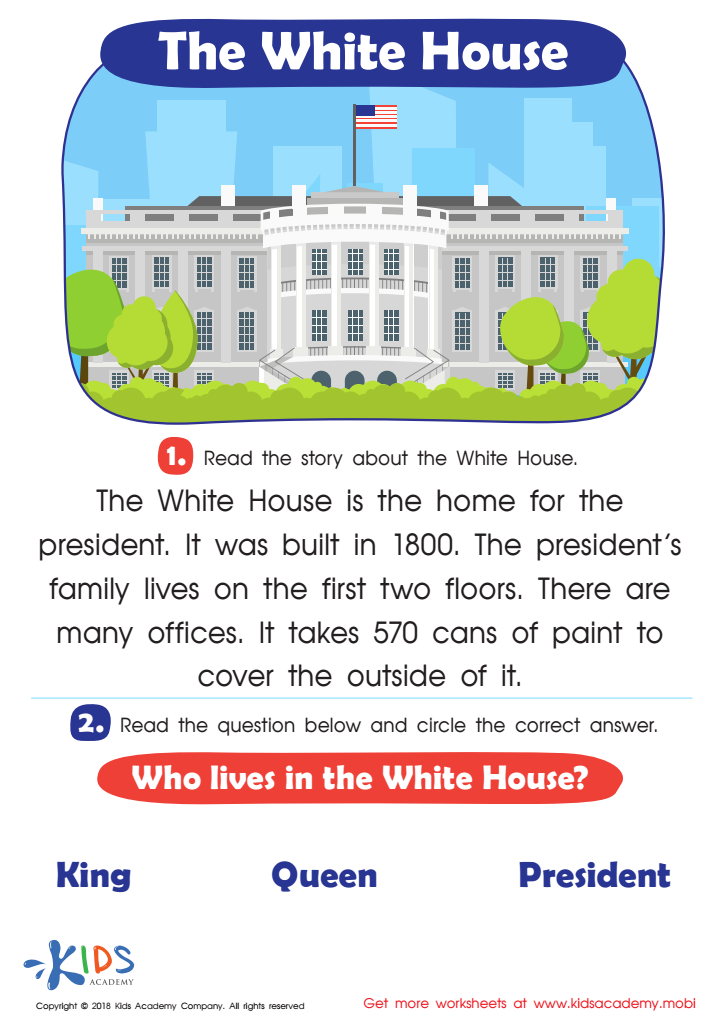
White House Worksheet
 Assign to My Students
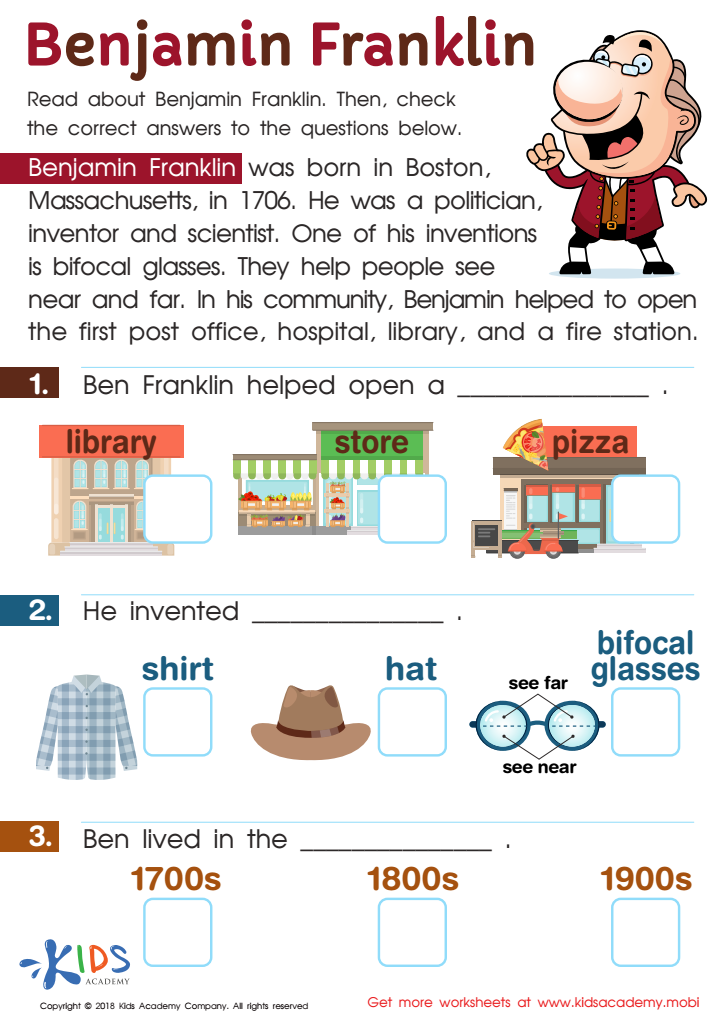
Benjamin Franklin Worksheet
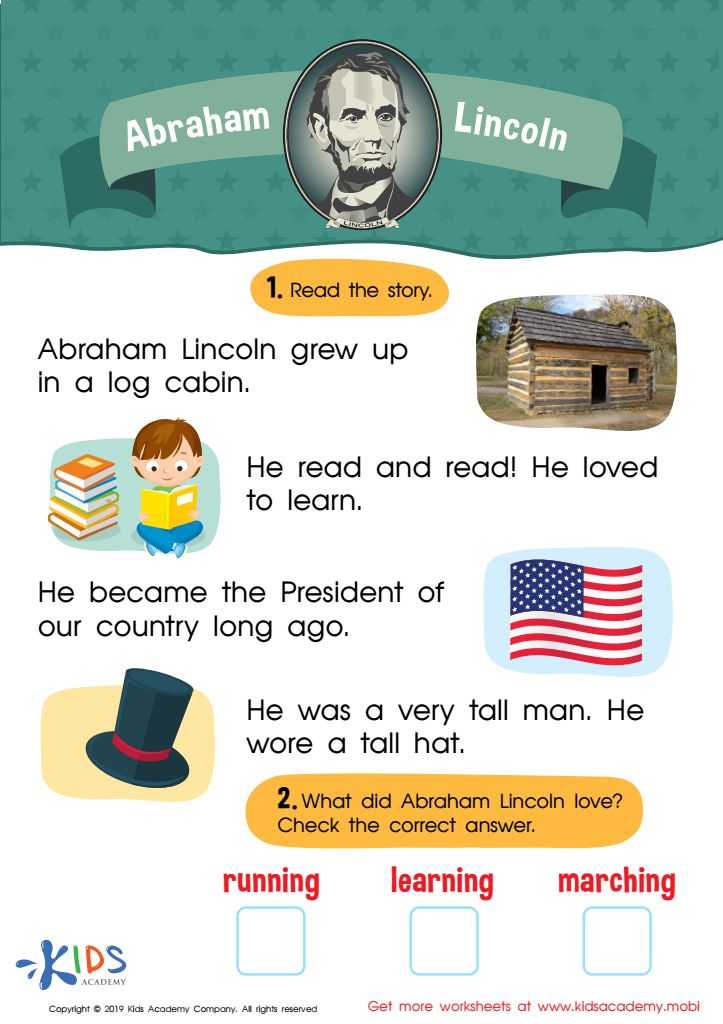
Abraham Lincoln Worksheet
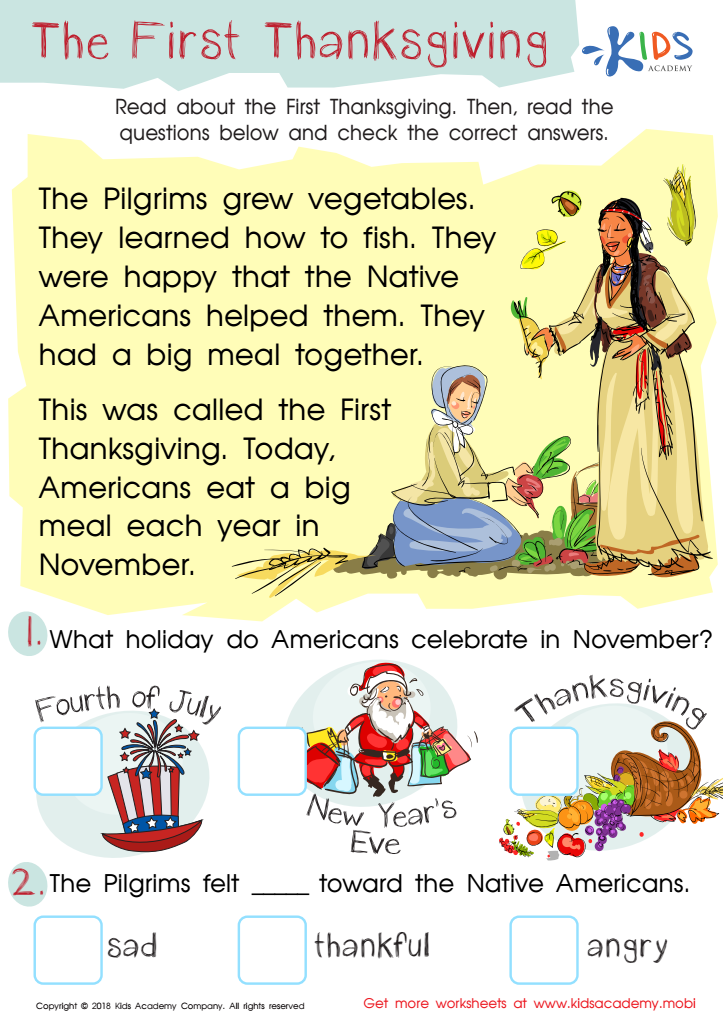
Assessment: First Thanksgiving Worksheet
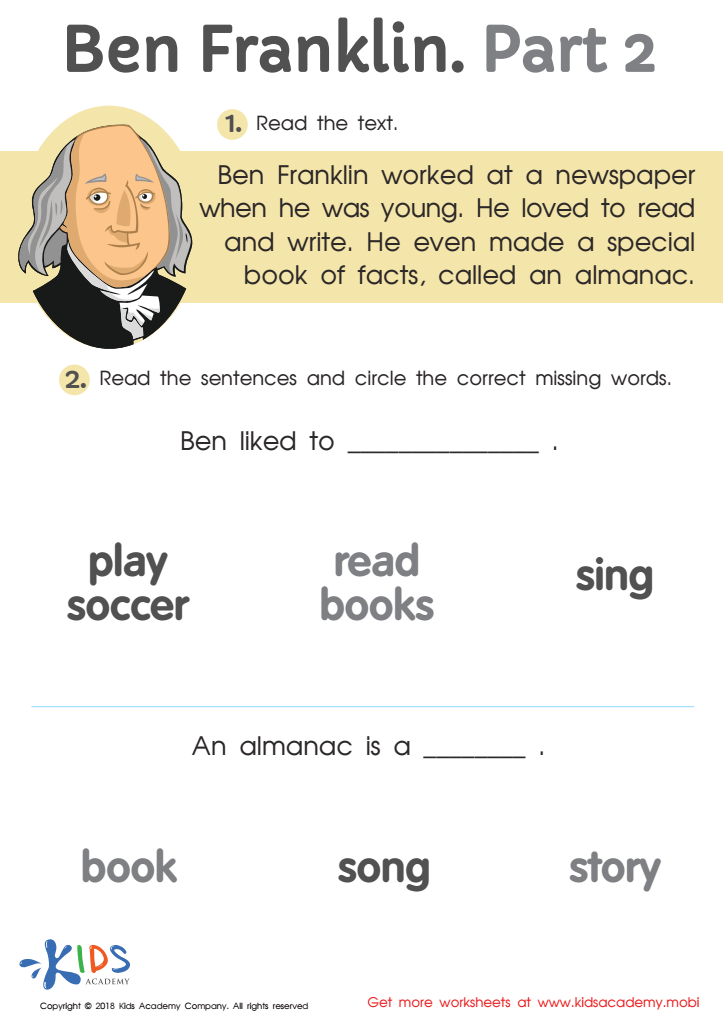
Ben Franklin Part 2 Worksheet








Parents and teachers should prioritize historical knowledge reading in non-fiction for ages 5-8 for several compelling reasons. First, young children possess a natural curiosity about their world, and non-fiction texts can satisfy this curiosity by introducing them to events, people, and cultures beyond their immediate experience. Engaging with historical content stimulates critical thinking, helping children to analyze and question information, fostering a sense of inquiry that enhances cognitive development.
Moreover, understanding history encourages empathy and social awareness. By learning about different times, places, and perspectives, children can develop a better understanding of diversity and the complexities of human experiences. This insight is essential for cultivating respectful, engaged citizens in a multicultural society.
Additionally, early exposure to historical knowledge supports literacy skills. Non-fiction texts often use varied vocabulary and sentence structures, which can enrich children’s language abilities and comprehension skills. Finally, these texts can serve as a springboard for discussions about values, ethics, and the importance of acknowledging past events, both positive and negative. This helps lay the foundation for responsible decision-making and civic involvement as they grow. Overall, fostering an interest in historical non-fiction can enrich children's educational journey and their understanding of the world.








