Logical Reasoning Reading Non-Fiction Worksheets for Ages 5-8
4 filtered results
-
From - To
Help young learners unlock their critical thinking potential with our Logical Reasoning Reading Non-Fiction Worksheets designed for ages 5-8. Perfect for early grade students, these engaging activities blend reading with analytical challenges to foster a keen sense of logic and comprehension. Each worksheet offers age-appropriate non-fiction passages paired with fun exercises that encourage kids to draw conclusions, identify patterns, and solve problems. Ideal for classroom environments or at-home practice, these resources support the development of important learning skills, ensuring a solid foundation for future academic success. Keep your child's mind sharp and inquisitive with Kids Academy’s expertly crafted materials.
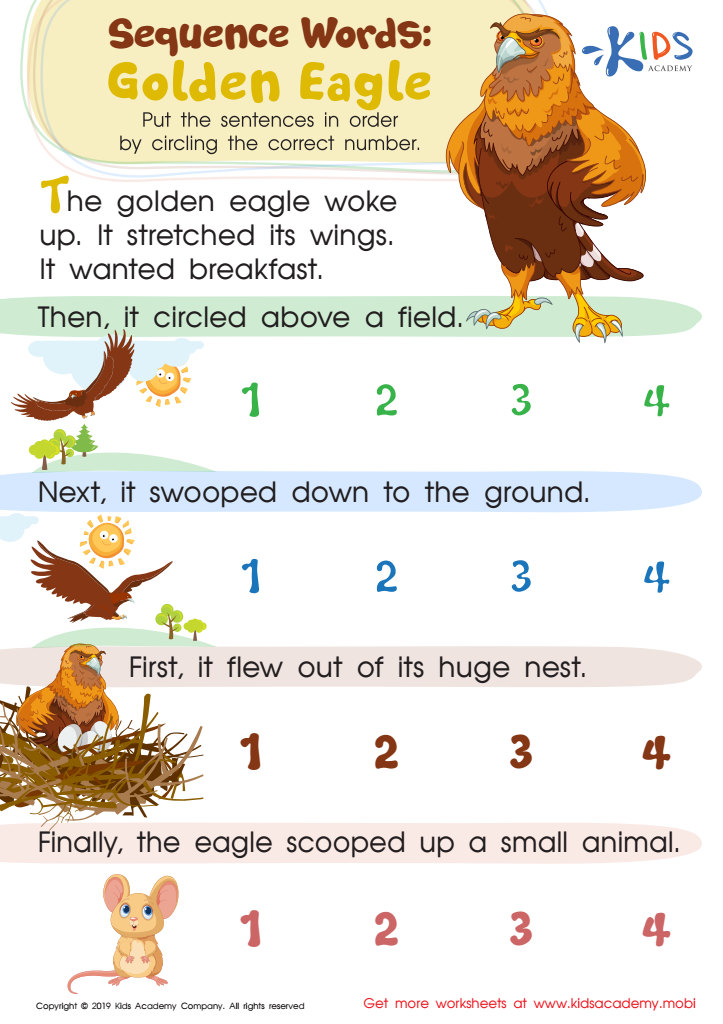
Sequence Word Eagle Worksheet
 Assign to My Students

Dogs, Dogs Worksheet
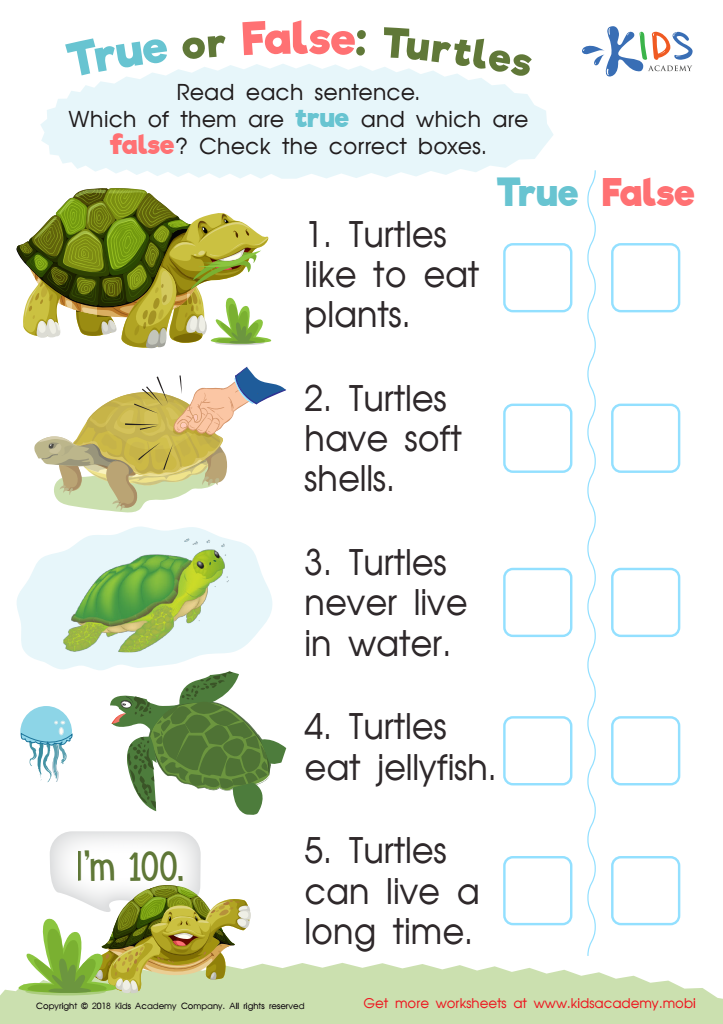
True or False: Turtles Worksheet
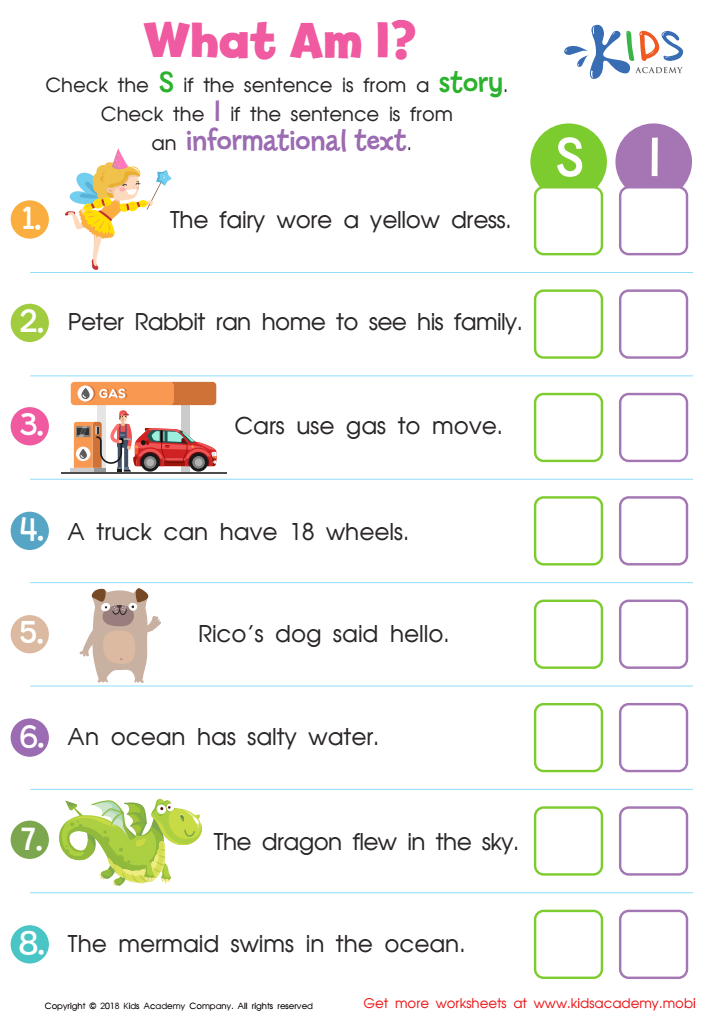
What Am I? Worksheet








Parents and teachers should care about promoting logical reasoning and reading non-fiction for children ages 5-8 because these skills are foundational for lifelong learning and critical thinking. At this formative stage, children's brains are highly receptive to new concepts, and engaging with non-fiction material helps them understand the world around them, fostering curiosity and a love for learning. Logical reasoning enhances their ability to process information, solve problems, and make decisions.
When children read non-fiction, they encounter real-world information and scenarios, which sharpens their analytical skills and allows them to distinguish between facts and opinions. This early exposure roots their understanding in reality, preparing them for complex scientific and historical concepts they will encounter later in their educational journey.
Moreover, improving logical reasoning and comprehension through non-fiction reading helps with academic performance across subjects, boosting literacy and numeracy simultaneously. It also encourages question-asking and informed discussion, which are essential for emotional and social development. Critical thinking nurtured through logical reasoning makes children more adept at understanding cause and effect, interpreting sequences, and being dependable problem-solvers. Therefore, integrating these elements into early education lays a robust foundation for their intellectual and personal growth.








