Reading Skills Reading Non-Fiction Worksheets for Ages 5-8
4 filtered results
-
From - To
Enhance your child's reading skills with our engaging Non-Fiction Worksheets, designed for ages 5-8! These fun and interactive activities introduce young learners to essential reading strategies while exploring fascinating topics. Our carefully crafted worksheets promote comprehension, vocabulary building, and critical thinking, ensuring that children develop a strong foundation in understanding real-world information. Perfect for at-home learning or classroom use, these resources foster a love for reading and curiosity about the world around them. Encourage your child's literary journey today and watch as they confidently tackle non-fiction texts with enthusiasm and skill!
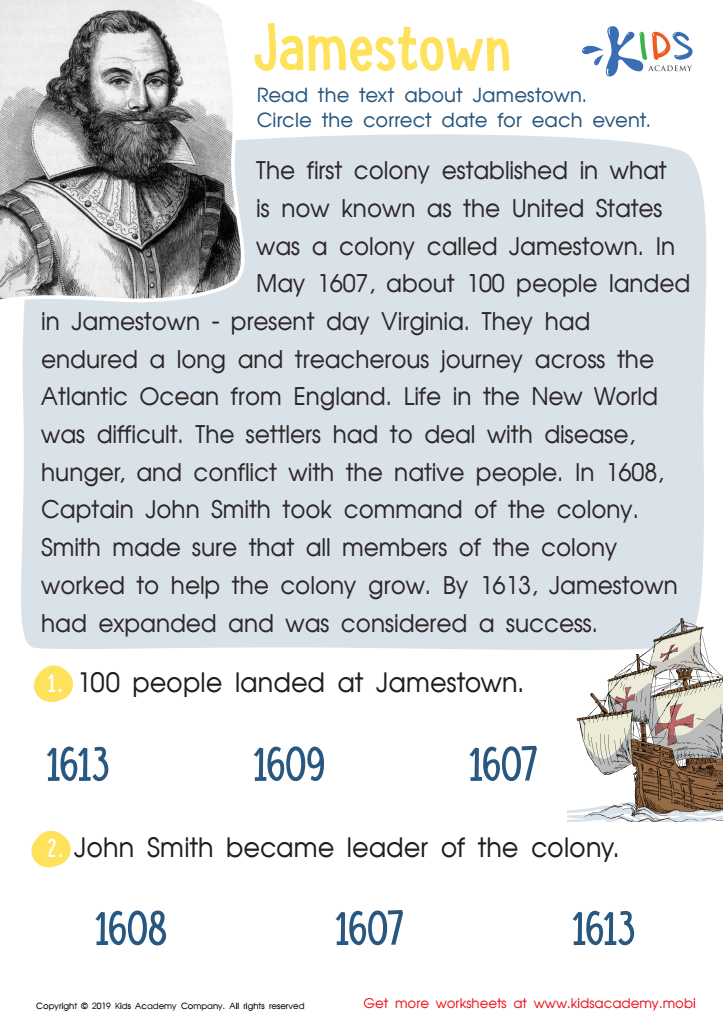
Jamestown Worksheet
 Assign to My Students
Draw a Line to the Picture Books Worksheet
Front of the Book Worksheet
Ben Franklin Part 2 Worksheet








Reading non-fiction is crucial for children aged 5-8 as it helps develop essential literacy skills while expanding their understanding of the world. During these formative years, children build foundational reading abilities, and exposure to non-fiction texts fosters critical thinking. Non-fiction introduces young readers to real-world concepts, facts, and diverse topics, stimulating curiosity and encouraging exploration.
Additionally, non-fiction supports vocabulary development. Children encounter new words and phrases related to various subjects, enhancing their comprehension and communication skills. This exposure ultimately builds the vocabulary necessary for academic success.
Moreover, reading non-fiction can ignite interests and passions in specific fields, such as science, history, or nature. Encouraging children to explore these topics can lead to lifelong learning and motivation to delve deeper into areas of fascination.
Furthermore, teaching children to identify different text features, such as headings, captions, and diagrams strengthens their comprehension skills. This is vital for their academic journey as they encounter increasingly complex texts in higher grades.
Ultimately, fostering a love for non-fiction reading cultivates informed, inquisitive learners who feel empowered to engage with their world, making it imperative for parents and teachers to prioritize this aspect of literacy development.








