Understanding life cycles Reading Non-Fiction Worksheets for Ages 5-8
3 filtered results
-
From - To
Explore the fascinating world of life cycles with our engaging non-fiction worksheets designed for ages 5-8! Perfect for early learners, these resources encourage curious minds to examine the stages of growth and transformation in various organisms, from butterflies to plants. Our worksheets promote interactive learning through captivating visuals and easy-to-understand texts that foster comprehension skills. With activities that spark interest in nature and science, children will develop both their reading abilities and critical thinking skills. Dive into the magic of life cycles and inspire a love of learning through fun and educational experiences tailored for young explorers!
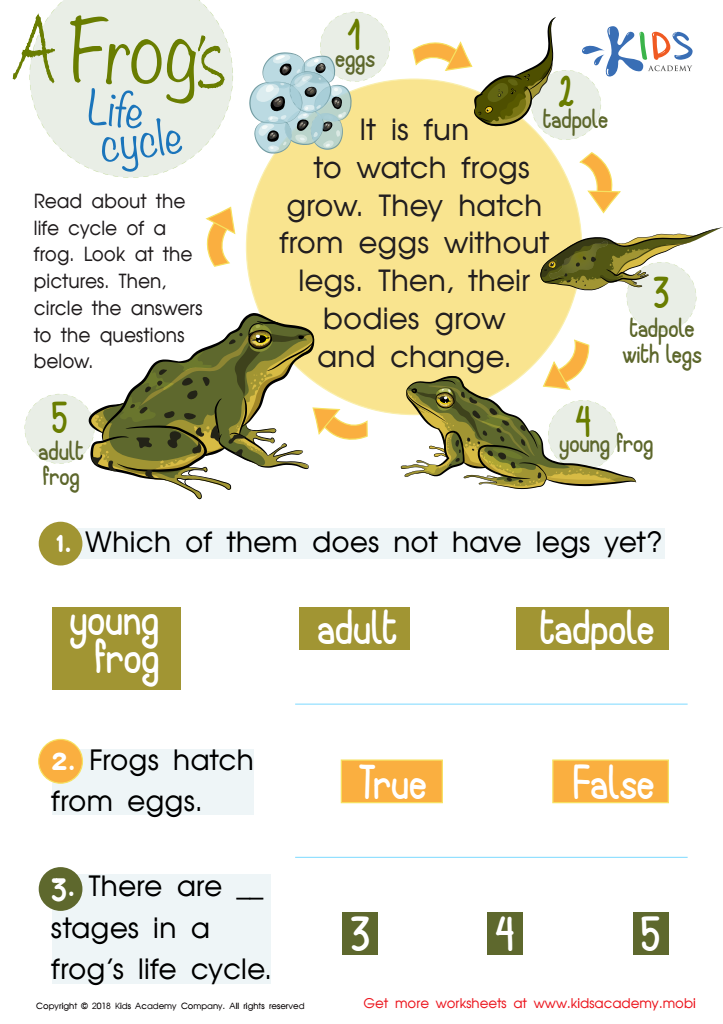
A Frog’s Life Cycle Worksheet
 Assign to My Students
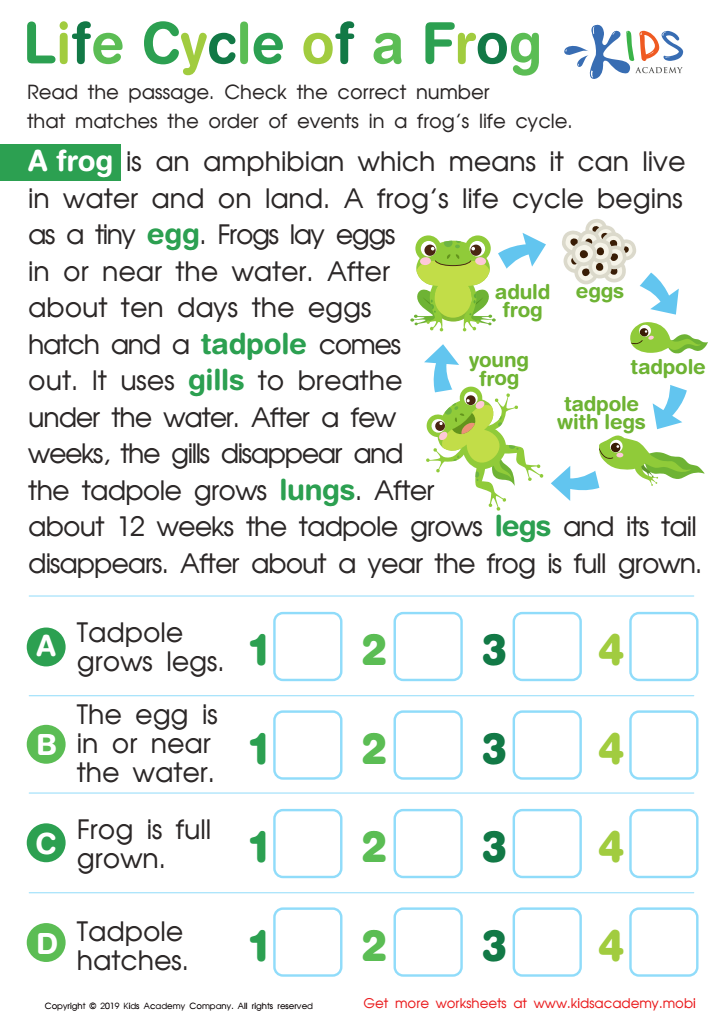
Life Cycle of a Frog Worksheet
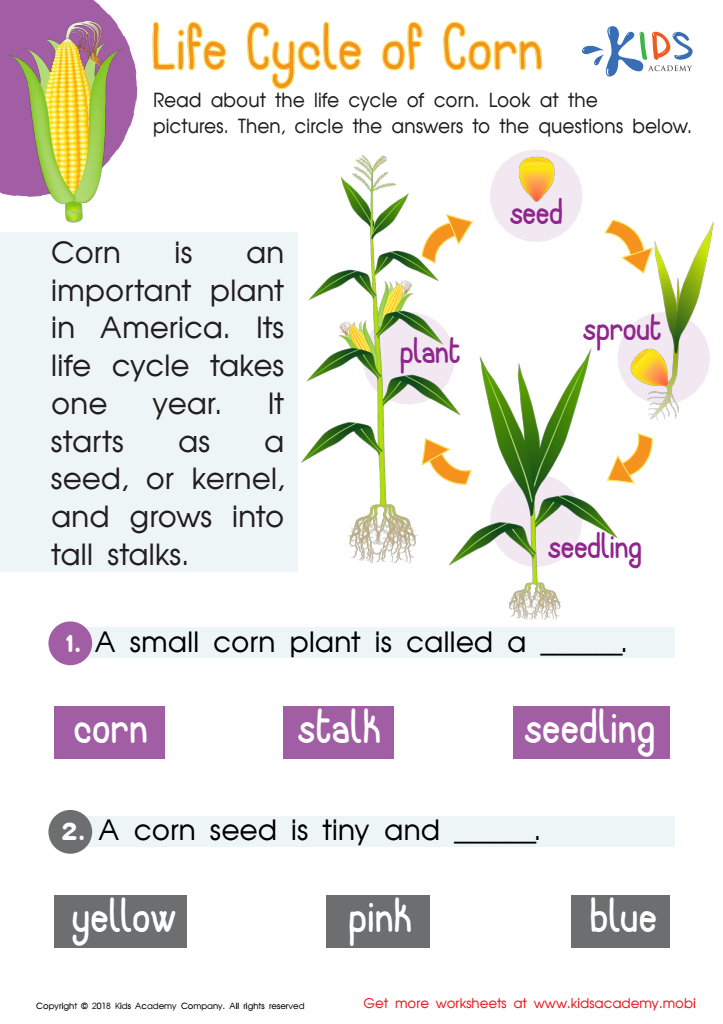
Life Cycle of Corn Worksheet








Understanding life cycles is essential for children ages 5-8 as it sparks their curiosity about nature and fosters an awareness of the interconnectedness of living things. Through non-fiction reading, children learn about various life cycles, from butterflies and frogs to plants and even human development. This knowledge forms foundational science literacy, helping young learners make observations, ask questions, and seek answers—a process critical for scientific inquiry.
Parents and teachers should care about this subject as it enhances critical thinking and comprehension skills. Non-fiction texts expose children to factual information and different text structures, cultivating their ability to engage with real-world topics. These reading experiences also enrich vocabulary, allowing children to articulate their thoughts about complex processes clearly.
Moreover, understanding life cycles can instill a sense of responsibility and empathy towards the environment and living organisms. By learning how all creatures go through stages of growth and change, children develop respect for nature and understand their role within ecosystems. Engaging with such content not only supports academic readiness but also contributes to the overall character development of young learners, promoting respect, love, and stewardship for the world around them. This investment in education ultimately nurtures informed, compassionate future citizens.








