Vocabulary Building Reading Non-Fiction Worksheets for Ages 5-8
4 filtered results
-
From - To
Boost your child's vocabulary with our engaging Vocabulary Building Reading Non-Fiction Worksheets, designed specifically for ages 5-8! These interactive worksheets foster a love for reading while enhancing language skills through exposure to fascinating non-fiction topics. Children will explore a variety of subjects, from animals to science, encouraging critical thinking and comprehension. Each worksheet includes fun exercises that promote word recognition, understanding of context, and the ability to use new vocabulary in sentences. Perfect for school or home learning, our worksheets make vocabulary development enjoyable and effective. Help your young learner expand their horizons and vocabulary today!
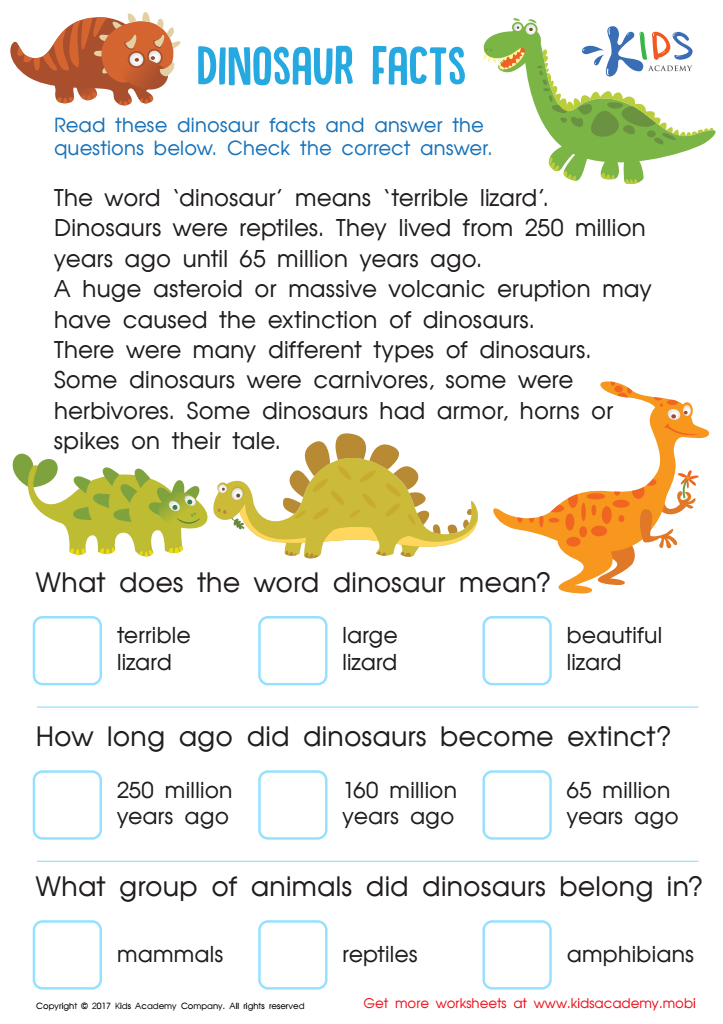
Dinosaur Facts Worksheet
 Assign to My Students
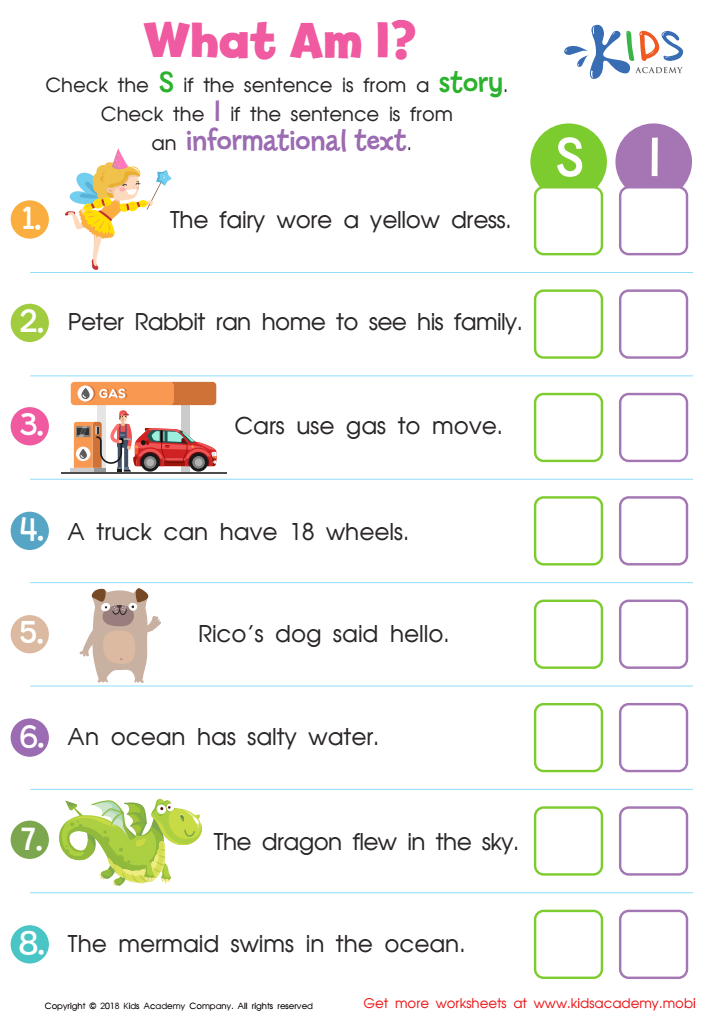
What Am I? Worksheet
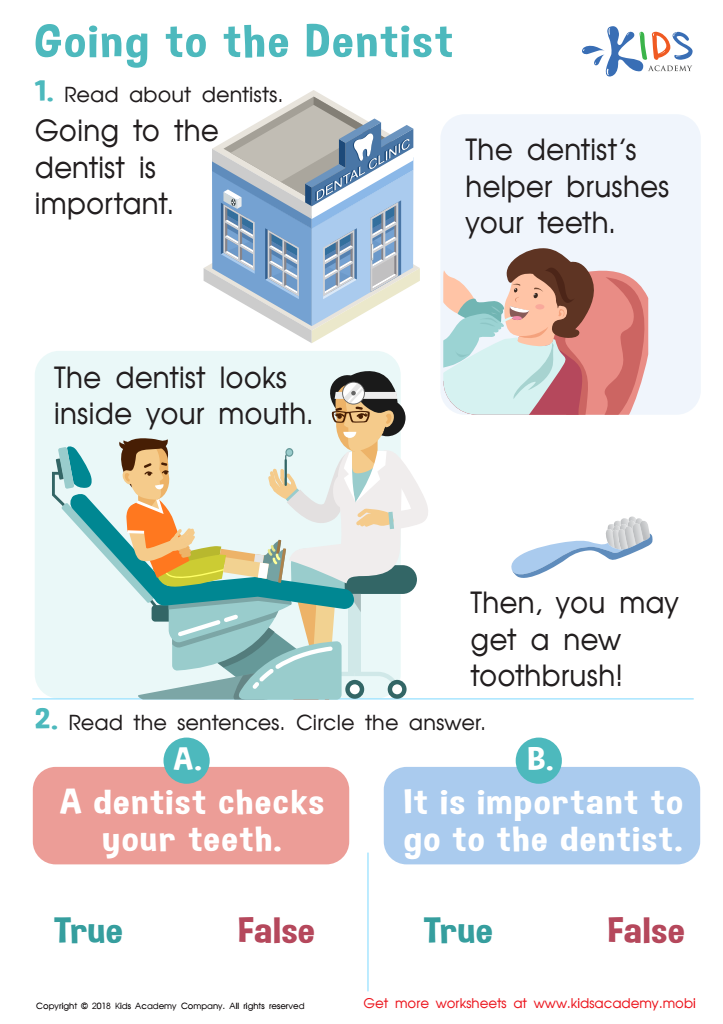
Going to the Dentist Part 2 Worksheet
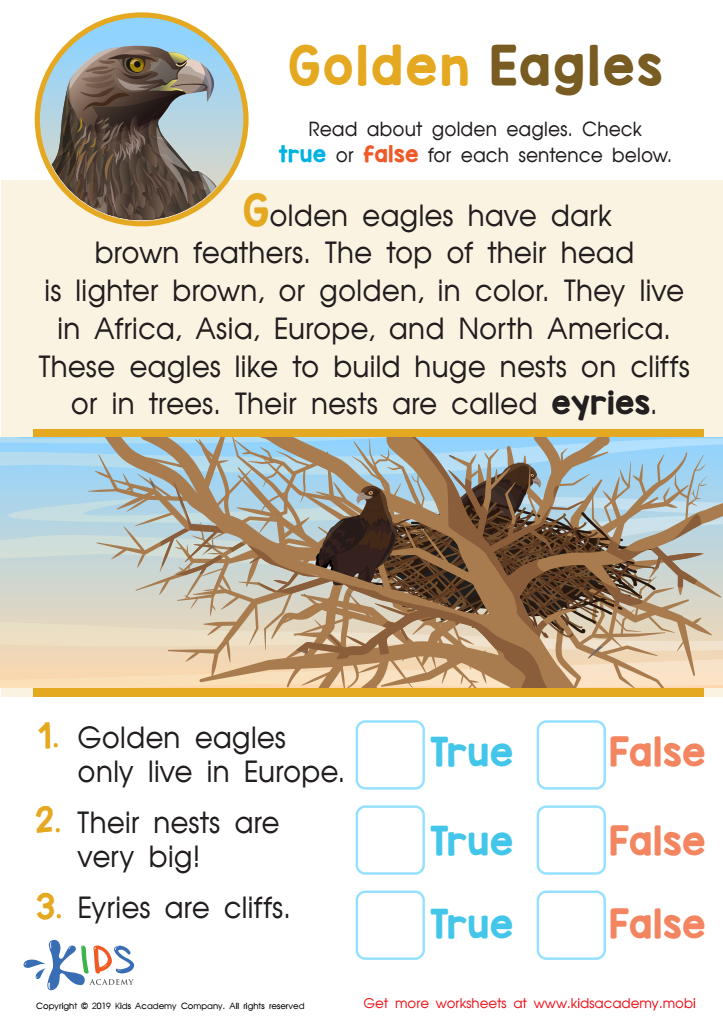
Golden Eagles Worksheet








Vocabulary building through reading non-fiction is crucial for children aged 5-8, as it lays the foundation for literacy and academic success. At this age, children's brains are highly receptive, and exposure to diverse vocabulary enhances their language skills, comprehension, and critical thinking. Non-fiction texts introduce specific terminology and concepts, helping kids connect words to real-world contexts, which makes learning more engaging and meaningful.
Parents and teachers should prioritize non-fiction reading because it fosters curiosity and a lifelong love for learning. When children explore topics such as animals, science, history, or geography through non-fiction, they develop a deeper understanding of the world around them. This understanding not only enriches their vocabulary but also cultivates analytical skills, as they learn to distinguish between fact and opinion.
Furthermore, strong vocabulary skills are essential for effective communication and problem-solving. In addition to fostering reading skills, building a robust vocabulary during these formative years better prepares children for future academic challenges. In short, by encouraging vocabulary building with engaging non-fiction reading, parents and teachers significantly enhance children's cognitive development, ensuring they become confident readers and informed thinkers.








