Filters

6 filtered results

Clear all filters
Favorites
With answer key
Interactive

6 filtered results

Difficulty Level

Grade


Enhance your child's vocabulary with our engaging and educational non-fiction reading worksheets, specially designed for ages 5-8. These worksheets help young learners expand their word knowledge through interactive, real-world texts on various topics. With a focus on building vocabulary, these resources are perfect for early grade readers to understand new words, contextual meanings, and usage. Ideal for both classroom and home learning, our worksheets provide a fun and productive way to boost reading skills and comprehension. Develop a love for reading non-fiction, and give your child a head start on lifelong learning today!

Check out this FREE Trial Lesson on Reading Non-Fiction for age 5-8!

Compare and Contrast Two Texts

Favorites
With answer key
Interactive
  • 5-8
  • Vocabulary development
  • Reading Non-Fiction
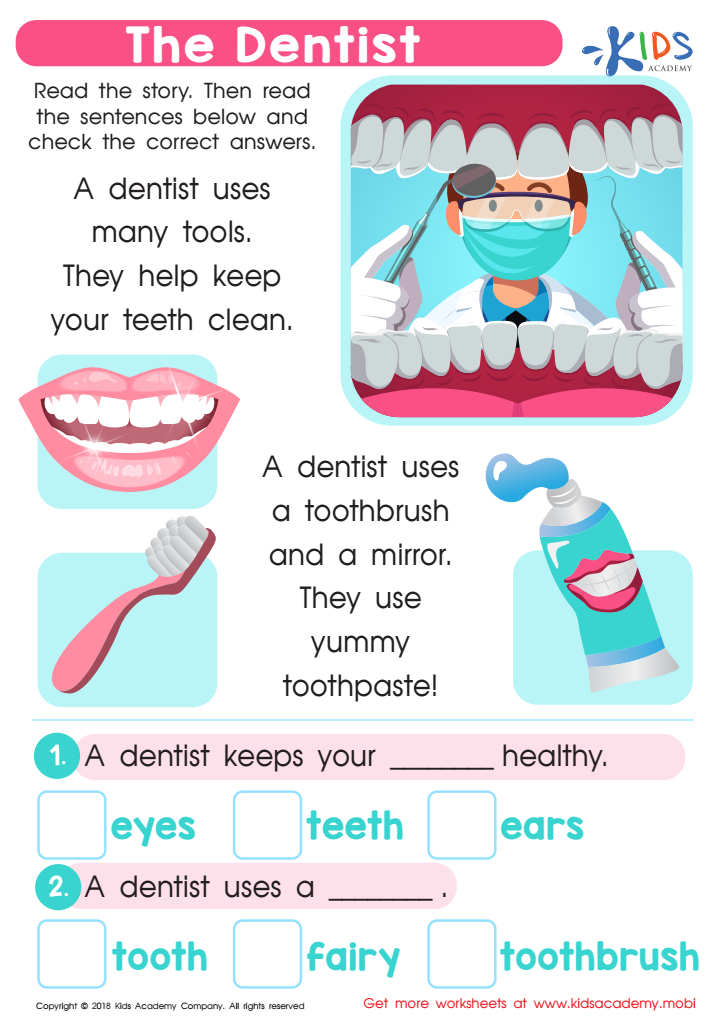
The Dentist Worksheet

The Dentist Worksheet

Community helpers are essential for our wellbeing. This vibrant worksheet is a great way to introduce children to the dentist and their tools. They'll read the text, use the pictures and answer questions about what the dentist does and what they use. It's a great way to make the dentist more approachable, as well as help with comprehension.
The Dentist Worksheet
Worksheet
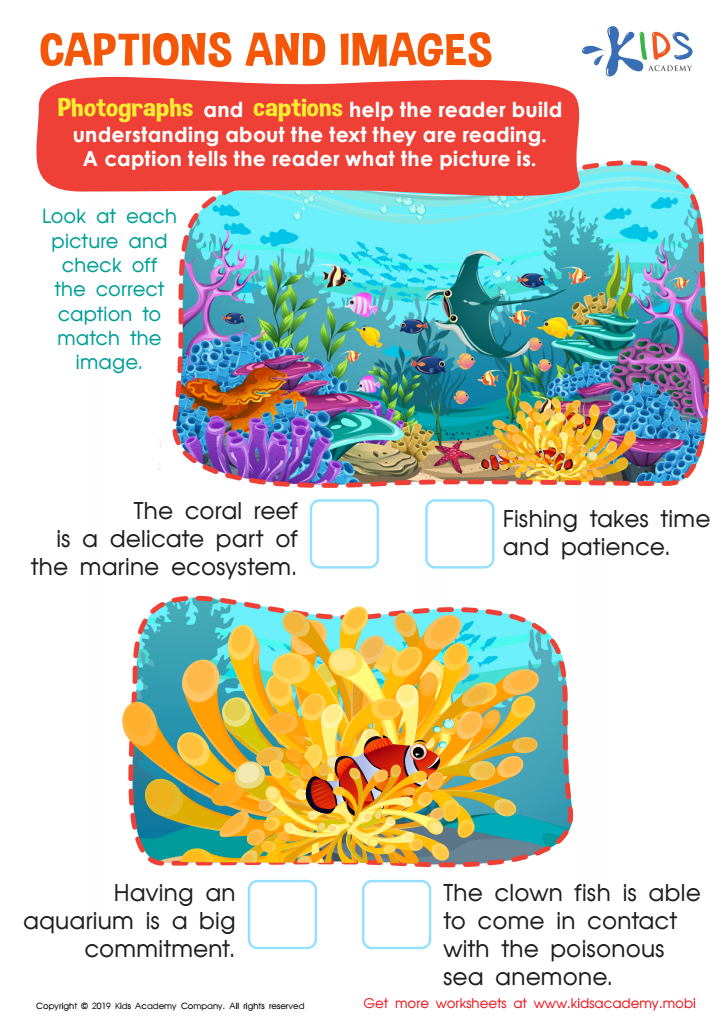
Captions and Images Worksheet

Captions and Images Worksheet

Pictures and captions can aid understanding. That's why many children's books have them. Have your kids look at the pictures in the worksheet, then help them match the right caption to each image. This will help them understand the story.
Captions and Images Worksheet
Worksheet
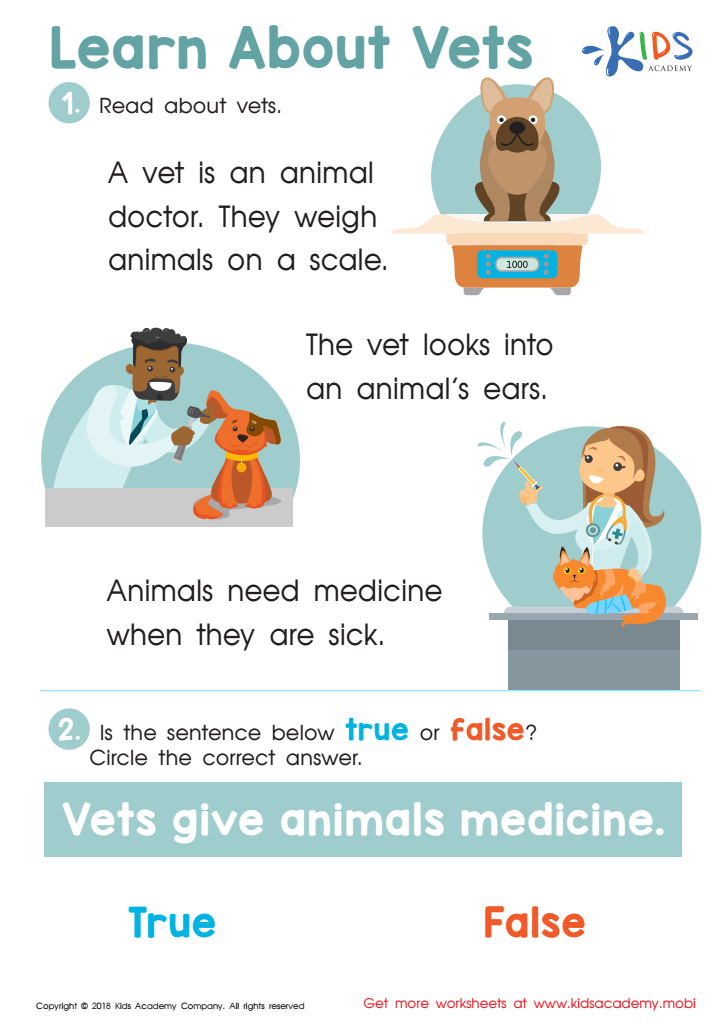
Learn About Vets Worksheet
Learn About Vets Worksheet

Assess your child's reading comprehension and recall with this ELA worksheet! It reviews interesting facts about vets with brief passages and pictures to help your reader. Ask the question at the bottom to see what they learned. It's a great way to check understanding!
Learn About Vets Worksheet
Worksheet
Marvelous Monarchs Worksheet

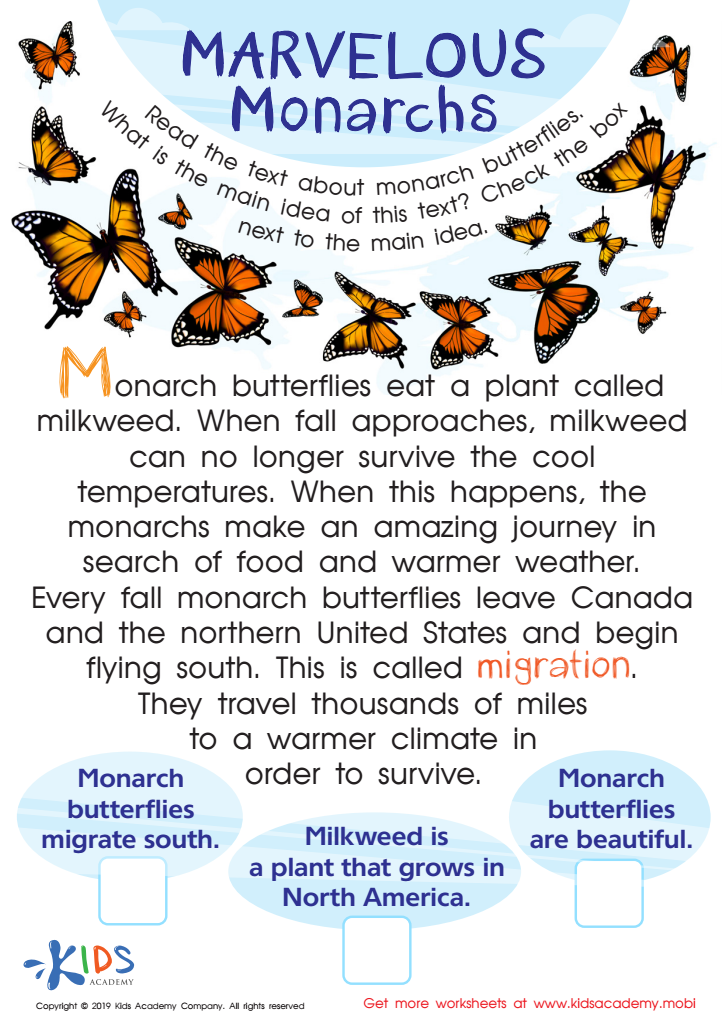
Marvelous Monarchs Worksheet

Help your kids have fun while reading - start with small words and short sentences. This worksheet can test your kids' reading and comprehension skills. Ask them to read the text about Monarch butterflies and help them locate the main idea.
Marvelous Monarchs Worksheet
Worksheet
Volcano Words Worksheet

Volcano Words Worksheet

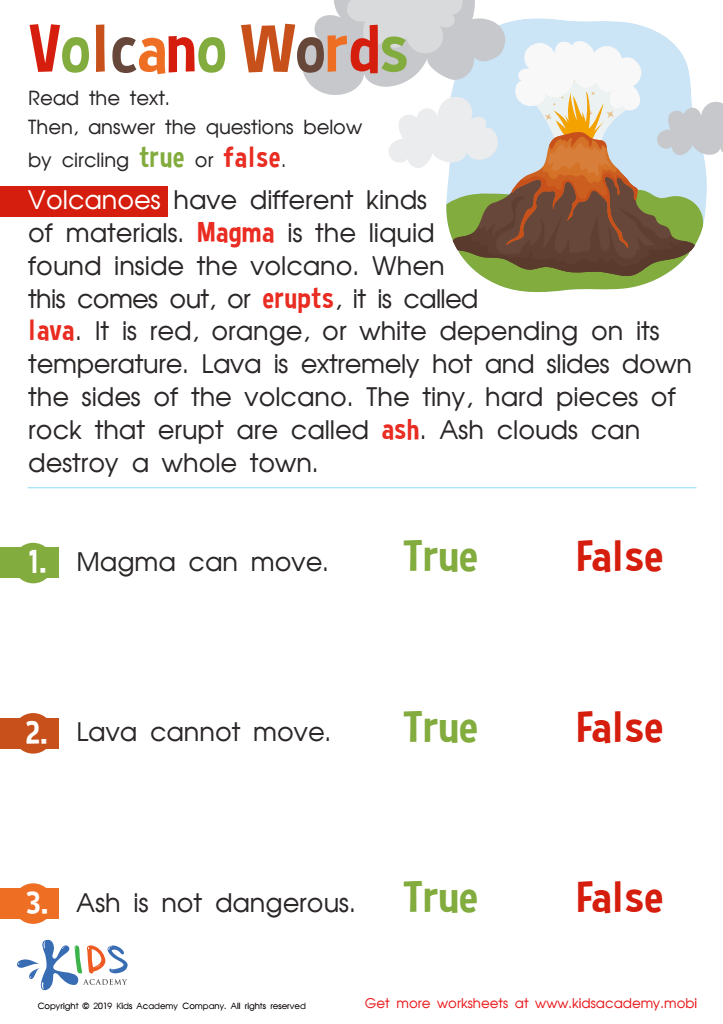
This worksheet helps kids focus and improve their reading comprehension skills. Start by reading a passage about volcanos and noting the bolded red words. Then answer true/false statements below, double-checking in the text if needed.
Volcano Words Worksheet
Worksheet
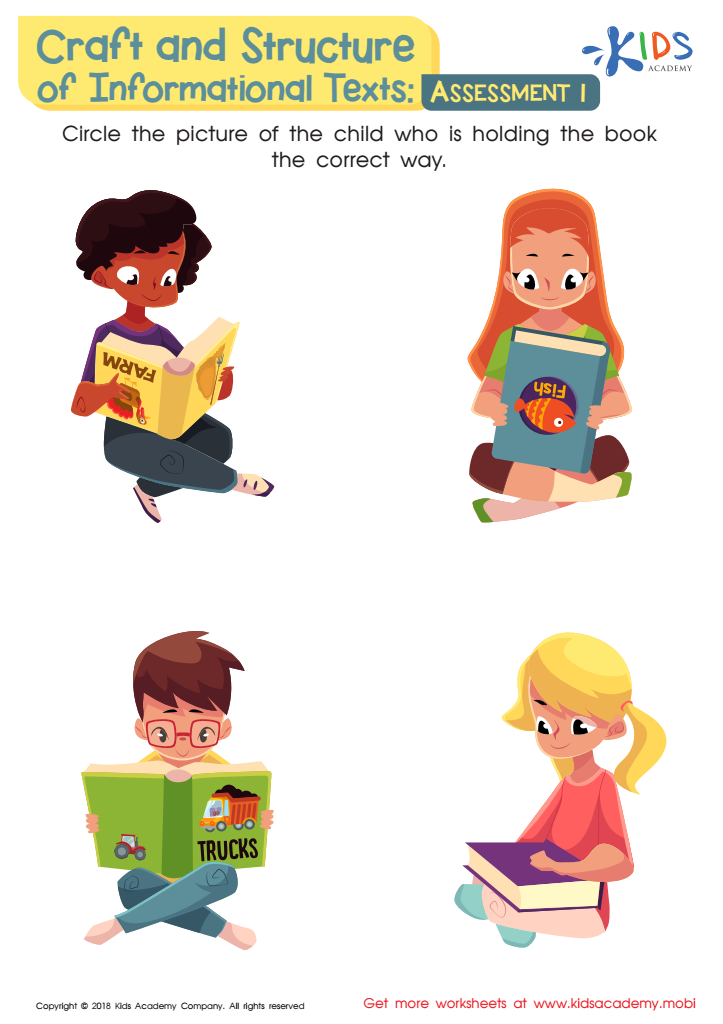
Craft and Structure of Informational Texts: Assessment 1 Worksheet


Craft and Structure of Informational Texts: Assessment 1 Worksheet

Young children need to know how to hold books correctly when they start reading. This assessment worksheet helps them show they know what to do. They'll look at the pictures and circle the child who is holding the book correctly. It's a great way to tell they are well on their way to becoming lifetime readers!
Craft and Structure of Informational Texts: Assessment 1 Worksheet

Worksheet


Vocabulary development in reading non-fiction is crucial for children aged 5-8 as it lays the foundation for their overall literacy skills and academic success. First, a robust vocabulary enhances reading comprehension. When children encounter a diverse array of words in non-fiction texts, they become capable of understanding and interpreting a broader range of information. Non-fiction exposes them to factual content about the world, aiding cognitive development and curiosity.

Second, early exposure to informational texts enriches their knowledge base, which is essential for critical thinking. As children learn new words, they also gain insights into various topics like science, history, and nature, promoting intellectual growth and curiosity. This background knowledge becomes valuable in making connections across subjects and in daily life.

Moreover, vocabulary development through non-fiction reading helps children articulate their thoughts more precisely and confidently. It influences their ability to participate in discussions, ask relevant questions, and express ideas clearly, aiding social and emotional development.

Lastly, fostering a love for reading non-fiction at an early age encourages lifelong learning and equips children with the tools needed to navigate an information-rich world. Parents and teachers should therefore prioritize vocabulary development through non-fiction to set children on a path of active learning and holistic growth.