Letter formation ABC Letters Worksheets for Ages 5-9
5 filtered results
-
From - To
Our ABC Letters Worksheets for Ages 5-9 are specially designed to help young learners master letter formation. These engaging and interactive activities guide children through the process of writing each letter, making it both fun and educational. With clear instructions and ample practice, kids develop fine motor skills and hand-eye coordination required for precise letter formation. Perfect for classroom or home use, these worksheets support children in building a strong foundation in writing, boosting their confidence and literacy skills. Available in print-friendly formats, our worksheets are a valuable resource for both parents and teachers seeking to enhance early language development.
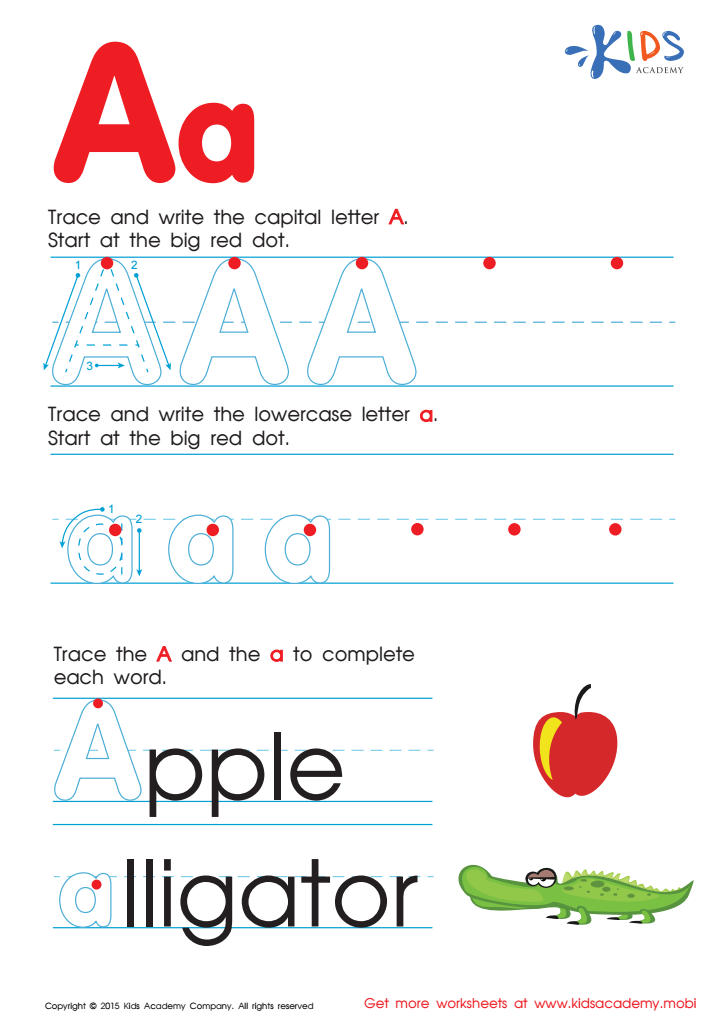
Letter A Tracing Page

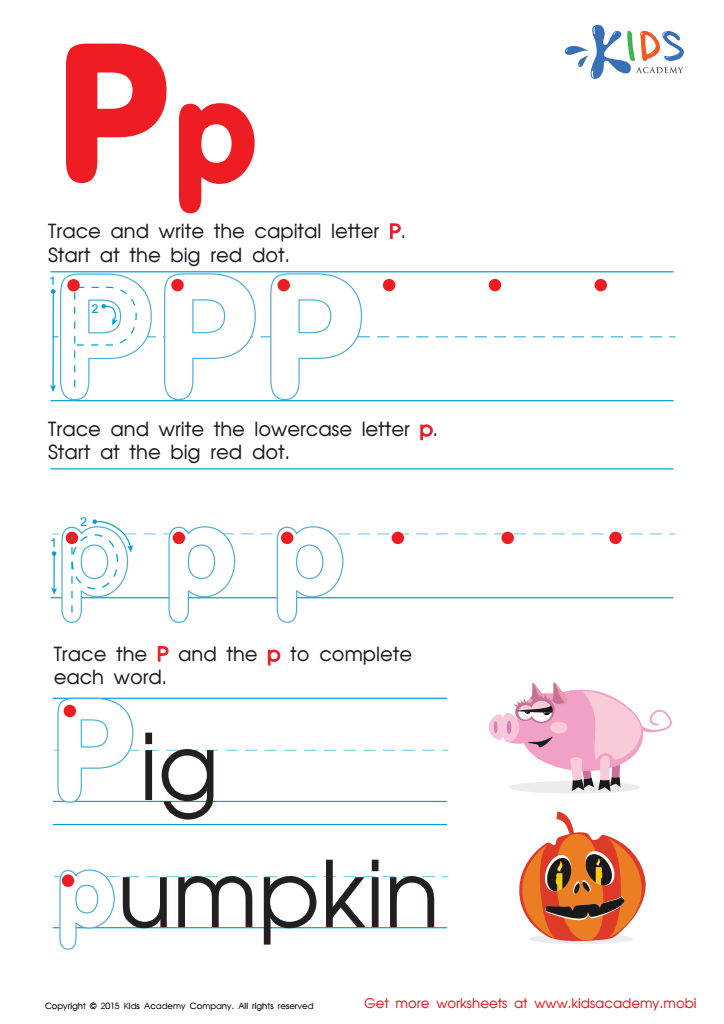
Letter P Tracing Page

Letter G Tracing Page
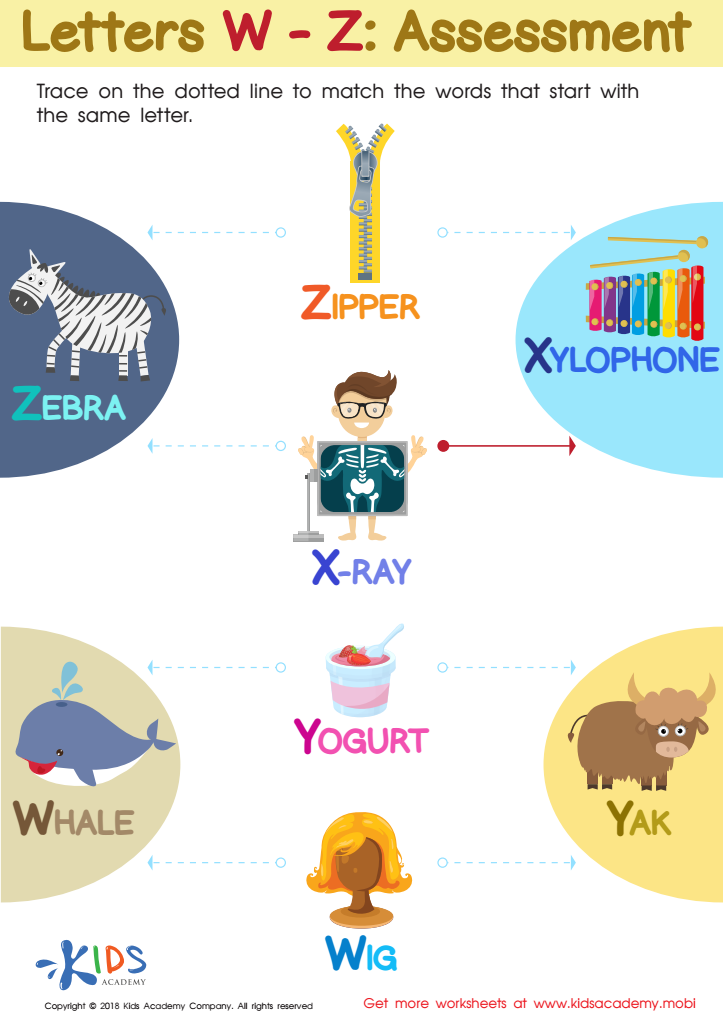
Letters W–Z Tracing Worksheet
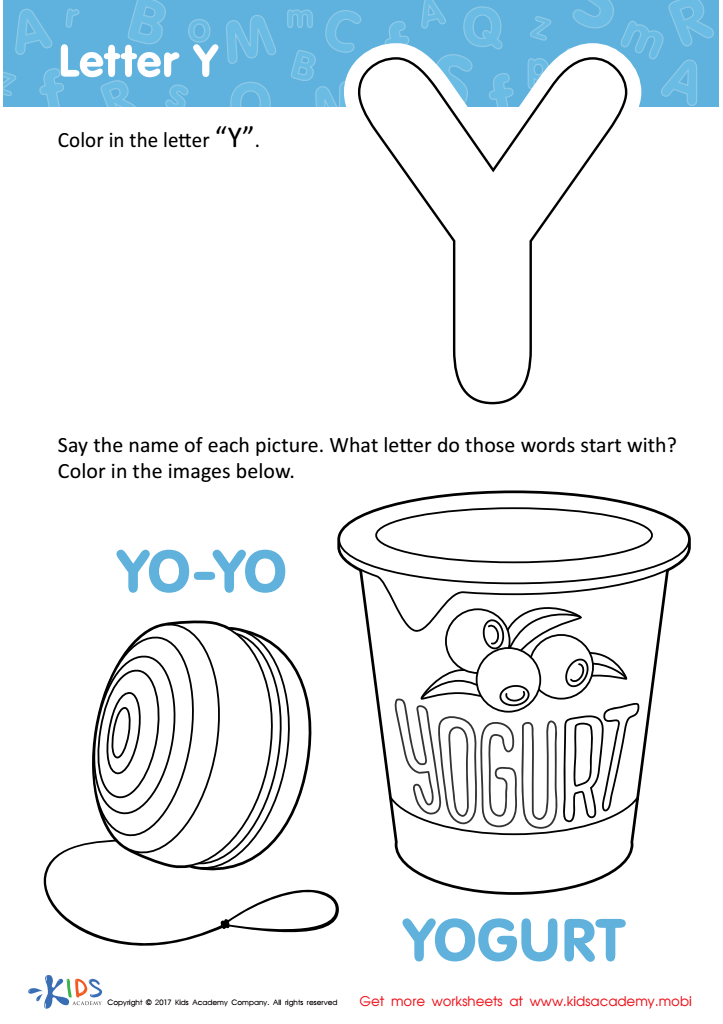
Letter Y Coloring Sheet
 Assign to My Students








Letter formation is fundamental for children aged 5-9 as it lays the groundwork for literacy and academic success. First, mastering proper letter formation improves legibility, which is essential for clear written communication. When letters are consistently well-formed, children can write more quickly and comfortably, reducing frustration and boosting their confidence.
Moreover, good letter formation supports cognitive development. As children concentrate on the fine motor skills needed to shape letters correctly, they simultaneously enhance their hand-eye coordination and strengthen neural connections in the brain. This interplay between motor skills and cognitive processes also benefits other areas, such as problem-solving and critical thinking.
Additionally, correct letter formation facilitates reading skills. Understanding the structure of each letter helps children recognize those letters within printed text, aiding in faster and more accurate reading. This recognition is also a key component in phonics instruction, where knowing letter sounds is crucial.
From a social-emotional perspective, children who feel adept at writing are more likely to enjoy school and participate in classroom activities, fostering a positive attitude towards learning. Teachers and parents should prioritize letter formation to ensure children build a solid foundation in literacy that underpins future educational achievements. Consistent practice, encouragement, and the right tools can make the process engaging and effective.







