Sound Association Consonants Worksheets for Ages 5-9
3 filtered results
-
From - To
Enhance your young learner’s phonics skills with our Sound Association Consonants Worksheets designed for ages 5-9. Our engaging worksheets make learning to associate consonant sounds with corresponding letters fun and interactive. Children will enjoy a variety of activities that involve matching sounds to letters, decoding consonant sounds in words, and building foundational phonemic awareness. Perfect for classroom and homeschool settings, these expertly developed resources help improve reading proficiency and language skills through fascinating exercises. Give your child the advantage they need to excel in reading and writing with our effective consonant sound association worksheets.
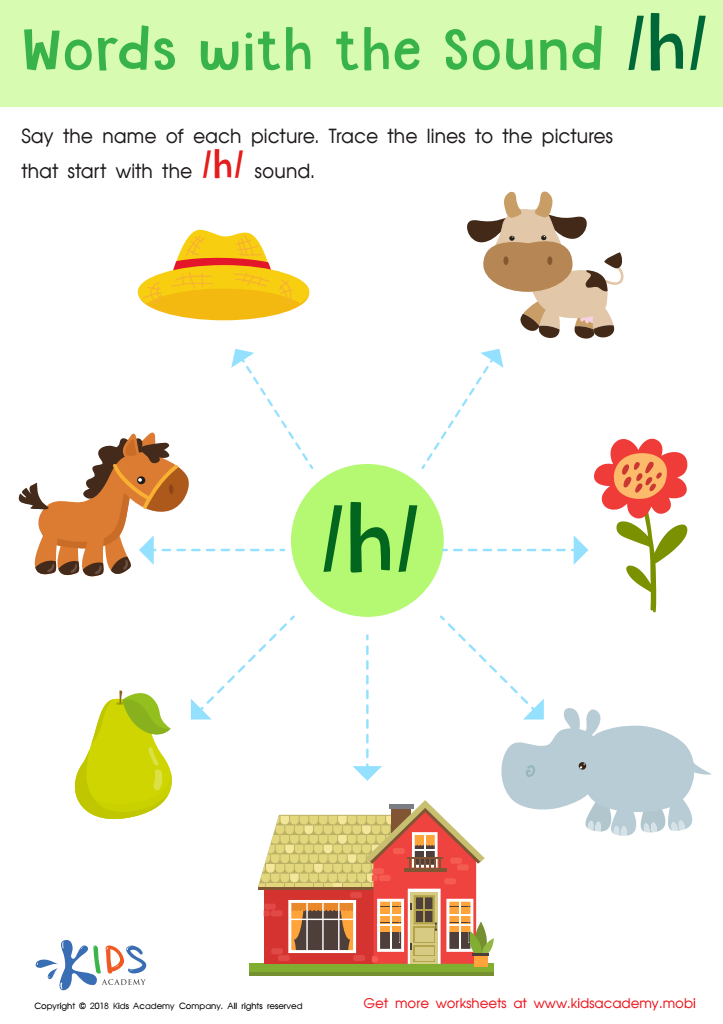
Words with sound h Reading Worksheet
 Assign to My Students
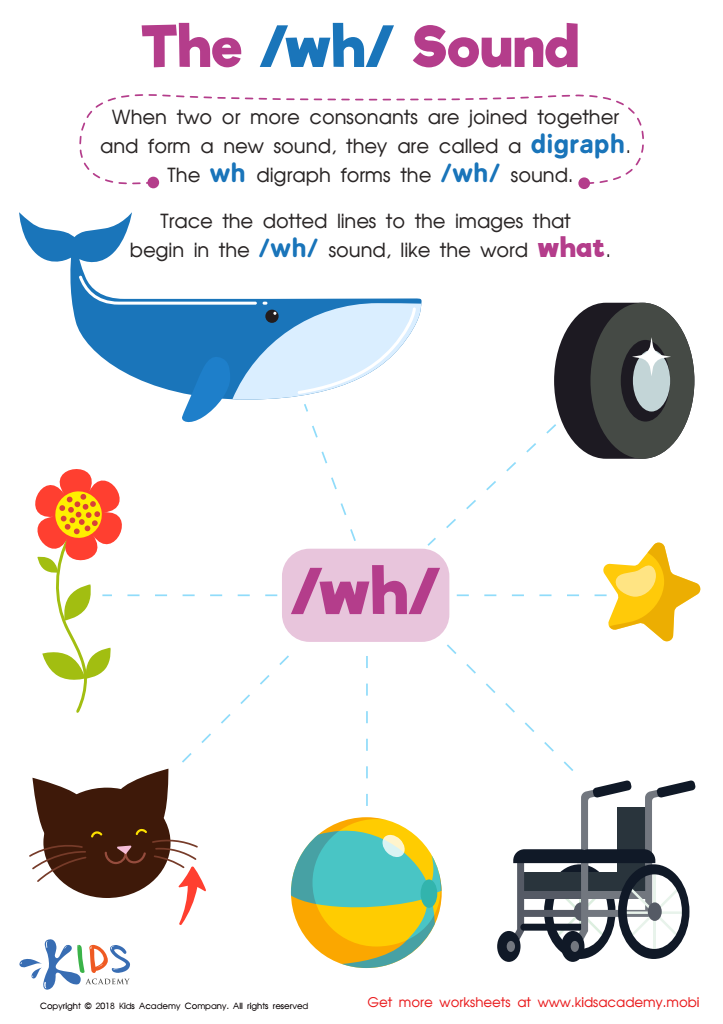
The /wh/ Sound Worksheet
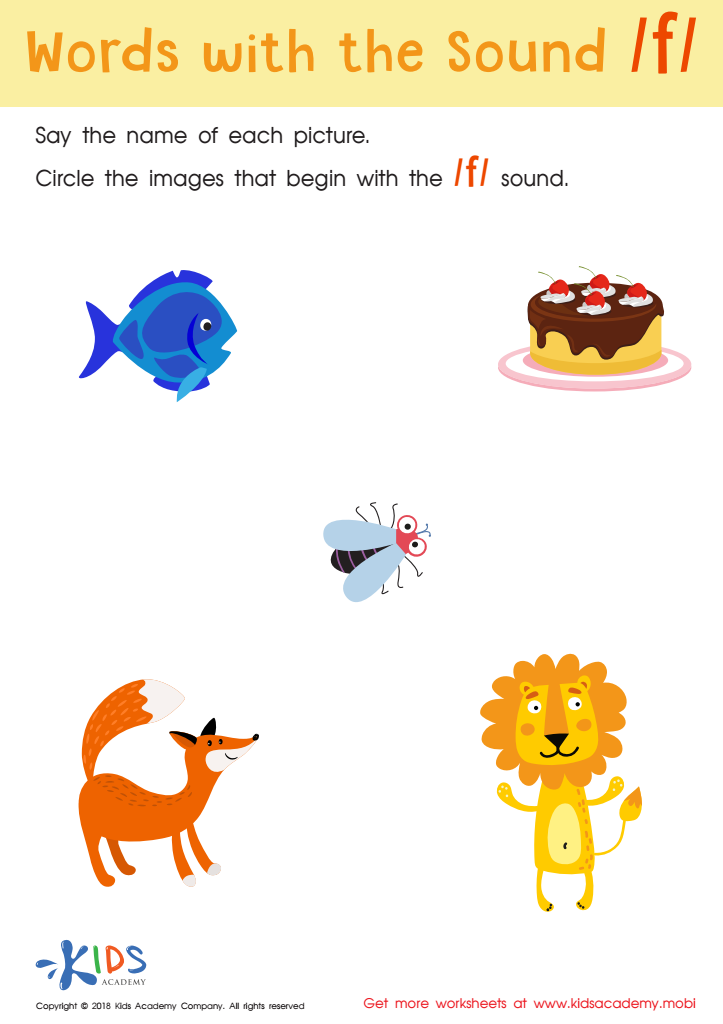
Words with sound f Reading Worksheet



Sound association with consonants is critical for children aged 5-9 because it lays the foundation for literacy and communication skills. At this age, children are in a critical period for language development. Understanding the distinct sounds that different consonants make enables them to decode words more efficiently, a skill essential for fluent reading. This phonemic awareness directly influences their spelling, writing, and comprehension abilities.
Moreover, being proficient in sound association helps children become confident readers. It reduces frustration and increases their willingness to read, thereby fostering a positive attitude towards learning. Confidence in reading leads to better academic performance overall and can ignite a lifelong love for books.
Additionally, sound association is not just about reading but also about effective communication. When children can break down and understand the sounds within words, they can articulate words more clearly. This is crucial for social interactions and expressing ideas coherently.
Teachers and parents play a vital role in guiding children through these formative years. By incorporating activities that enhance consonant-sound association—such as phonics games, reading aloud sessions, and multisensory learning techniques—they invest in the child's academic success and overall cognitive development. In sum, focusing on sound association with consonants is beneficial not just educationally but also for children's personal growth.







