
Listening skills Elementary Phonics Worksheets for Ages 5-9
4 filtered results
Difficulty Level
Grade
Age
-
From - To
Subject
Activity
Standards
Enhance your child's early reading abilities with our Listening Skills Elementary Phonics Worksheets designed for ages 5-9. These interactive and engaging resources from Kids Academy focus on building strong listening foundations essential for effective phonetic learning. Featuring fun activities, these worksheets foster auditory discrimination and phonological awareness, aiding young learners in associating sounds with letters and words. Perfect for in-class practice or at-home learning, our worksheets ensure your child develops crucial listening skills while having fun. Guide your child towards reading success with our expert-crafted phonics worksheets tailored specifically for young, eager minds.
Favorites
With answer key
Interactive
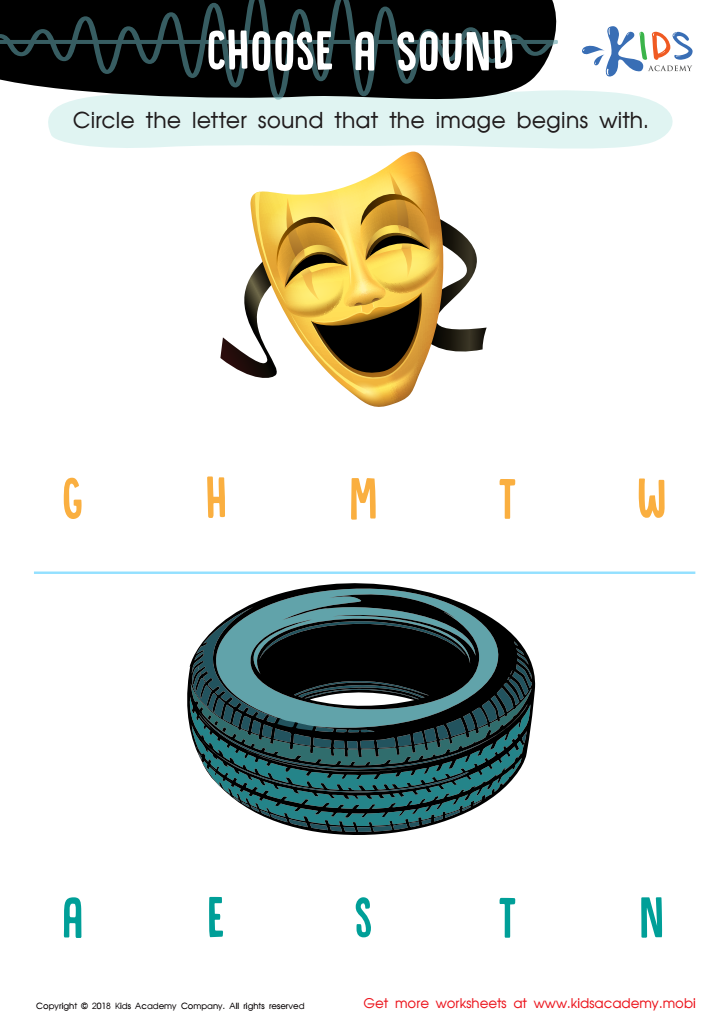
Choose a Sound Worksheet
Help your child hone pre-reading skills with this colorful worksheet! They'll practice tracing letter sounds, develop phoneme awareness, and gain confidence. Plus, it's a fun way to work on their fine motor skills.
 Assign to My Students
Choose a Sound Worksheet
Worksheet
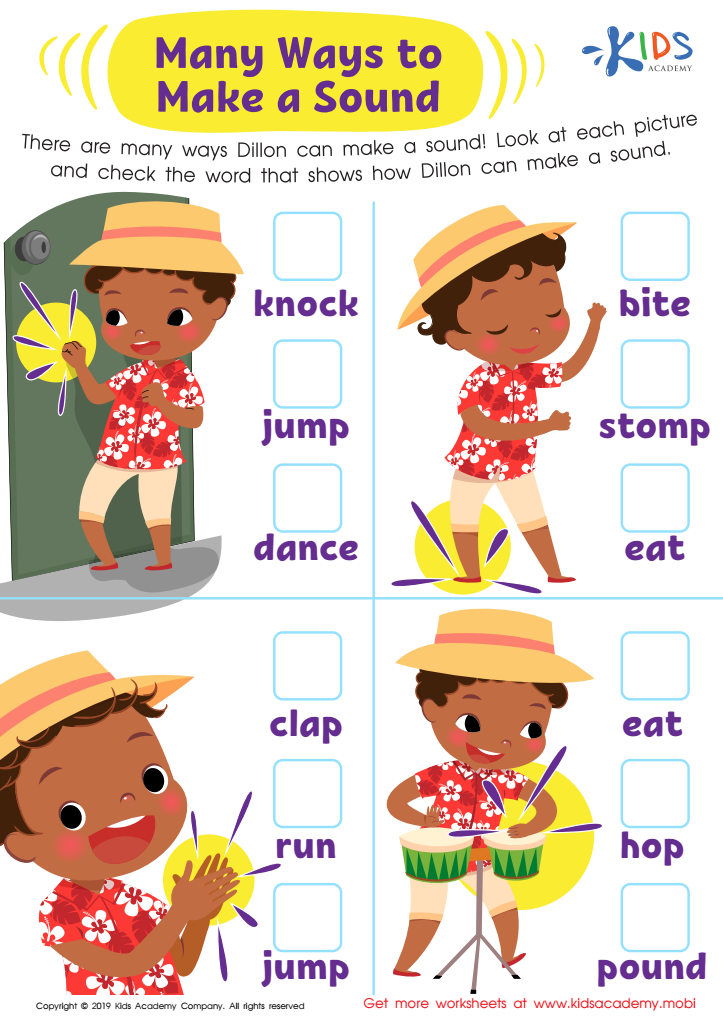
Many Ways to Make a Sound Worksheet
This interactive worksheet encourages creativity and imagination as kids use picture clues to match sound words. It helps them identify the sound methodology and build fine motor skills. Plus, with learning through play, they'll develop stronger vocabularies without even knowing it!
Many Ways to Make a Sound Worksheet
Worksheet
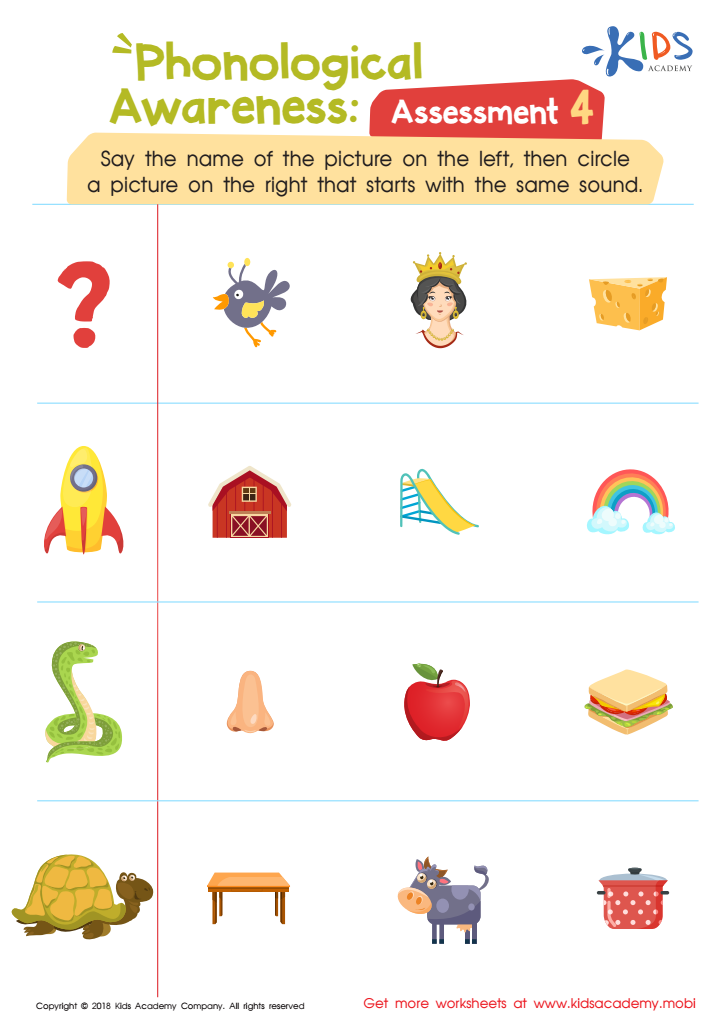
Phonological Awareness: Assessment 4 Worksheet
It can be tricky for young readers to differentiate between sounds in words. Make it fun with this downloadable worksheet! Ask your child to name each picture on the left and match the starting sound with an image on the right. This helps assess their phonics skills and make learning enjoyable.
Phonological Awareness: Assessment 4 Worksheet
Worksheet
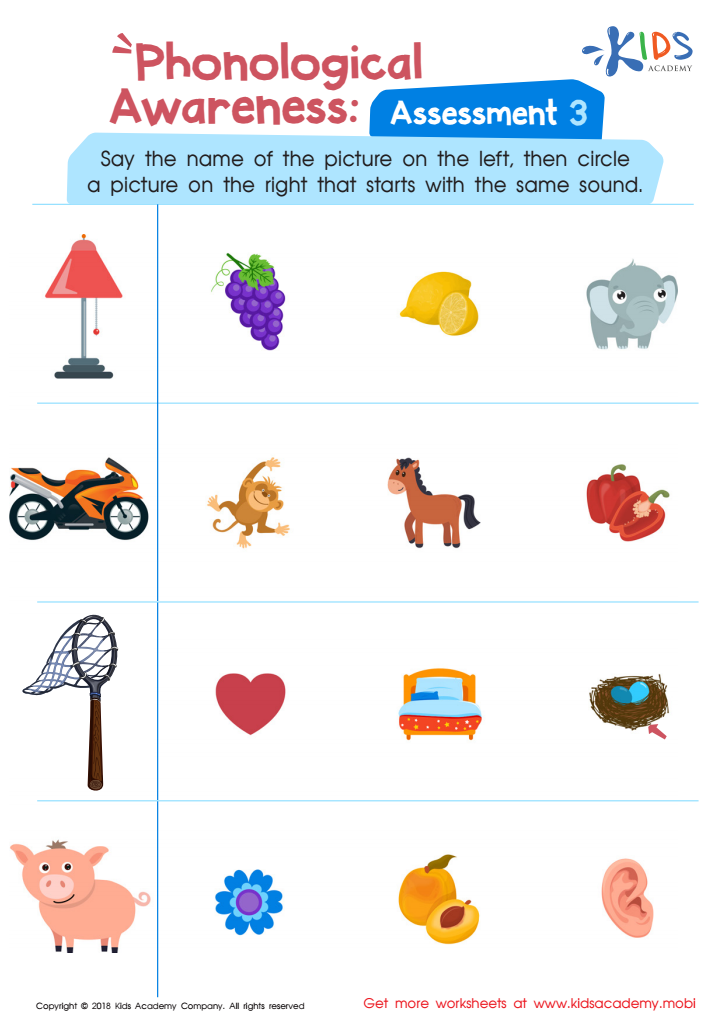
Phonological Awareness: Assessment 3 Worksheet
Test kids' reading readiness with a phonological awareness worksheet! With this PDF exercise, encourage children to name each picture aloud and match left to right. Help them learn to recognize word sounds at the start, middle and end of words. They'll be sure to remember that lamp doesn't sound like elephant!
Phonological Awareness: Assessment 3 Worksheet
Worksheet
Join Kids Academy for Free
Who is primarily going to use this learning content?




Listening skills and elementary phonics are foundational pillars in the educational development of children ages 5-9. During these formative years, children's brains are like sponges, rapidly absorbing information, and how well they grasp basic phonetics significantly impacts their reading and communication skills.
Listening skills are critical as they directly influence a child's ability to understand and process information. By actively listening, children develop better attention spans, comprehension, and can follow directions more accurately, all of which are crucial for classroom success.
Elementary phonics plays a key role in helping children decode words by understanding sound-letter patterns. Proficient phonics skills empower children to read fluently, which is essential for academic achievement across all subjects. Reading is not only about recognizing words but also about making meaning from text; a firm grasp of phonics aids in this comprehension process.
Furthermore, strong listening and phonics abilities contribute positively beyond academics. They enhance communication skills, build confidence, and spur a lifelong love for reading. Whether they're interacting with teachers, parents, or peers, effective communication significantly enriches a child's social experiences and builds foundational skills for future learning.
Investing time and effort into developing these skills sets children on a trajectory for continued academic success, effective communication, and enriched personal growth.







