Phonics Skills Elementary Phonics Worksheets for Ages 5-9
4 filtered results
-
From - To
Discover our engaging Phonics Skills Worksheets designed specifically for children aged 5-9! These printable resources provide an interactive way to enhance phonemic awareness, support letter-sound recognition, and improve early reading skills. Each worksheet is crafted to make learning fun with colorful graphics and diverse activities that appeal to young learners. From matching sounds to parsing simple words, our worksheets cater to various learning styles and help build a solid foundation for literacy. Perfect for teachers and parents alike, these worksheets are an essential tool in developing essential phonics skills and fostering a love for reading in young children. Explore today!
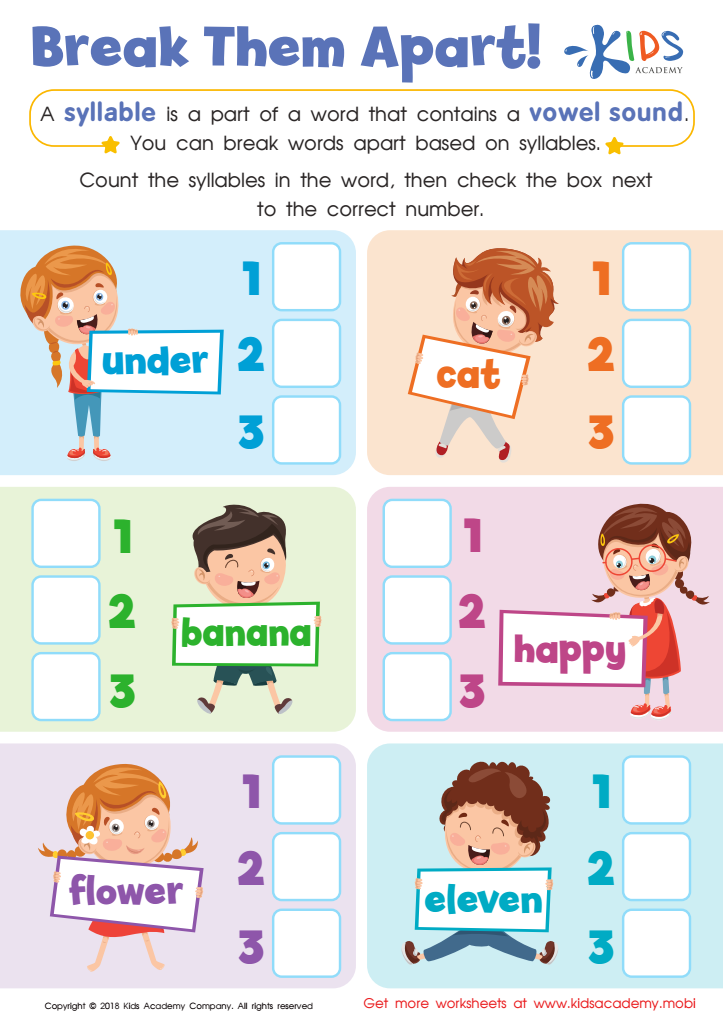
Reading: Break Them Apart Worksheet
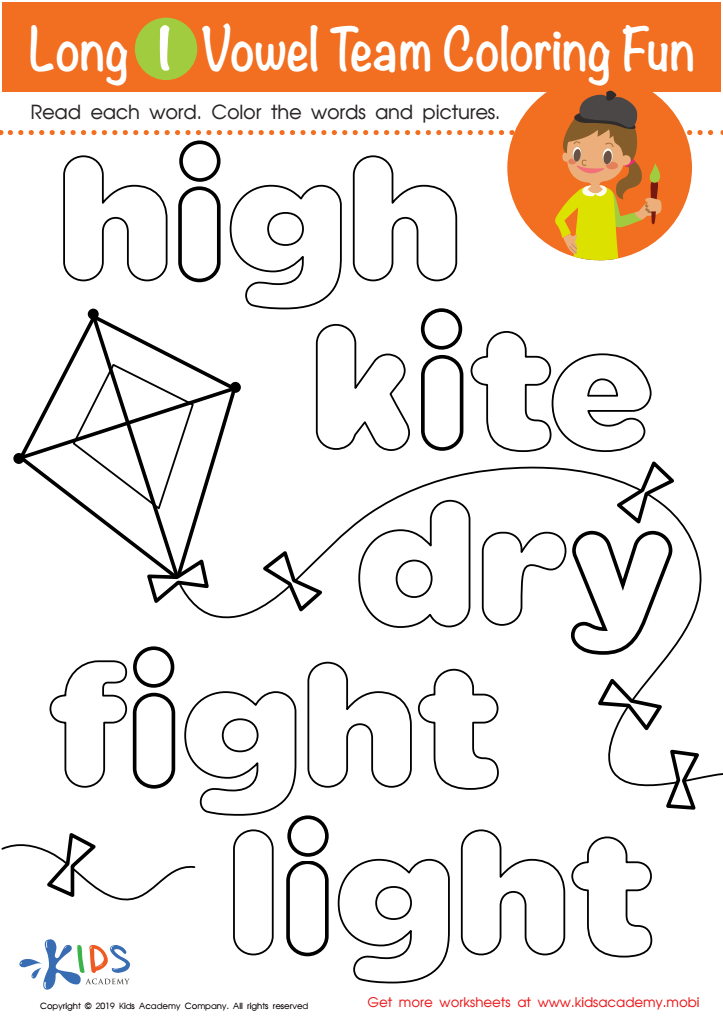
Long I Vowel Team Coloring Worksheet
 Assign to My Students
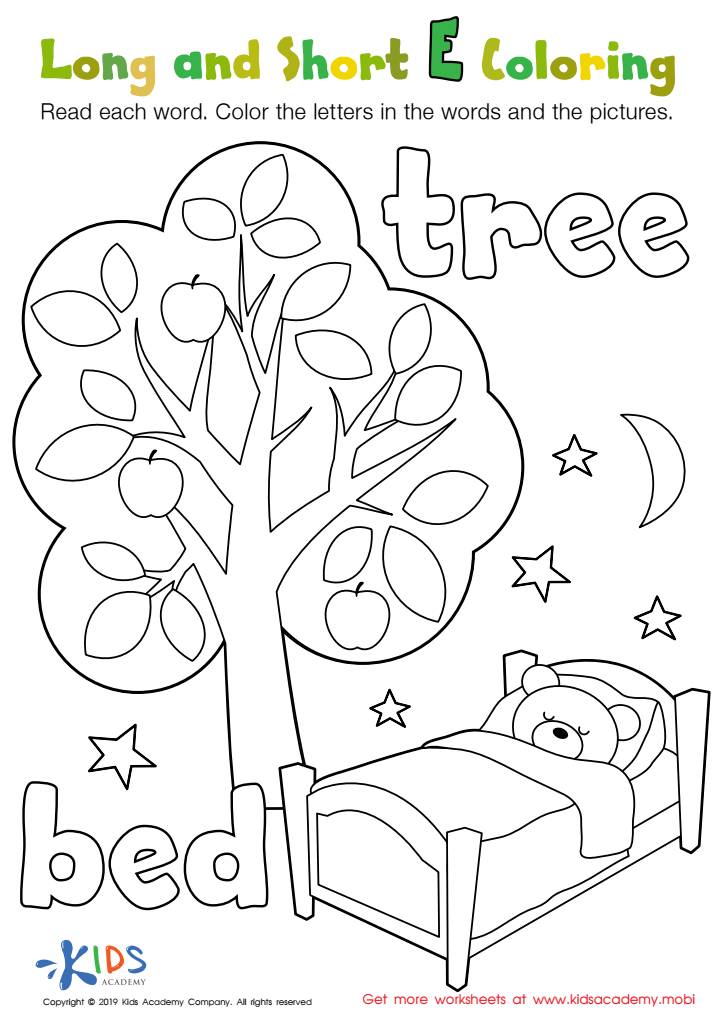
Long and Short E Worksheet
Assign to My Students
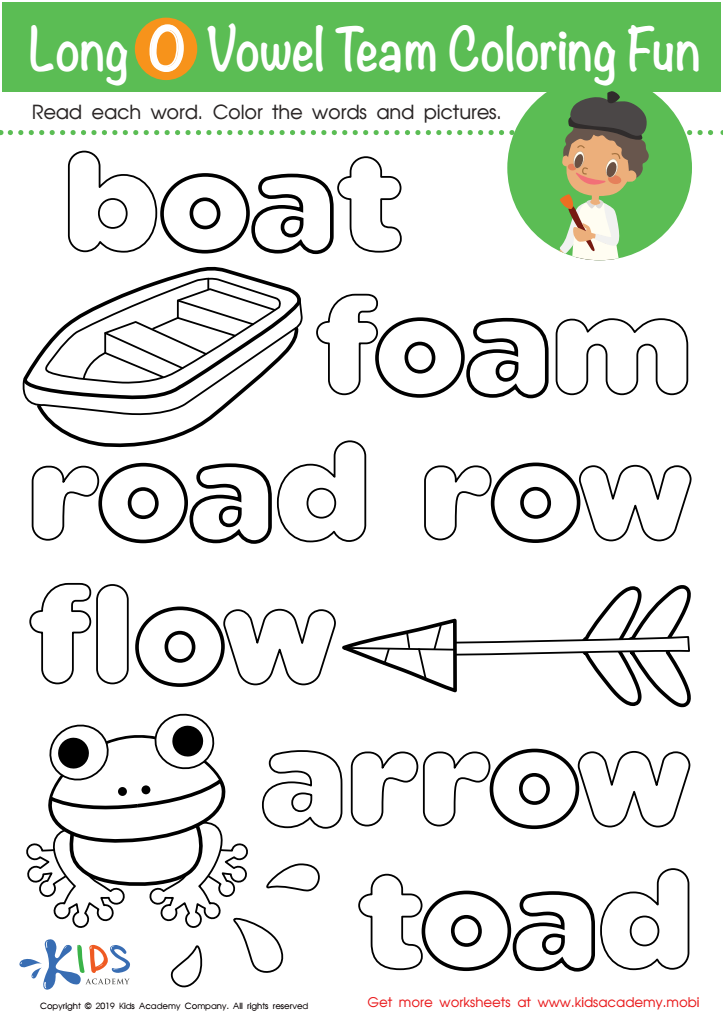
Long O Vowel Team Coloring Worksheet
Assign to My Students




Parents and teachers should prioritize phonics skills for children aged 5-9 as they play a crucial role in early literacy development. Phonics, the connection between sounds and letters, serves as the foundation for reading and writing. Understanding phonics helps children decode words, enhance their reading fluency, and build their vocabulary. Strong phonics skills enable students to tackle unfamiliar words confidently, promoting a love for reading and learning.
Moreover, proficiency in phonics directly correlates with academic success. Children with solid phonics skills tend to perform better in school, as reading is fundamental across all subjects. These early literacy skills are essential for developing critical thinking and comprehension abilities, preparing children for higher-level concepts as they progress through their education.
Furthermore, phonics instruction supports struggling readers who may need more targeted assistance. Early intervention through phonics can bridge gaps in skills, enabling children to catch up to their peers and fostering a sense of achievement. By fostering these skills, parents and teachers contribute to a child’s self-esteem and lifelong learning journey, laying the groundwork for their future academic and personal success. Investing time in phonics now can yield significant long-term benefits in a child’s educational trajectory.







