Sound identification Elementary Phonics Worksheets for Ages 5-9
4 filtered results
-
From - To
Discover our engaging Sound Identification Elementary Phonics Worksheets, crafted for children aged 5-9. These interactive resources are designed to enhance phonemic awareness, an essential prerequisite for reading success. Each worksheet introduces young learners to various sounds, helping them recognize different phonetic elements through fun activities and vibrant illustrations. Students will practice identifying initial, medial, and final sounds, reinforcing their reading skills in an enjoyable way. Perfect for classroom use or at-home learning, our worksheets foster a love for learning and improve sound recognition, laying a solid foundation for lifelong literacy. Explore our collection today and empower your child's reading journey!
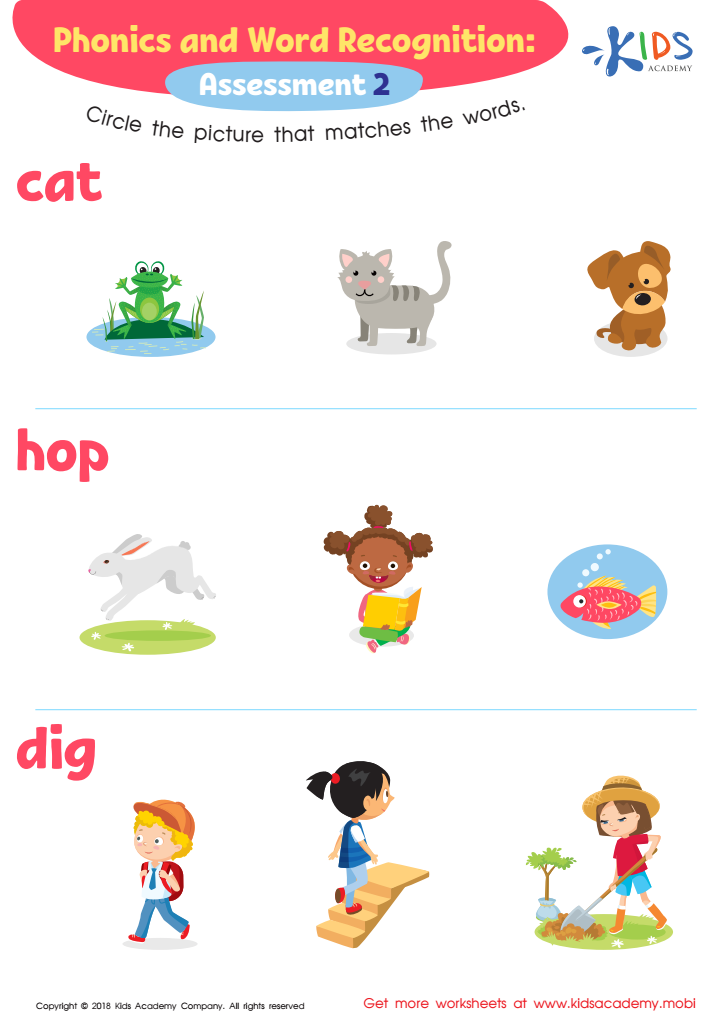
Phonological Awareness: Assessment 2 ELA Worksheet
 Assign to My Students
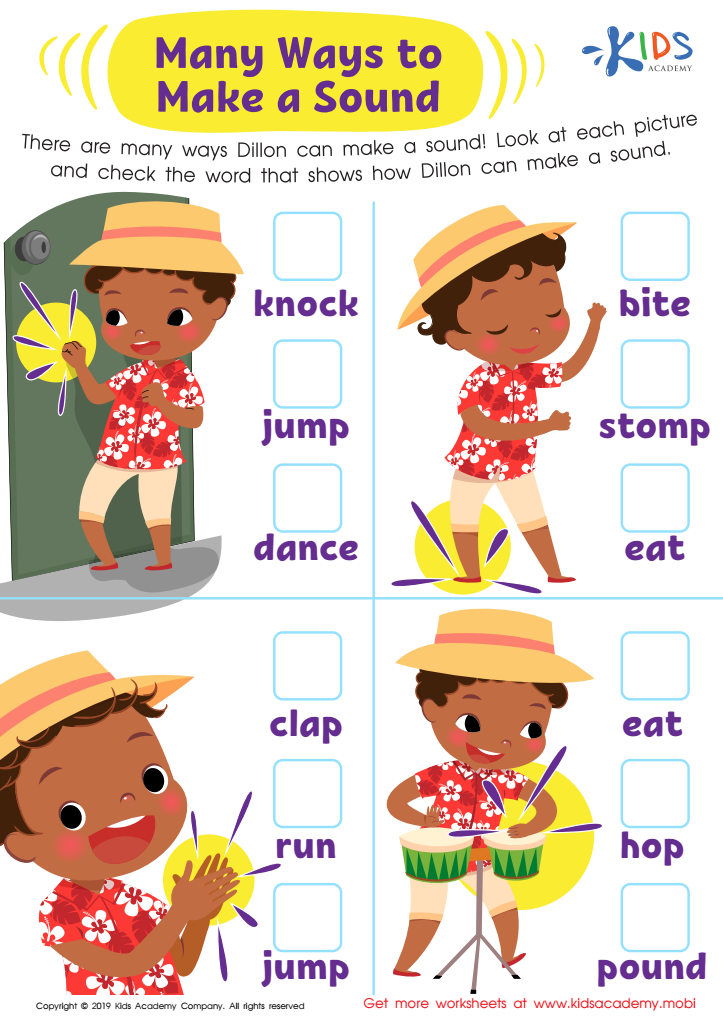
Many Ways to Make a Sound Worksheet
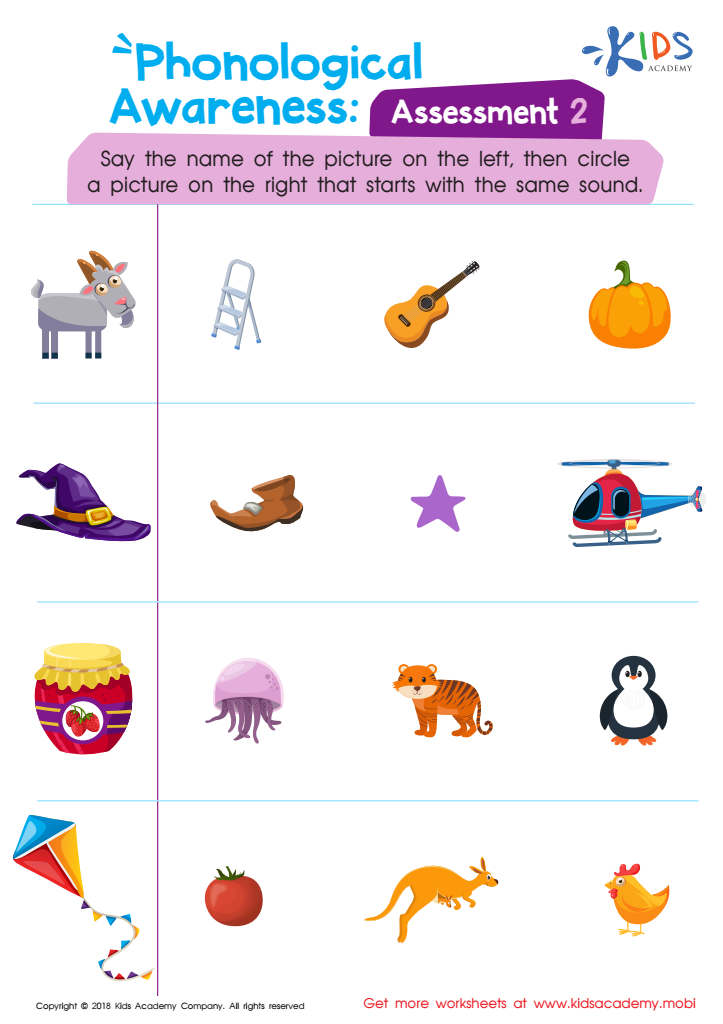
Phonological Awareness: Assessment 2 Worksheet
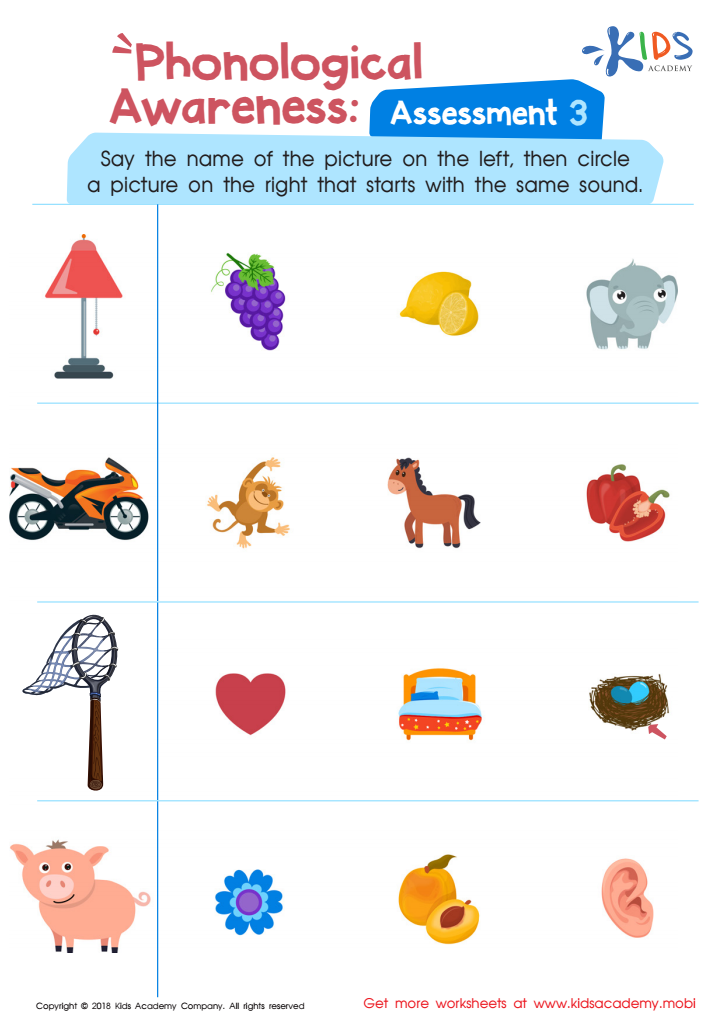
Phonological Awareness: Assessment 3 Worksheet




Sound identification in Elementary Phonics is crucial for children ages 5-9 as it lays the foundation for their reading and writing skills. At this age, children are developing their language abilities, and recognizing sounds helps them understand the connection between letters and their corresponding phonetic sounds. This skill, often referred to as phonemic awareness, is fundamental for decoding words, which is essential for reading fluency.
Teachers and parents should care about sound identification because it directly impacts a child’s ability to read and communicate effectively. By mastering sound identification, children gain confidence, allowing them to explore more complex texts and develop a love for reading. Furthermore, strong phonics skills have been linked to higher academic success and can reduce the likelihood of literacy-related struggles later in life.
Additionally, sound identification can enhance children's listening skills, critical thinking, and vocabulary development. When parents and teachers engage in phonics activities, they support the holistic growth of their child's cognitive abilities. Encouraging fun and interactive phonics practices at home or in the classroom fosters a supportive learning environment, promoting collaboration and enthusiasm for learning, setting the stage for lifelong literacy.







