Vocabulary development Elementary Phonics Worksheets for Ages 5-9
4 filtered results
Difficulty Level
Grade
Age
-
From - To
Subject
Activity
Standards
Unlock your child's reading potential with our Vocabulary Development Elementary Phonics Worksheets, perfect for ages 5-9. These expertly designed worksheets from Kids Academy focus on enhancing key phonics skills such as decoding, sound recognition, and word formation. Through engaging activities and vibrant illustrations, children will expand their vocabulary while solidifying fundamental reading concepts. Our worksheets are tailored to meet the learning needs of young readers, offering a fun and effective way to build a strong vocabulary foundation. Give your child the tools to succeed in reading with these essential educational resources. Start their literacy journey today!
Favorites
With answer key
Interactive
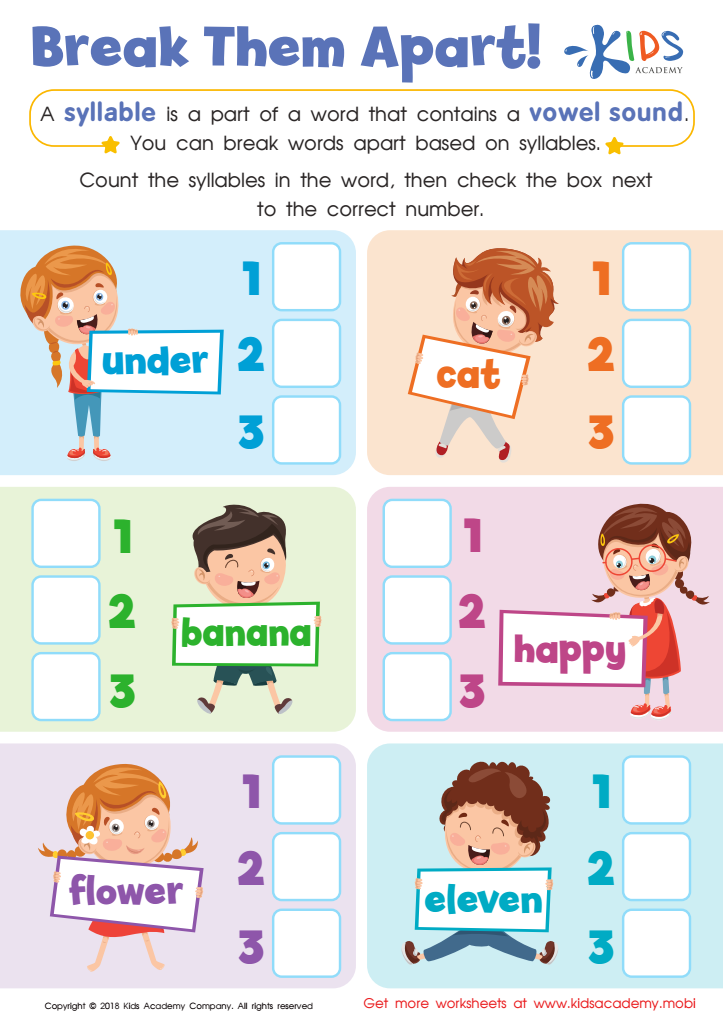
Reading: Break Them Apart Worksheet
See if students understand syllables with this fun worksheet. It teaches them that a syllable is a word part with a vowel sound. Kids read each word and choose how many parts it has. Doing this often helps them decode new words and gain confidence.
 Assign to My Students
Reading: Break Them Apart Worksheet
Worksheet
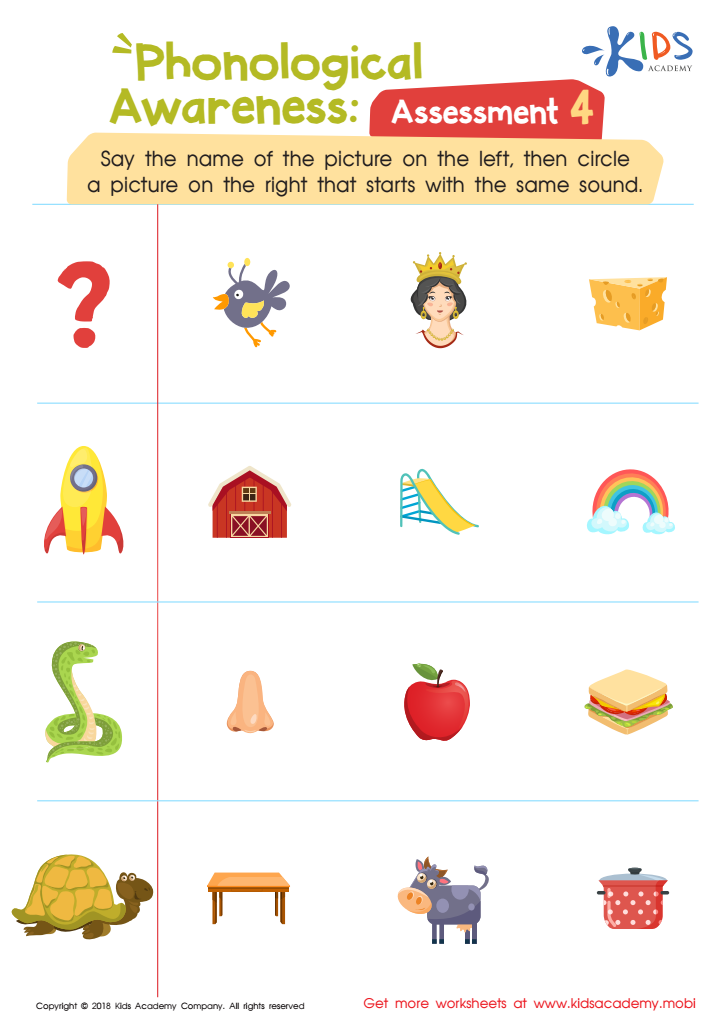
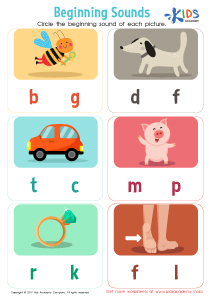
Phonological Awareness: Assessment 4 Worksheet
It can be tricky for young readers to differentiate between sounds in words. Make it fun with this downloadable worksheet! Ask your child to name each picture on the left and match the starting sound with an image on the right. This helps assess their phonics skills and make learning enjoyable.
Phonological Awareness: Assessment 4 Worksheet
Worksheet
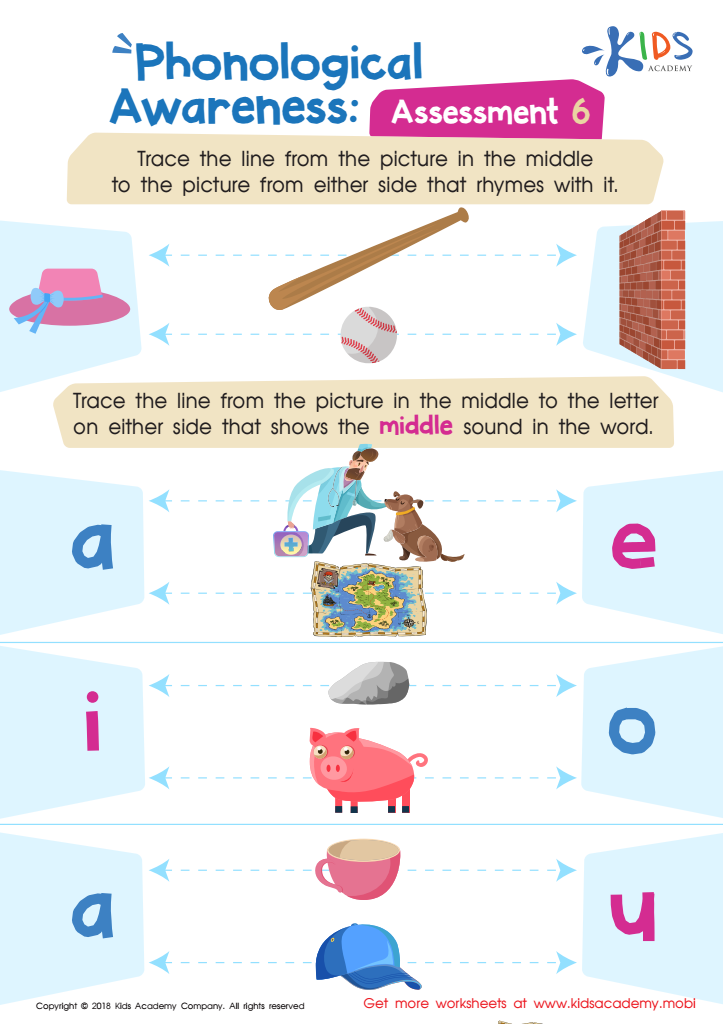
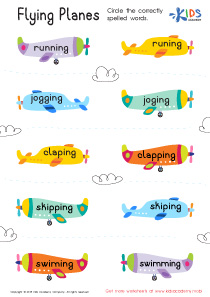
Phonological Awareness: Assessment 6 Worksheet
Check your child's ability to recognize middle word sounds using this free worksheet. Help them learn phonics by practicing with rhyming. Trace the line from the image to its rhyming match then encourage them to name each image aloud to identify which letter matches the sound. It's a great way to assess letter and sound recognition.
Phonological Awareness: Assessment 6 Worksheet
Worksheet
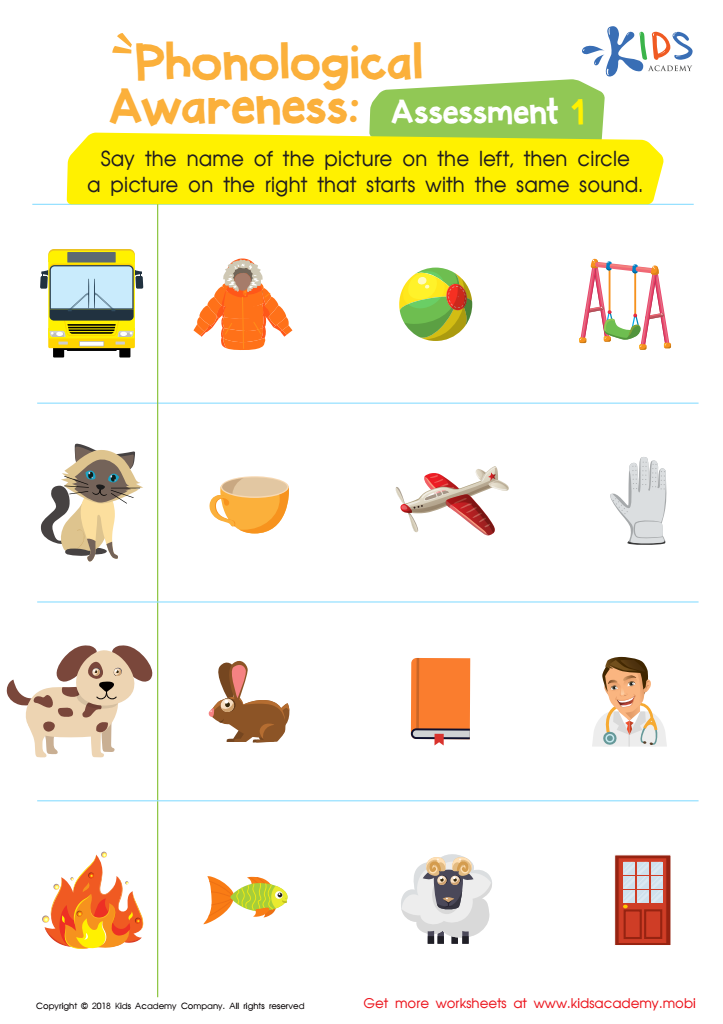
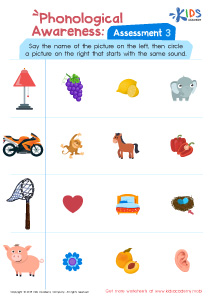
Phonological Awareness: Assessment 1 Worksheet
This worksheet helps kids build key phonics skills for pre-reading. They say each picture name aloud, focusing on the starting sound. Then, they match the sound with an image in the same row. Use as a checkpoint for kindergarten or grade 1 phonics readiness.
Phonological Awareness: Assessment 1 Worksheet
Worksheet
Join Kids Academy for Free
Who is primarily going to use this learning content?




Vocabulary development and elementary phonics are fundamental components of early childhood education, and their importance cannot be overstated for children aged 5-9. During these formative years, a child’s language and literacy skills form the foundation for future academic success and effective communication.
Vocabulary development enhances a child's ability to comprehend and engage with texts. A rich vocabulary allows children to express their thoughts and emotions more clearly, engage in meaningful conversations, and understand instructions and stories. When children encounter new words, they are more likely to grasp complex concepts and ideas, promoting critical thinking and creativity.
Phonics, which involves the relationship between letters and sounds, is crucial for reading proficiency. Mastery of phonics enables children to decode unfamiliar words, making reading a more fluid and less frustrating experience. As children become more confident readers, they are more likely to enjoy reading, leading to a lifelong love of learning and literature.
Together, robust vocabulary and phonics skills underpin academic achievement across subjects, from comprehension in reading to understanding word problems in math. Parents and teachers who prioritize these areas are setting children up for not just educational success, but also enhanced self-esteem and intellectual curiosity. Investing time in vocabulary and phonics during these early years yields significant long-term benefits that impact all facets of a child's life.