Word Recognition Elementary Phonics Worksheets for Ages 5-9
7 filtered results
-
From - To
Welcome to our Word Recognition Elementary Phonics Worksheets page, designed specifically for children aged 5-9. These engaging and fun worksheets help young learners develop essential reading skills by recognizing and understanding words. Our expertly crafted activities promote phonemic awareness, sound and letter association, and vocabulary growth. Perfect for both classroom and home use, these worksheets align with educational standards to ensure your child gets a high-quality, structured learning experience. Boost their confidence and pave the way for reading success with our comprehensive collection of age-appropriate phonics exercises. Empower your child’s literacy journey today!
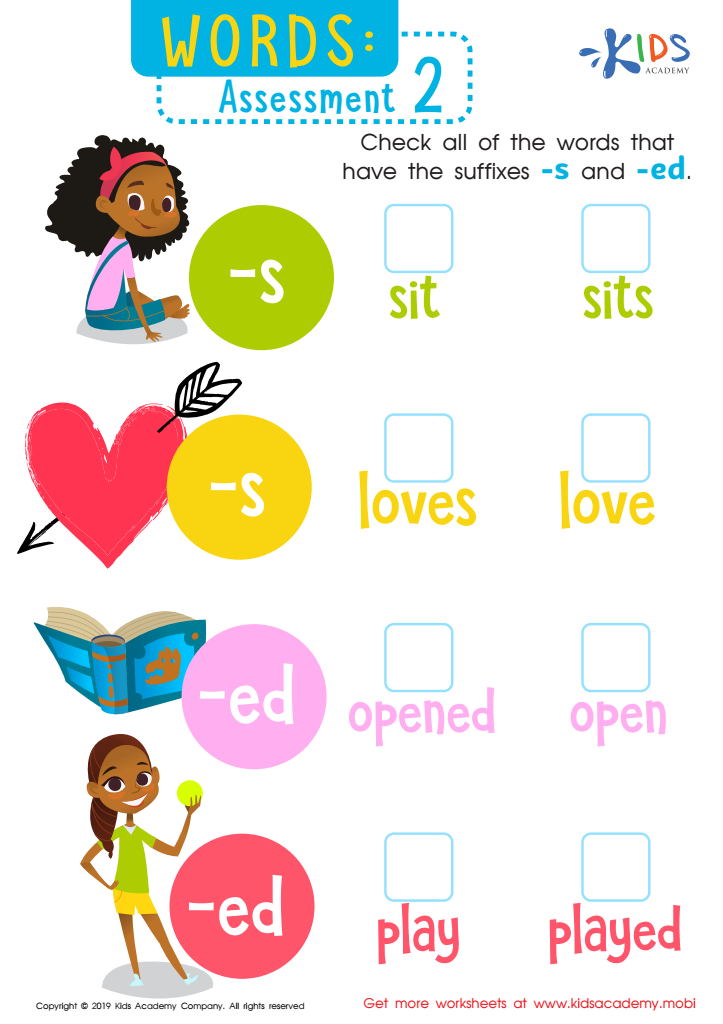
Words: Assessment 2 Worksheet
 Assign to My Students
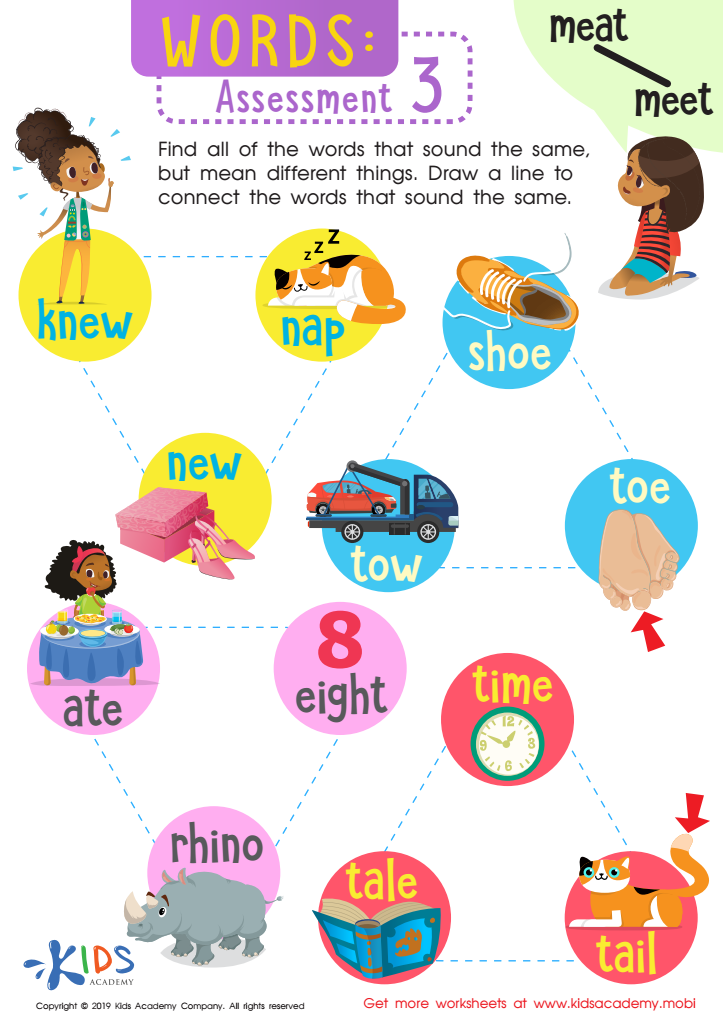
Words: Asessment 3 Worksheet
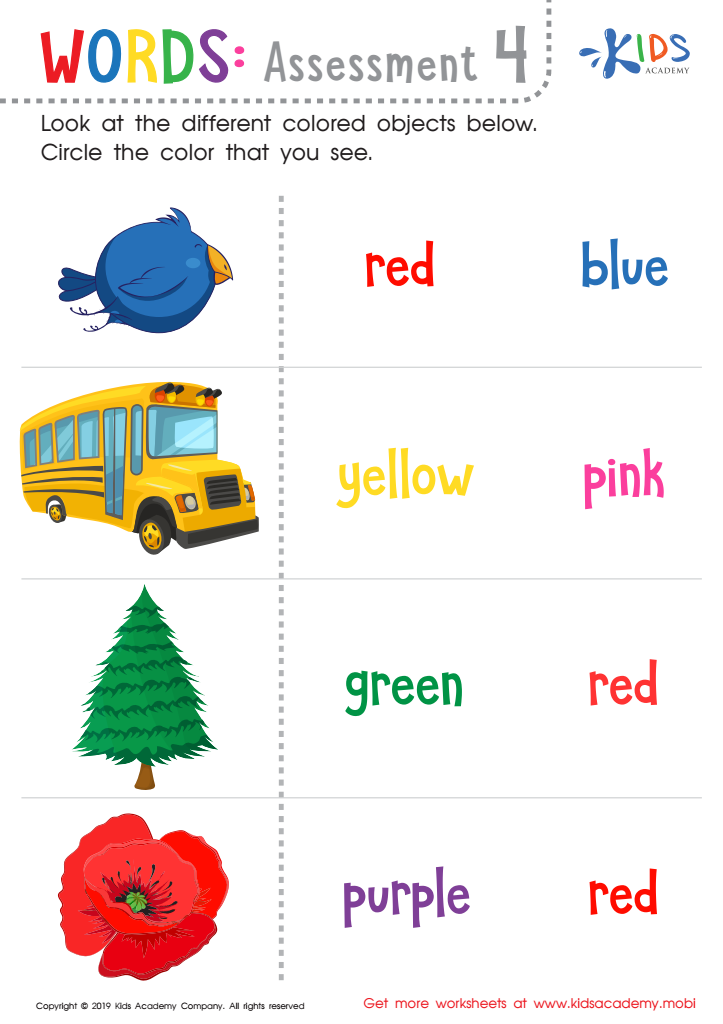
Words: Assessment 4 Worksheet
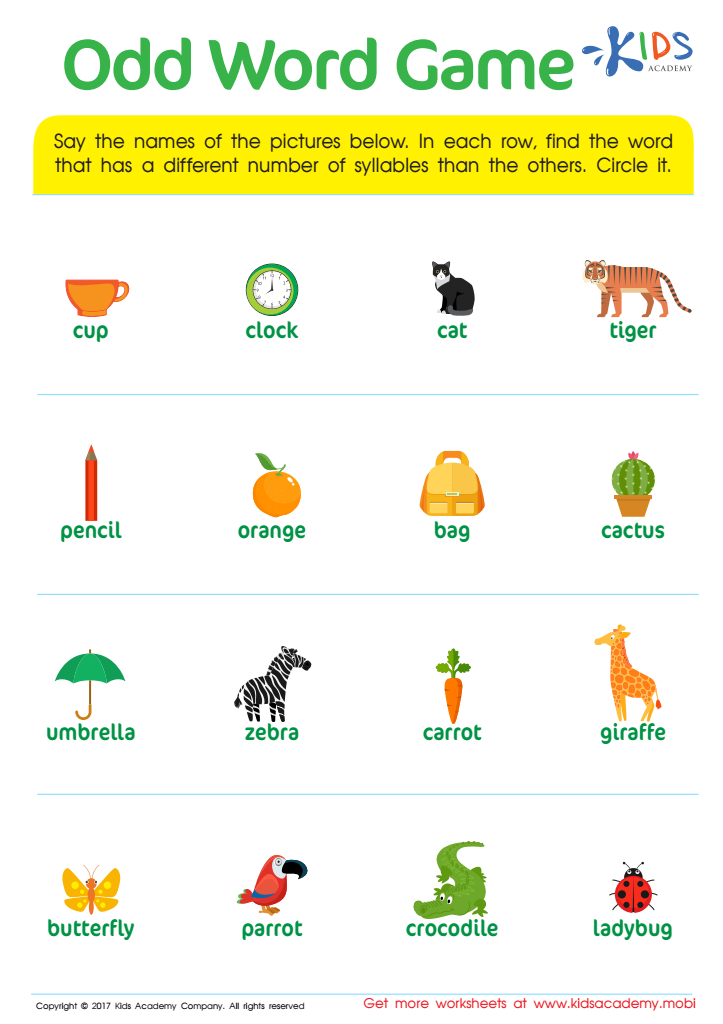
Count Syllables: Odd Word Game Worksheet
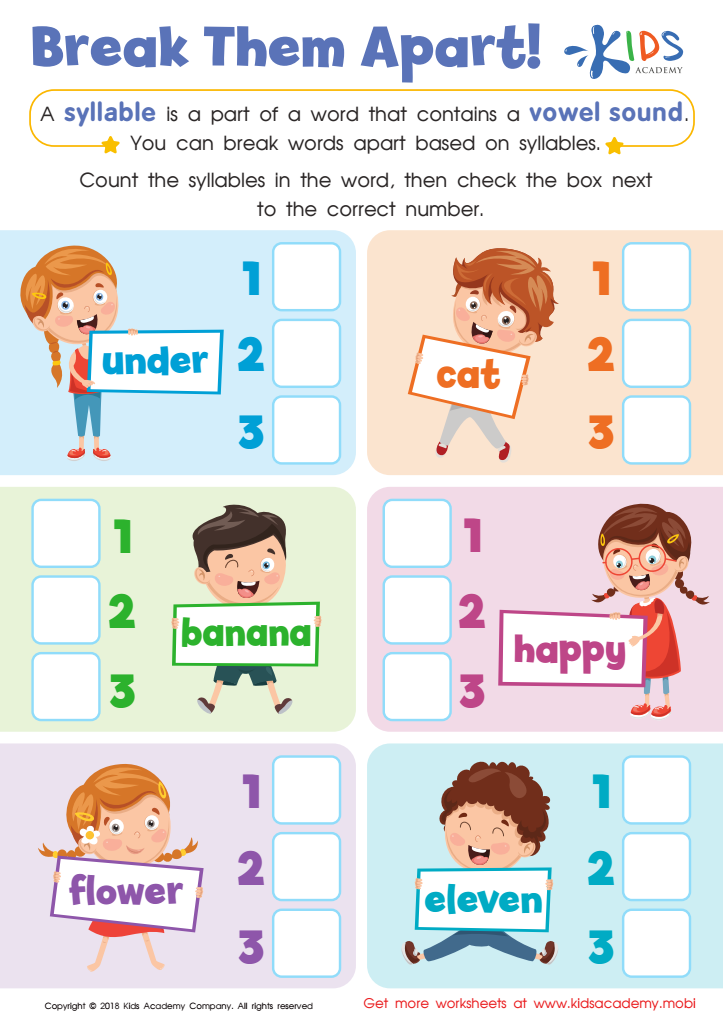
Reading: Break Them Apart Worksheet
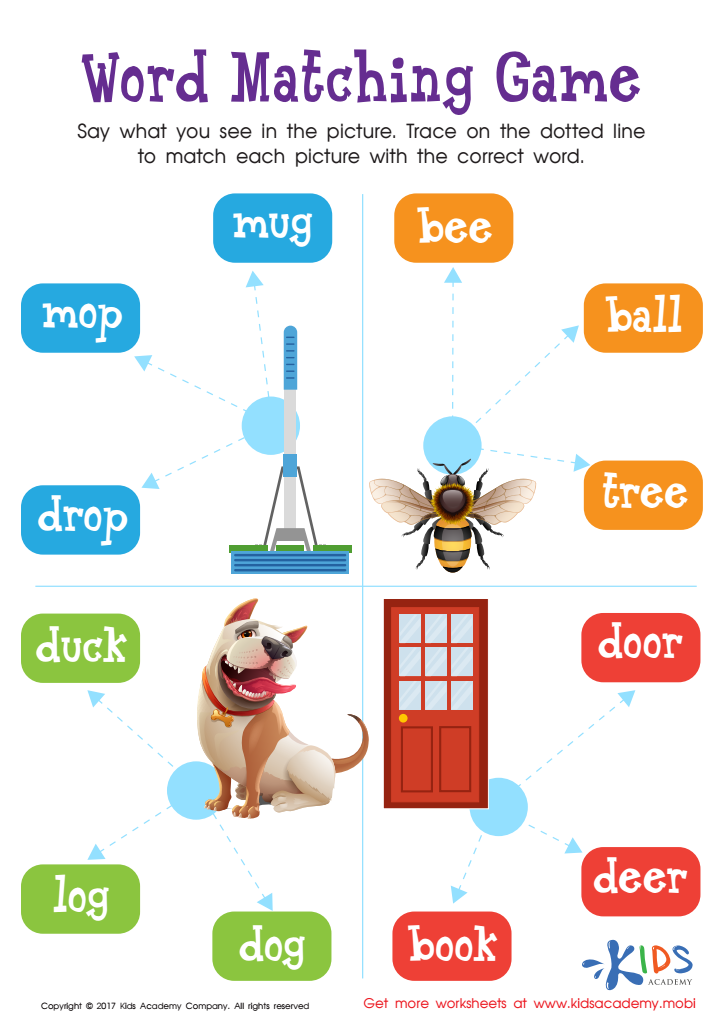
Word Matching Game Worksheet
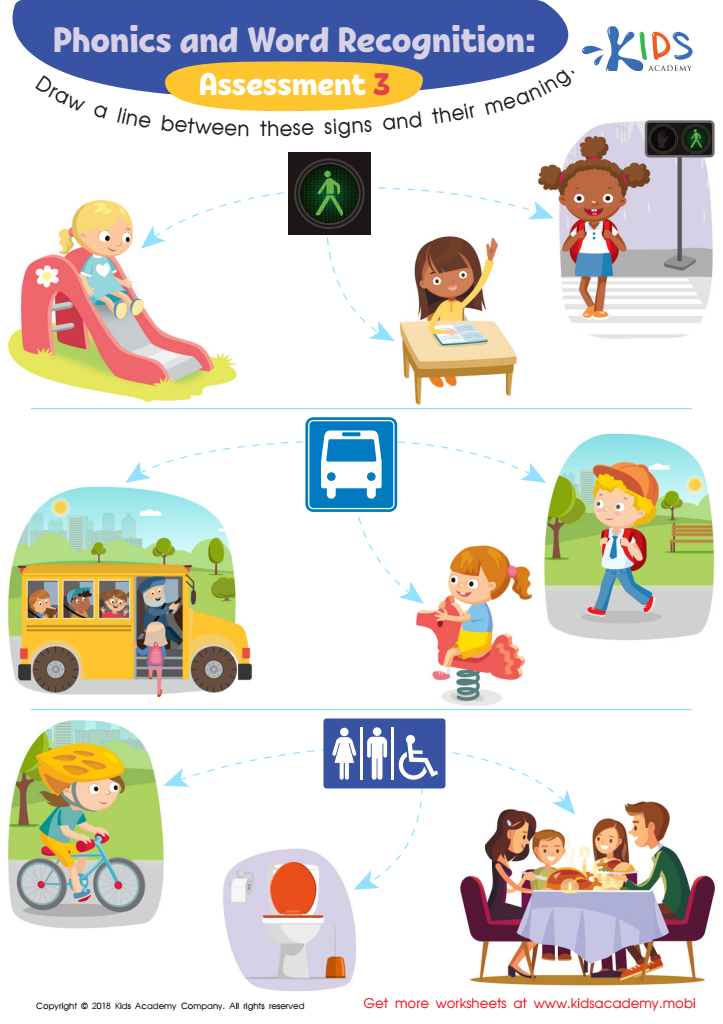
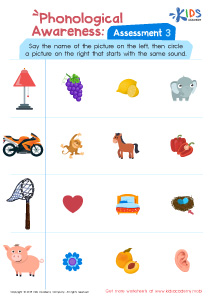
Phonological Awareness: Assessment 3 ELA Worksheet




Parents and teachers should care about word recognition and elementary phonics for children ages 5-9 because these skills serve as foundational pillars for proficient reading and overall literacy development. During these formative years, children's brains are highly receptive to learning new skills, including decoding written language and recognizing patterns in letter-sound relationships.
Word recognition involves the ability to perceive and understand written words quickly and accurately. This skill is crucial because it directly impacts fluency, which in turn influences comprehension. The more effortlessly a child can recognize words, the more mental resources they can divert to understanding the text.
Phonics, on the other hand, teaches the correlation between letters and their sounds, enabling children to decode new words confidently and independently. This systematic approach empowers young readers to tackle unfamiliar words, fostering a sense of achievement and encouraging a positive attitude towards reading.
Furthermore, strong word recognition and phonics skills have a cascading effect on vocabulary development, spelling, and writing abilities. Early mastery of these skills lays the groundwork for academic success across all subjects, enriching children’s educational experiences and opening up endless avenues for lifelong learning. In essence, investing in word recognition and phonics is an investment in a child's future academic prowess and intellectual curiosity.