Alphabetical understanding Alphabet Worksheets for Ages 5-9
4 filtered results
-
From - To
Unlock your child’s potential with our Alphabetical Understanding Alphabet Worksheets, designed for ages 5-9! These engaging worksheets focus on building essential skills in alphabetical order, letter recognition, and phonics. Each activity encourages children to identify, sort, and sequence letters, paving the way for improved reading and writing capabilities. Our user-friendly format allows for easy printing and fun, hands-on learning at home or in the classroom. With a variety of colorful illustrations and interactive exercises, your child will develop literacy skills while enjoying the process. Explore our resources today and give your young learners a confident start on their educational journey!
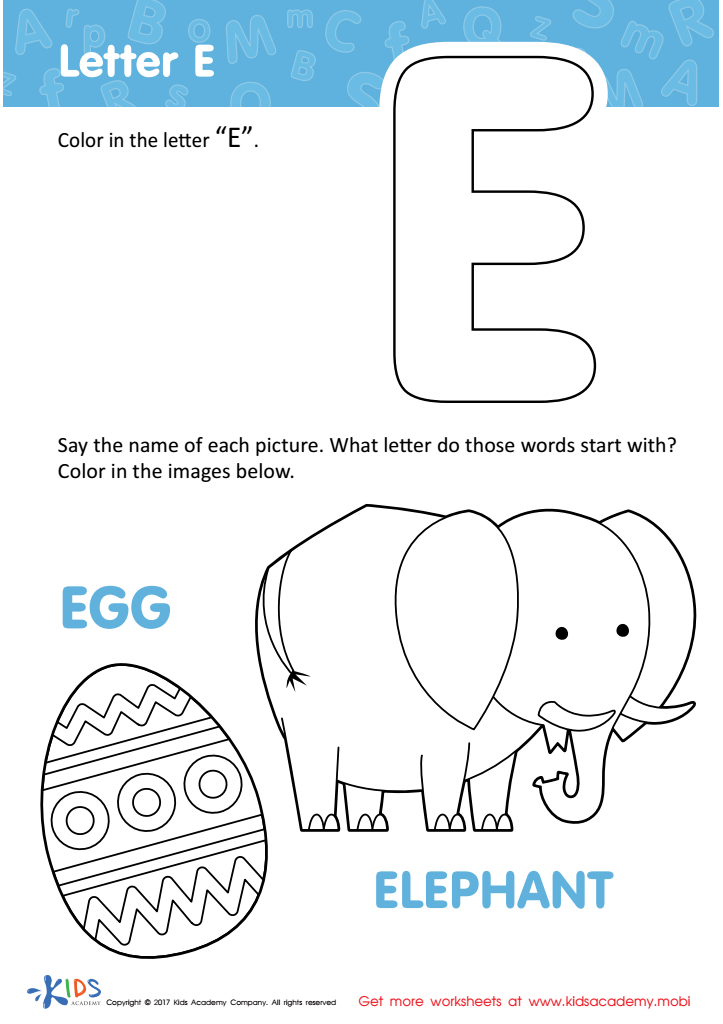
Letter E Coloring Sheet
 Assign to My Students
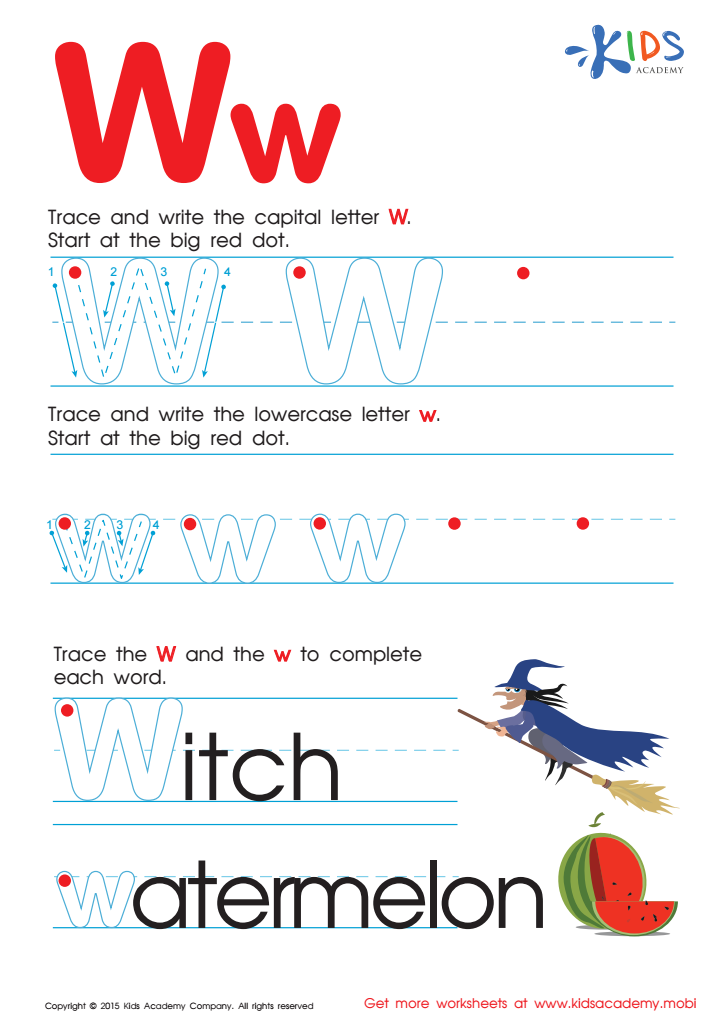
Letter W Tracing Page
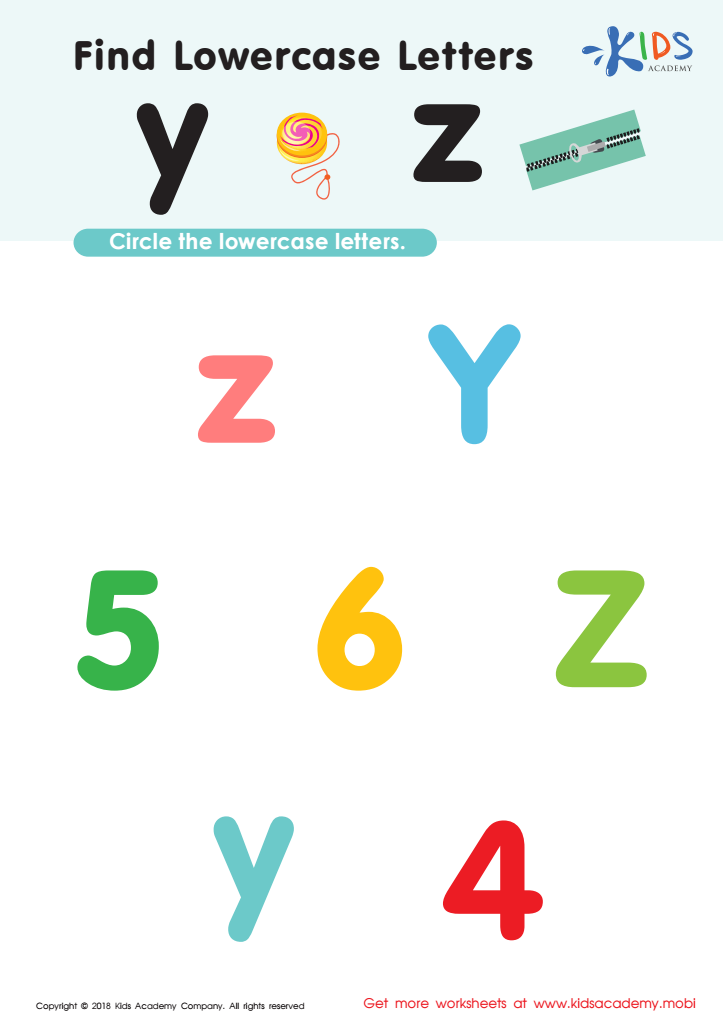
Find Lowercase Letters y z Worksheet
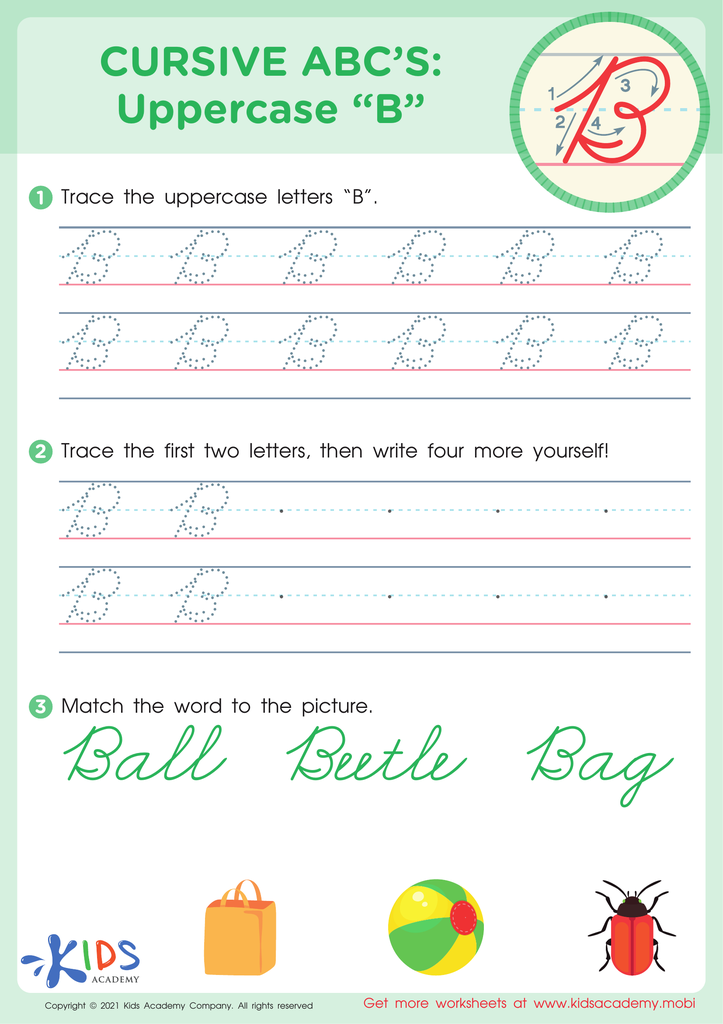
Cursive ABCs: Uppercase B







Understanding the alphabet is a foundational skill that significantly impacts a child's literacy development, especially for ages 5-9. At this age, children are at a crucial stage of learning where they begin to connect letters with their corresponding sounds, helping them decode words. This knowledge is necessary not just for reading but also for writing, spelling, and effective communication.
Parents and teachers play essential roles in nurturing this understanding. Engaging in activities like reading together, singing the alphabet song, and using educational games can reinforce letter recognition and phonics skills. Early, consistent exposure to the alphabet fosters confidence, enhances vocabulary, and sets the groundwork for reading fluency as children progress in their education.
Moreover, strong alphabetic knowledge equips children with the tools to explore their curiosity and understanding of the world around them. An awareness of the alphabet enhances the cognitive processes required for critical thinking and problem-solving. For these reasons, it is vital for parents and teachers to prioritize alphabetical understanding, ensuring that children not only master this key component of literacy but also develop a love for reading that lasts a lifetime. By emphasizing these early skills, adults can significantly impact a child's overall academic journey and lifelong learning.







