Fine motor development Alphabet Worksheets for Ages 5-9
3 filtered results
-
From - To
Explore our engaging Fine Motor Development Alphabet Worksheets for ages 5-9, designed to enhance young learners’ dexterity while they discover the alphabet. These printable worksheets feature fun and interactive activities that promote hand-eye coordination and control, essential skills for writing and drawing. Through tracing letters, coloring exercises, and various hands-on tasks, children will develop confidence in their fine motor skills as they master the fundamentals of letter recognition. Perfect for homeschooling or classroom use, our worksheets encourage playful learning and make the alphabet journey enjoyable. Download today to support your child's developmental milestones with creativity and excitement!
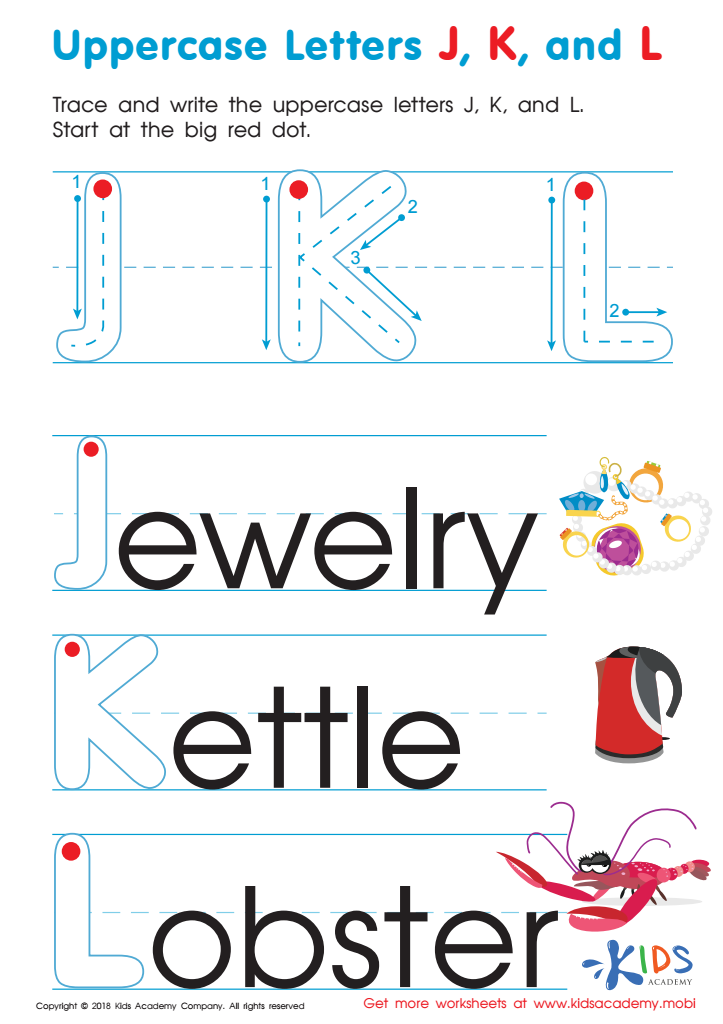
Uppercase Letters J, K, and L Worksheet
 Assign to My Students
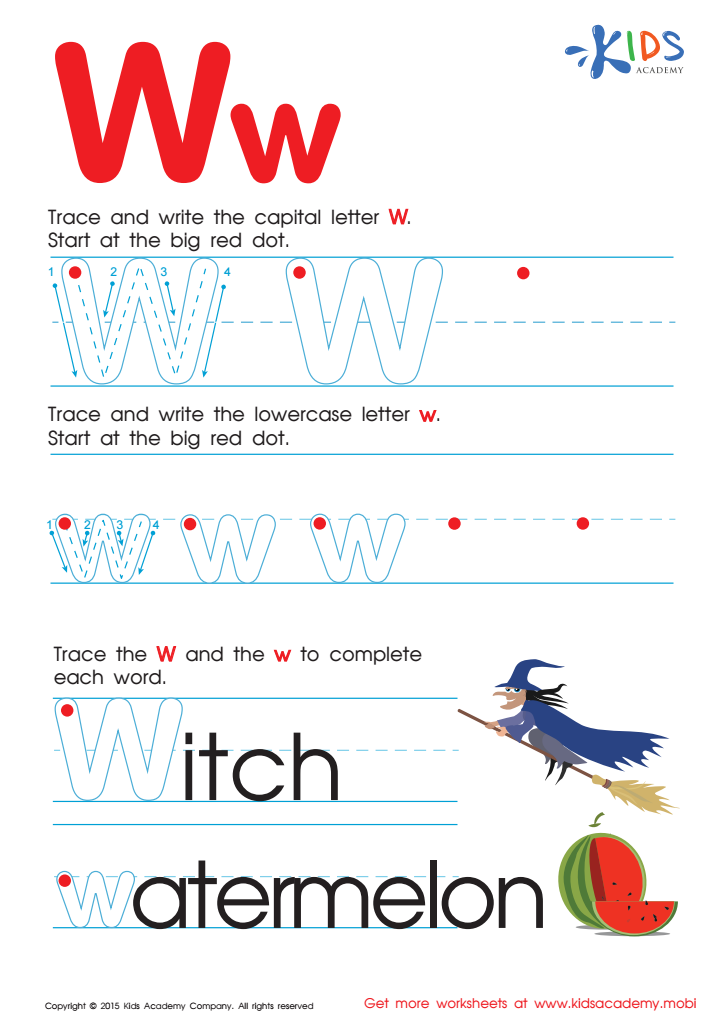
Letter W Tracing Page
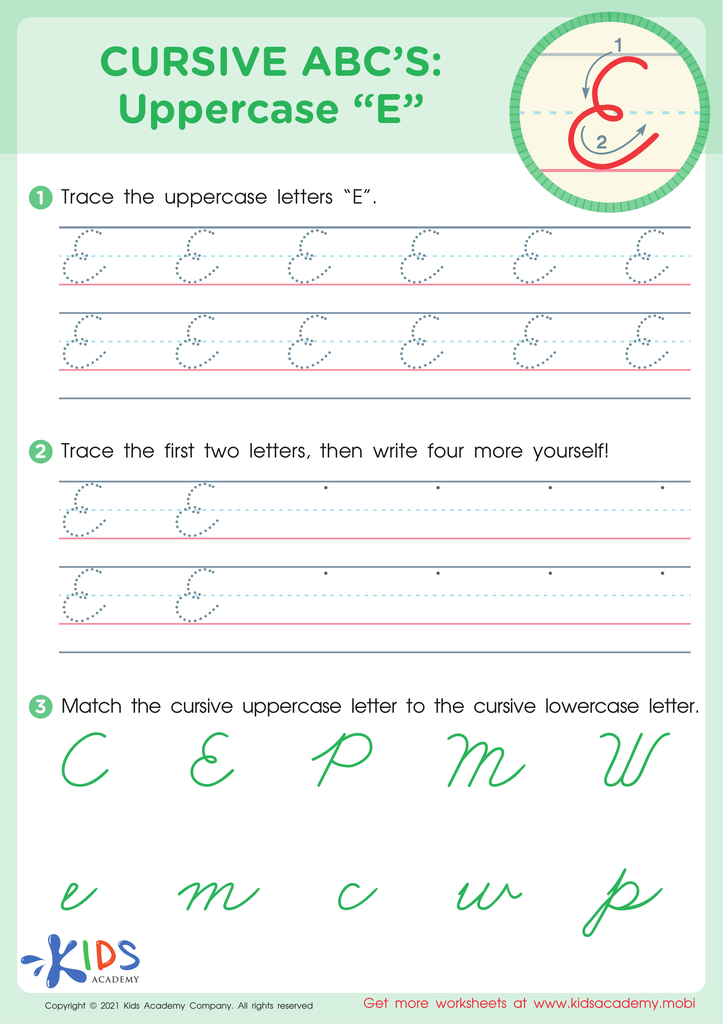
Cursive ABCs: Uppercase E







Fine motor development is crucial for children aged 5-9, as it lays the foundation for various essential skills they will use throughout their lives. This stage is when children refine their hand-eye coordination and dexterity, key for tasks such as writing, drawing, and manipulating small objects. Understanding fine motor concepts related to the alphabet—like how to hold a pencil or cut with scissors—enables young learners to form letters correctly and write neatly, which greatly influences their confidence and academic performance.
Teachers and parents should prioritize fine motor activities because they promote cognitive development by enhancing children's ability to focus and follow instructions. Engaging in activities like clay molding, finger painting, or practicing writing letters also encourages creativity, self-expression, and problem-solving skills. Furthermore, strong fine motor skills are linked to later success in learning, particularly in subjects like mathematics that require precision and attention to detail.
By actively supporting fine motor development during these formative years, parents and educators provide children with the tools they need to succeed academically and beyond, fostering confidence and independent learning as they progress through school. The skills gained during this critical period will serve them well in various future tasks and life experiences.







