Fine motor skills improvement Alphabet Worksheets for Ages 5-9
5 filtered results
-
From - To
Unlock your child's creativity and enhance their fine motor skills with our engaging Alphabet Worksheets, designed specifically for ages 5-9. These worksheets offer fun activities that help children develop essential writing skills while learning the alphabet. From tracing letters to connecting dots, each worksheet encourages hand-eye coordination and boosts dexterity. As kids practice, they'll build confidence in their writing abilities and gain a solid foundation for future learning. Perfect for home or classroom use, our Fine Motor Skills Improvement Alphabet Worksheets are a valuable resource for parents and educators aiming to foster learning through play and hands-on experiences. Start your child's journey today!
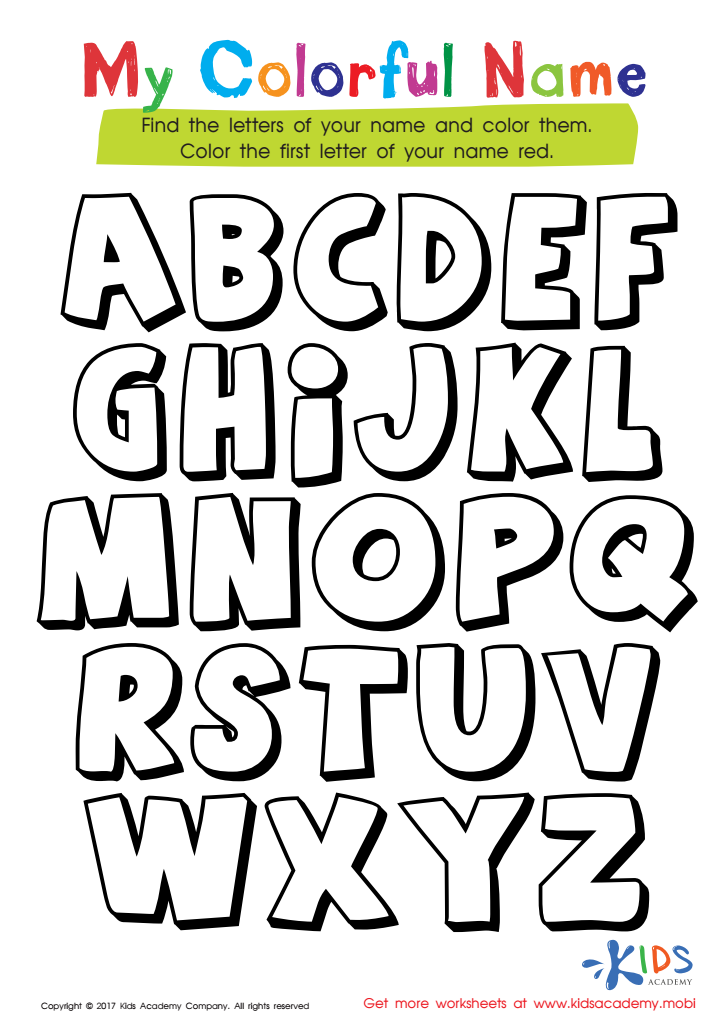
My Colorful Name Worksheet
 Assign to My Students
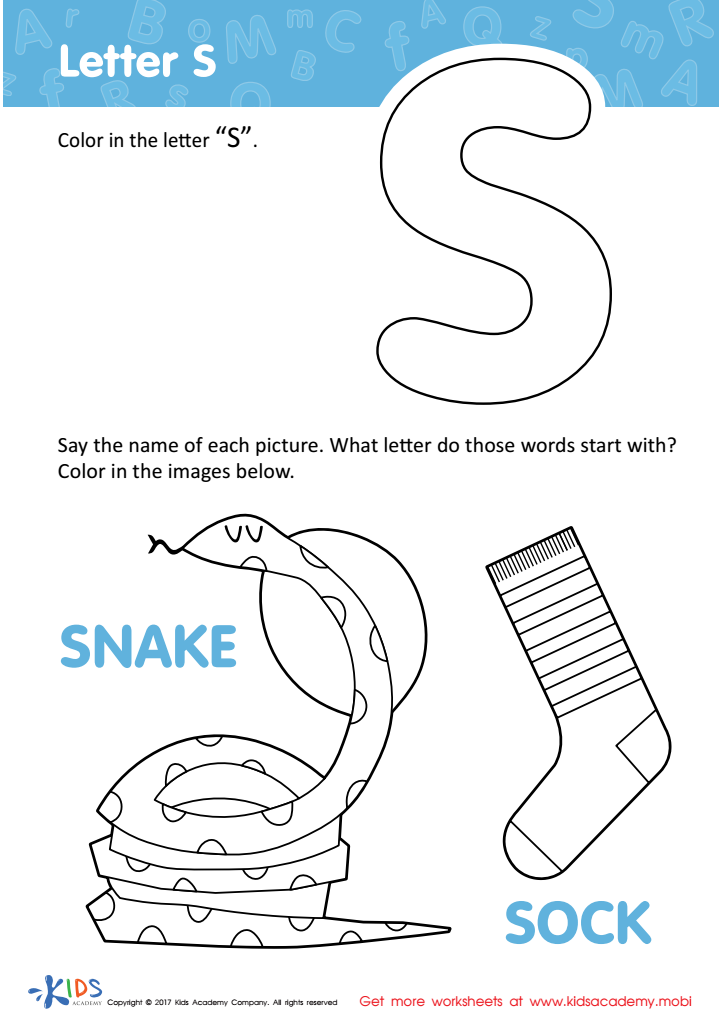
Letter S Coloring Sheet
Assign to My Students
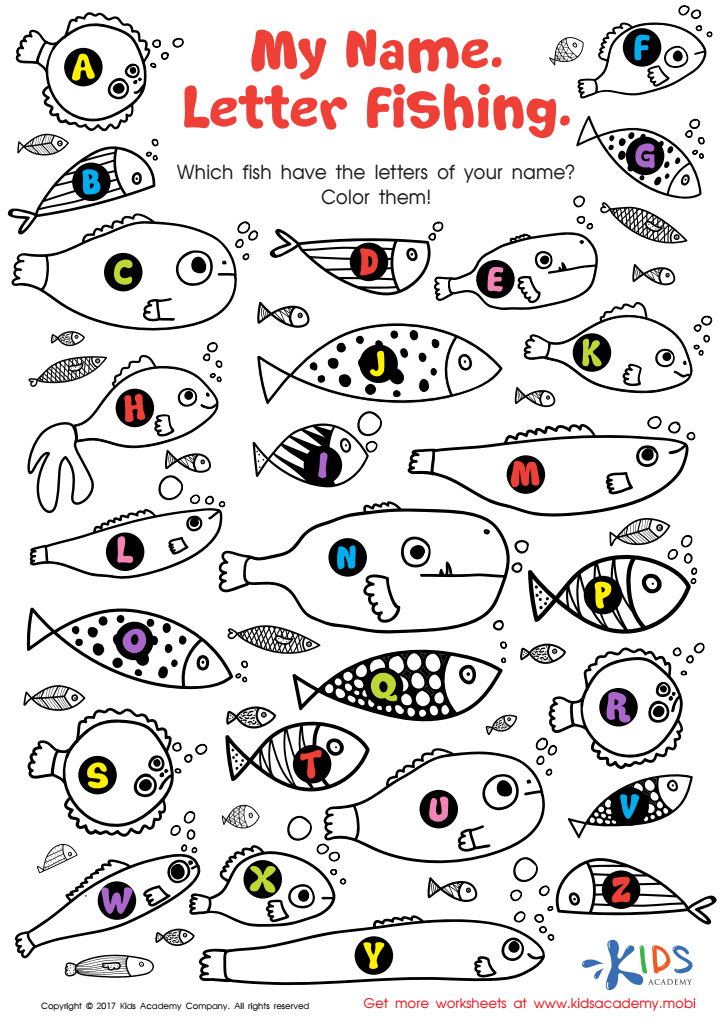
My Name: Letter Fishing Worksheet
Assign to My Students
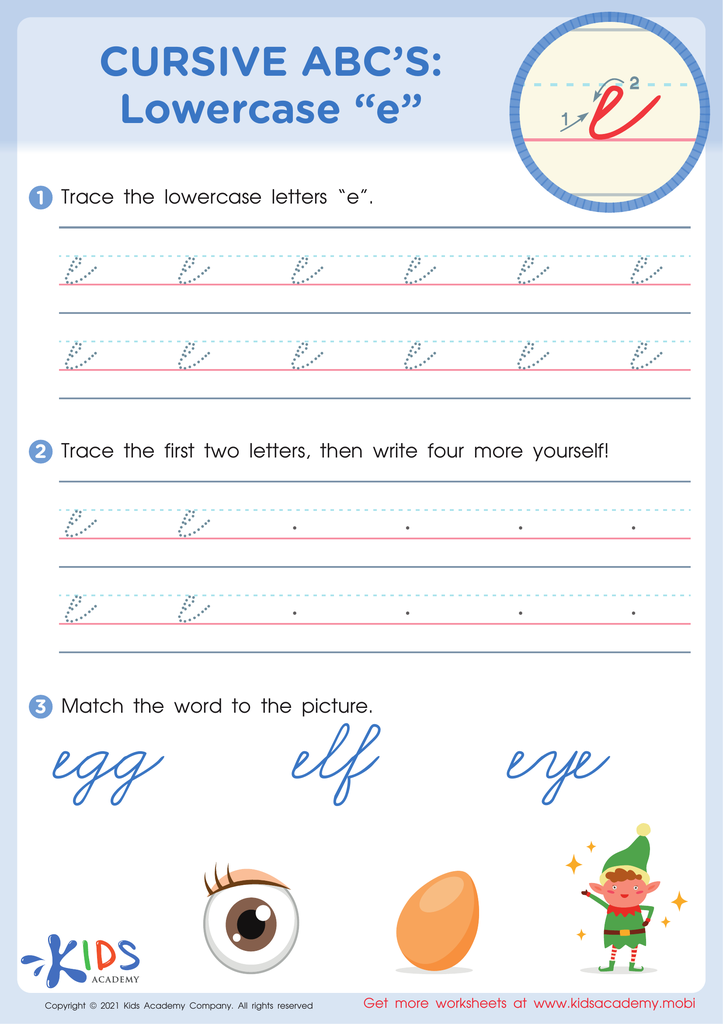
Cursive ABCs: Lowercase e
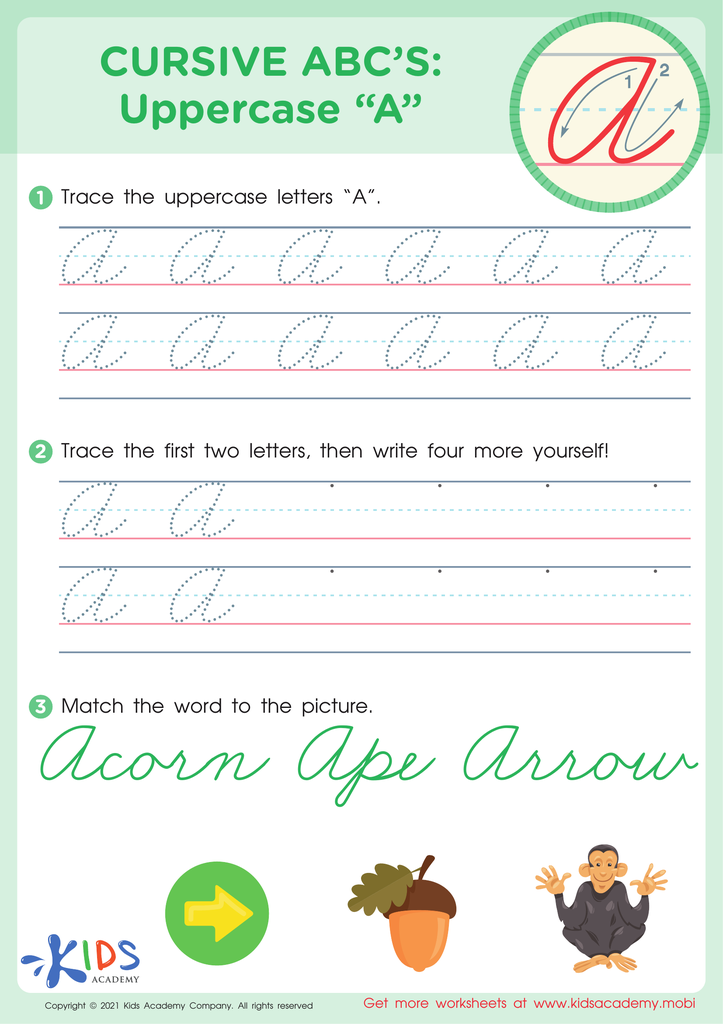
Cursive ABCs: Uppercase A






.jpg)

Fine motor skills are crucial for children's development, especially during the ages of 5 to 9, as they significantly impact learning, academic success, and daily activities. These skills involve the coordination of small muscles, typically in the hands and fingers, allowing children to perform tasks such as writing, drawing, and manipulating objects.
For parents and teachers, nurturing fine motor skills is essential because they lay the foundation for effectively managing the written alphabet. Mastery of letter formation not only supports literacy development but also boosts a child's confidence in their academic abilities. As children improve these skills, they become more adept at expressing their thoughts through writing, which is integral to learning in all subjects.
Additionally, fine motor skills play an essential role in everyday activities such as buttoning shirts, tying shoelaces, and using utensils. Improved coordination fosters independence and self-sufficiency.
By investing time in fine motor skill development, parents and teachers help children unlock their potential. Engaging in activities like crafts, puzzles, and writing exercises can significantly enhance these skills, leading to successful educational experiences and a love for learning. Therefore, prioritizing fine motor skills is a vital aspect of holistic child development.







