Hand-eye Coordination Long Vowels Worksheets for Ages 5-9
3 filtered results
Difficulty Level
Grade
Age
-
From - To
Subject
Activity
Standards
Enhance your child's reading and motor skills with our Hand-eye Coordination Long Vowels Worksheets designed for ages 5-9. These engaging activities seamlessly combine learning with fun, helping young learners recognize long vowels while improving their hand-eye coordination. Ideal for both classroom and home use, our worksheets encourage children to trace, match, and connect letters to form words, reinforcing phonics and fine motor abilities simultaneously. Boost your child's confidence and foundational skills with our expertly crafted resources, ensuring a well-rounded educational experience. Discover the joy of learning and coordination with Kids Academy's trusted worksheets!
Favorites
With answer key
Interactive
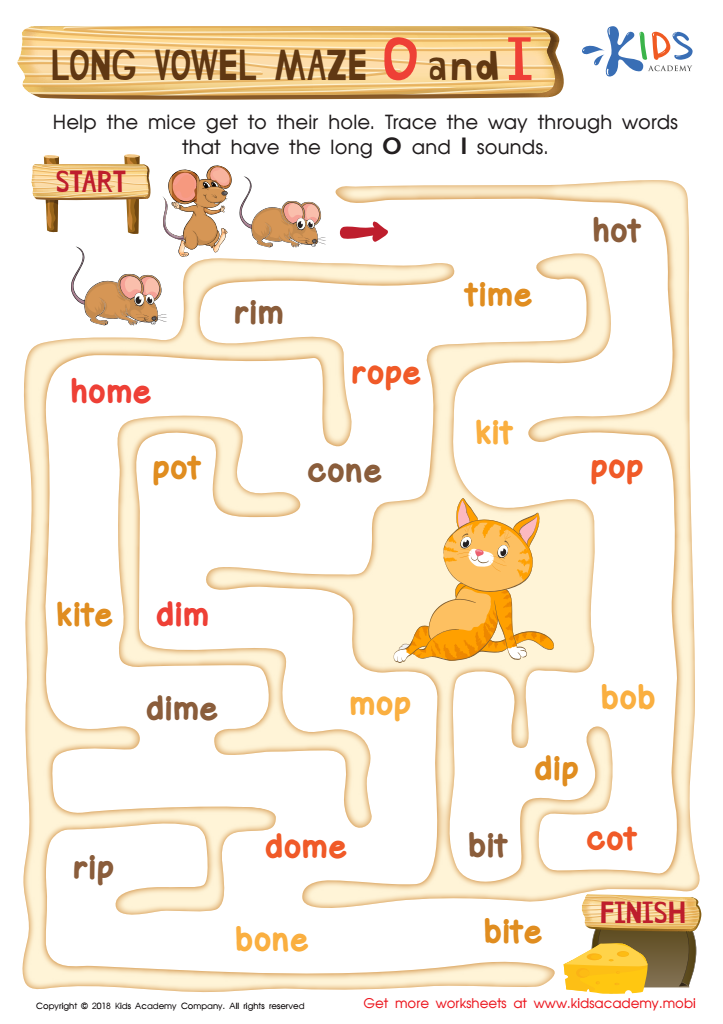
Long Vowel Maze /o/ and /i/ Worksheet
Help your new readers have fun and build their sight word vocabulary! Guide the mice to their prize cheese by having them trace the route on the worksheet, using words with the long o and long i sounds. But watch out for the kitty!
Long Vowel Maze /o/ and /i/ Worksheet
Worksheet
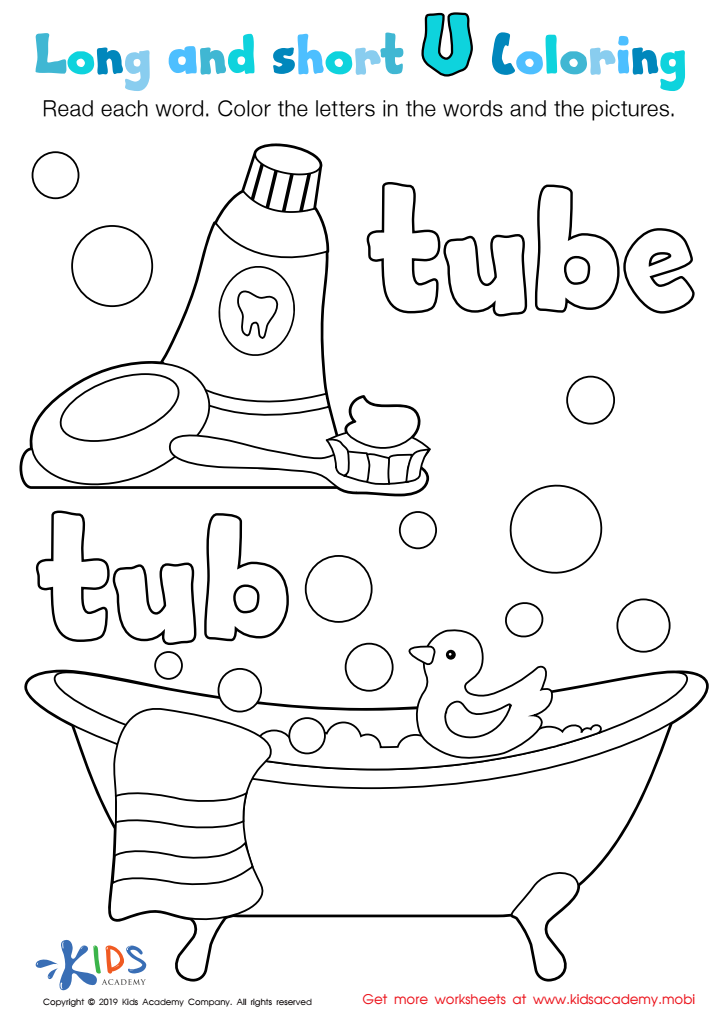
Long and Short U Worksheet
Revised: Spice up your lesson on long and short vowels with this fun printout! Kids read the words "tube" and "tub," then reinforce the sound by coloring in the words and pictures. It's a great way to make phonics class enjoyable!
Download (PDF)
 Assign to My Students
Assign to My Students
Long and Short U Worksheet
Worksheet

Long and Short E Worksheet
This fun printout makes learning phonics enjoyable for Grade 3 students. Get them to read the words “tree” and “bed” to recognize the different sounds of the letter “E”. After hearing the words they can color the words and the pictures to understand differences between long and short vowels.
Download (PDF)
Assign to My Students
Assign to My Students
Long and Short E Worksheet
Worksheet
Join Kids Academy for Free
Who is primarily going to use this learning content?



Hand-eye coordination and understanding long vowels are crucial developmental skills for children aged 5-9, and parents and teachers play a pivotal role in nurturing these abilities.
Hand-eye coordination is the ability to process information from the eyes to direct the movements of the hands. This skill is foundational for academic tasks such as writing, drawing, and even using technology. Children with well-developed hand-eye coordination are more adept at performing activities that require precision, like cutting with scissors or participating in sports, which builds their confidence and independence.
Long vowels, on the other hand, form the bedrock of reading fluency. Long vowels are vowel sounds pronounced the same as their letter names, significantly contributing to accurate pronunciation and comprehension. Mastering long vowels helps children decode new words, facilitating smoother reading experiences and instilling a love for reading early on.
Both hand-eye coordination and long vowel recognition enhance cognitive development and create a more integrated learning environment. Investing time and effort into these areas equips children with the essential skills needed for academic success and overall development, making them more equipped for later challenges in their educational journey. Therefore, both parents and teachers should actively engage in activities and exercises that support these critical developmental milestones.