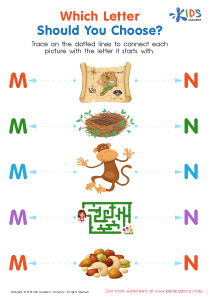
Lowercase identification Lowercase/Small Letters Worksheets for Ages 5-9
5 filtered results
-
From - To
Welcome to our Lowercase Identification Worksheets, specifically designed for children ages 5-9! These engaging resources help young learners master lowercase letters while boosting their reading and writing skills. Each worksheet features fun activities to enhance letter recognition, including tracing, matching, and coloring exercises. Tailored for early-grade classrooms or homeschooling, our worksheets encourage independent learning and creativity. With a variety of colorful and interactive designs, your child will stay captivated as they practice identifying and incorporating small letters into their language repertoire. Download our printable resources today and make lowercase letter learning a delightful adventure!
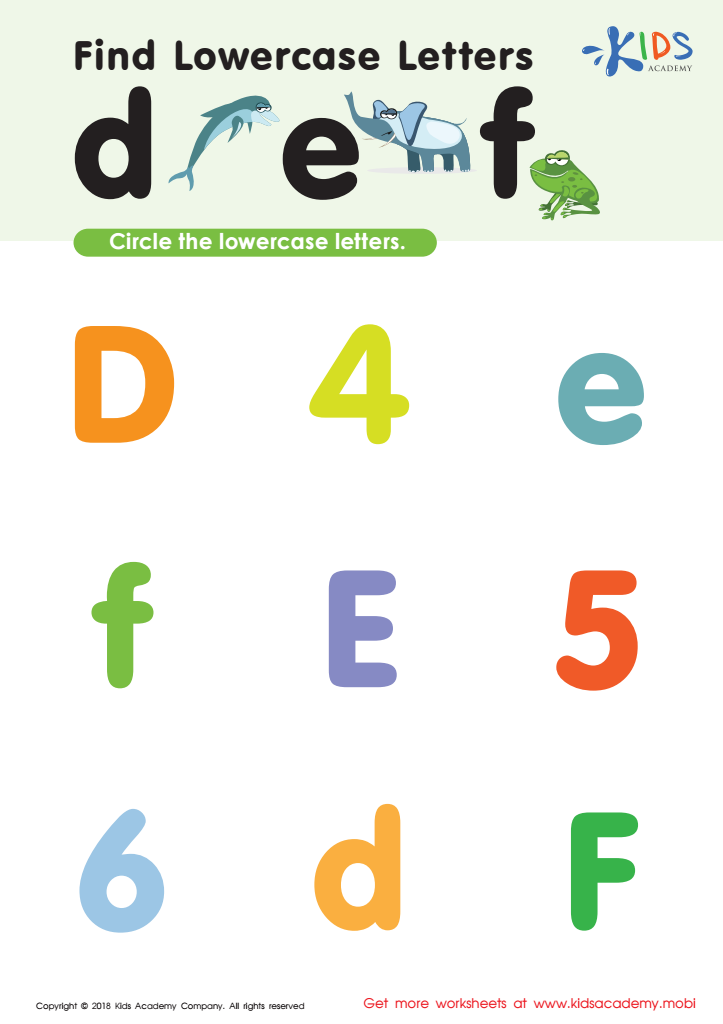
Find Lowercase Letters d e f Worksheet
 Assign to My Students
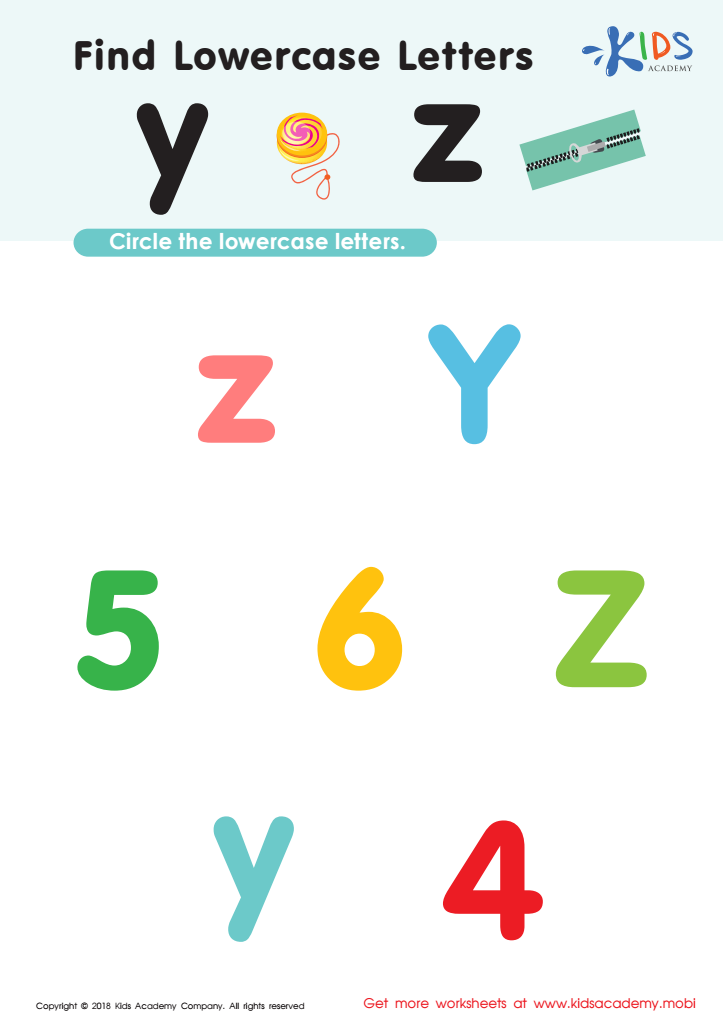
Find Lowercase Letters y z Worksheet
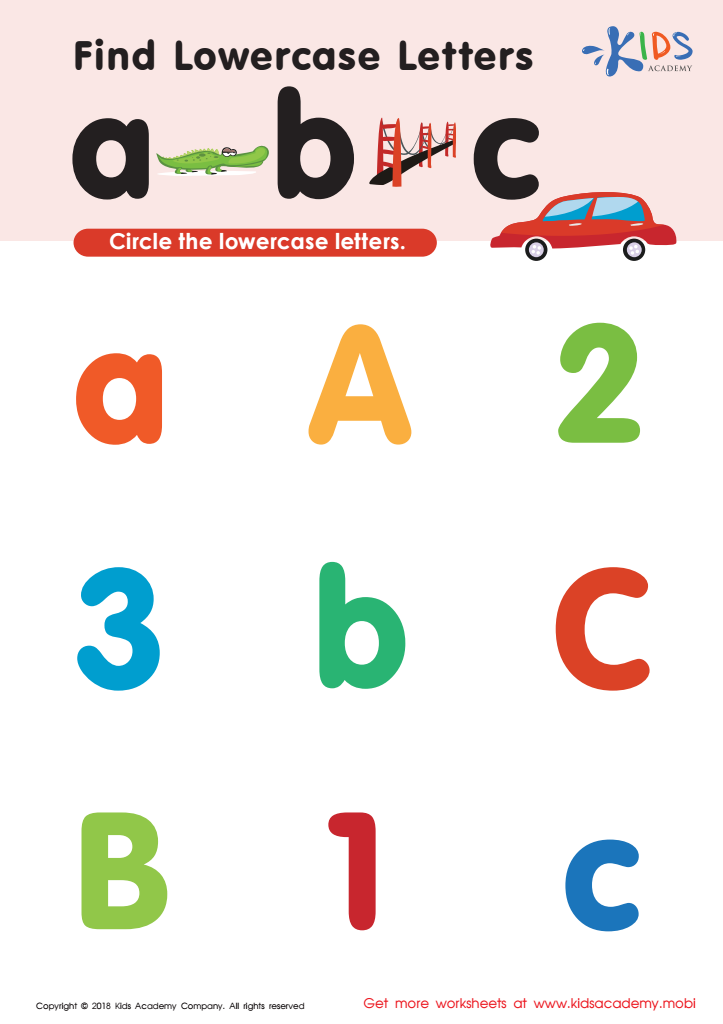
Find lowercase letters a b c Worksheet
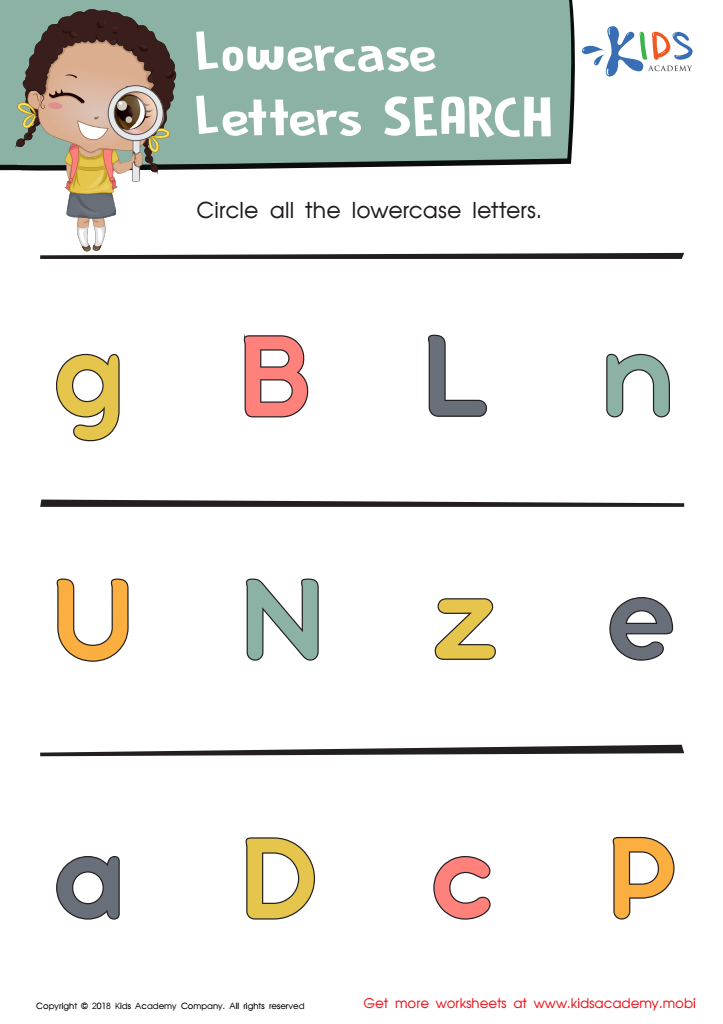
Lowercase Letters Search: Assessment Worksheet
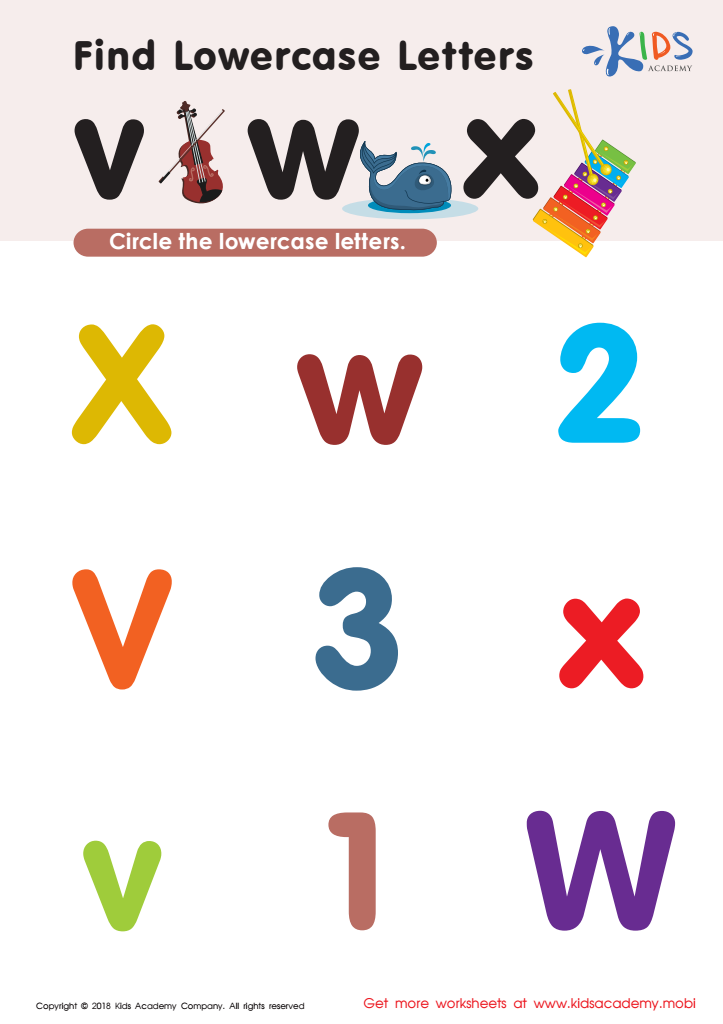
Find Lowercase Letters v w x Worksheet


Understanding and identifying lowercase letters is crucial for children ages 5-9 as they lay the foundation for literacy and successful communication. During these formative years, children are not only learning the alphabet but also developing essential reading and writing skills. Recognizing lowercase letters helps in decoding words, which is vital for literacy. Most texts children encounter are in lowercase, so familiarity with these forms aids in reading fluency.
Moreover, recognizing and differentiating between capital and lowercase letters is vital for writing proficiency. Children begin to practice writing their names, basic words, and sentences in lowercase, which is the dominant format used in everyday writing. This skill enhances their confidence as they express their thoughts on paper.
Additionally, lowercase letter identification contributes to cognitive development, as it involves recognition, memory, and categorization—skills integral to learning. Teachers and parents play a significant role in fostering this awareness through engaging activities, songs, and games that reinforce letter recognition in fun and interactive ways. By prioritizing lowercase identification, adults can supports children’s overall linguistic development, paving the way for future academic success and effective communication skills.