Alphabet Recognition Missing Letters Worksheets for Ages 5-9
3 filtered results
-
From - To
Enhance your child's alphabet recognition skills with our engaging "Missing Letters Worksheets" specifically designed for ages 5-9. These printable worksheets make learning fun while helping children identify letters and improve their handwriting. Each worksheet challenges kids to fill in the blanks, promoting critical thinking and reinforcing their understanding of letter sequences. As they practice, children build confidence and develop essential literacy skills that lay the foundation for reading success. Perfect for teachers and parents alike, our worksheets can be used in classrooms or at home. Explore our diverse range of activities and watch your child's literacy skills flourish!
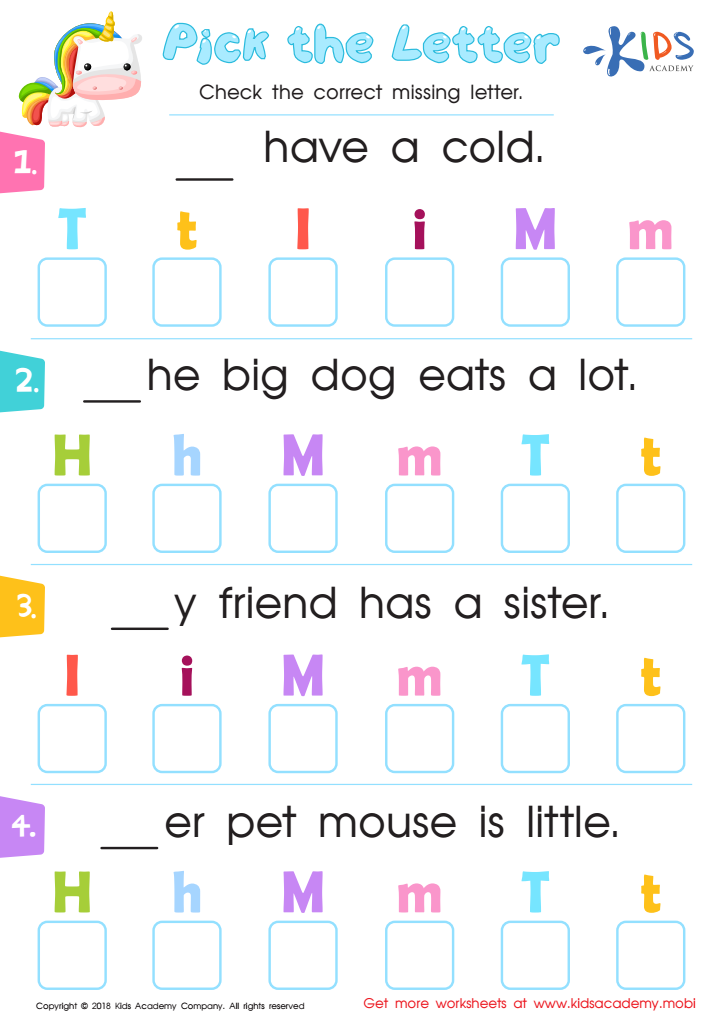
Pick the Letter Worksheet
 Assign to My Students
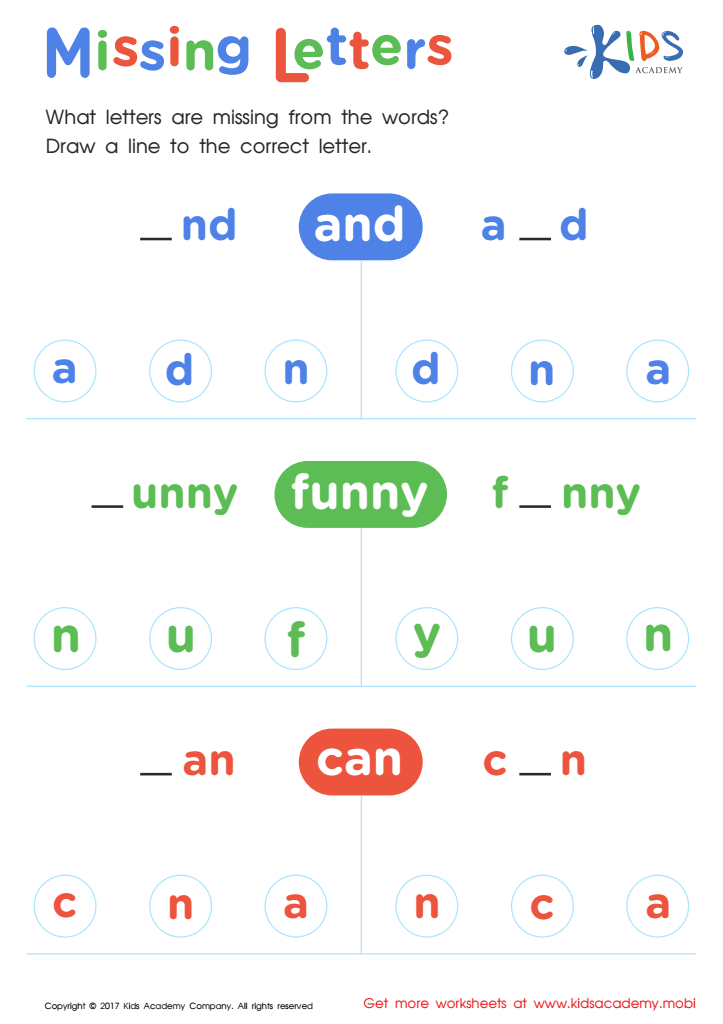
Missing Letters Worksheet
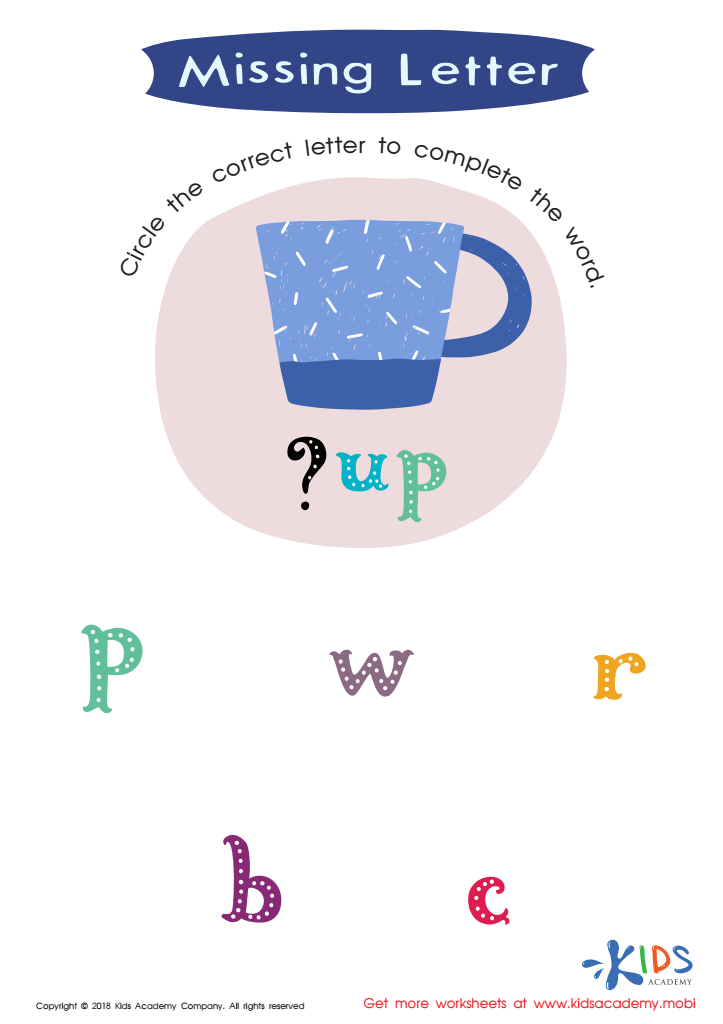
Missing Letter Worksheet



Alphabet recognition and identifying missing letters are foundational skills in early literacy for children aged 5-9. This age group is crucial for cognitive and linguistic development, and parents and teachers must prioritize these skills for several reasons.
Firstly, mastering the alphabet lays the groundwork for reading and writing. Strong recognition skills enable children to decode words, understand phonics, and develop vocabulary, all of which are essential for proficient literacy. If children struggle with recognizing letters or identifying missing ones, they may find reading difficult, leading to long-term literacy challenges.
Additionally, engaging in activities that focus on missing letters fosters critical thinking and problem-solving abilities. This not only enhances their language skills but also promotes cognitive development, as children learn to analyze patterns and make connections.
Furthermore, parental involvement and teaching support can significantly boost children's motivation and confidence. Positive reinforcement encourages a love for learning, making literacy a fun and engaging process rather than a chore.
In summary, care and attention to alphabet recognition and missing letters are vital for establishing a solid literacy foundation, fostering cognitive skills, and nurturing a positive learning environment for children aged 5-9. Investing in these early literacy skills can lead to lasting academic success and a lifelong love of reading.







