
Alphabet Recognition Phonics Worksheets for Ages 5-9
9 filtered results
Difficulty Level
Grade
Age
-
From - To
Subject
Activity
Standards
Unlock your child's reading potential with our Alphabet Recognition Phonics Worksheets designed for ages 5-9! These engaging and interactive resources help young learners master letter identification and sound recognition through fun exercises and activities. Tailored to reinforce essential pre-reading skills, our worksheets promote phonemic awareness, enhancing your child's ability to connect letters with their corresponding sounds. With colorful visuals and varied activities, children will enjoy practicing their alphabet knowledge, leading to greater confidence and competence in reading. Ideal for home and classroom use, our worksheets provide a solid foundation for a lifelong love of learning. Start your phonics journey today!
Favorites
With answer key
Interactive
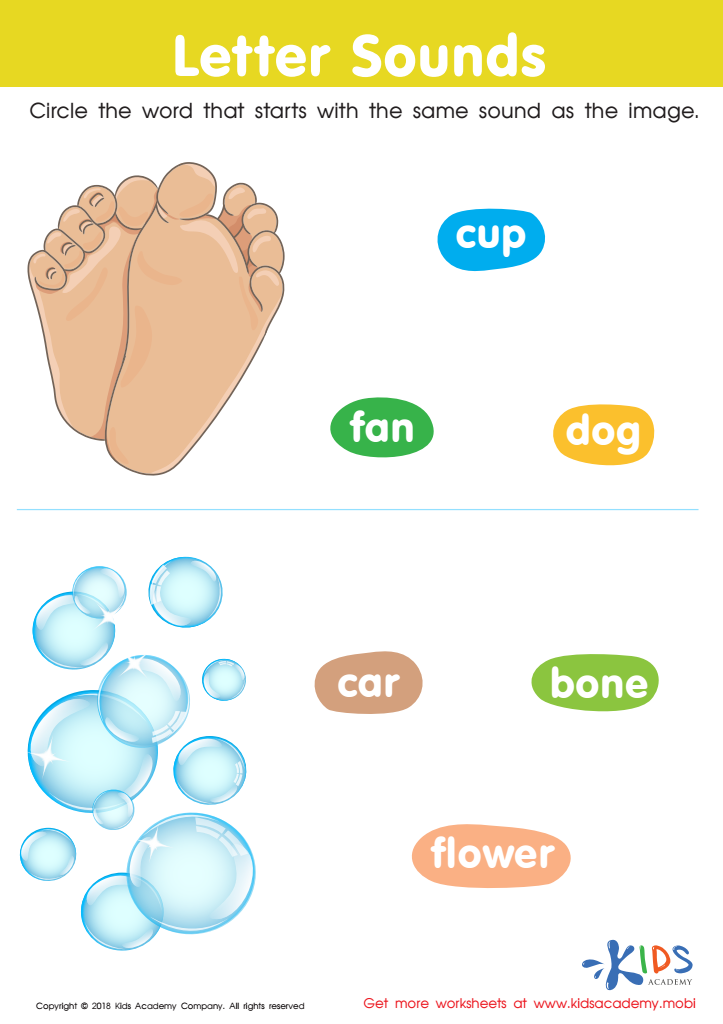
letter sounds Worksheet
Test your child's letter recognition skills with this worksheet. Match words to pictures and challenge them to say each image out loud and sound out the words beside it. Ask: Which word starts with the same letter as the picture? Then let them circle the right answer. Quick and easy!
letter sounds Worksheet
Worksheet
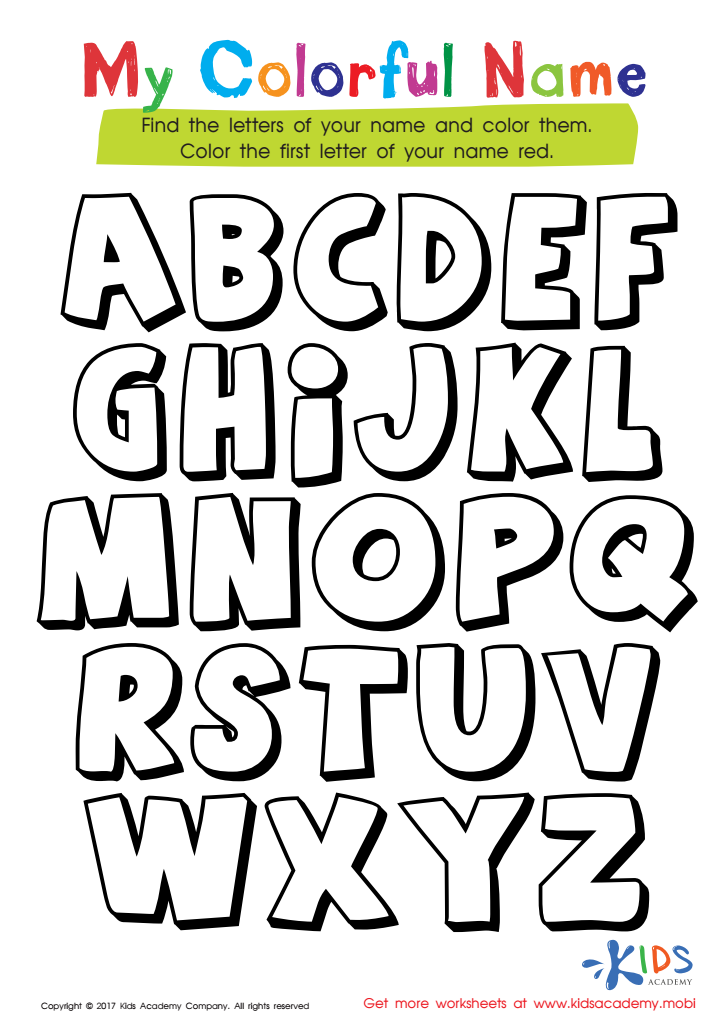
My Colorful Name Worksheet
Writing their names is a milestone for children. With this worksheet, they recall the letters in their name and color the letters one at a time. Spelling and alphabet order are reinforced as they find each letter. Use this fun printable to help kids learn to write their names!
Download (PDF)
 Assign to My Students
Assign to My Students
My Colorful Name Worksheet
Worksheet
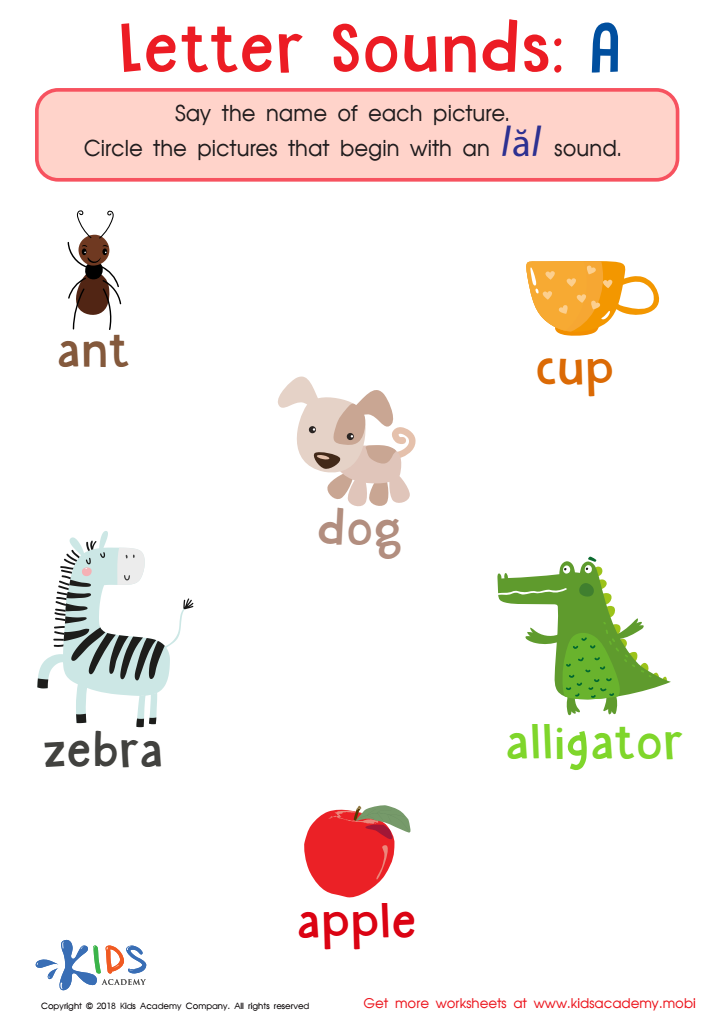
Letter A Sounds Worksheet
Encourage your new reader to practice the «ă» sound with this fun, free PDF worksheet. With the help of picture clues, they'll say the name of each word and trace circles around the items that start with «ă». This worksheet is an effective way to boost beginning sound skills while having fun!
Letter A Sounds Worksheet
Worksheet
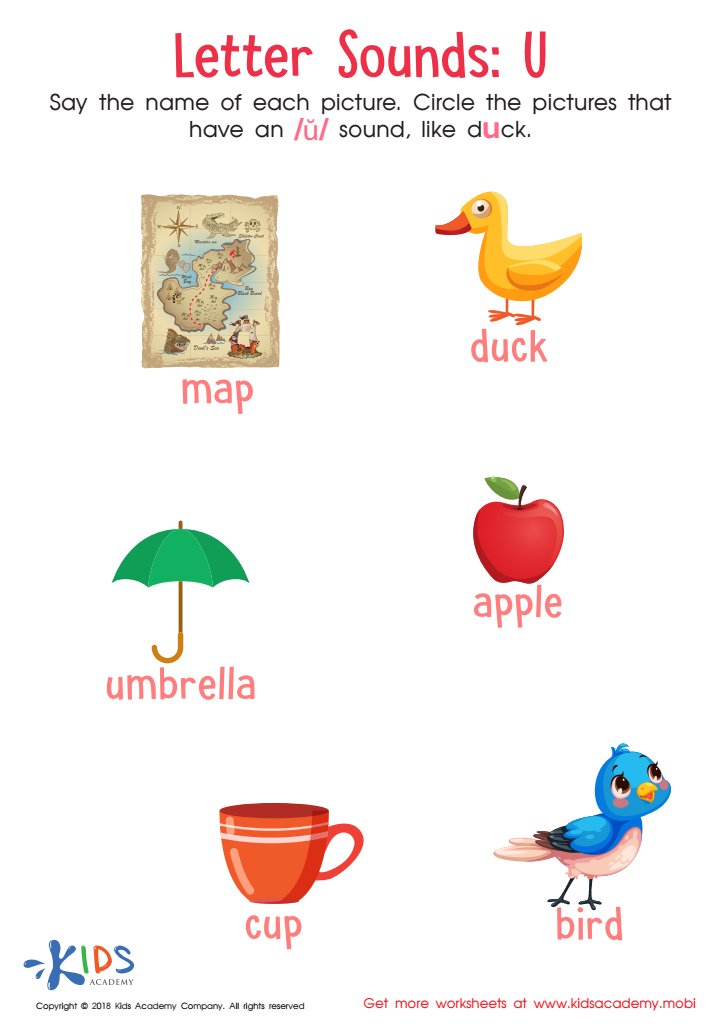
Letter U Sounds Worksheet
The letter U is special with multiple pronunciations. This worksheet helps kids identify the short «u» in words like duck and cup. Read the words aloud and listen closely to the sounds. Circle only words with the correct sound to complete the sheet. Kids will quickly know that words like "map" don't contain a U.
Letter U Sounds Worksheet
Worksheet
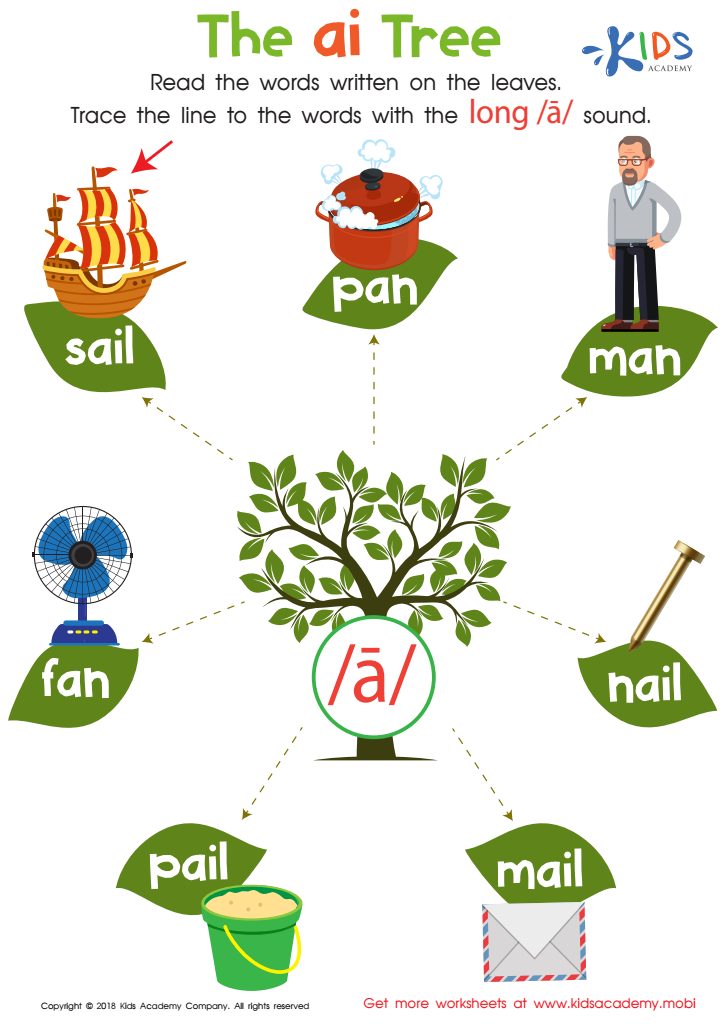
The AI Tree Worksheet
Help your kids learn to read better with this worksheet! Introduce the vowel pair 'ai' and give them familiar examples. Ask them to give you some in return. Then, have them read the words on the leaves and help them trace the ones with the long /a/ sound.
The AI Tree Worksheet
Worksheet
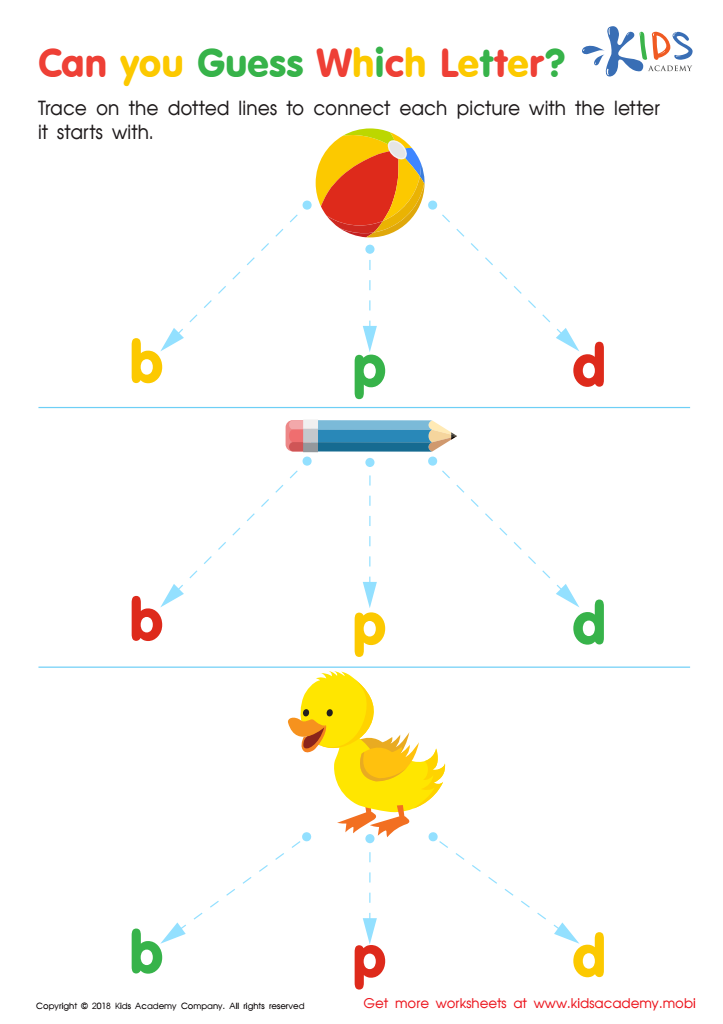
Can you Guess Which Letter? Worksheet
Connect the pictures with their corresponding letters with this fun worksheet! Ask your child what each picture is, then what letter it begins with. Download the PDF for colorful images and engaging texts to hold their attention, making learning an enjoyable activity.
Can you Guess Which Letter? Worksheet
Worksheet
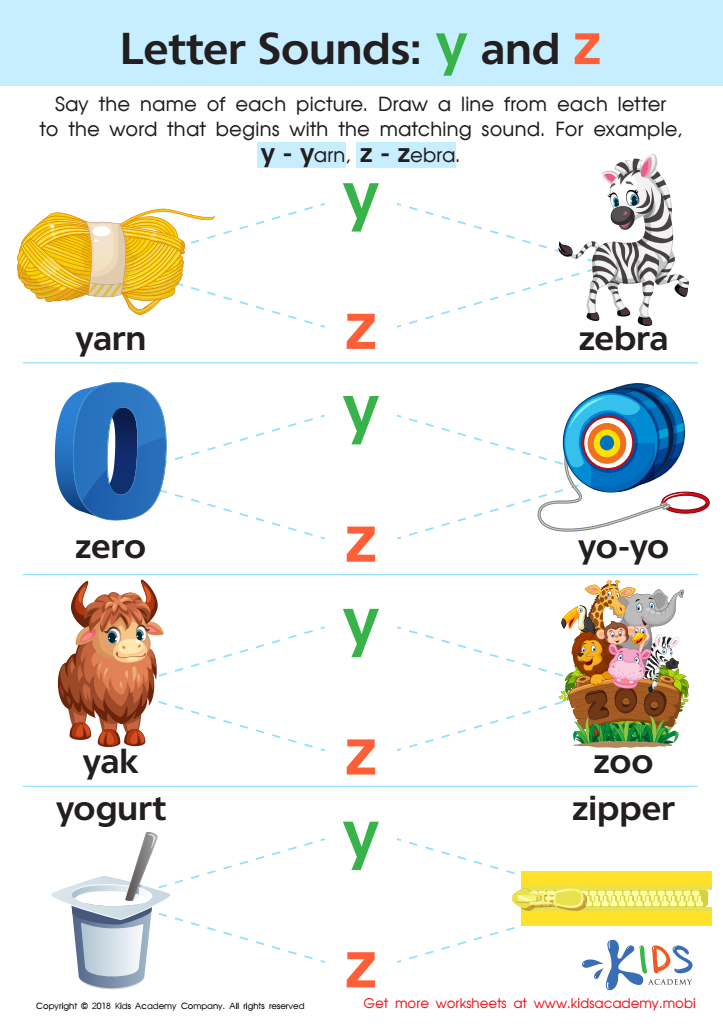
Letter Y and Z Sounds Worksheet
Y and Z can be tricky for kids to learn. Kids Academy has the answer with a great worksheet. "Yo-yo", "yak" and "zebra" help kids recognize, say and trace each letter. Plus, they can read the words and match them to images! Let your child try and help them master phonics at the end of the alphabet.
Letter Y and Z Sounds Worksheet
Worksheet
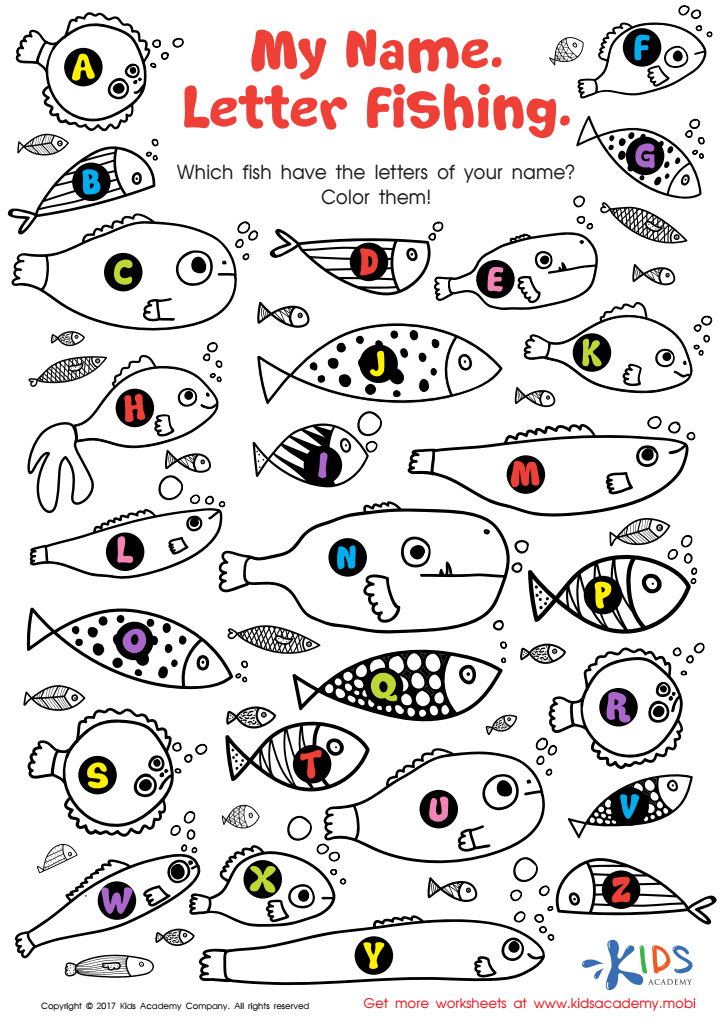
My Name: Letter Fishing Worksheet
Dive into the deep sea and search for fish with a letter on them. Can you find all the letters from your name? Color your favorite fish with crayons and be creative! On the other side, use the letters you found to write your name. Have fun coloring and finding the letters of your name! (80 words)
Download (PDF)
Assign to My Students
Assign to My Students
My Name: Letter Fishing Worksheet
Worksheet
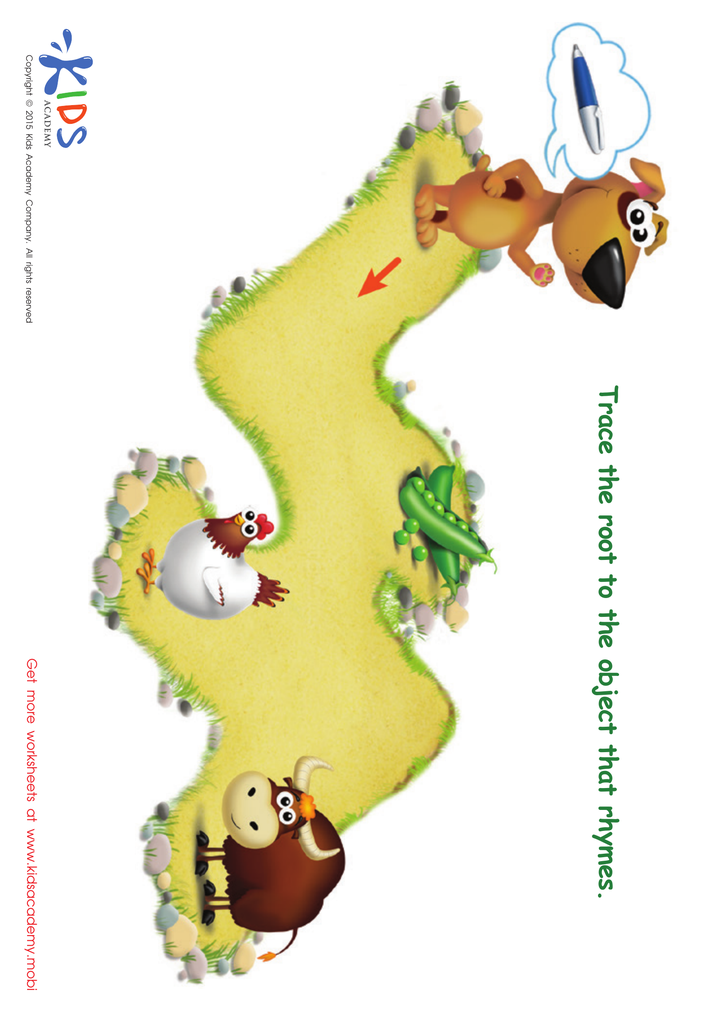
Pen Rhyming Words Worksheet
Check out the cute pup, pondering away. He's thinking of a root word - no suffix or prefix. Now check the hen, green beans, and the cow. Can you find the word that rhymes with pen? Draw a line from the root word to its rhyme for this simple yet beneficial worksheet. It helps young learners practice hearing and recognizing rhymes.
Pen Rhyming Words Worksheet
Worksheet
Join Kids Academy for Free
Who is primarily going to use this learning content?








Alphabet recognition and phonics are fundamental components of early literacy that significantly impact a child's reading and writing abilities. For parents and teachers, understanding the importance of these skills for children aged 5-9 is crucial. During this critical developmental stage, children are acquiring the foundational knowledge needed to decode words and comprehend written language.
Alphabet recognition allows children to identify and name letters, fostering a positive relationship with the alphabet. When children can recognize letters, they can develop phonemic awareness— the ability to hear and manipulate sounds, which is essential for phonics. Phonics instruction teaches children the relationships between letters and their corresponding sounds, enabling them to sound out words independently.
Parents and teachers should prioritize these skills because early mastery of alphabet recognition and phonics lays the groundwork for proficient reading and writing. Strong literacy skills correlate with academic success across all subjects, impacting long-term educational outcomes. Moreover, by fostering a love for reading and writing early on, educators and caregivers can help instill confidence in children, becoming lifelong learners and effective communicators. Encouraging literacy development through play, reading, and engaging phonics activities can make the learning process enjoyable and effective for young learners.







