Color Identification Phonics Worksheets for Ages 5-9
5 filtered results
-
From - To
Enhance your child's reading skills with our engaging Color Identification Phonics Worksheets designed for ages 5-9! These interactive worksheets provide a fun way for young learners to associate colors with letters and words, making phonics both visual and enjoyable. Ideal for strengthening vocabulary and color recognition, each activity offers playful illustrations and simple prompts that encourage creativity and critical thinking. Whether at home or in the classroom, these worksheets are perfect for reinforcing essential skills that prepare children for successful reading. Dive into a colorful learning adventure and watch your child's confidence grow as they identify colors and enhance their phonics knowledge!
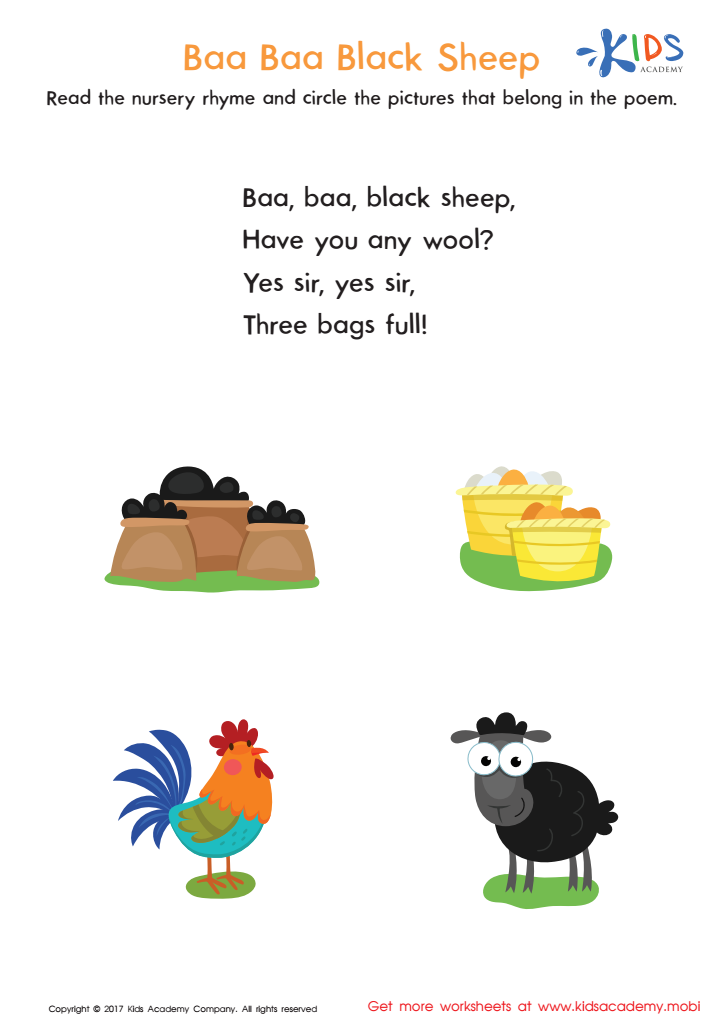
Baa Baa Black Sheep Printable
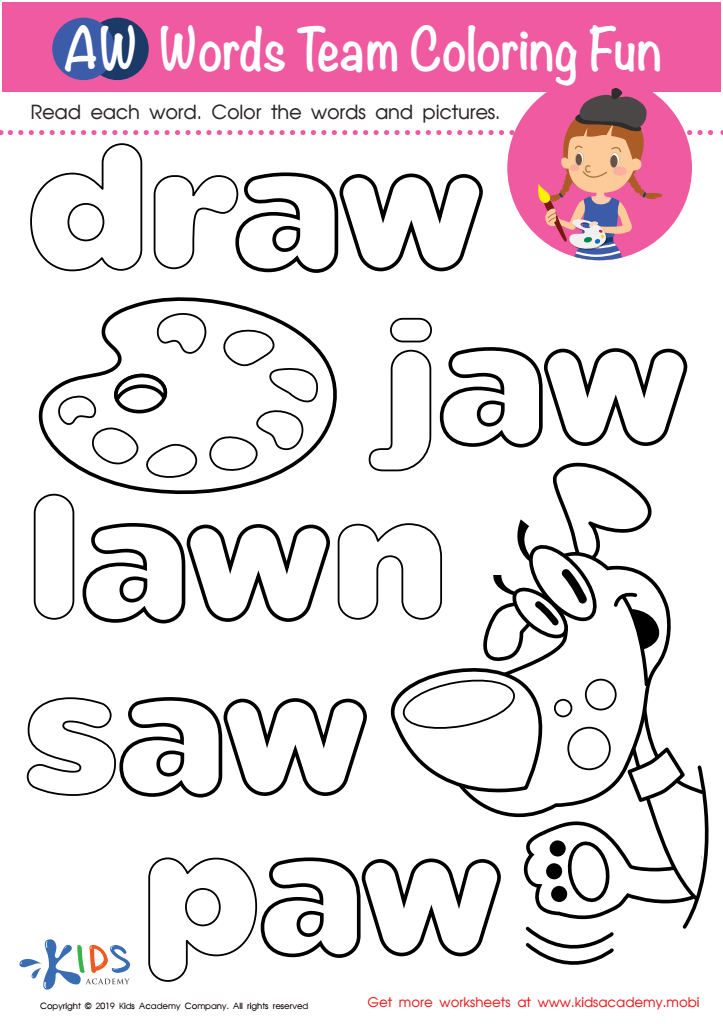
AW Words Team Coloring Fun Worksheet
 Assign to My Students
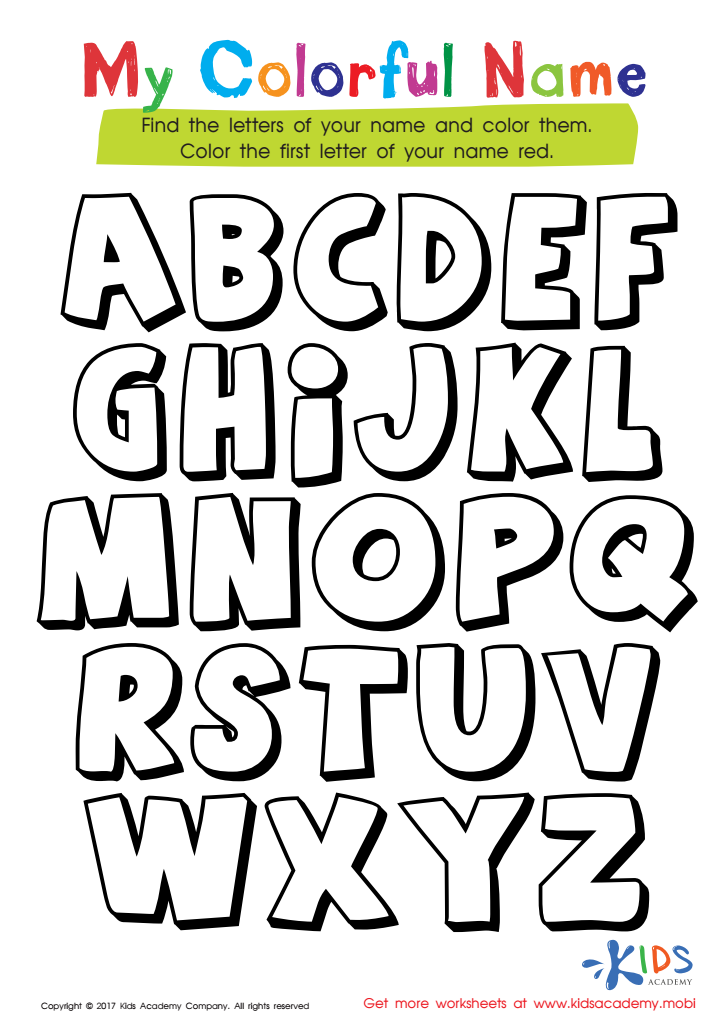
My Colorful Name Worksheet
Assign to My Students
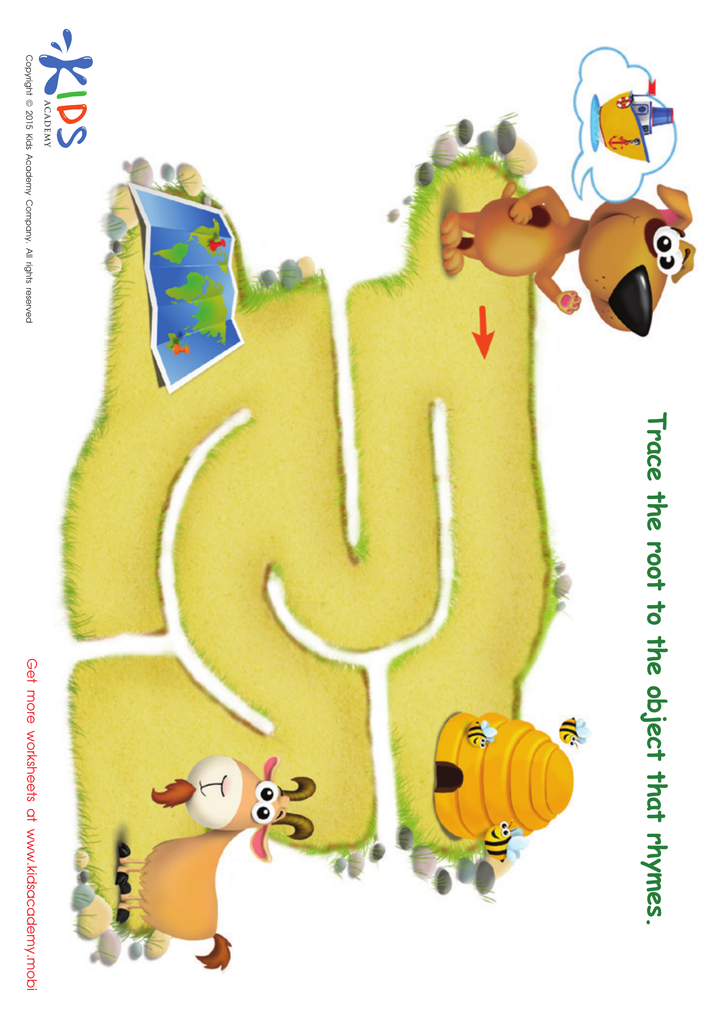
Boat Rhyming Words Worksheet
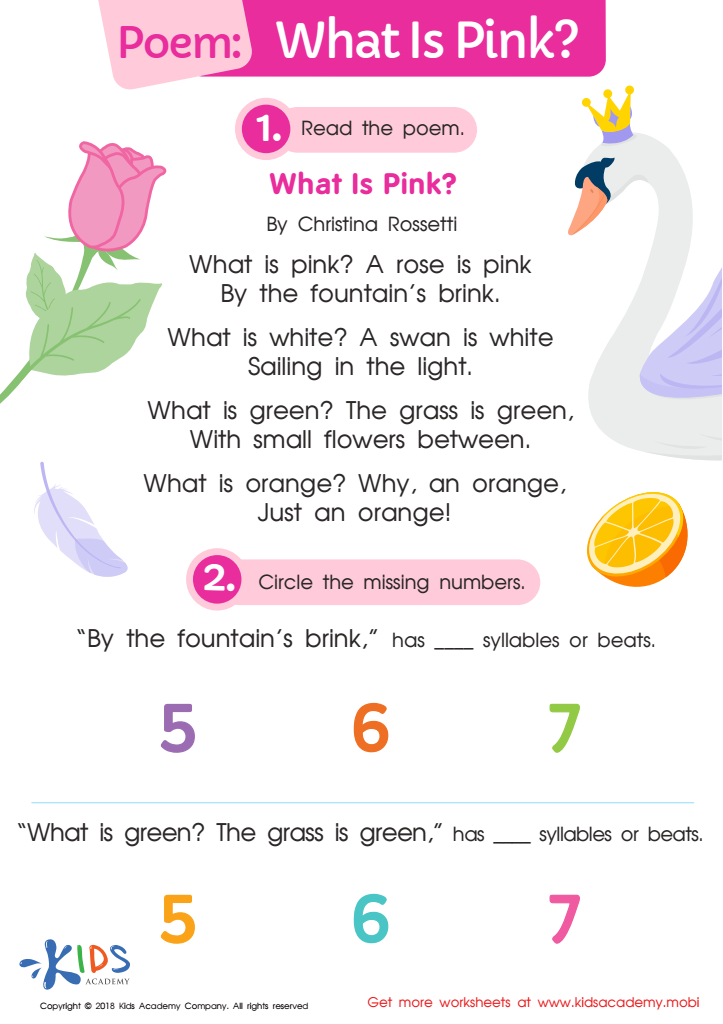
Poem: What Is Pink? Worksheet








Color Identification Phonics is an essential tool for children aged 5-9 as it lays the foundation for literacy skills and cognitive development. At this early age, children's brains are incredibly receptive to learning through visual and auditory stimuli. Integrating color identification into phonics instruction makes it a more engaging and interactive process, helping young learners connect letters and sounds with colors in a fun way.
Understanding colors and phonics simultaneously enhances memory retention, offering young learners a multisensory experience. This approach caters to various learning styles, ensuring that visual learners can associate colors with phonetic sounds, thereby improving their recall. Moreover, color identification can foster creativity, enabling students to express their thoughts and ideas through colorful illustrations and activities.
Parents and teachers should prioritize Color Identification Phonics not only because it builds a fundamental literacy skill set but also because it encourages critical thinking and problem-solving through an artistic lens. This fun, playful method encourages children to explore language in a safe, supportive environment, making learning not just educational, but enjoyable. Ultimately, this kind of integrated learning approach can greatly enhance literacy outcomes, preparing students for future academic success.







