Letter-sound association Phonics Worksheets for Ages 5-9
3 filtered results
-
From - To
Unlock the power of literacy with our engaging Letter-Sound Association Phonics Worksheets designed for kids ages 5-9. Strengthen your child's essential reading skills through fun, interactive activities that seamlessly blend learning and play. Our worksheets focus on matching letters with their corresponding sounds, helping young learners build a solid foundation for successful reading and writing. Perfect for use at home or in the classroom, these expertly crafted resources support both structured lesson plans and independent practice. Spark a love of reading and set your child up for future academic success with our dynamic phonics worksheets!
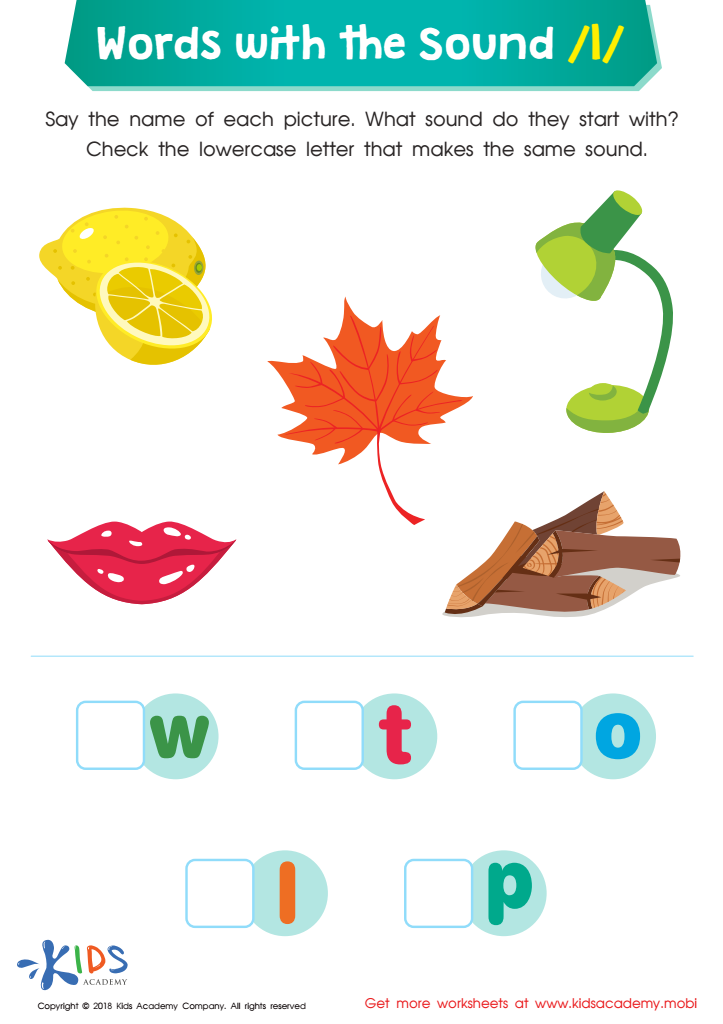
Words with Sound L Reading Worksheet
 Assign to My Students
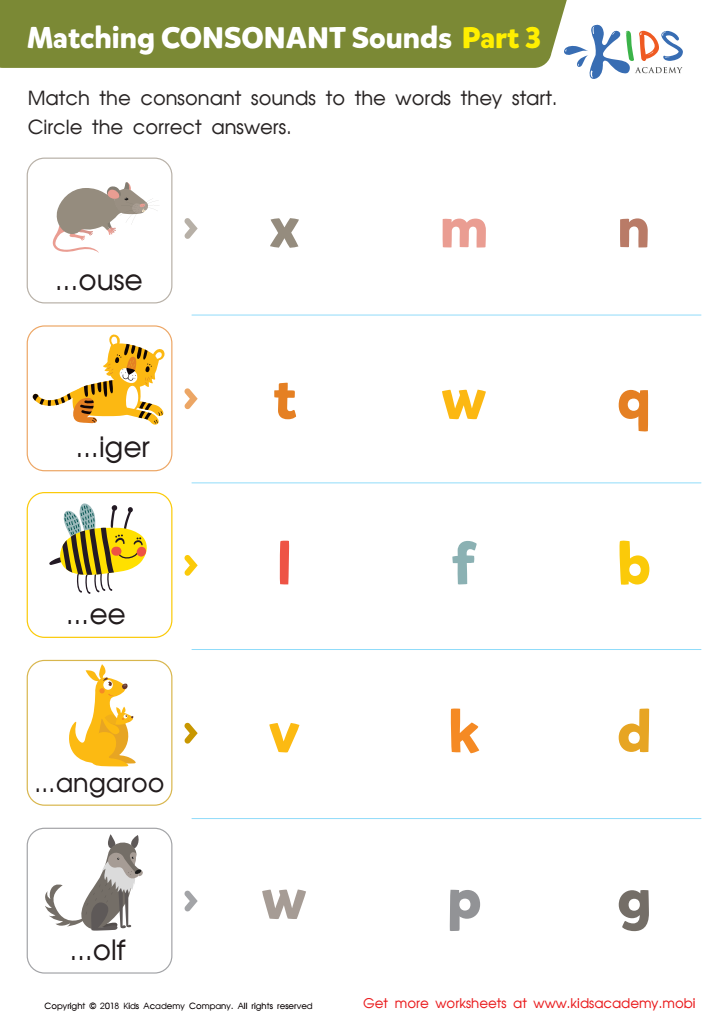
Matching Consonant Sounds: Part 3 Worksheet
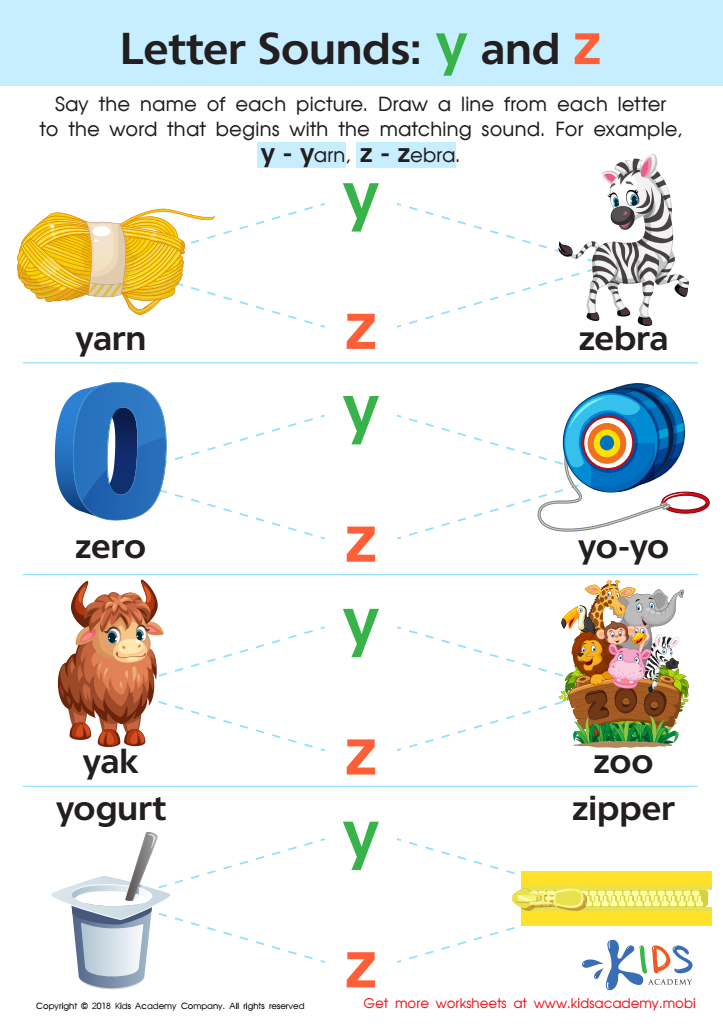
Letter Y and Z Sounds Worksheet








Letter-sound association, a crucial component of phonics, establishes the foundational skills necessary for young children, ages 5-9, to become proficient readers and writers. Understanding the relationship between letters and sounds enables children to decode new words, fostering independent reading. This skill is pivotal for early literacy development as it directly impacts a child's ability to comprehend texts, enrich their vocabulary, and cultivate a love for reading.
Parents and teachers should prioritize letter-sound phonics because it empowers children with the tools to tackle increasingly complex texts. Proficient readers can absorb information more effectively, which is essential for academic success across all subjects. Furthermore, research indicates that early proficiency in phonics is linked to long-term educational achievements, highlighting its lasting importance.
Moreover, strong phonics skills can prevent future reading difficulties. Children who struggle to decode often experience frustration, leading to a dislike for reading and potential academic underperformance. Early intervention through explicit letter-sound association instruction can mitigate these issues, promoting confidence and motivation in young learners.
Investing in phonics education also fosters critical thinking and problem-solving skills as children learn to apply rules and patterns to unfamiliar words. Ultimately, a solid grasp of letter-sound associations equips children with the literacy foundation needed for lifelong learning and intellectual growth.







