
Rhyme recognition Phonics Worksheets for Ages 5-9
5 filtered results
Difficulty Level
Grade
Age
-
From - To
Subject
Activity
Standards
Enhance your child's phonics skills with our Rhyme Recognition Worksheets, designed specifically for ages 5-9. These engaging and fun activities promote early literacy by helping young learners identify and create rhyming words. Our worksheets feature vibrant illustrations and playful exercises that encourage children to explore sounds, boosts vocabulary, and sharpen their listening skills. Perfect for parents, teachers, and homeschoolers, these resources provide a solid foundation in phonics while fostering a love for reading. Discover the joy of rhyming and watch your child's confidence soar as they master essential phonemic awareness skills. Start exploring our worksheets today for an exciting learning experience!
Favorites
With answer key
Interactive
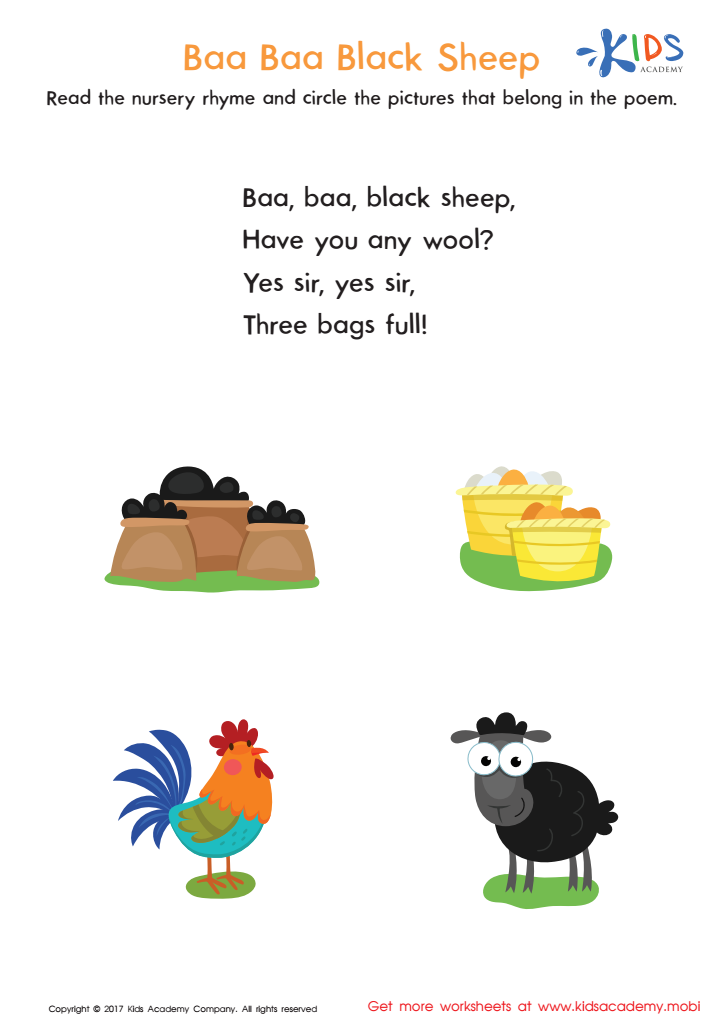
Baa Baa Black Sheep Printable
Jumpstart your child's reading skills with this printable Baa Baa Black Sheep worksheet! Recite the lines with them, then have them select the pictures associated with the poem to test comprehension. Fun and educational!
 Assign to My Students
Baa Baa Black Sheep Printable
Worksheet
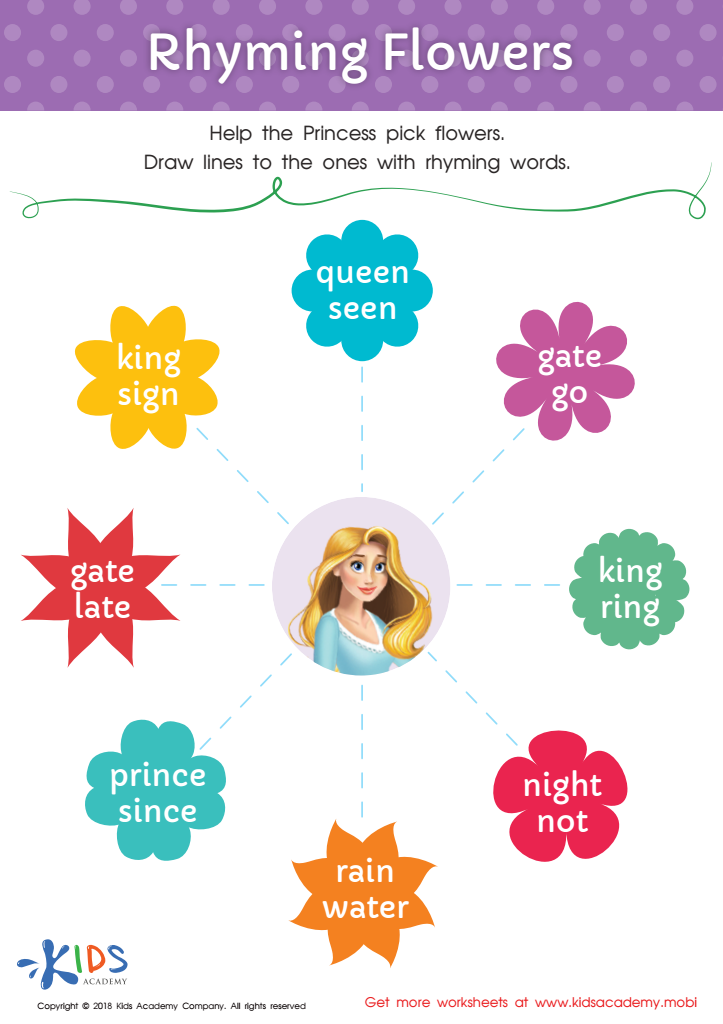
Rhyming Flowers Worksheet
Recognizing rhyming words boosts phonological awareness. With this skill, students can identify similar sounds in words and predict new words more accurately. This worksheet provides practice and is ideal for the reading classroom. Download and find the rhyming words! (80 words)
Rhyming Flowers Worksheet
Worksheet
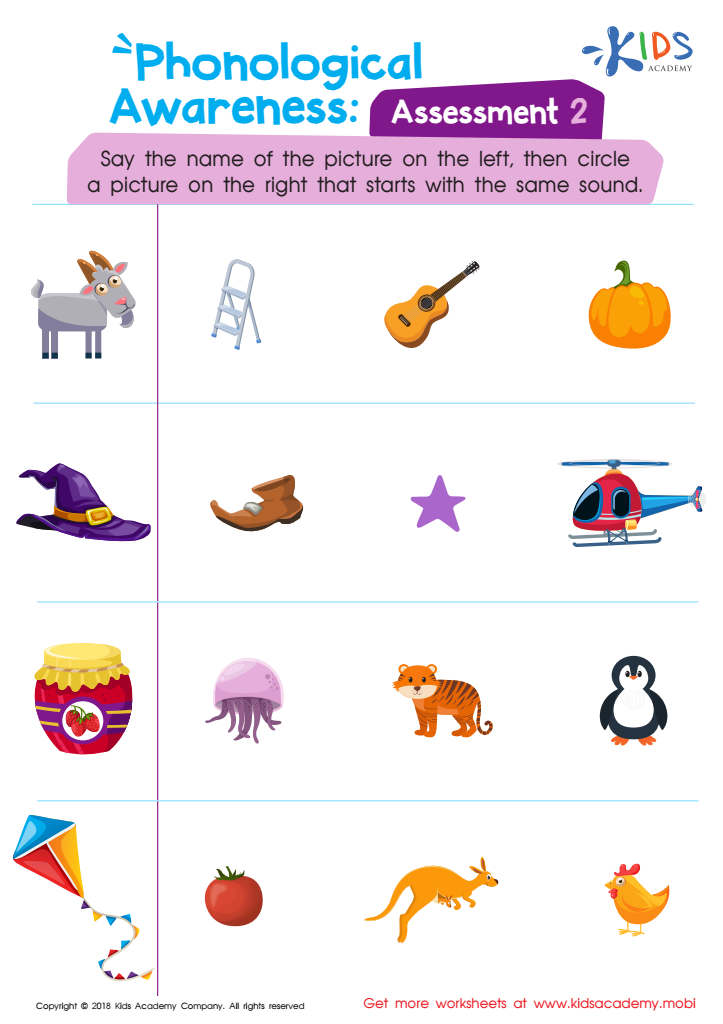
Phonological Awareness: Assessment 2 Worksheet
Test your child’s phonological awareness and reading readiness with this charming worksheet! Perfect for K-1, it assesses if they can name a picture aloud, listening for the starting sound and matching it to another word. Watch as they think deeply and listen to the sounds as they name each picture. Determine if your child is ready to sound out words or needs more phonics practice.
Phonological Awareness: Assessment 2 Worksheet
Worksheet
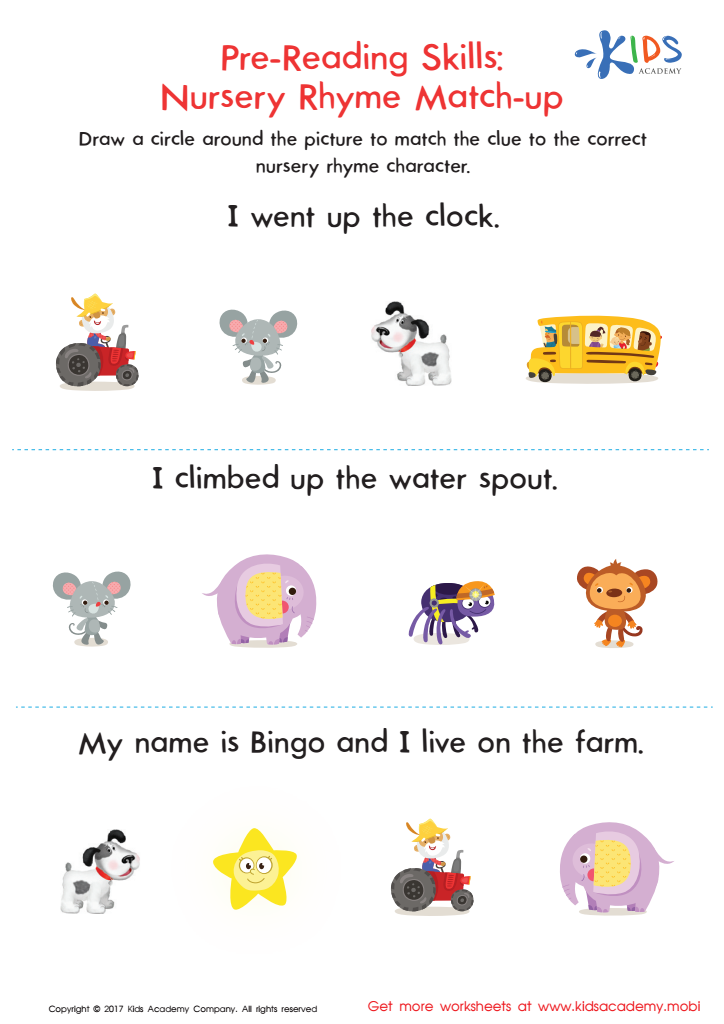
Nursery Rhyme Match–Up Worksheet
This worksheet helps kids build pre-reading skills using stories they know and love! By connecting with prior knowledge, kids can develop ideas about characters and set the stage for reading strategies.
Nursery Rhyme Match–Up Worksheet
Worksheet
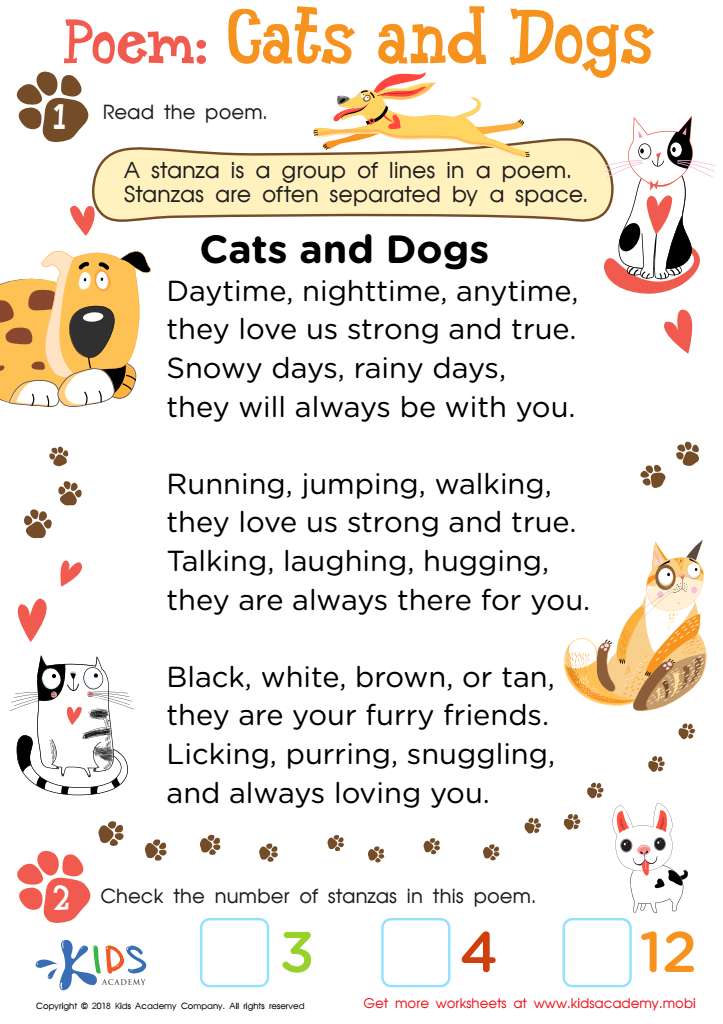
Poem: Cats and Dogs Worksheet
Read the poem to your child and point out where each stanza ends. Ask if they know what a stanza is (if not, explain it's a group of lines in a poem). Help them answer the question at the bottom of the printout. This simple, sweet poem about cats is easy for your child to relate to.
Poem: Cats and Dogs Worksheet
Worksheet
Join Kids Academy for Free
Who is primarily going to use this learning content?








Rhyme recognition and phonics are essential components of early literacy development for children aged 5-9. Understanding and appreciating rhymes enhance children's phonological awareness, a crucial skill for deciphering language sounds, which ultimately supports reading success. When children can identify and produce rhyming words, they develop the ability to discern similar sounds within words, aiding their skills in phonics, which focuses on the correlation between letters and sounds.
Parents and teachers should care about these aspects because they form the foundation for further reading and writing proficiency. Engaging children in rhyming activities not only makes learning enjoyable but also fosters cognitive skills like memory retention and auditory discrimination. Furthermore, strong phonics skills empower children to decode unfamiliar words, fostering a sense of autonomy and confidence in their reading journey.
Additionally, children who struggle with rhyme and phonics may experience challenges in literacy that can affect their self-esteem and academic performance. By prioritizing these skills in early education, caregivers and educators can create a supportive environment that nurtures a love for reading and writing, ensuring that children are equipped with the tools they need for future success in their educational endeavors.







