Phonics practice Short Vowels Worksheets for Ages 5-9
4 filtered results
Difficulty Level
Grade
Age
-
From - To
Subject
Activity
Standards
Enhance your child's reading skills with our Phonics Practice Short Vowels Worksheets, designed for ages 5-9. These engaging worksheets from Kids Academy help young learners master the essential short vowel sounds through fun activities and exercises. Perfect for building a strong foundation in early reading, these printable worksheets focus on words with short vowel sounds, fostering phonemic awareness and boosting confidence. With a variety of tasks, including matching, tracing, and identifying short vowels, children can improve their pronunciation and phonics skills effortlessly. Unlock your child's reading potential today with our comprehensive short vowel worksheet collection!
Favorites
With answer key
Interactive
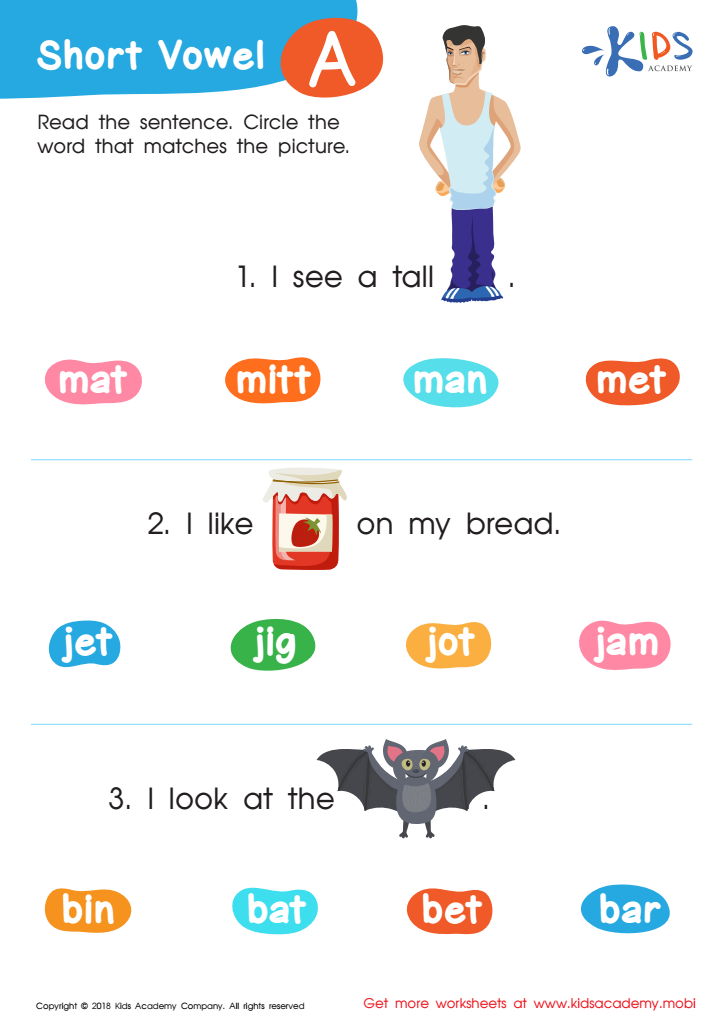
Short Vowel /a/ Worksheet
This free PDF helps new readers use sight words and pictures to read basic sentences. Then, they use accompanying word choices to find the correct word with the short a vowel sound. A key early reading skill, discriminating between short vowel sounds can be tricky in monosyllabic words, so use this PDF to help your reader reinforce it.
 Assign to My Students
Short Vowel /a/ Worksheet
Worksheet
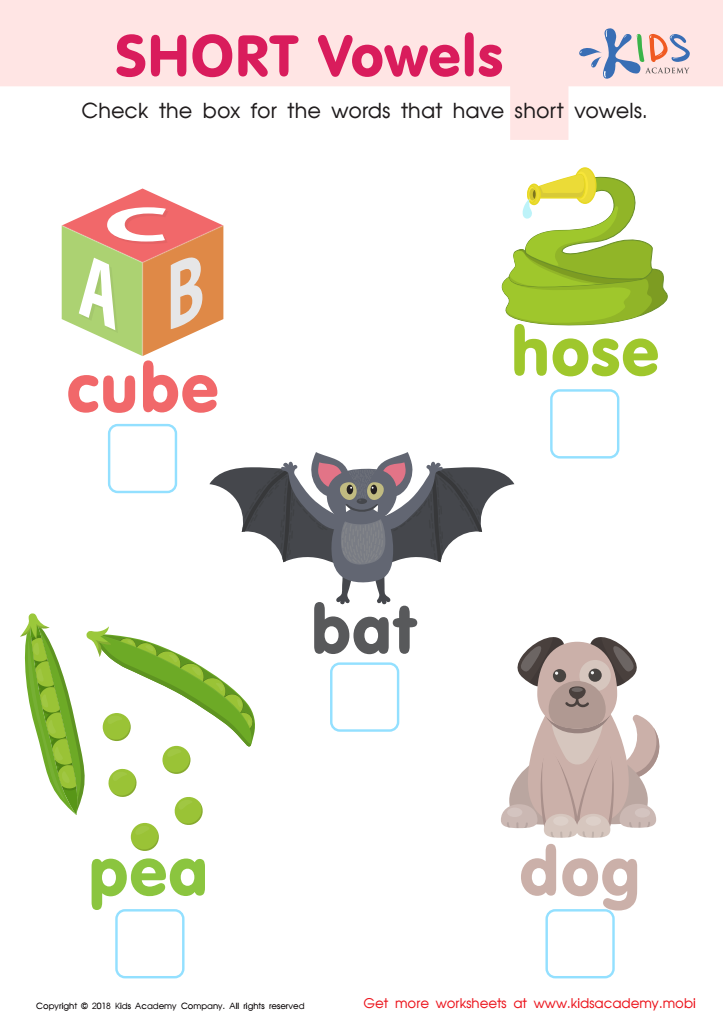
short vowels Worksheet
Say "dog" and notice how long it takes to pronounce the vowel. Is it short or long? Compare it to "pea" and use this worksheet to quickly assess your child's mastery. Have them name each picture and listen for the vowel sounds. Only check the boxes for words with short vowel sounds.
short vowels Worksheet
Worksheet
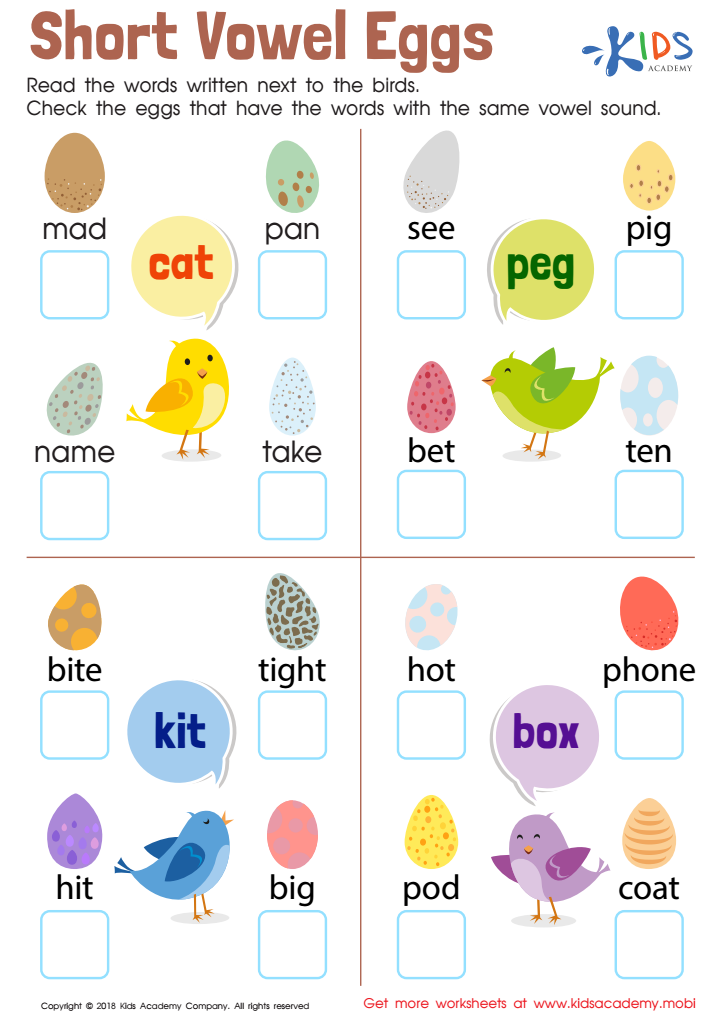
Short Vowel Eggs Worksheet
Your students will love helping these birdies pick the short vowel eggs! Have them read the words in the thought bubbles, then check off the boxes with the same short vowel sounds. The bright colors of this free Worksheet will draw them in and get them practicing their vowels!
Short Vowel Eggs Worksheet
Worksheet
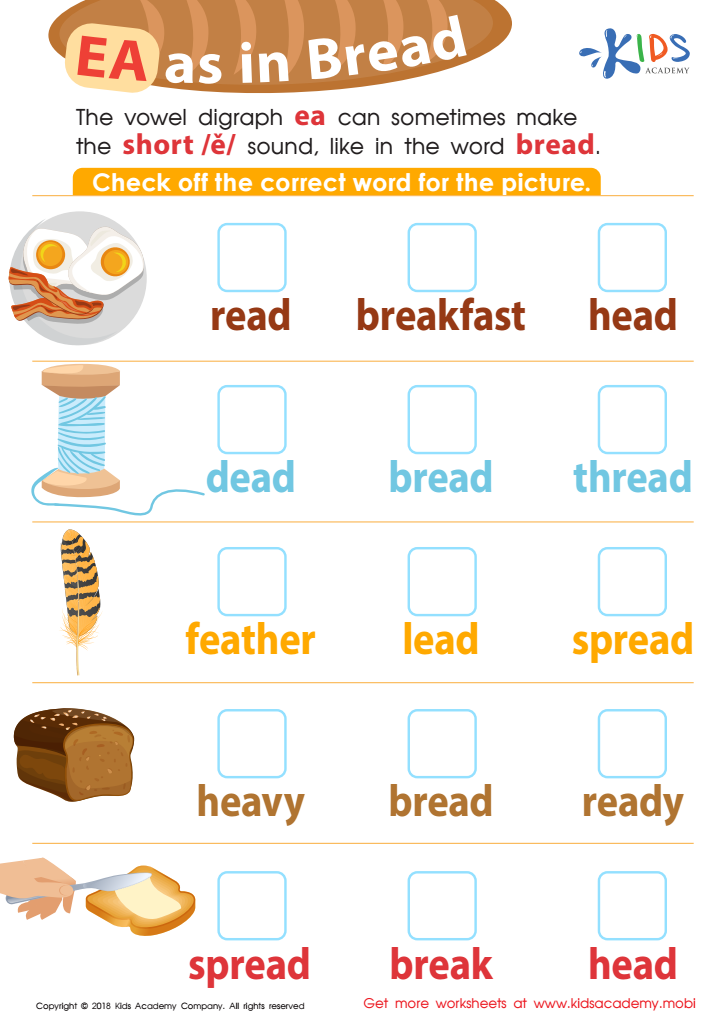
Reading: EA as in Bread Worksheet
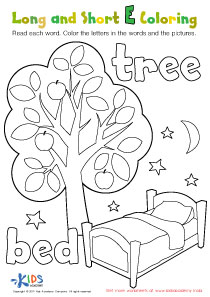
The vowel digraph ea can be read in two ways. Examples of the long sound are "read" and "lead"; examples of the short sound are "bread" and "head". Ask your kids to give you more examples and then have them check off the correct word for the pictures on this worksheet. This will help them understand the ea sound.
Reading: EA as in Bread Worksheet
Worksheet
Join Kids Academy for Free
Who is primarily going to use this learning content?



Phonics practice is essential for young children, particularly with short vowels, in the age group of 5-9, as it forms the foundation of their reading and writing skills. Short vowels are the simplest sound units in the English language, and mastering them equips children with the ability to decode simple words, a critical step in early literacy.
Children at this stage are in a crucial learning period where their cognitive and language development is exceptionally responsive. Focusing on phonics practice helps them recognize sound patterns, improving their ability to blend sounds to form words and enhance reading fluency. This practice strengthens their spelling and pronunciation, essential for effective communication.
Beyond just reading, phonics skill acquisition boosts a child's confidence. When children can read and spell words independently, they are more likely to engage actively in educational settings, fostering a love for learning. This foundational skill also supports comprehension; as children grow older, a robust grounding in phonics aids them in tackling more complex texts with ease.
For parents and teachers, investing time in phonics practice for short vowels helps mitigate future literacy challenges. Systematic and methodical phonics education aligns with the understanding that early, consistent practice can significantly impact a child’s overall academic performance, paving the way for lifelong literacy and learning success.