
Hand-eye Coordination Tracing Letters Worksheets for Ages 5-9
6 filtered results
Difficulty Level
Grade
Age
-
From - To
Subject
Activity
Standards
Enhance your child's hand-eye coordination with our engaging Tracing Letters Worksheets, specifically designed for ages 5-9! These interactive activities focus on developing fine motor skills as children practice tracing letters. Each worksheet is tailored to make learning enjoyable, promoting both alphabet recognition and handwriting proficiency. As kids trace, they'll strengthen their hand muscles and improve coordination, laying the foundation for future writing success. Perfect for classrooms or home learning environments, these worksheets offer creative challenges that keep young learners engaged. Unlock their potential and watch them thrive as they master letter tracing while having fun!
Favorites
With answer key
Interactive

Letter A Tracing Page
Trace and write the letter "A"! Start with the big red dot, then do the capital and lowercase versions. Then write it again with two words - apple and alligator. Download more tracing worksheets at Kids Academy.
 Assign to My Students
Letter A Tracing Page
Worksheet
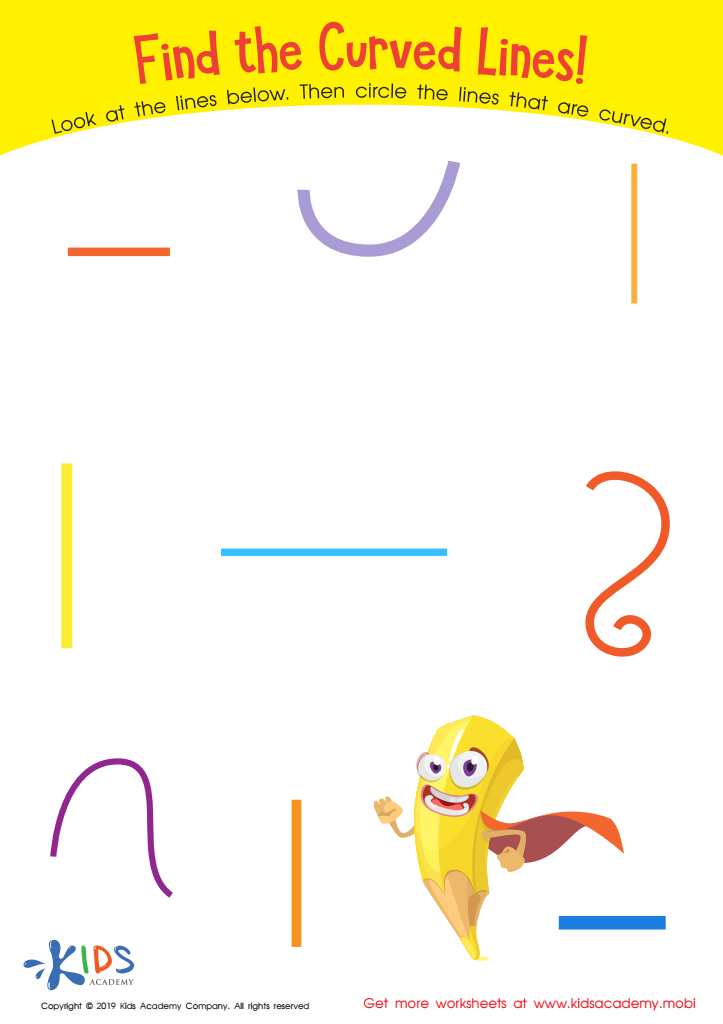
Find the Curved Lines! Worksheet
Help your child build their writing skills by having them trace words and practice with exercises. This worksheet helps them identify and draw curved lines. There are seven curved lines among nine shapes and lines. Ask your child to spot the curved lines and circle them.
Find the Curved Lines! Worksheet
Worksheet
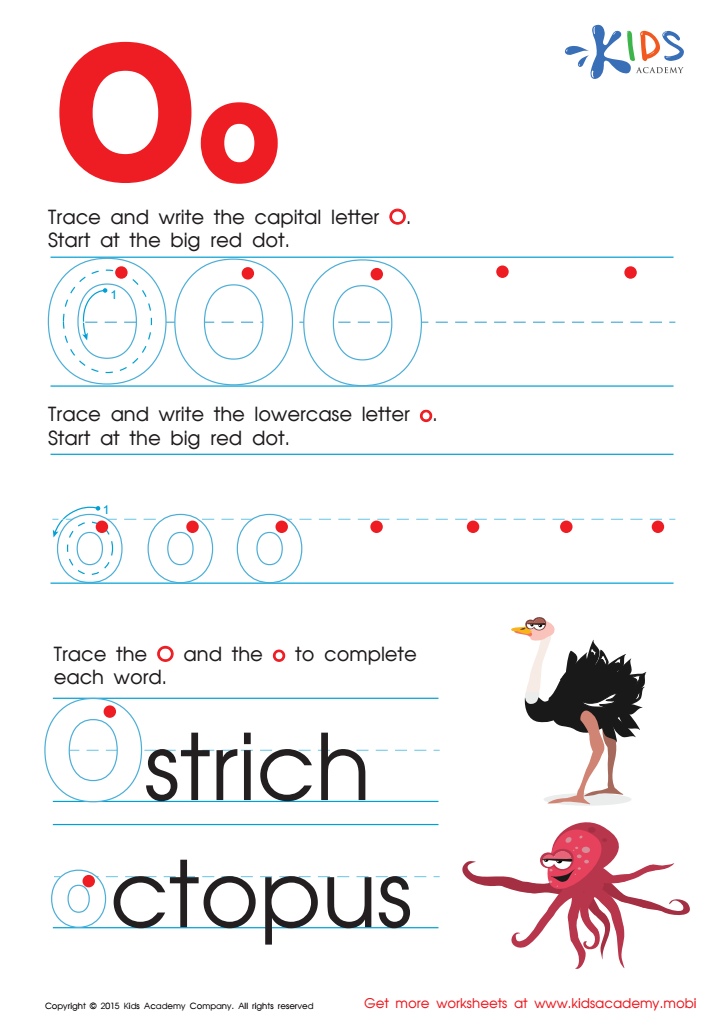
Letter O Tracing Page
Practice writing the letter "O" with our new worksheet. Trace and write the letter several times, starting at the red dot. First do the uppercase letter, then the lowercase. Use the pictures to complete the words "Ostrich" and "octopus". Kids Academy offers more fun alphabet worksheets.
Letter O Tracing Page
Worksheet
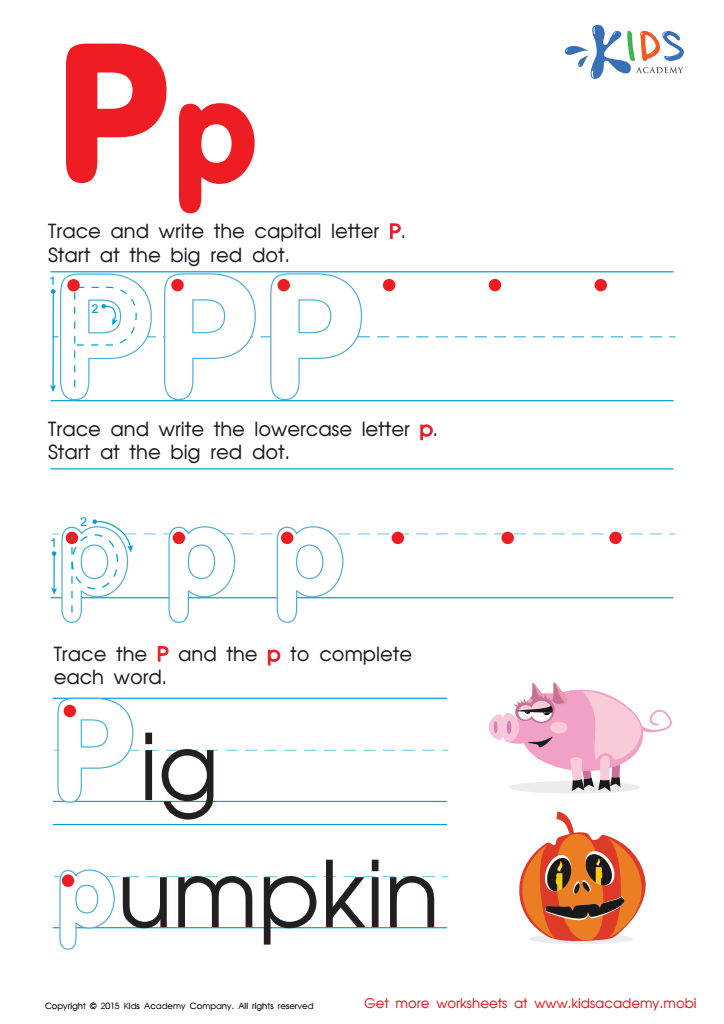
Letter P Tracing Page
Trace the lines from the red dot to learn to write "P"! Then practice this letter with the fun activities: complete the word "Pig" and "Pumpkin". Check out Kids Academy to get more free ABC worksheets.
Letter P Tracing Page
Worksheet
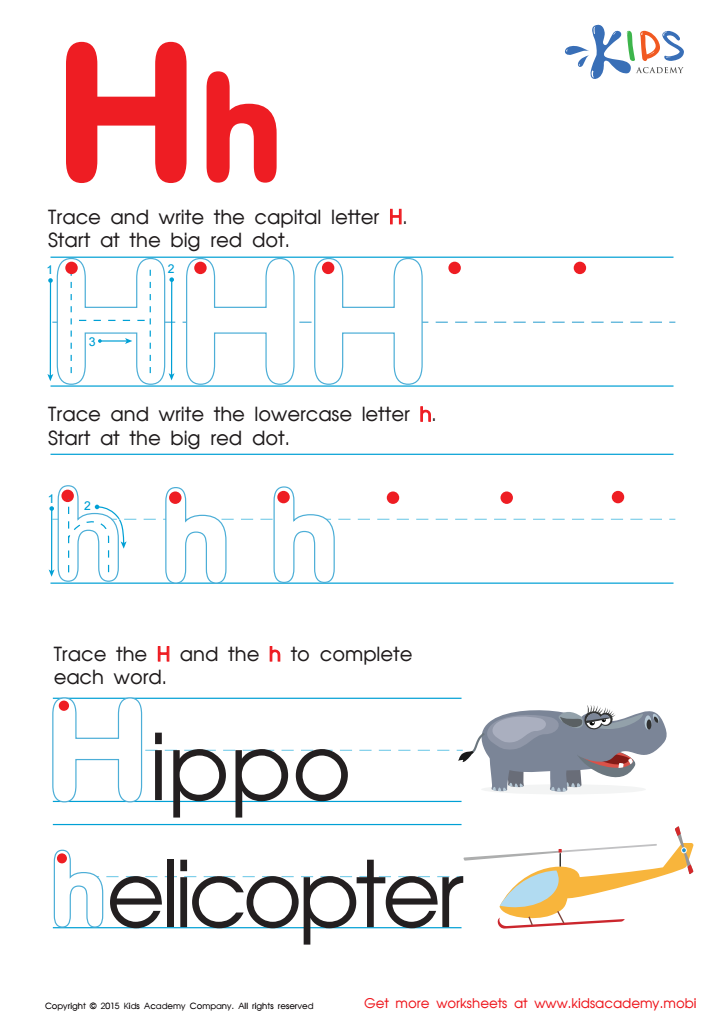
Letter H Tracing Page
Trace the letter "H", then practice writing its lowercase form. Finally, choose your favorite form of transport and ride away! Get our worksheets to make learning fun and easy.
Letter H Tracing Page
Worksheet

Letter D Tracing Page
Trace and write capital and lowercase letter "D" with our free printable alphabet worksheet! Be careful not to mix up "b" and "d" - just look at the ducks and write their first letter. The dolphin wants to join the fun too - do you like dolphins? Get more fun worksheets and activities at Kids Academy!
Letter D Tracing Page
Worksheet
Join Kids Academy for Free
Who is primarily going to use this learning content?







Hand-eye coordination is a vital skill that lays the foundation for numerous developmental milestones, particularly in early education. For children aged 5-9, tracing letters is an engaging activity that significantly enhances this coordination. As young learners trace letters, they exercise fine motor skills and learn to synchronize their hand movements with what they see visually. This linkage not only helps in writing proficiency but also aids in tasks like drawing, cutting, and even sports activities, where precise hand movement is crucial.
Moreover, tracing letters reinforces letter recognition and phonetic awareness. When children engage in this practice, they reinforce their understanding of the alphabet, essential for reading and language development. Tracing also fosters concentration and patience, encouraging a sense of accomplishment as they see their progress.
For parents and teachers, emphasizing hand-eye coordination through letter tracing can stimulate cognitive growth and build a more well-rounded skill set. By prioritizing these activities, caregivers can help children develop confidence in their writing abilities and lay the groundwork for future academic success. Integrating fun, creativity, and occasional challenges in letter tracing can turn learning into a delightful experience, making it a valuable tool for early education.








