
Letter-sound association Tracing Letters Worksheets for Ages 5-9
5 filtered results
Difficulty Level
Grade
Age
-
From - To
Subject
Activity
Standards
Unlock the magic of letters and sounds with our "Letter-Sound Association Tracing Letters Worksheets for Ages 5-9." Designed to seamlessly blend fun with learning, these vibrant worksheets guide young learners through the exciting journey of letter recognition and sound matching. By tracing letters, children not only enhance their fine motor skills but also solidify their understanding of letter-sound relationships. Ideal for both classroom and home use, these engaging activities lay a strong foundation for reading and writing proficiency. Watch your child's confidence soar as they master each letter through interactive and enjoyable practice. Let the adventure in learning begin!
Favorites
With answer key
Interactive
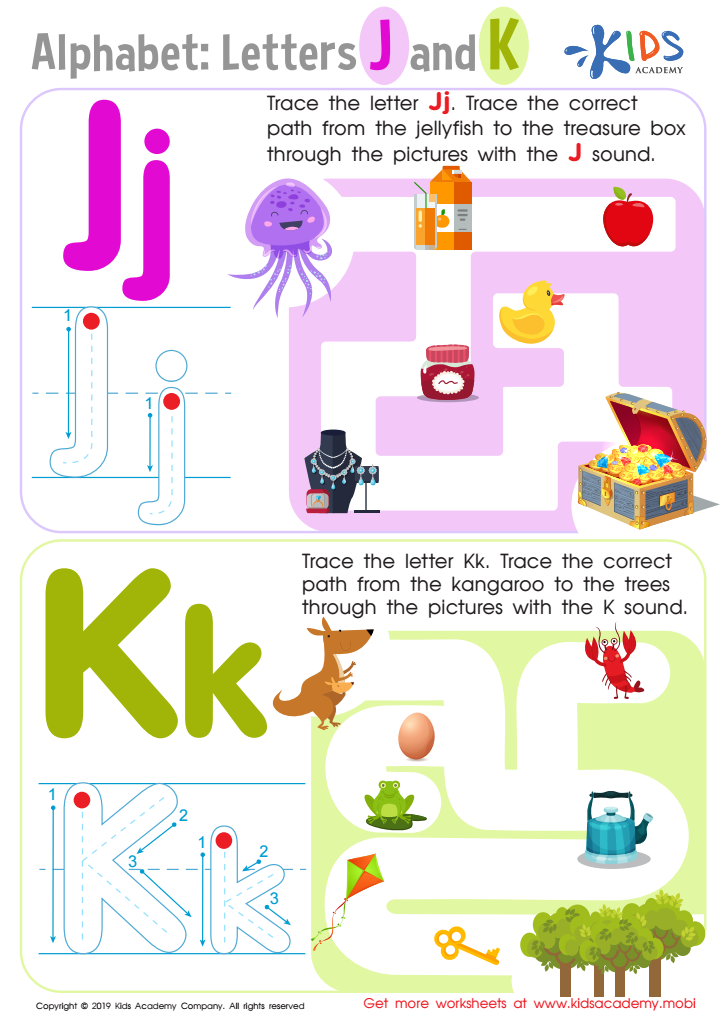
Letters J and K Tracing Worksheet
Tracing the letters «J» and «K» is the first step. Help the jellyfish find a path to the treasure chest with pictures of the «J» sound, and assist the kangaroo in finding a path to the trees with pics of «K». Fun, educational and enjoyable for children!
 Assign to My Students
Letters J and K Tracing Worksheet
Worksheet
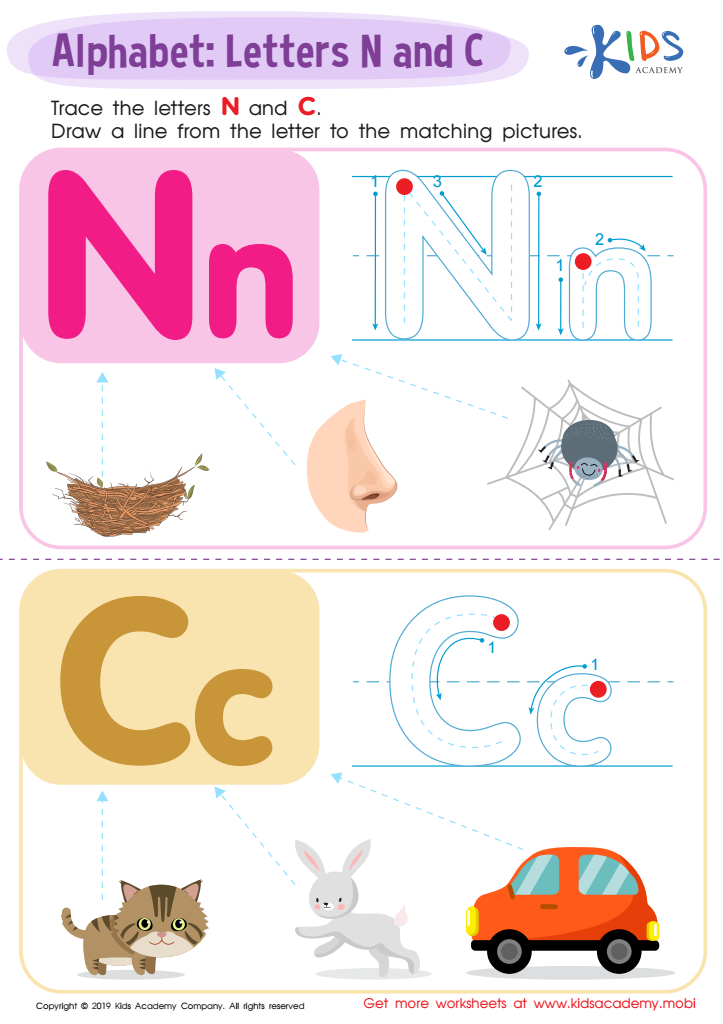
Letter N and C Tracing Worksheet
Kids can trace the letters N and C, then draw a line to the words starting with each letter. This worksheet helps them practice letter writing, distinguish capital and lowercase letters, and match pictures with the right letter. It also teaches essential skills for learning letters efficiently.
Letter N and C Tracing Worksheet
Worksheet
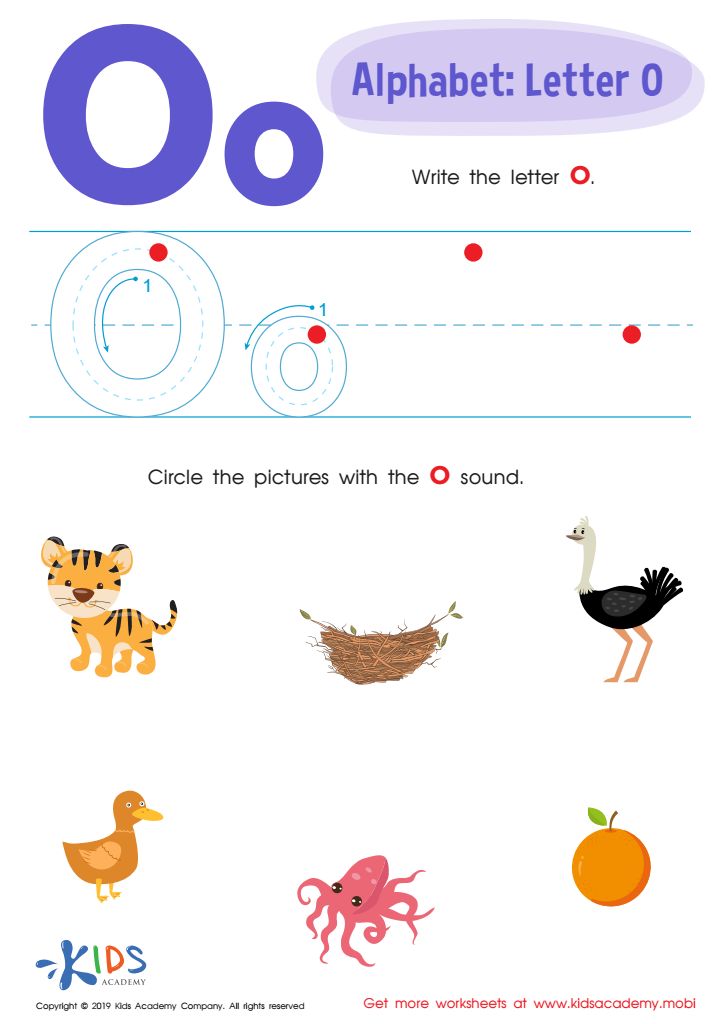
Letter O Tracing Worksheet
This worksheet gives kids the chance to trace the letter "O" while also circling pictures that have the "O" sound. Visual and hands-on learners will benefit from the visuals and tracing, helping them learn the letter "O" with ease. It's the perfect way to learn what "octopus" and "ostrich" start with!
Letter O Tracing Worksheet
Worksheet
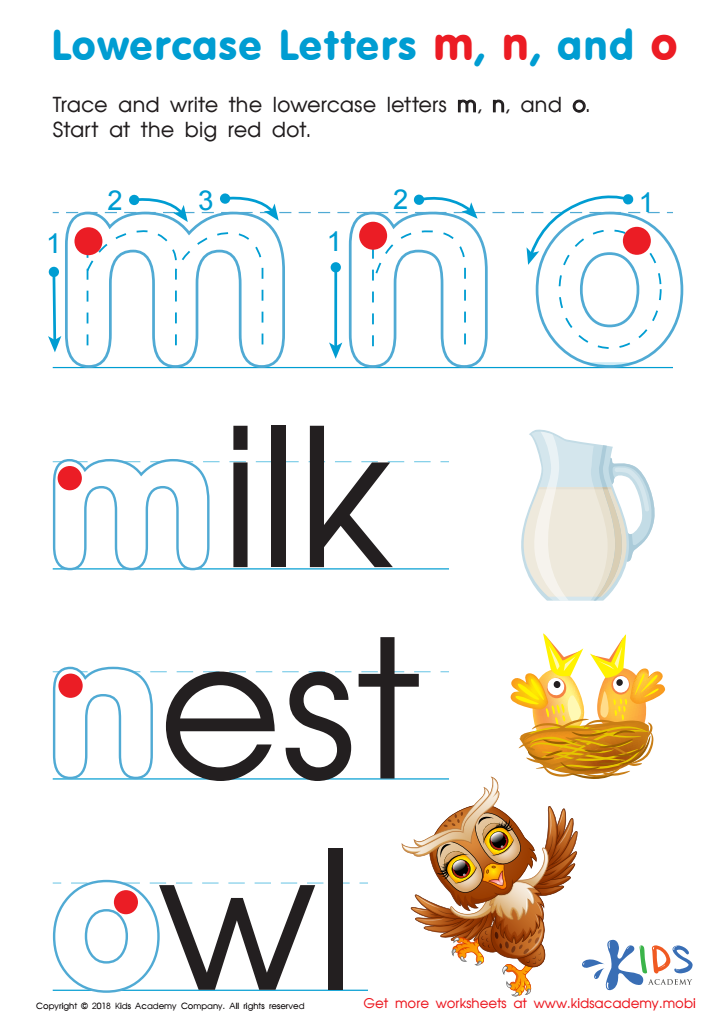
Lowercase Letters m n o Worksheet
Help your child learn the alphabet with letter tracing. Show them the difference between uppercase and lowercase letters by working through this free worksheet, tracing and writing lowercase m, n and o.
Lowercase Letters m n o Worksheet
Worksheet
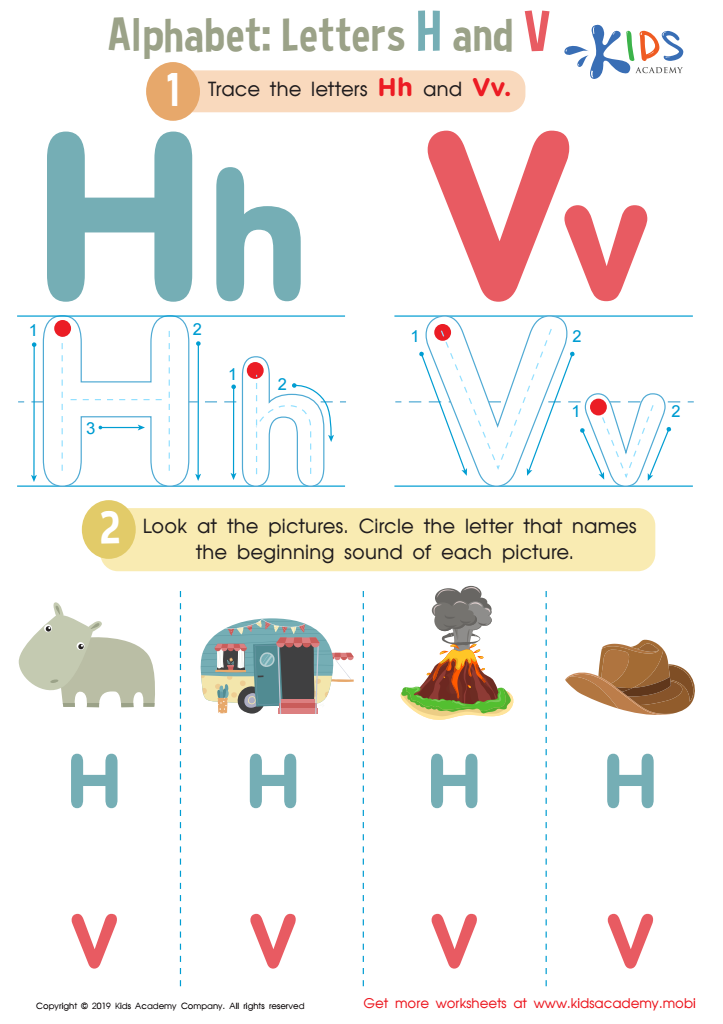
Letters H and V Tracing Worksheet
Kids will trace the letters H and V and circle the letter of the beginning sound of each picture. This helps strengthen writing and identify objects with their beginning sound, with two letter options to choose from.
Letters H and V Tracing Worksheet
Worksheet
Join Kids Academy for Free
Who is primarily going to use this learning content?







Letter-sound association and tracing letters are foundational skills for children ages 5-9, pivotal for their literacy development. By correlating letters with their respective sounds, children begin to decode words, laying the groundwork for reading proficiency. This process, known as phonics, is crucial; studies have consistently shown that strong phonics skills are linked to better reading and spelling abilities.
Tracing letters further reinforces these associations by integrating multi-sensory learning. When children trace a letter, they engage their visual, tactile, and kinesthetic senses simultaneously. This holistic approach helps solidify the connection between the letter’s shape and its corresponding sound, enhancing memory retention.
Parents and teachers should prioritize these activities because early literacy skills are strong predictors of long-term academic success. Children who struggle with reading in the early grades often face challenges across all subjects. Supporting letter-sound association and letter tracing can help prevent future learning difficulties, ensuring children build the confidence and competence needed for ongoing education.
Moreover, engaging in these activities fosters an environment of interactive and supportive learning. It allows parents and teachers to bond with children, provide immediate feedback, and tailor support to individual learning styles. Overall, emphasizing letter-sound association and tracing letters equips children with essential tools for reading success, positively influencing their entire educational journey.








