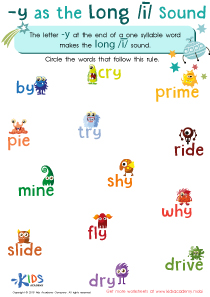
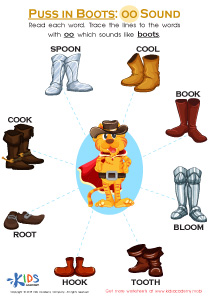
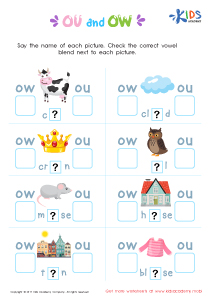
Phonics practice Vowel Blends Worksheets for Ages 5-9
3 filtered results
-
From - To
Enhance your child's reading skills with our engaging Phonics Practice Vowel Blends Worksheets, designed for ages 5-9. These printable worksheets provide a fun and effective way for young learners to master vowel blends through various activities, including matching, tracing, and fill-in-the-blanks. Each worksheet is crafted to build phonemic awareness, improve pronunciation, and boost confidence in reading. Perfect for classroom or home use, our vowel blends worksheets are a valuable resource for both teachers and parents. Unlock your child’s full potential in reading today with Kids Academy's comprehensive and interactive phonics practice.
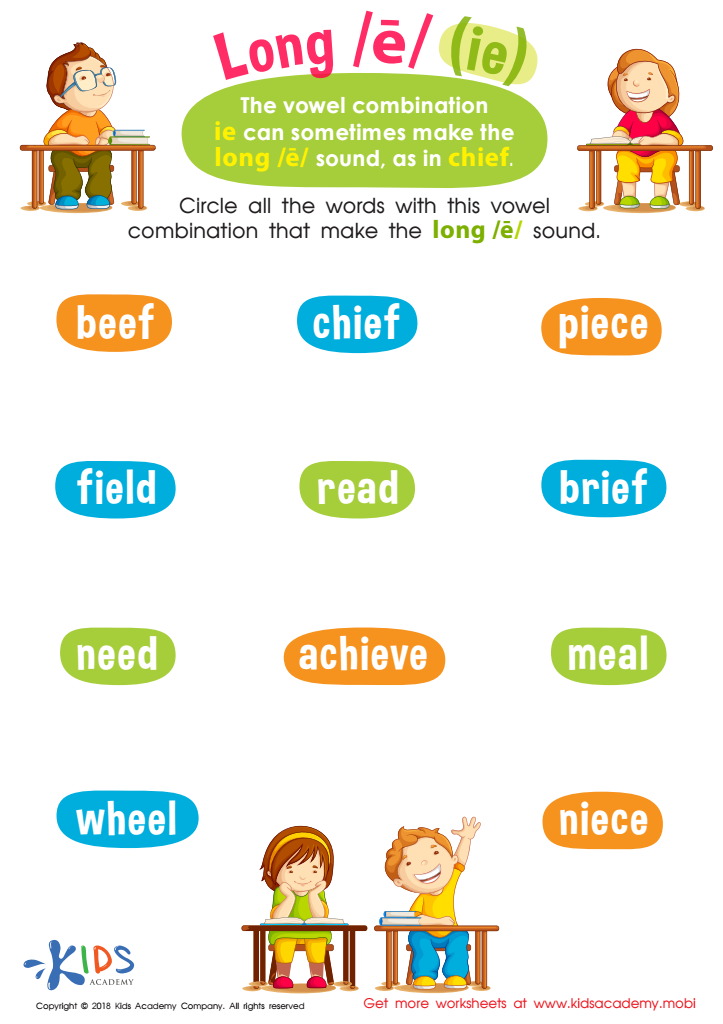
Reading: Long E and IE Worksheet
 Assign to My Students
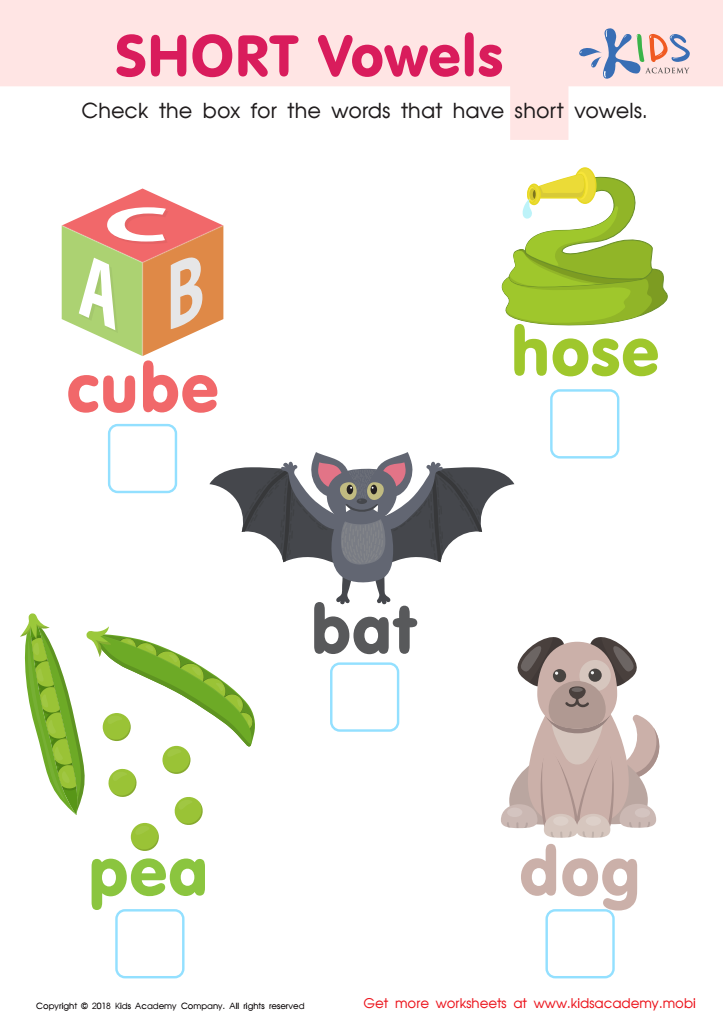
short vowels Worksheet
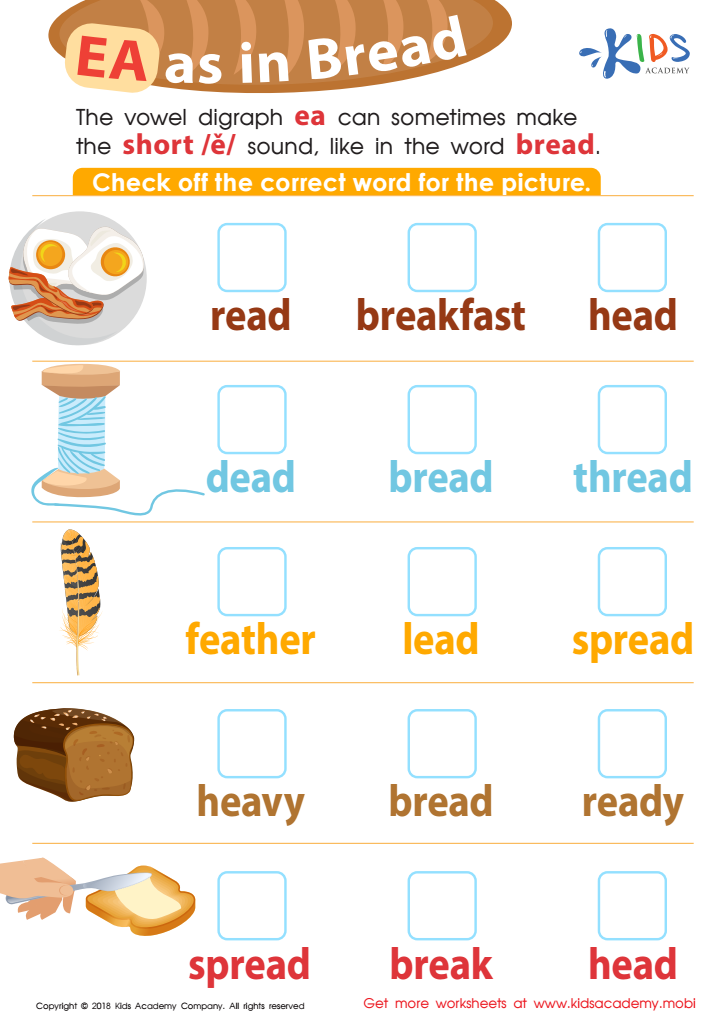
Reading: EA as in Bread Worksheet





Phonics practice, particularly focusing on vowel blends, is crucial for children aged 5-9 for several compelling reasons. This developmental stage, often referred to as early childhood, is when foundational reading skills are established, impacting their future academic success and overall confidence in literacy.
Firstly, the ability to decode words (sounding them out) hinges significantly on knowledge of phonics, which includes vowel blends. Vowel blends are combinations of vowel sounds that come together to form unique phonetic patterns. Mastering these blends enables children to read more fluently by simplifying the decoding process, allowing them to move from recognizing individual letter sounds to understanding more complex word structures.
Secondly, comprehensive vowel blend practice enhances spelling skills. When children understand how different vowel combinations contribute to word formation, they are better equipped to spell words accurately, which bolsters writing competency.
Moreover, structured phonics practice improves phonemic awareness - the recognition that words are made up of individual sounds. This awareness is critical not just for reading and spelling but also for developing strong listening and speaking abilities.
In essence, emphasizing phonics practice in vowel blends equips children with essential tools for successful reading, writing, and communication, laying a robust foundation for lifelong learning. Therefore, parents and teachers play a pivotal role in encouraging and facilitating these fundamental skills during the formative years.