Cognitive Development Vowels Worksheets for Ages 5-9
3 filtered results
-
From - To
Unlock your child's potential with our “Cognitive Development Vowels Worksheets” tailored for ages 5-9. Carefully designed to boost early literacy skills, these engaging activities focus on vowel recognition and usage. Each worksheet is crafted to enhance cognitive functions through fun and educational exercises, promoting critical thinking and problem-solving abilities. Perfect for classroom or home use, our worksheets ensure that learning vowels becomes an enjoyable and rewarding experience. Equip your young learner with the essential language foundations they need to succeed. Visit Kids Academy to explore our exciting variety of resources and give your child the head start they deserve.
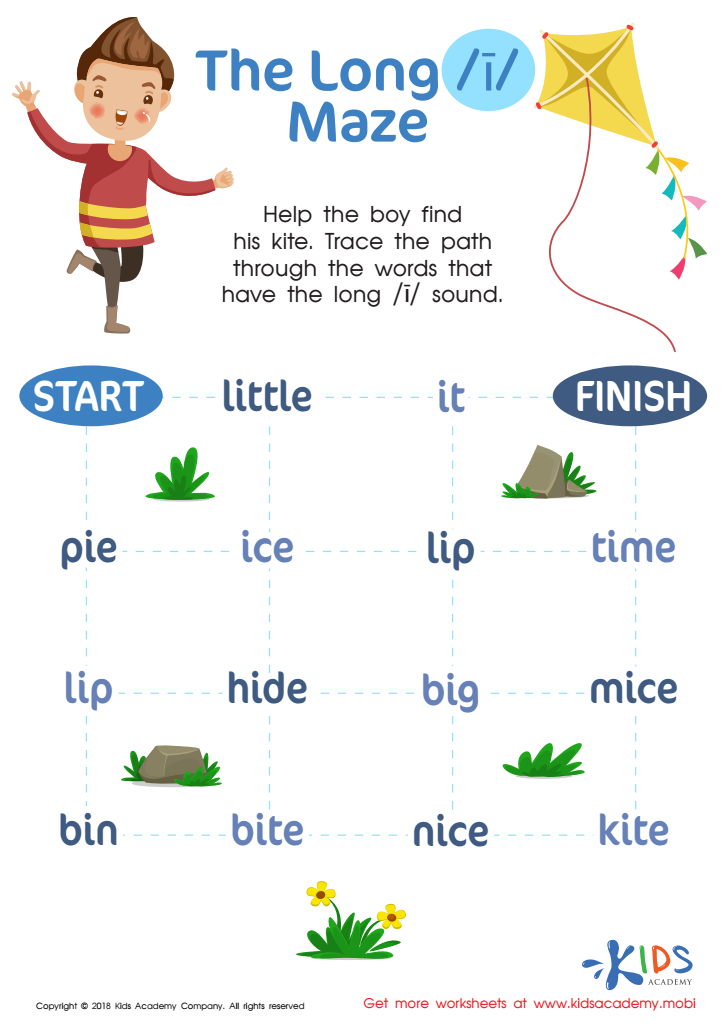
The Long I Maze Reading Worksheet
 Assign to My Students
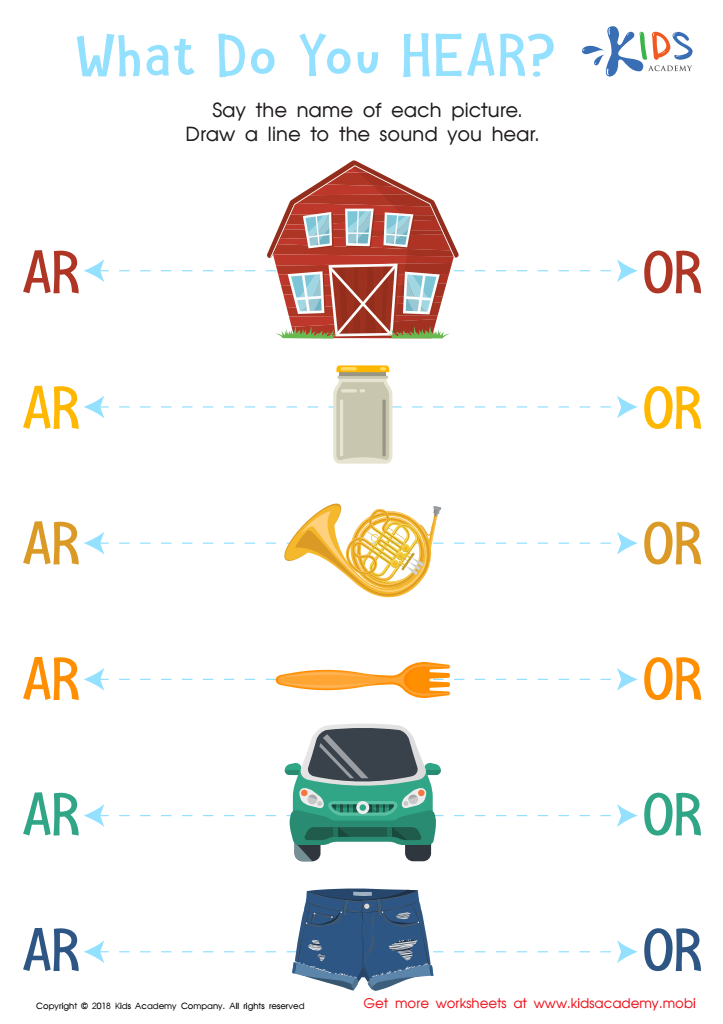
What do you hear Worksheet
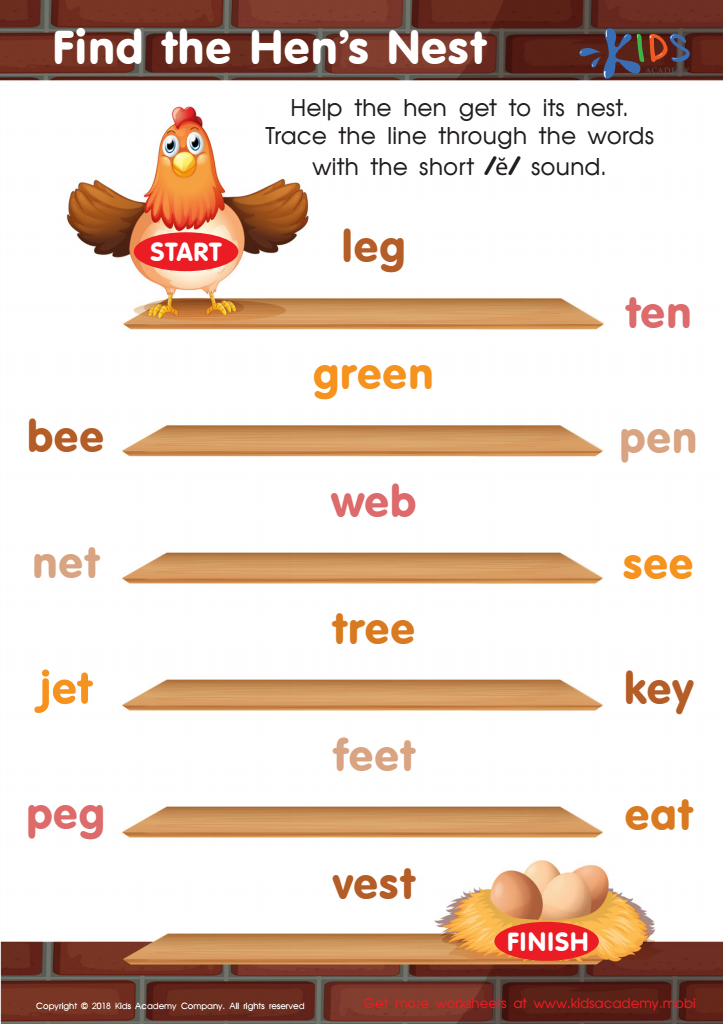
Find Hens Nest Reading Worksheet





Parents and teachers should care about cognitive development, specifically in learning vowels, for ages 5-9 because it forms the foundation of essential literacy skills. During this critical period, children are developing their ability to read, write, and communicate, all of which are inherently dependent on understanding vowels. Vowels play a crucial role in phonemic awareness, which is the ability to recognize and manipulate the sounds in words. This becomes a cornerstone for decoding, or sounding out words when reading.
Mastering vowels aids in accurate pronunciation and comprehension, thus enhancing communication skills. Additionally, familiarity with vowel sounds helps children to become proficient readers and writers, influencing their future academic success. Cognitive development related to vowel recognition and usage enriches vocabulary, boosts memory, and nurtures critical thinking and problem-solving abilities.
Early attention to vowel learning also increases children's confidence in their language skills, making them more willing to engage in reading and writing activities. Effective support from parents and teachers can turn challenges into mastered skills, setting a positive educational trajectory. Ignoring the basics of vowel comprehension can lead to struggles with literacy, which can affect overall cognitive development and learning capabilities in later years.







