Sound differentiation Vowels Worksheets for Ages 5-9
3 filtered results
-
From - To
Explore our engaging Sound Differentiation Vowels Worksheets designed for young learners aged 5-9! These visually stimulating activities help children identify and differentiate between vowel sounds in a fun and interactive way. Each worksheet encourages phonetic awareness through various exercises, including matching, sorting, and filling in the blanks. Tailored for early readers, our resources aid in building essential reading skills while fostering a love for language. Perfect for home or classroom use, these worksheets enhance auditory skills and reinforce understanding of vowel sounds, setting a strong foundation for literacy. Download and watch your little ones become confident readers today!
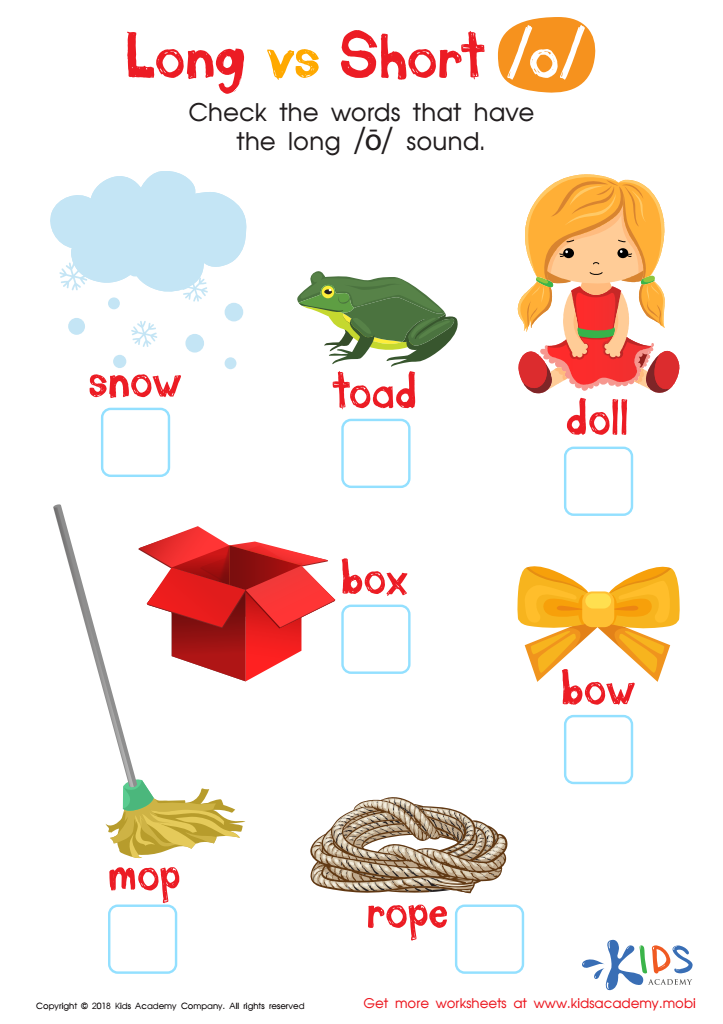
Long vs Short O Reading Worksheet
 Assign to My Students
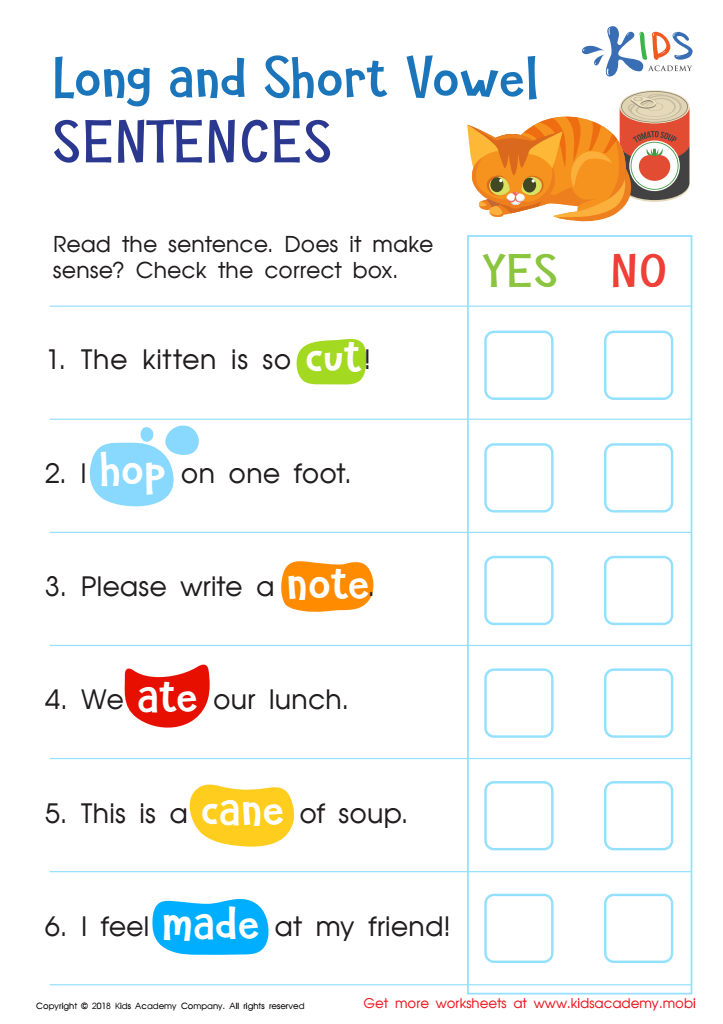
Long and Short Vowel Sentences: Assessment Worksheet
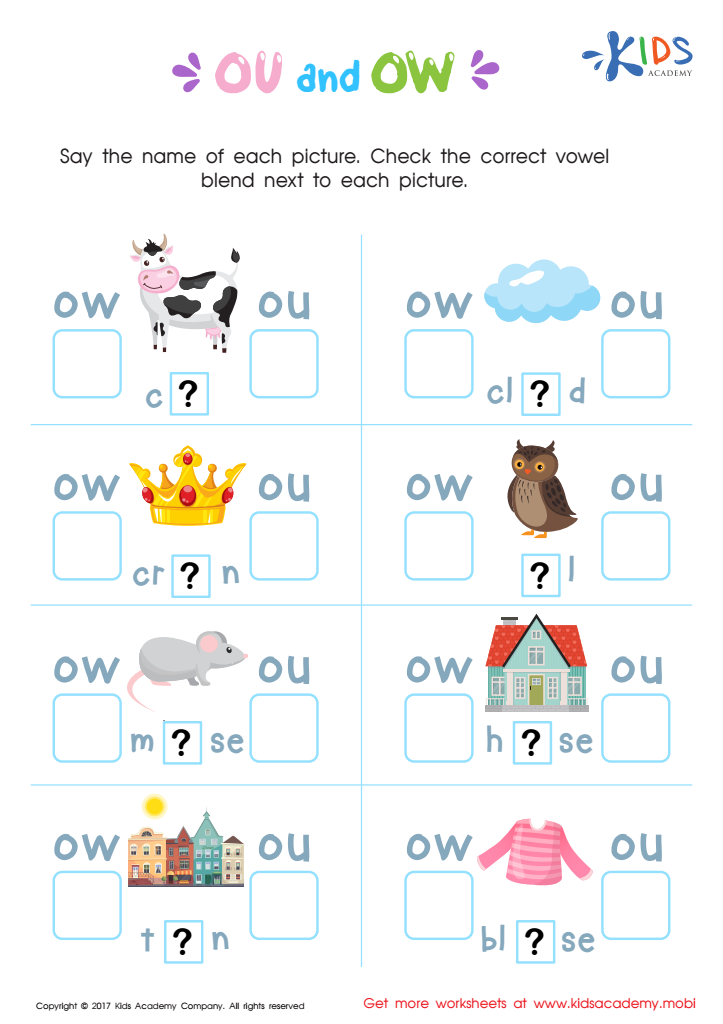
OU and OW Words Worksheet





Sound differentiation in vowels is crucial for children aged 5-9 as it forms the basis of their reading and language development. Mastering vowel sounds helps kids decode words, a foundational skill for literacy. If children can distinguish between different vowel sounds, they can break down words into manageable parts, improving their reading fluency and comprehension.
Parents and teachers should prioritize this skill because it acts as a springboard for further language acquisition. Vowel sounds carry most of the melodic aspects of speech, meaning children who can differentiate these sounds often become more articulate speakers. Furthermore, early proficiency in sound blending and segmentation contributes to better spelling abilities, which plays a significant role in writing development.
Additionally, promoting vowel sound differentiation can help identify and address reading difficulties, such as dyslexia, early on, providing the necessary interventions to guide children toward success. Parental involvement at home, coupled with targeted teaching strategies in school, reinforces this learning. Ultimately, aiding children in mastering sound differentiation fosters their confidence and lays a sturdy groundwork for lifelong learning and communication skills. Improving their understanding of vowels will empower them academically and socially as they progress through school and beyond.







