Vocabulary Building Vowels Worksheets for Ages 5-9
5 filtered results
-
From - To
Enhance your child's language skills with our engaging Vocabulary Building Vowels Worksheets designed for ages 5-9! These worksheets focus on expanding vocabulary through fun activities centered around vowels, helping young learners recognize and use words effectively. Perfect for at-home practice or classroom settings, these resources improve spelling and phonetic understanding while encouraging creativity and critical thinking. Our vibrant and interactive worksheets capture children's attention and foster a love for learning. Equip your little ones with essential language skills in an enjoyable way today! Explore our collection and watch their vocabulary soar as they master the power of vowels.
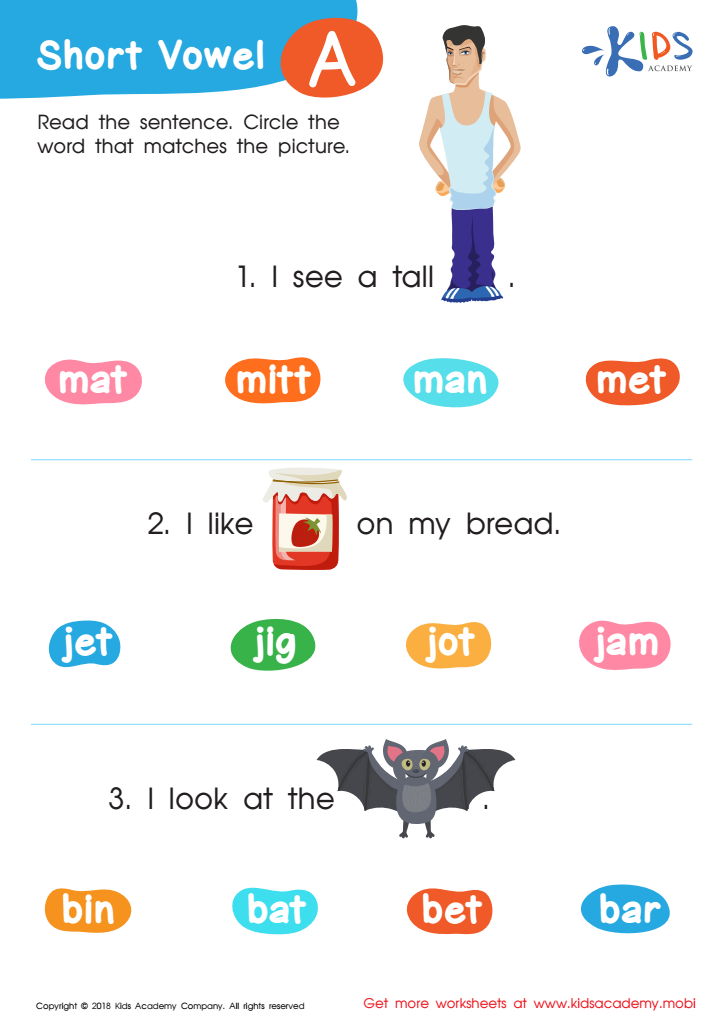
Short Vowel /a/ Worksheet
 Assign to My Students
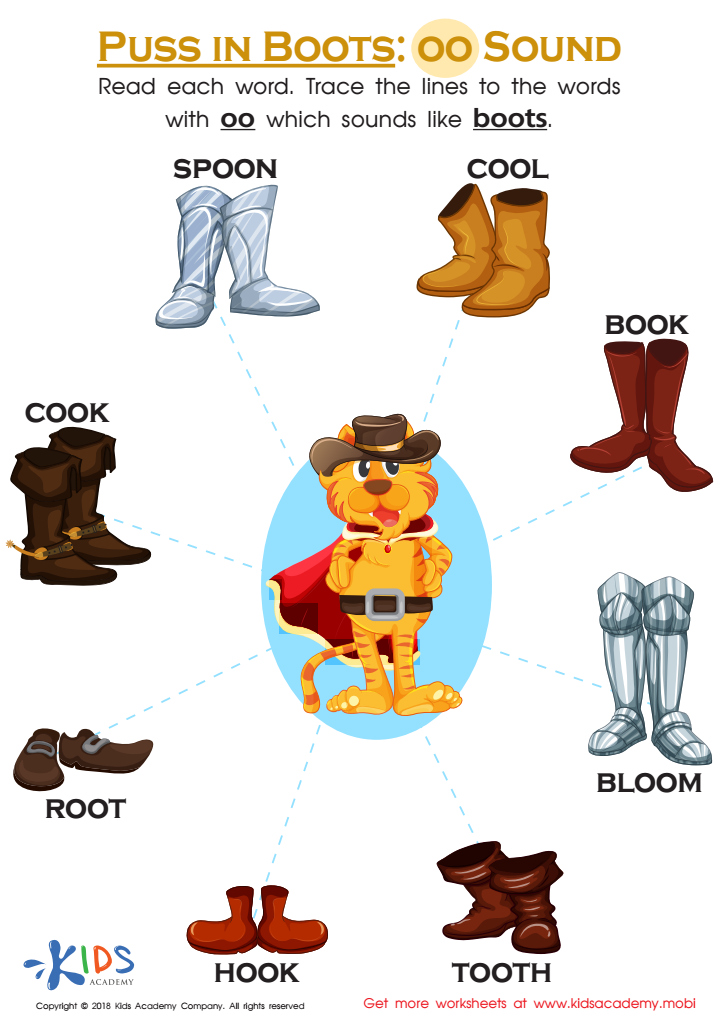
Puss in Boots: OO Sound Worksheet
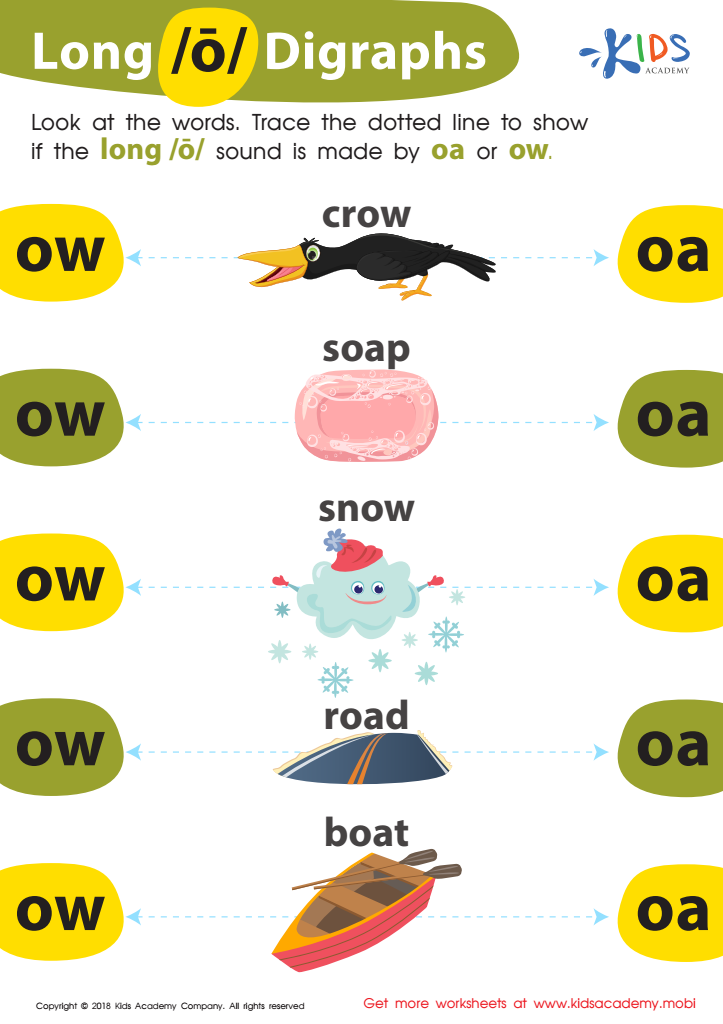
Reading: Long O Digraphs Worksheet
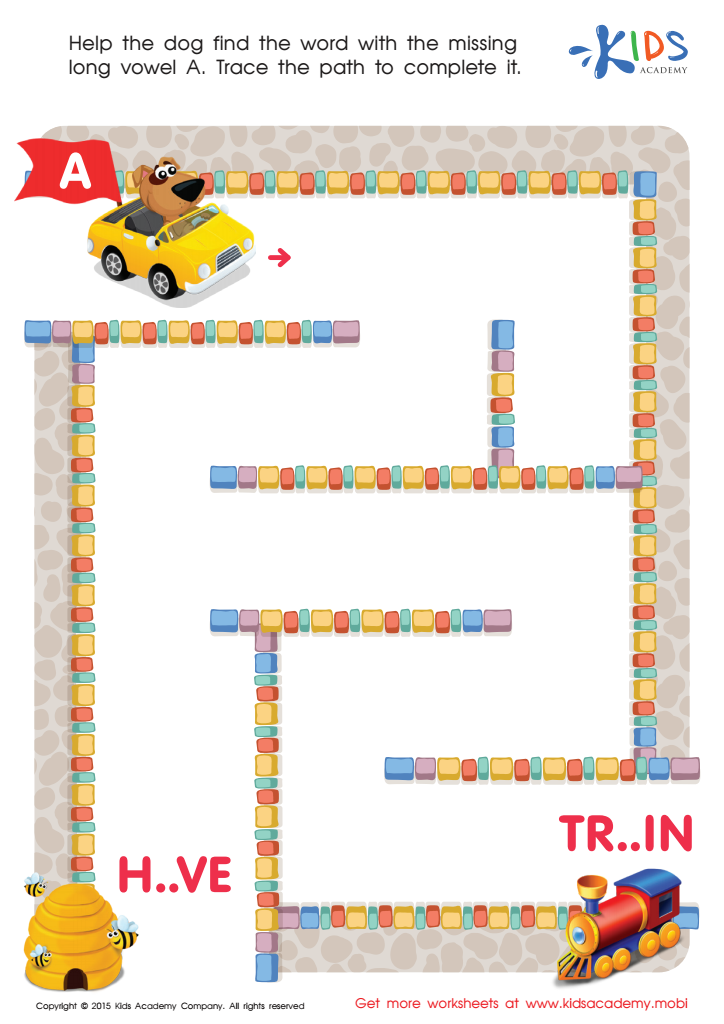
Long Vowel Sound A Worksheet
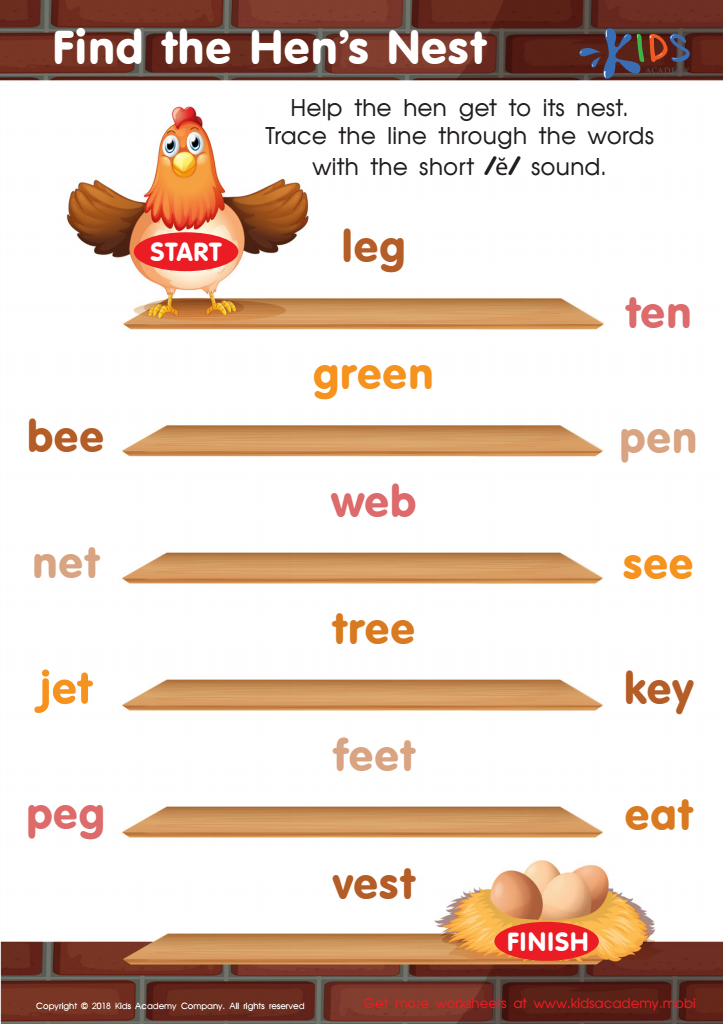
Find Hens Nest Reading Worksheet





Vocabulary building vowels are crucial for young learners aged 5-9, forming the foundation for effective communication and literacy skills. During this stage of development, children are like sponges, absorbing language and learning how to construct words and sentences. Vowels, as the core components of words, play a pivotal role in language comprehension and pronunciation.
By focusing on vowels, parents and teachers can help children develop strong phonetic awareness, enabling them to identify and understand sound patterns. This understanding fosters the ability to decode words, which is essential for reading proficiency. Further, an enriched vocabulary enhances children's ability to express themselves, facilitating better interactions and social skills.
Investing time in vocabulary building through engaging activities such as singing songs, reading books, or playing word games allows for meaningful learning experiences. This not only enhances literacy but also promotes cognitive development, creativity, and critical thinking.
Furthermore, building a robust vocabulary provides children with the tools to engage with more complex ideas in later years, setting the groundwork for academic success. Overall, nurturing vowel recognition and vocabulary expansion in early education empowers children to become confident, articulate communicators, instilling a lifelong love for learning.







