Animal knowledge Worksheets for Ages 5-9
6 filtered results
-
From - To
Explore our engaging Animal Knowledge Worksheets designed for children aged 5-9! These fun and educational resources encourage young learners to discover the fascinating world of animals. Our worksheets cover a variety of topics, including animal habitats, lifecycles, and classifications, promoting curiosity and critical thinking. Each activity is tailored to enhance reading comprehension, enhance vocabulary, and develop observational skills. Suitable for both home and classroom use, these worksheets can be easily printed and integrated into lesson plans. Foster your child's love for animals while strengthening their knowledge and understanding of the natural world. Start their learning adventure today!
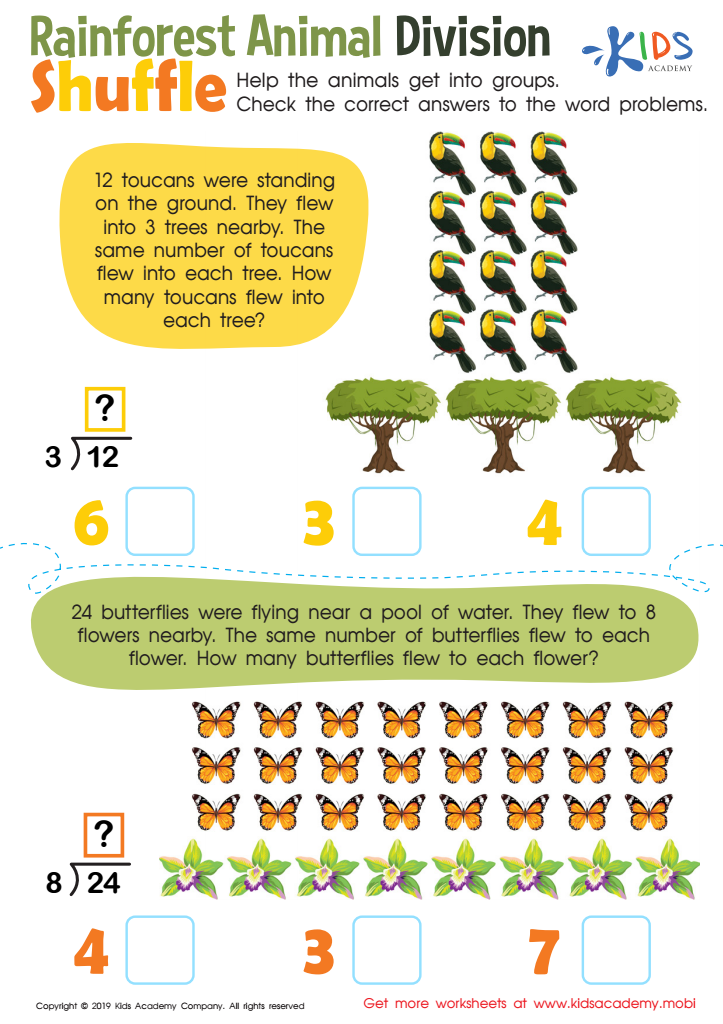
Rainforest Animal Division Worksheet
 Assign to My Students
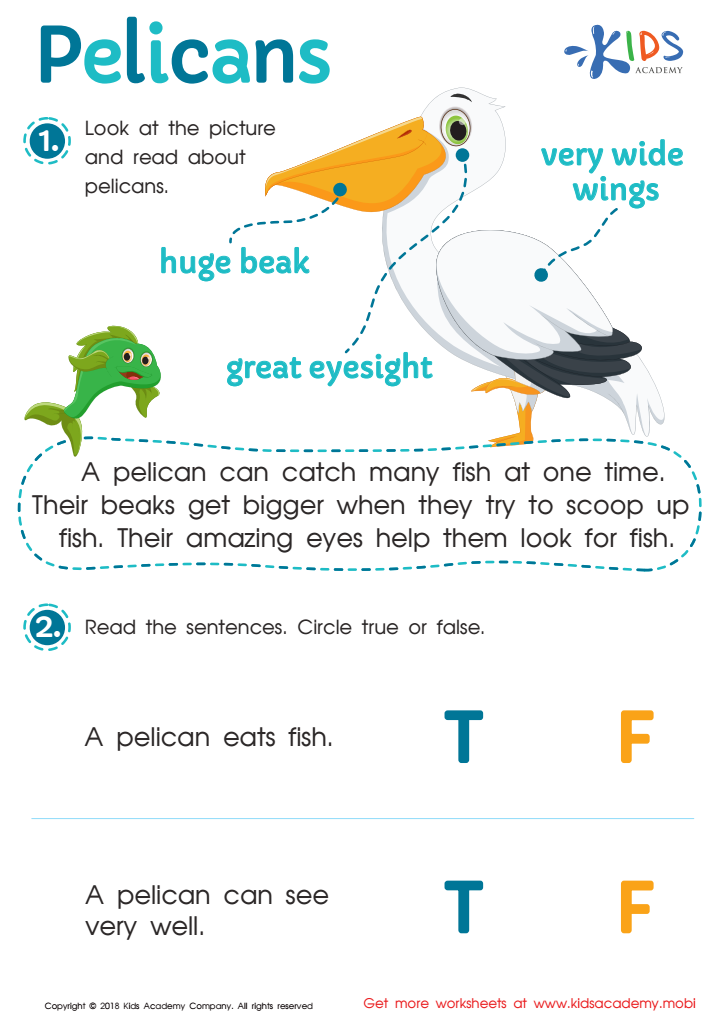
Pelicans Worksheet
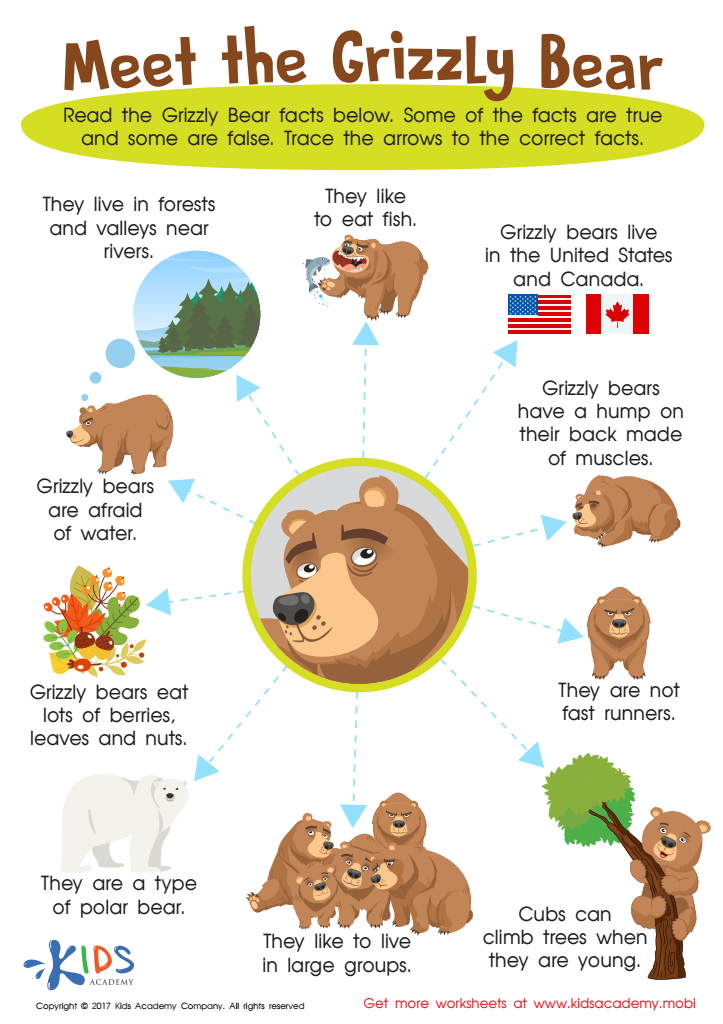
Grizzly Bear Facts Worksheet
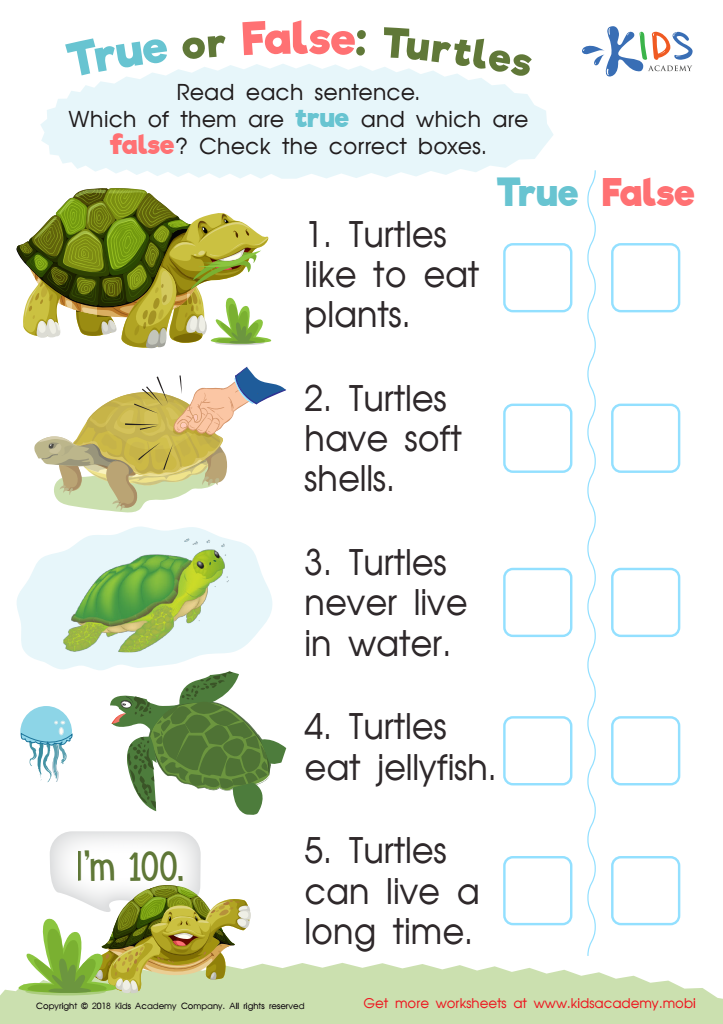
True or False: Turtles Worksheet
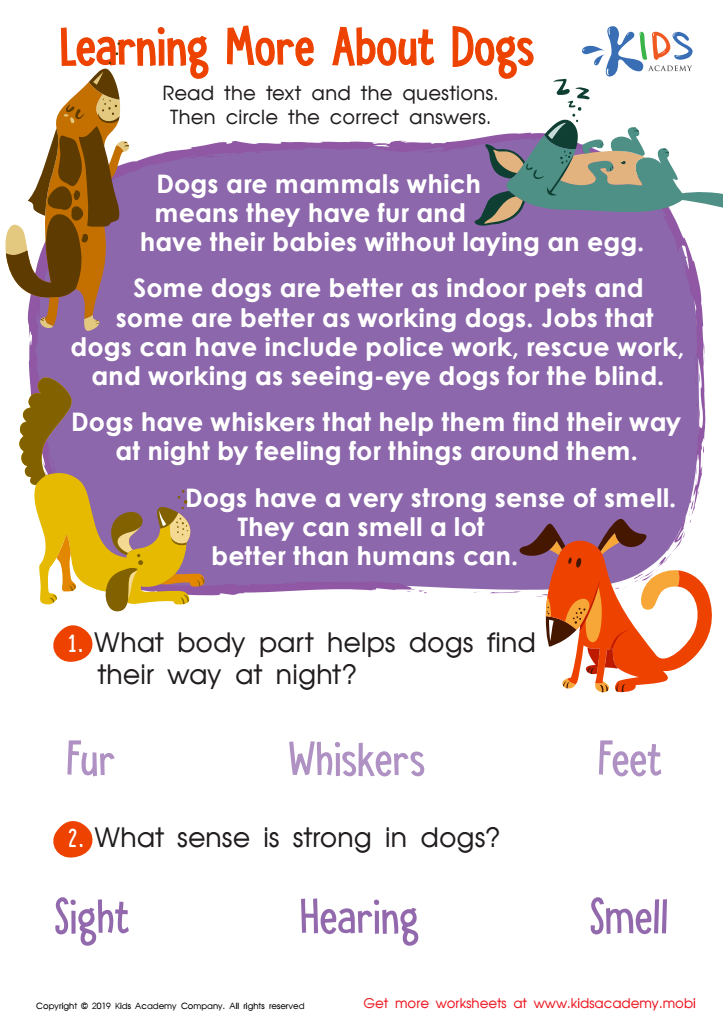
Learning More About Dogs Worksheet
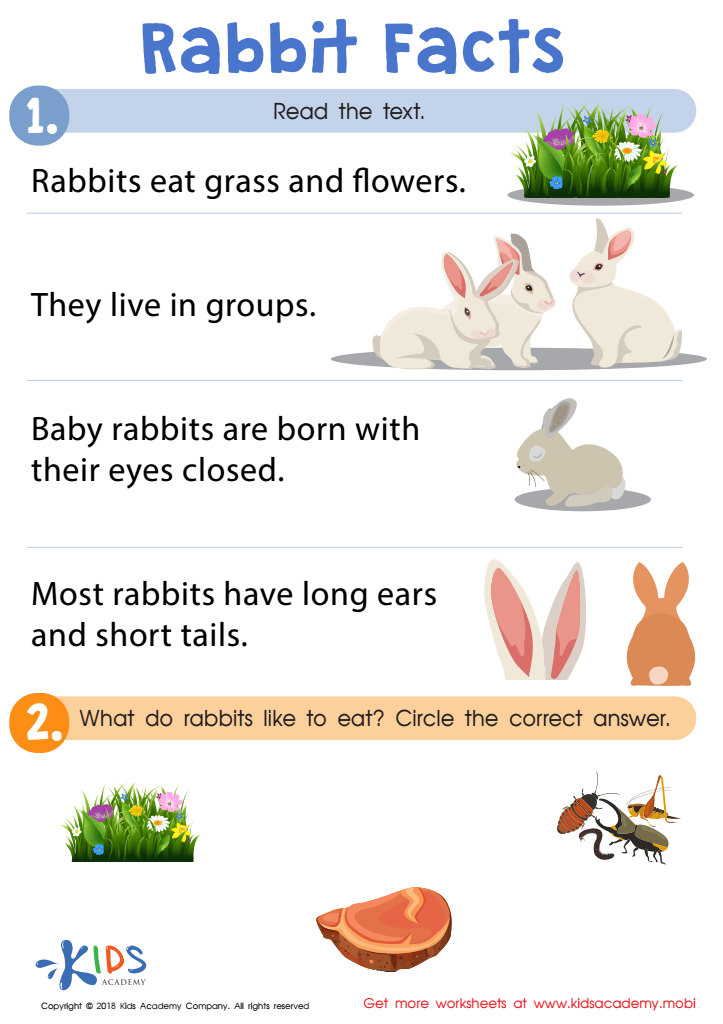
Rabbit Facts Worksheet







Understanding animal knowledge is crucial for children aged 5-9 as it forms a foundation for their cognitive, emotional, and social development. First, learning about animals fosters curiosity and encourages exploration, vital aspects of early childhood education. Children become engaged learners by exploring various species, habitats, and behaviors, making science relatable and fun.
Second, recognizing the importance of biodiversity helps instill a sense of responsibility for the environment. Awareness of how animals contribute to ecosystems promotes empathy and preservation, nurturing future stewards of the planet. This is particularly significant in a world facing environmental challenges; instilling such values early equips children to advocate for wildlife adaptation in their communities.
Additionally, animal knowledge connects to various subjects, from math (e.g., counting species) to language arts (e.g., storytelling about animal adventures). Incorporating this knowledge encourages cross-disciplinary learning and improves critical thinking skills.
Lastly, for children with special needs, animal narratives and behaviors often provide relatable content, assisting in understanding emotions and social interactions. In summary, animal knowledge enriches early learning experiences, encouraging curiosity, fostering empathy towards the environment, and supporting overall academic and personal development. Parents and teachers should champion this foundational aspect of education for holistic growth.








