Check out this FREE "Basic Addition Skills" Trial Lesson for age 5-9!

A

Favorites
With answer key
Interactive
  • 5-9
  • Basic Addition Skills
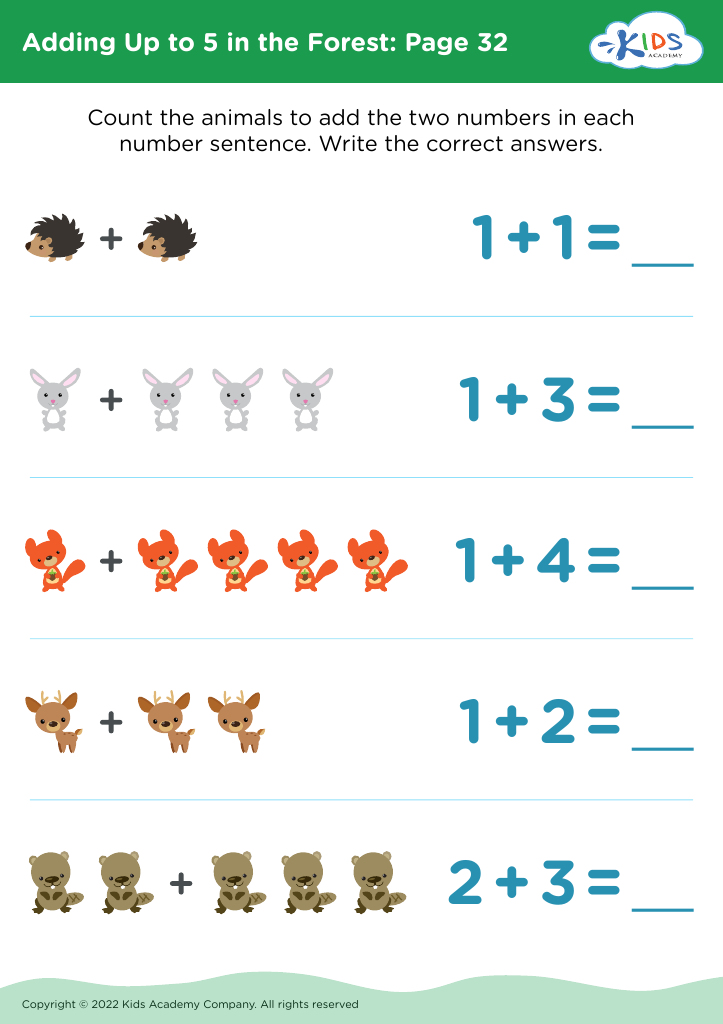
Adding Up to 5 in the Forest: Page 32
Worksheet
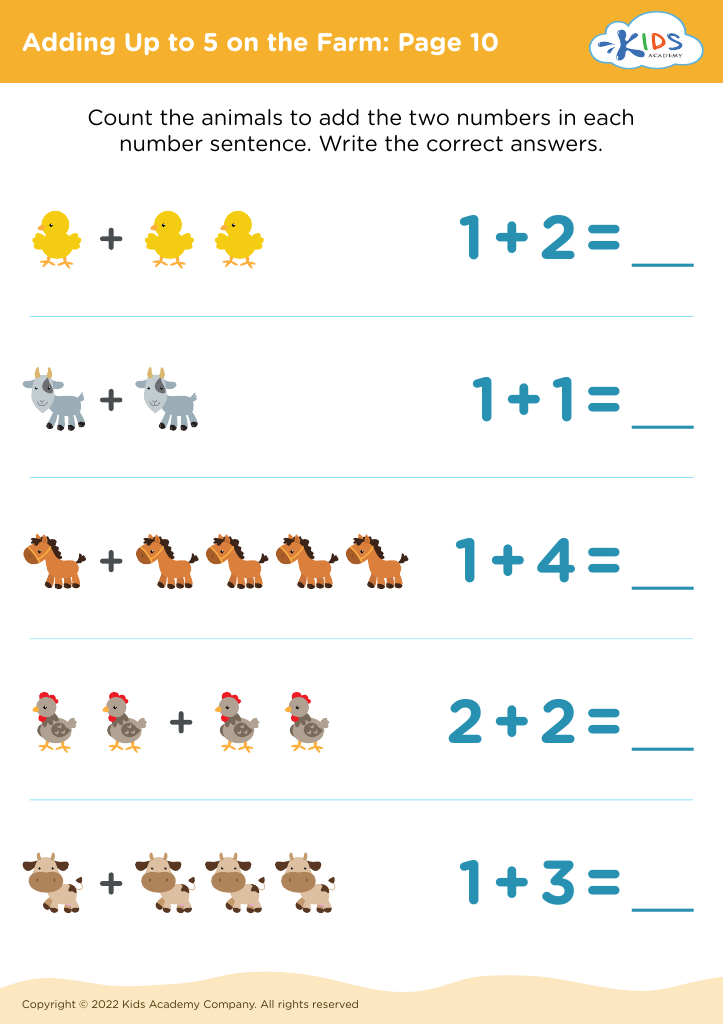
Adding Up to 5 on the Farm: Page 10
Worksheet
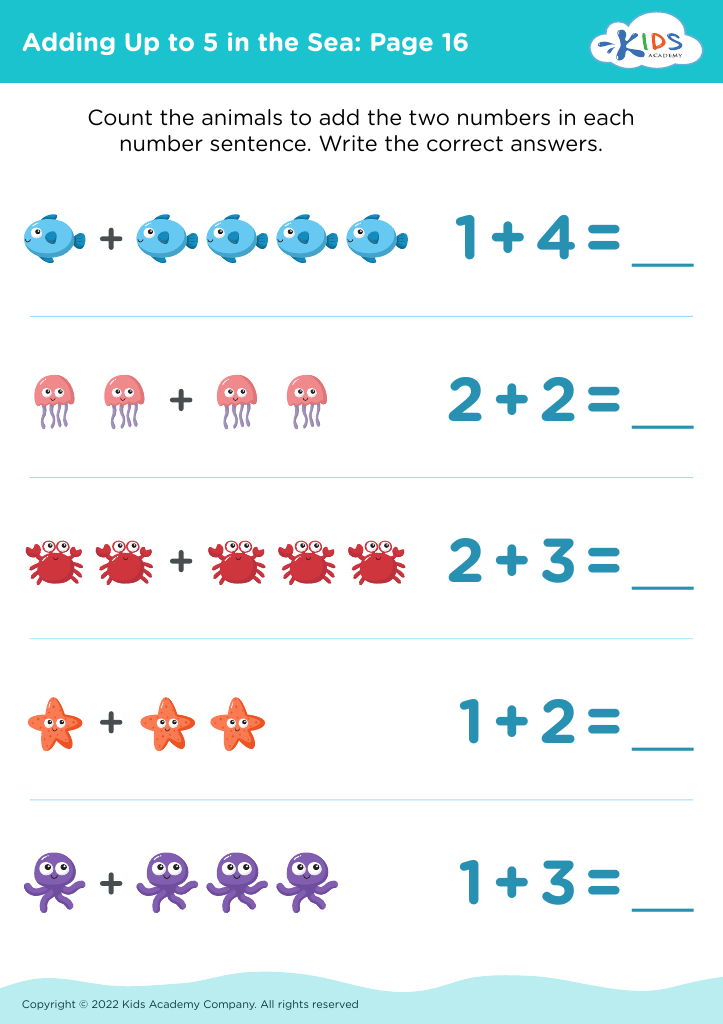
Adding Up to 5 in the Sea: Page 16
Worksheet
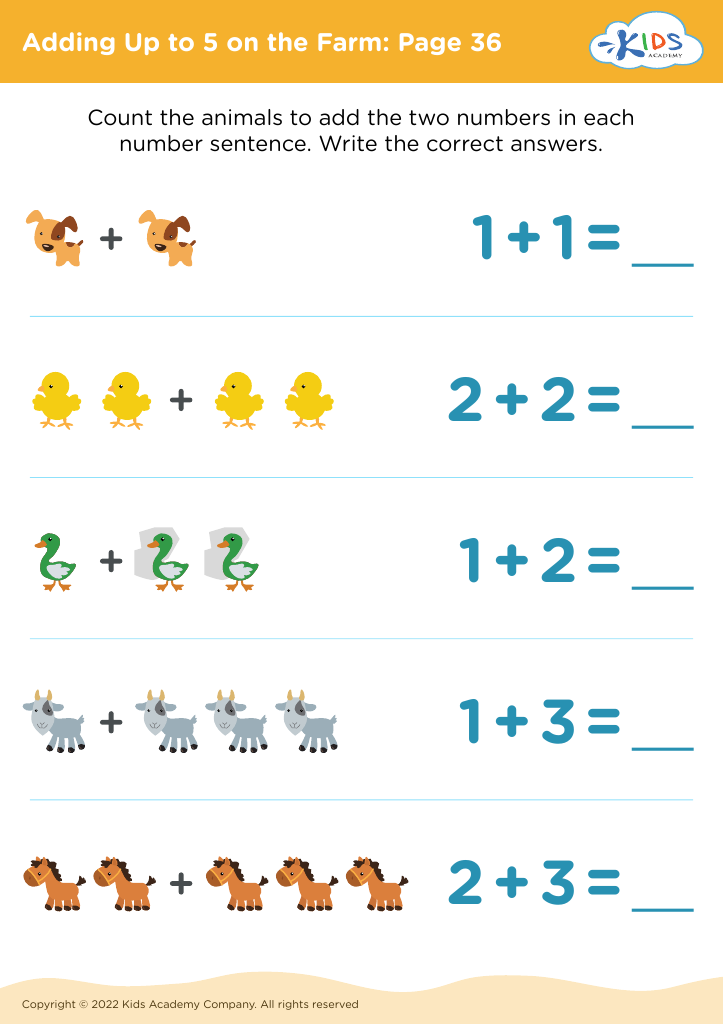
Adding Up to 5 on the Farm: Page 36
Worksheet
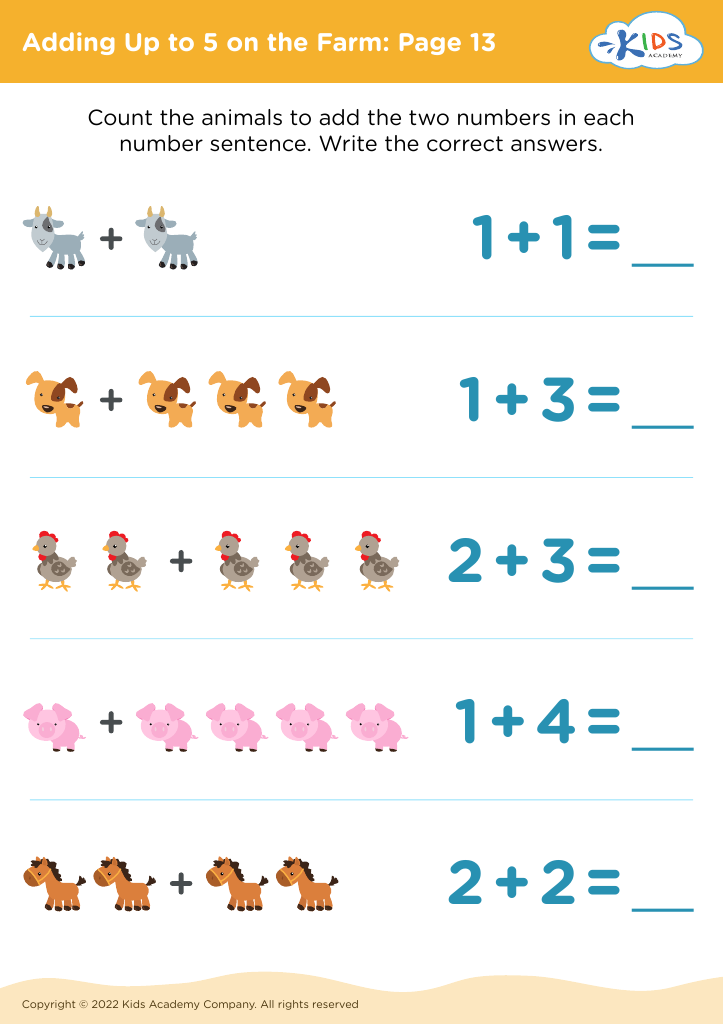
Adding Up to 5 on the Farm: Page 13
Worksheet
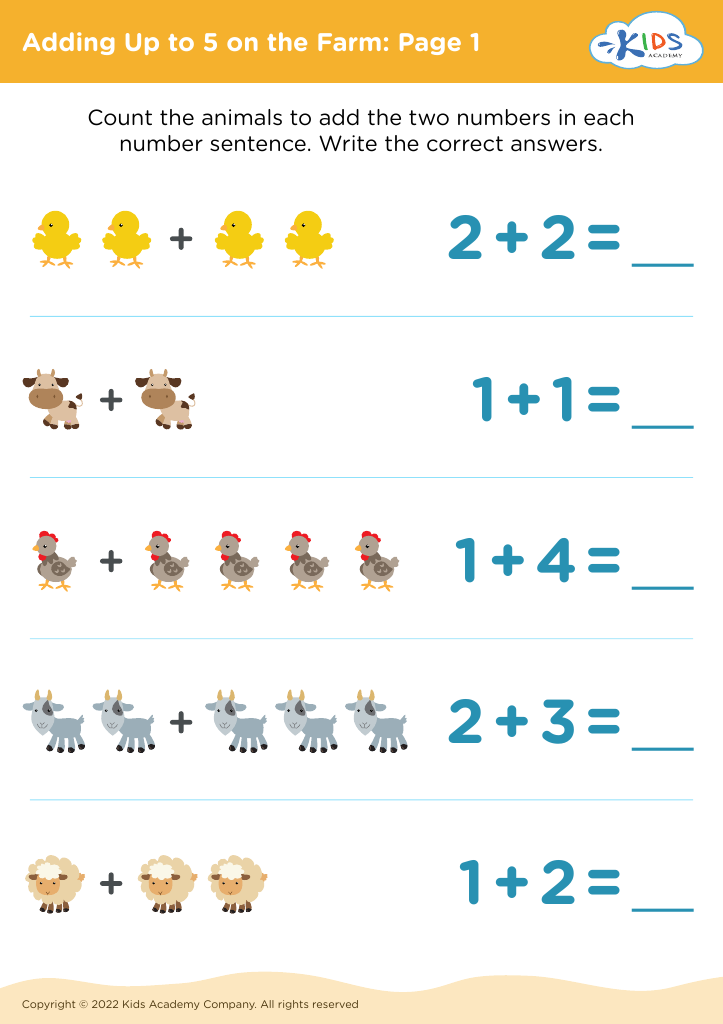
Adding Up to 5 on the Farm: Page 1
Worksheet
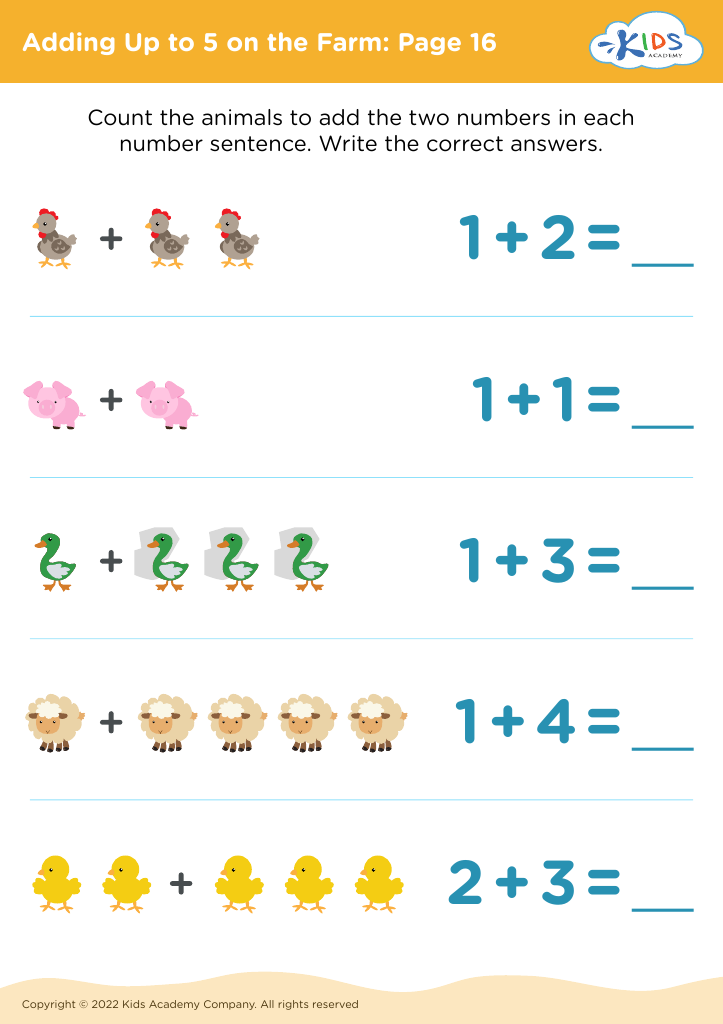
Adding Up to 5 on the Farm: Page 16
Worksheet
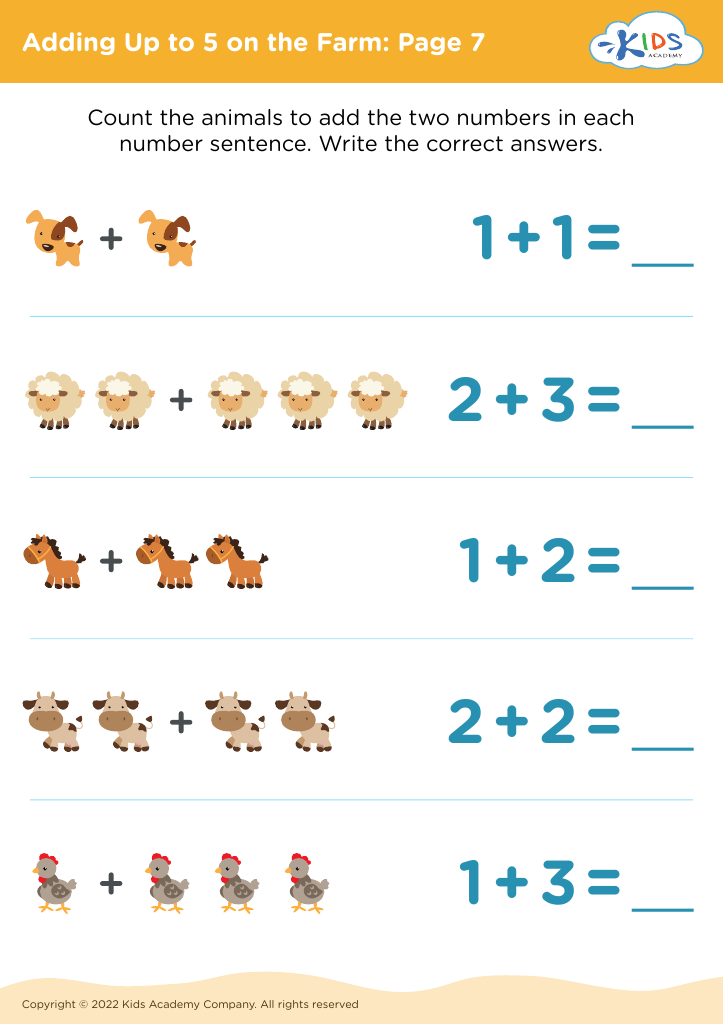
Adding Up to 5 on the Farm: Page 7
Worksheet
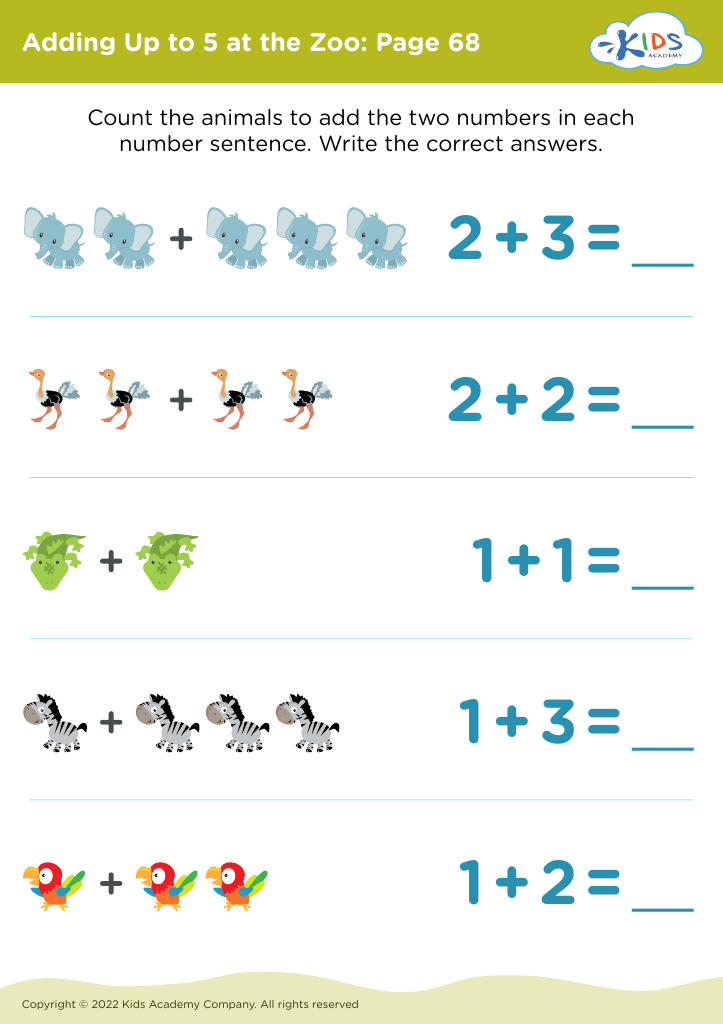
Adding Up to 5 at the Zoo: Page 68
Worksheet
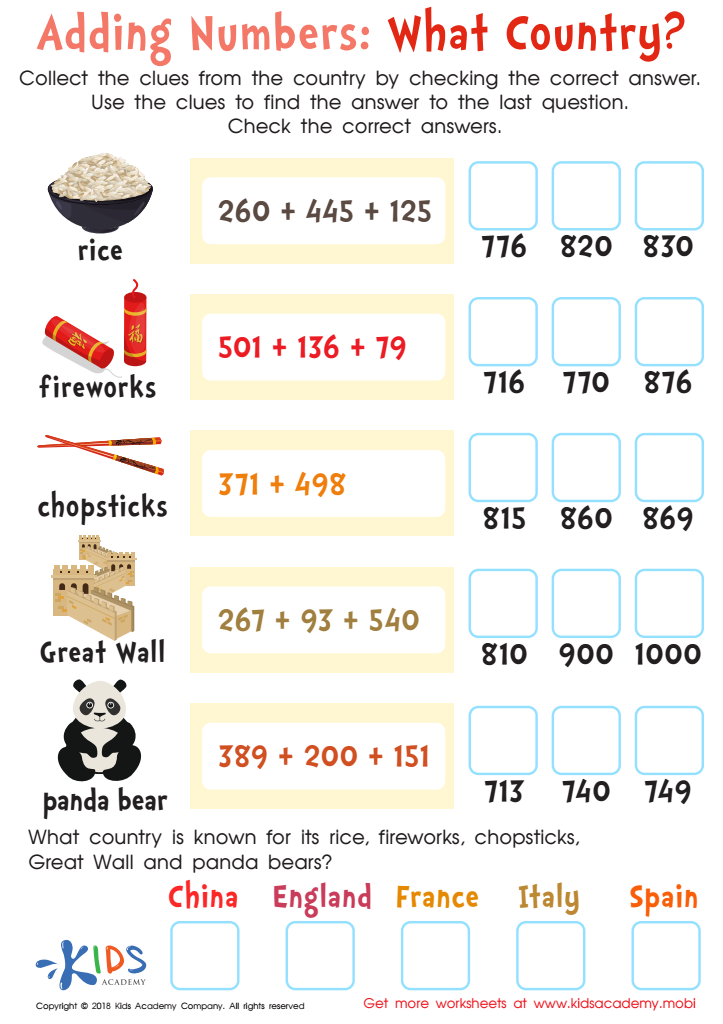
Adding Numbers: What Country Worksheet

Adding Numbers: What Country Worksheet

Students can use this worksheet to learn more about different countries. Have them collect clues from the worksheet to answer the last question. Help them check the correct answer, and they'll gain knowledge about each country's food, animals, celebrations, and landmarks.
Adding Numbers: What Country Worksheet
Worksheet
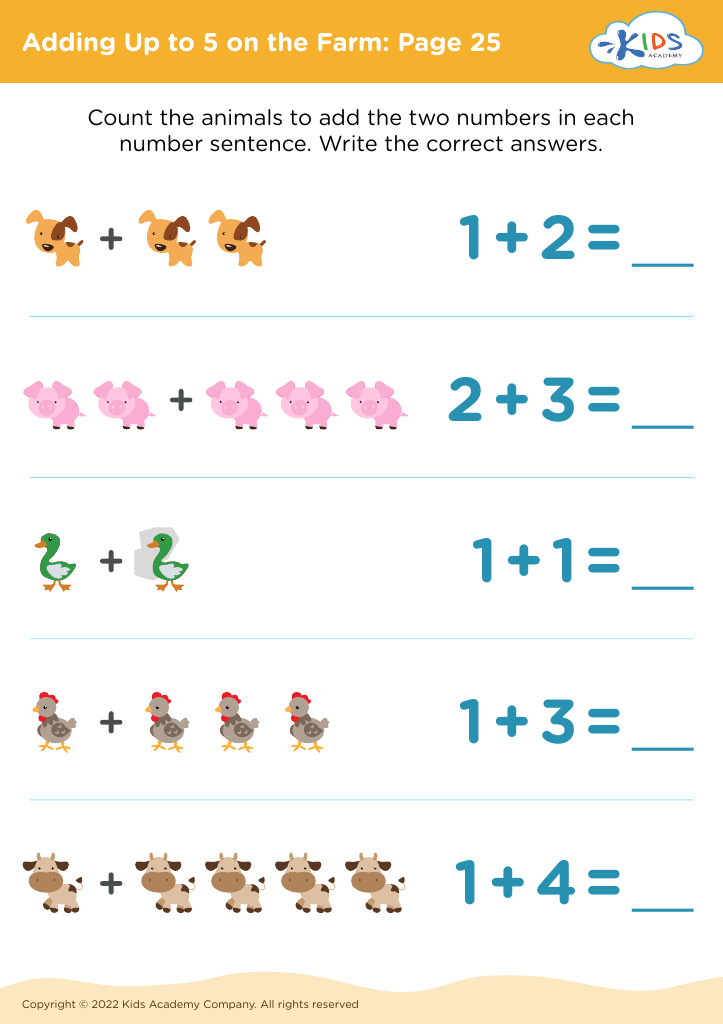
Adding Up to 5 on the Farm: Page 25
Worksheet
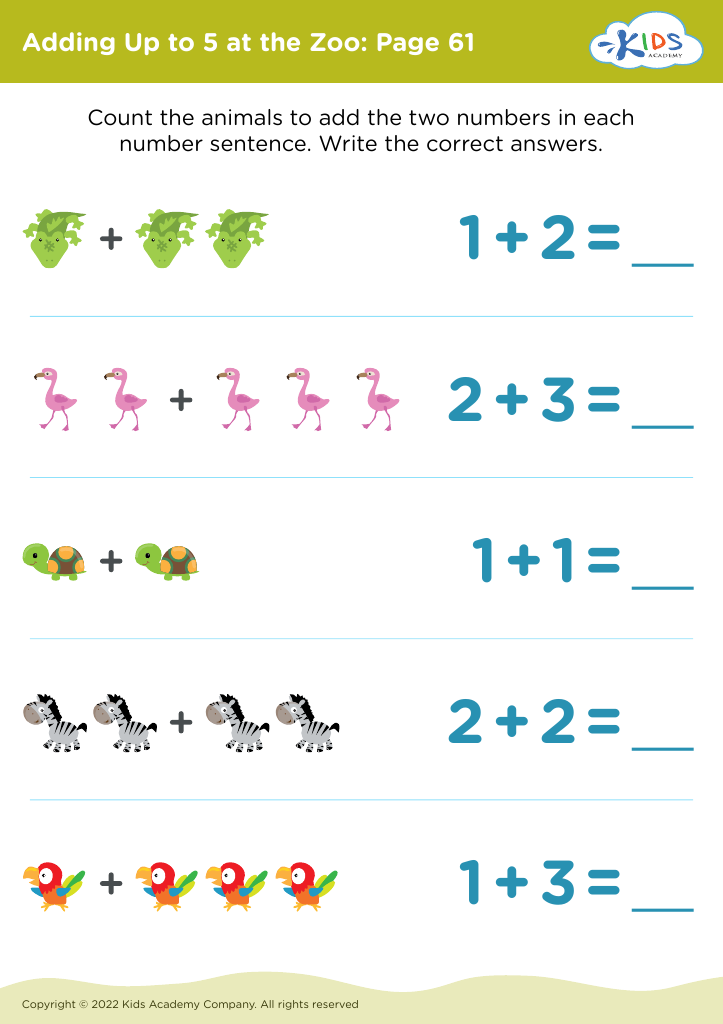
Adding Up to 5 at the Zoo: Page 61
Worksheet
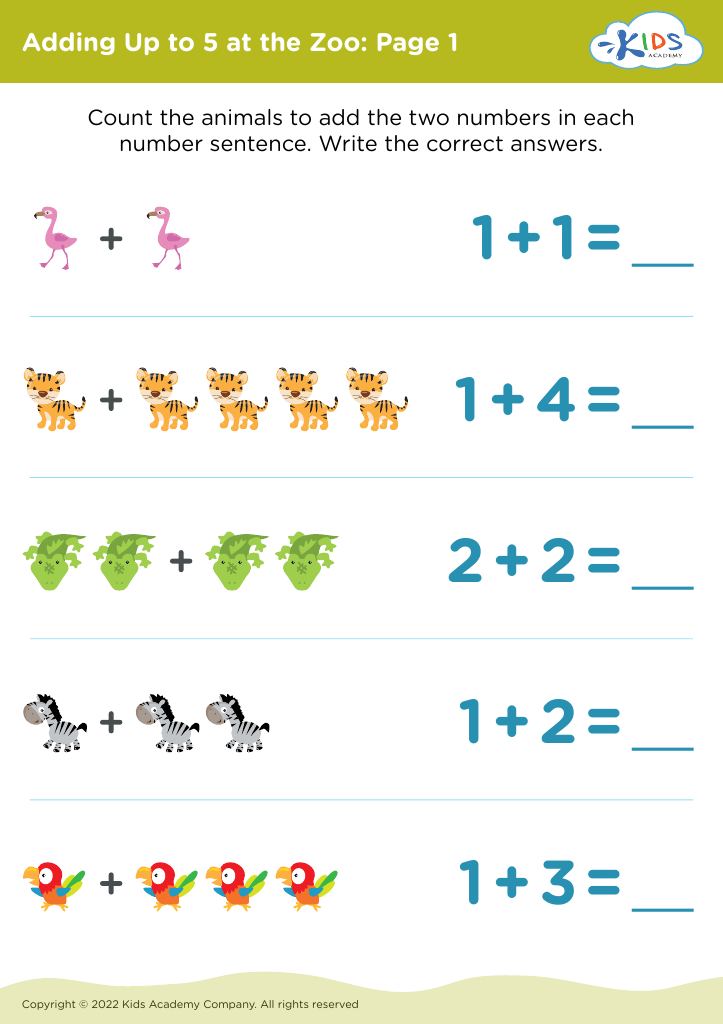
Adding Up to 5 at the Zoo: Page 1

Adding Up to 5 at the Zoo: Page 1

Adding Up to 5 at the Zoo: Page 1
Worksheet
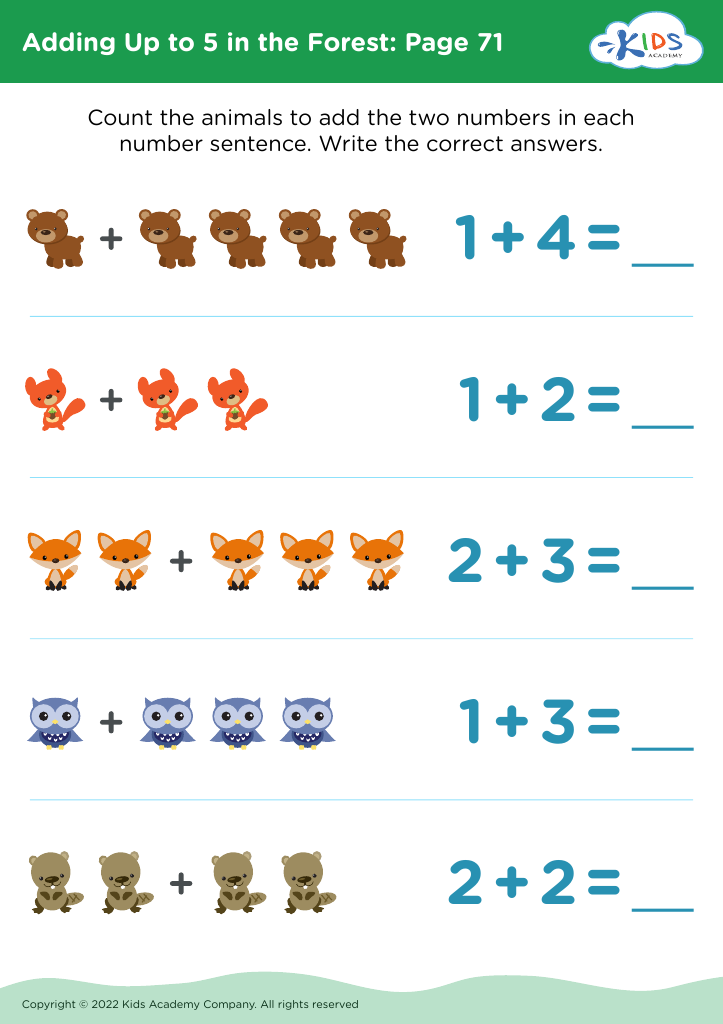
Adding Up to 5 in the Forest: Page 71
Worksheet
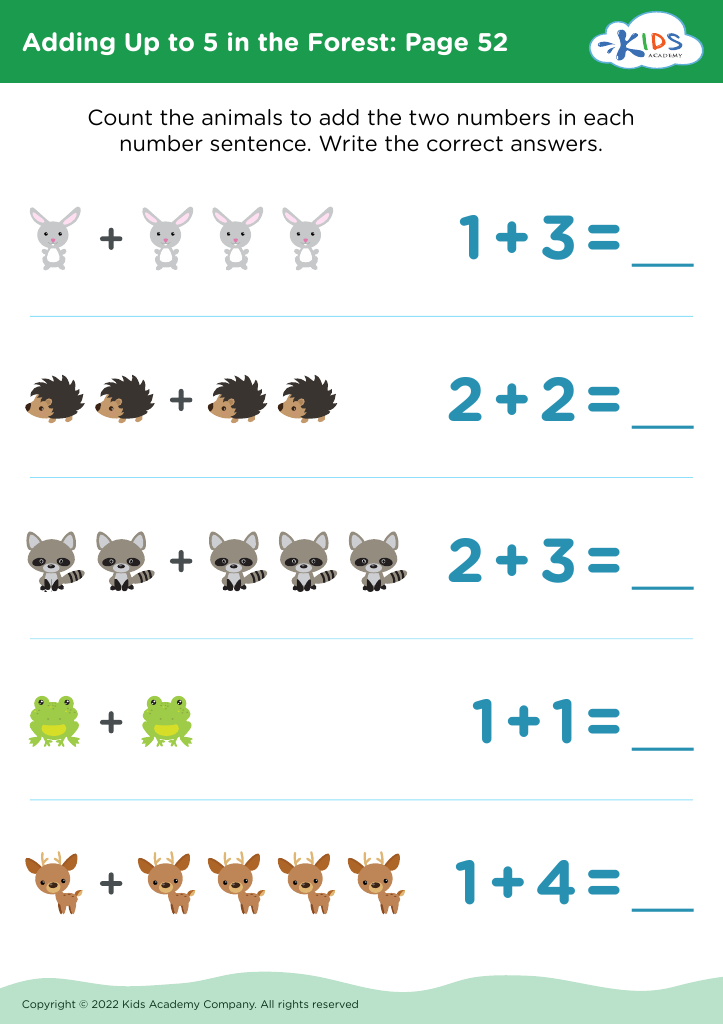
Adding Up to 5 in the Forest: Page 52
Worksheet
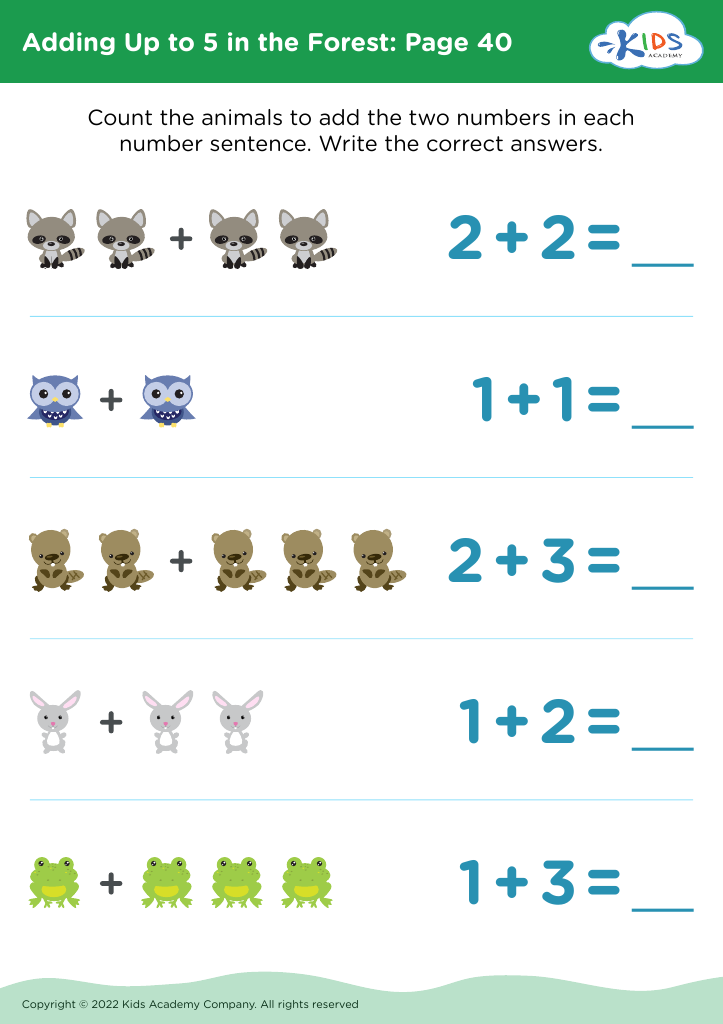
Adding Up to 5 in the Forest: Page 40
Worksheet
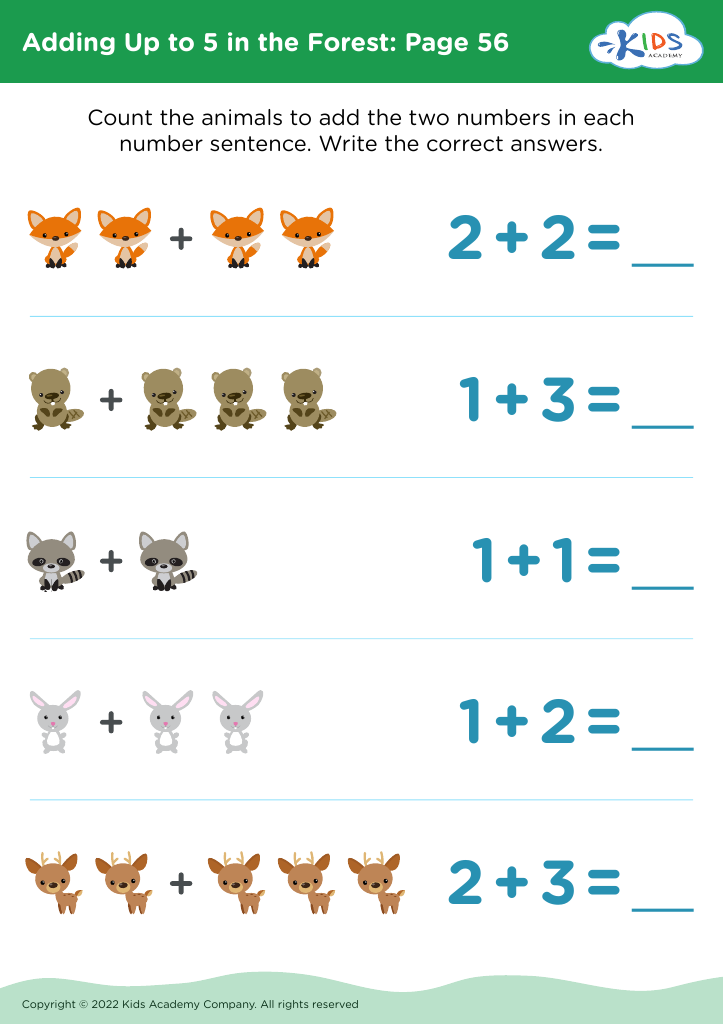
Adding Up to 5 in the Forest: Page 56
Worksheet
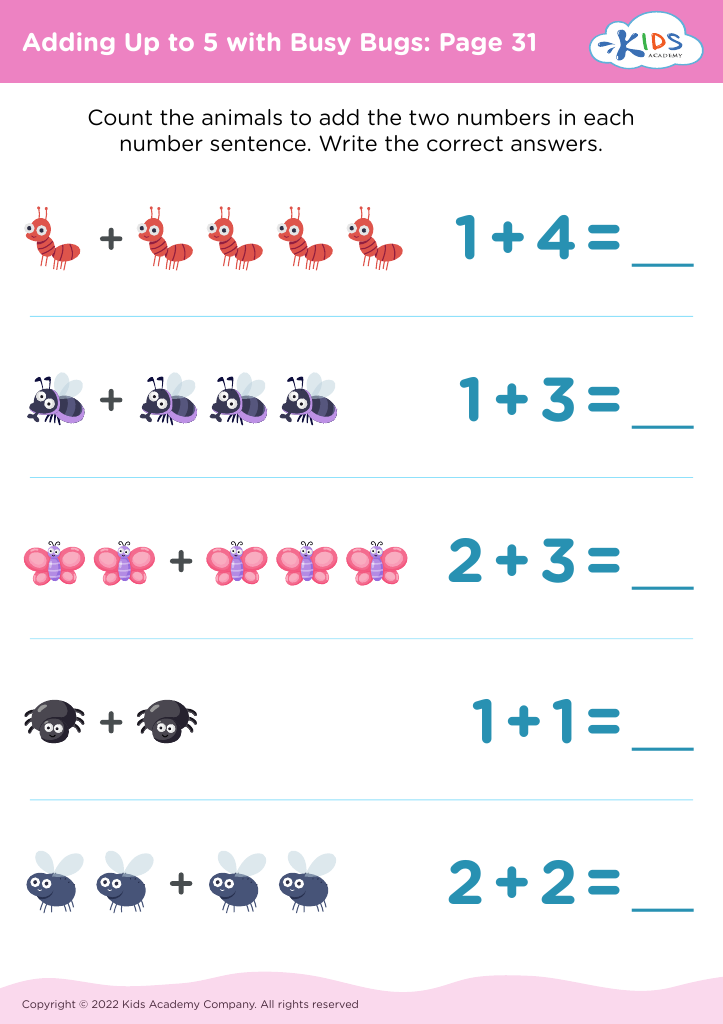
Adding Up to 5 with Busy Bugs: Page 31
Worksheet
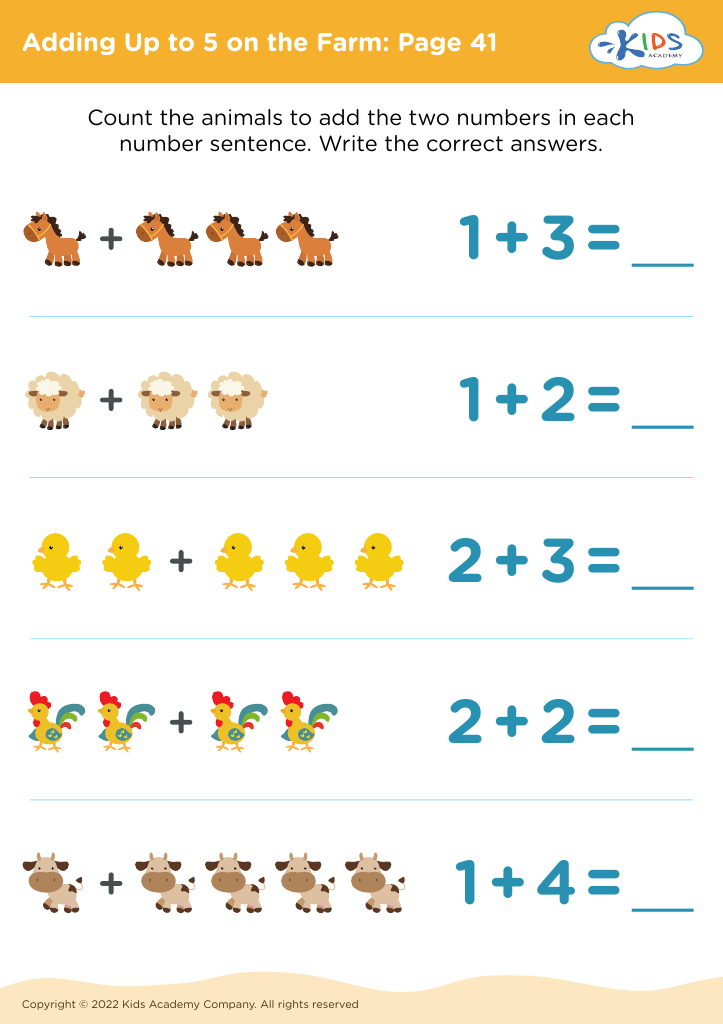
Adding Up to 5 on the Farm: Page 41
Worksheet
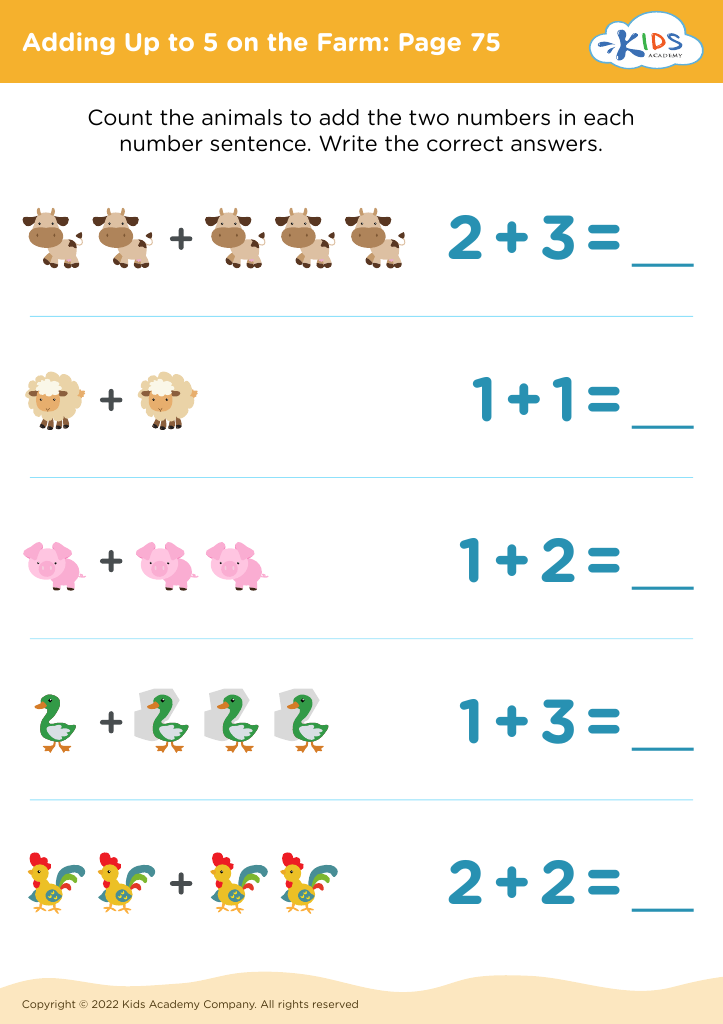
Adding Up to 5 on the Farm: Page 75
Worksheet
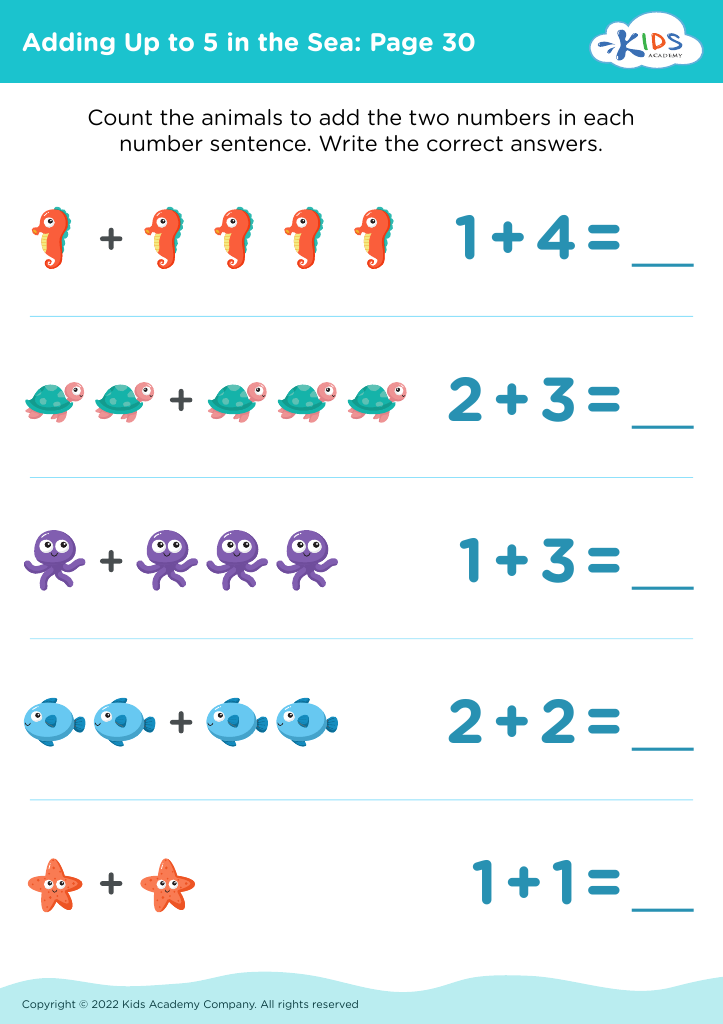
Adding Up to 5 in the Sea: Page 30
Worksheet
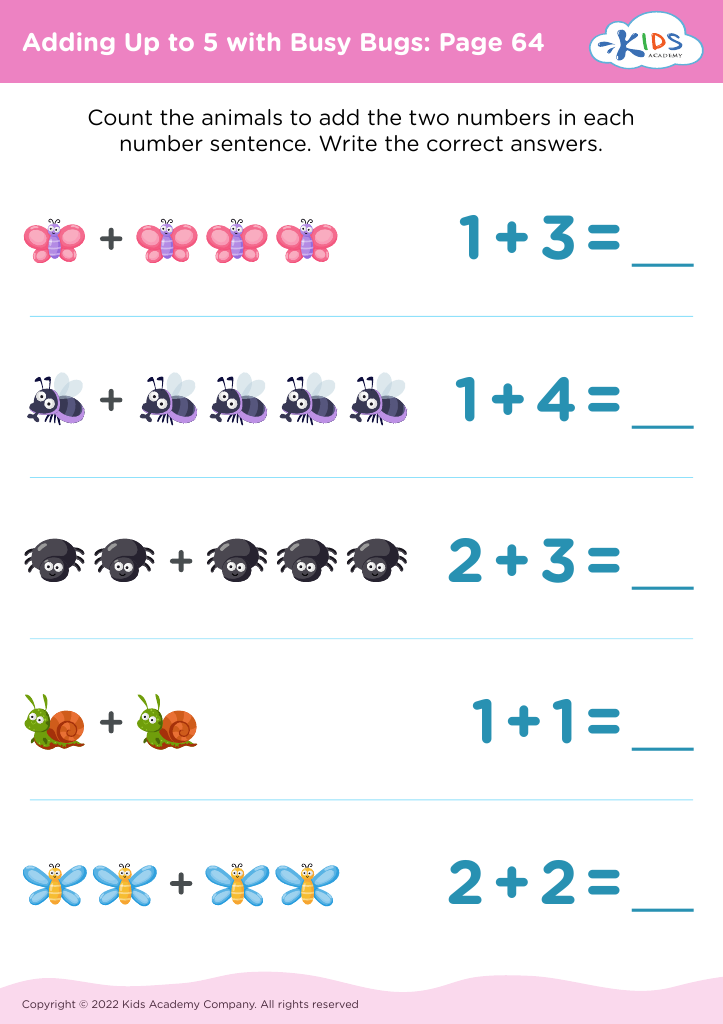
Adding Up to 5 with Busy Bugs: Page 64
Worksheet
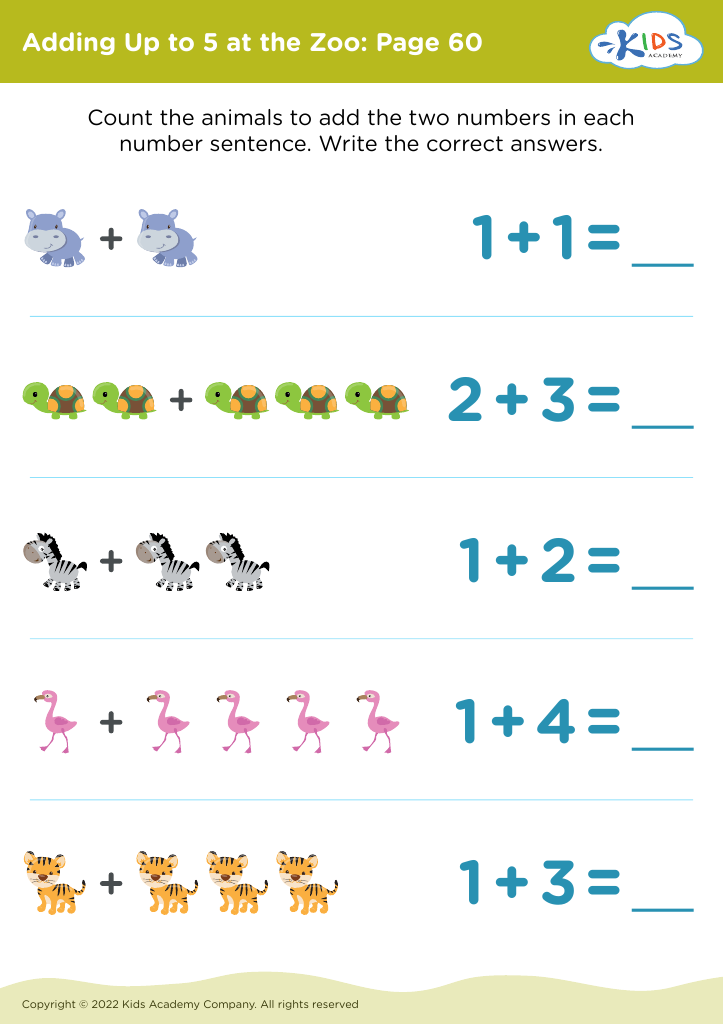
Adding Up to 5 at the Zoo: Page 60
Worksheet
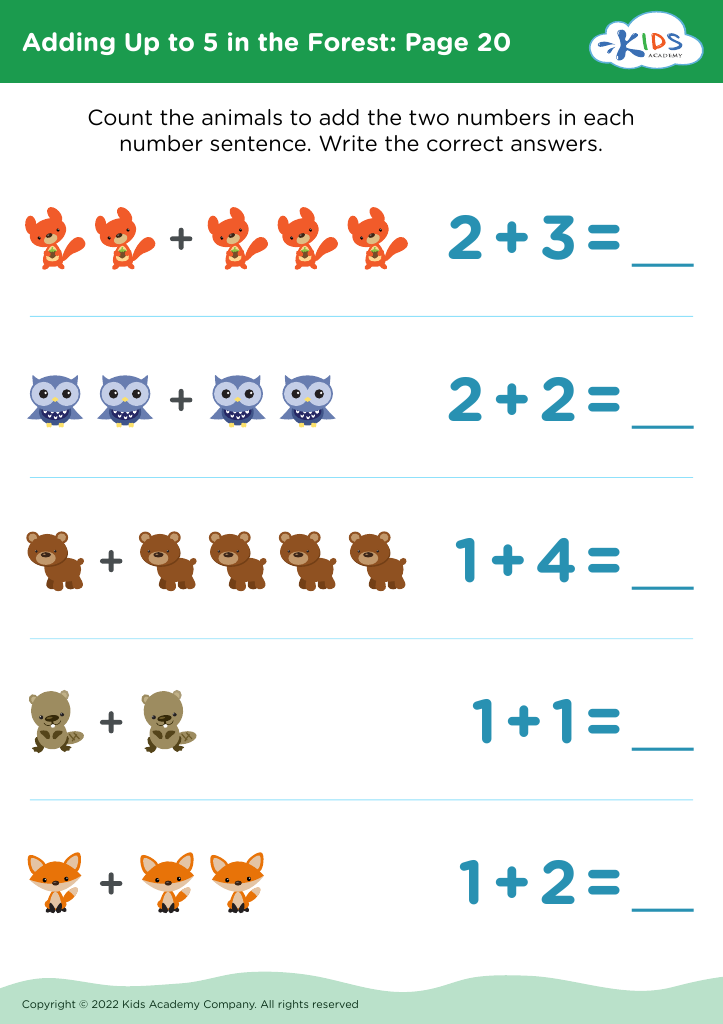
Adding Up to 5 in the Forest: Page 20
Worksheet


Basic addition skills form the cornerstone of early mathematics education, a fundamental part of overall cognitive development for children aged 5-9. Mastery of basic addition goes beyond simple arithmetic; it cultivates strong numerical awareness, logical reasoning, and problem-solving abilities. Children who develop strong addition skills at an early age are more likely to excel in advanced math topics and other academic disciplines later on.

For parents and teachers, fostering a child's ability to add builds confidence and reduces math anxiety. Performing basic addition tasks successfully gives children a sense of accomplishment and encourages a positive attitude towards learning. Early arithmetic success also aids in developing critical thinking and helps in real-world scenarios, such as understanding time, money, and measurement.

Moreover, foundational math skills, like addition, are interconnected with literacy and other cognitive skills. They help children understand patterns, sequences, and structures, which is crucial not just in math but also in reading and science.

Investing in teaching basic addition equips children with essential life skills, laying a solid groundwork for academic success and lifelong learning. By valuing these early mathematics skills, parents and teachers help to ensure that children build the confidence and capability to tackle increasingly complex educational challenges.