
Categorizing animals Worksheets for Ages 5-9
3 filtered results
Difficulty Level
Grade
Age
-
From - To
Subject
Activity
Standards
Explore our engaging "Categorizing Animals Worksheets for Ages 5-9," designed to enhance your child's understanding of animal classifications. These worksheets offer fun and interactive activities that help young learners identify different animals, categorize them by habitats, diets, and physical traits, and develop critical thinking skills. Perfect for reinforcing lessons in school or at home, our colorful and kid-friendly designs will capture your child's attention while promoting essential learning concepts. With a mix of puzzles, matching games, and imaginative exercises, your child will gain confidence in their knowledge of the animal kingdom. Start your journey into the world of animals today!
Favorites
With answer key
Interactive
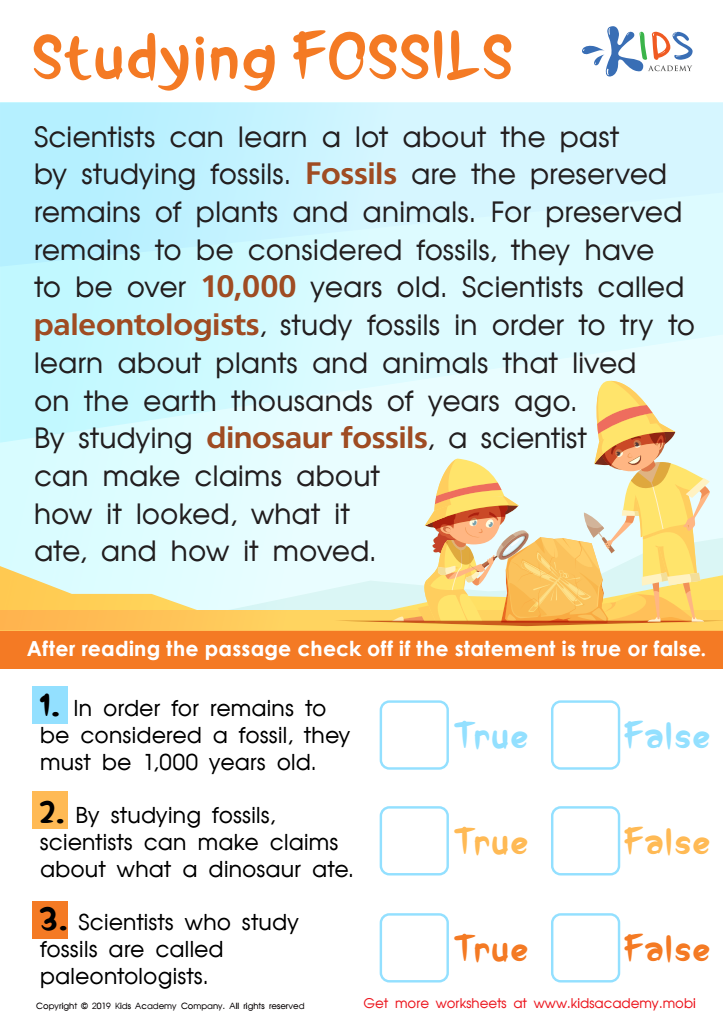
Studying Fossils Worksheet
Fossils captivate children! It's no wonder why; when we learn about them, we are getting a glimpse into history and uncovering old mysteries! With this free download, kids will understand what a paleontologist is and how they use fossils to learn about long-gone plants and animals. They'll discover that old bones are priceless and that exploring ancient history can be exciting!
 Assign to My Students
Studying Fossils Worksheet
Worksheet
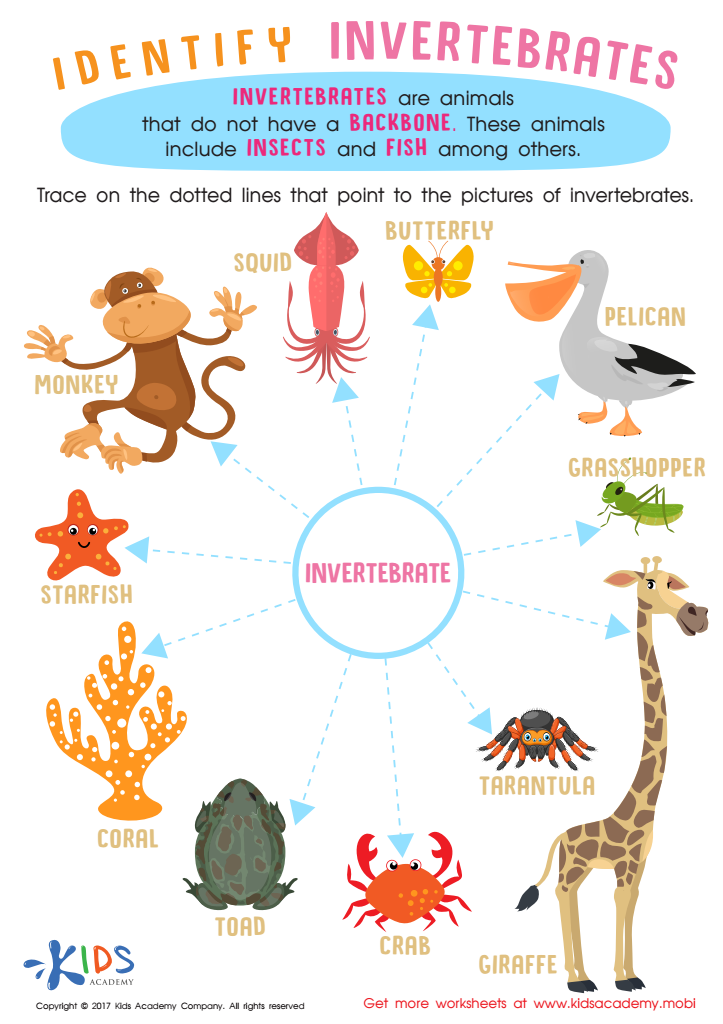
Invertebrates Worksheet for Grade 3
Kids explore the world of invertebrates with this worksheet for grade 3. Invertebrates are animals without a backbone, such as fish and insects. Kids must identify and select them from a group of animals. This activity is sure to stimulate their curiosity and help them discover more about these remarkable creatures.
Invertebrates Worksheet for Grade 3
Worksheet
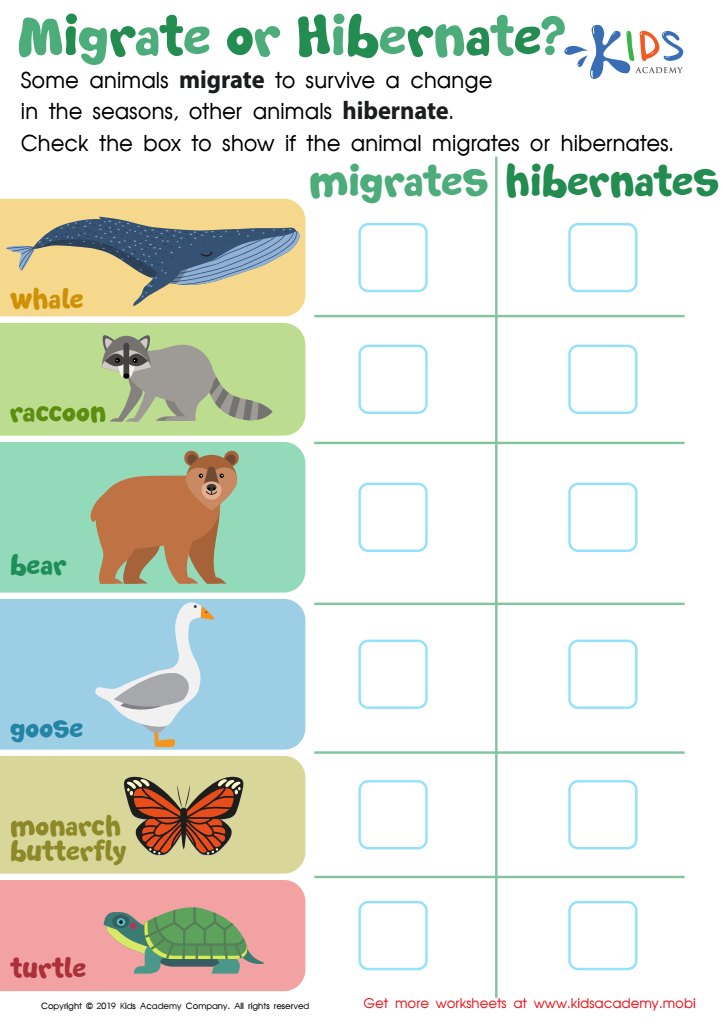
Migrate or Hibernate? Worksheet
Many animals survive by either migrating or hibernating when the weather changes. Migration involves traveling in flocks or herds to a more temperate climate, while hibernation is when animals stay in their homes and eat and sleep for a long period of time. Show your kids this worksheet and help them decide which strategy animals use to cope with the changing weather.
Migrate or Hibernate? Worksheet
Worksheet
Join Kids Academy for Free
Who is primarily going to use this learning content?






Categorizing animals is essential for children ages 5-9 as it lays the groundwork for scientific understanding and critical thinking skills. At this age, children are naturally curious about the world around them, and learning about animals by grouping them into categories—such as mammals, reptiles, birds, and amphibians—helps them make sense of the diverse ecosystem.
By engaging with animal classification, children develop observational skills, learning to notice similarities and differences among species. This practice enhances their cognitive development, as they analyze and categorize information around them. Furthermore, understanding animal groups fosters an appreciation for biodiversity and encourages responsible attitudes toward conserving the environment.
For parents and teachers, encouraging categorization helps meet educational milestones by integrating subjects like science and language arts. Activities such as sorting animals into groups can be interactive and fun, making learning enjoyable and memorable.
Ultimately, teaching children to categorize animals nurtures their curiosity, builds knowledge, and promotes critical thinking. It sets the foundation for future scientific inquiry, making it a worthy focus for both parents and educators aiming to inspire the next generation of learners.








