Character recognition Worksheets for Ages 5-9
4 filtered results
-
From - To
Enhance your child's early reading skills with our "Character Recognition Worksheets for Ages 5-9." Perfectly designed for young learners, these engaging worksheets help kids identify and understand letters, numbers, and various characters. Our resources employ fun activities and vibrant visuals to make learning enjoyable and effective. Providing a solid foundation in literacy, these worksheets support cognitive development and foster a love for reading. Tailored to meet the needs of children in early educational stages, our collection empowers parents and teachers to guide kids on an exciting journey of character recognition and overall knowledge growth. Download and start practicing today!
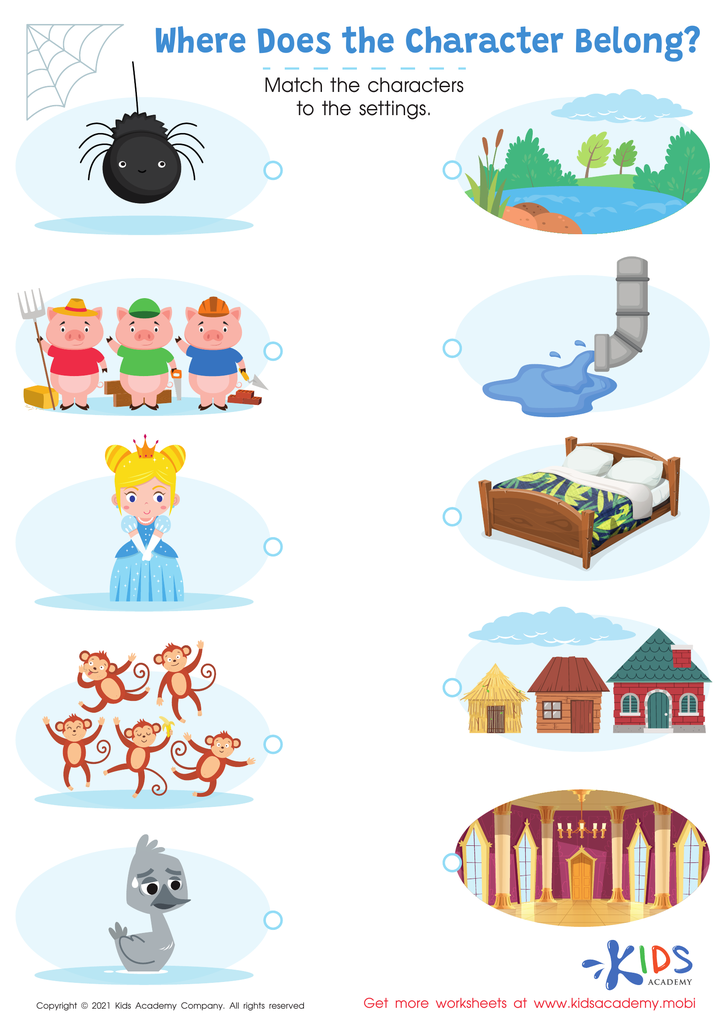
Where Does the Character Belong? Worksheet
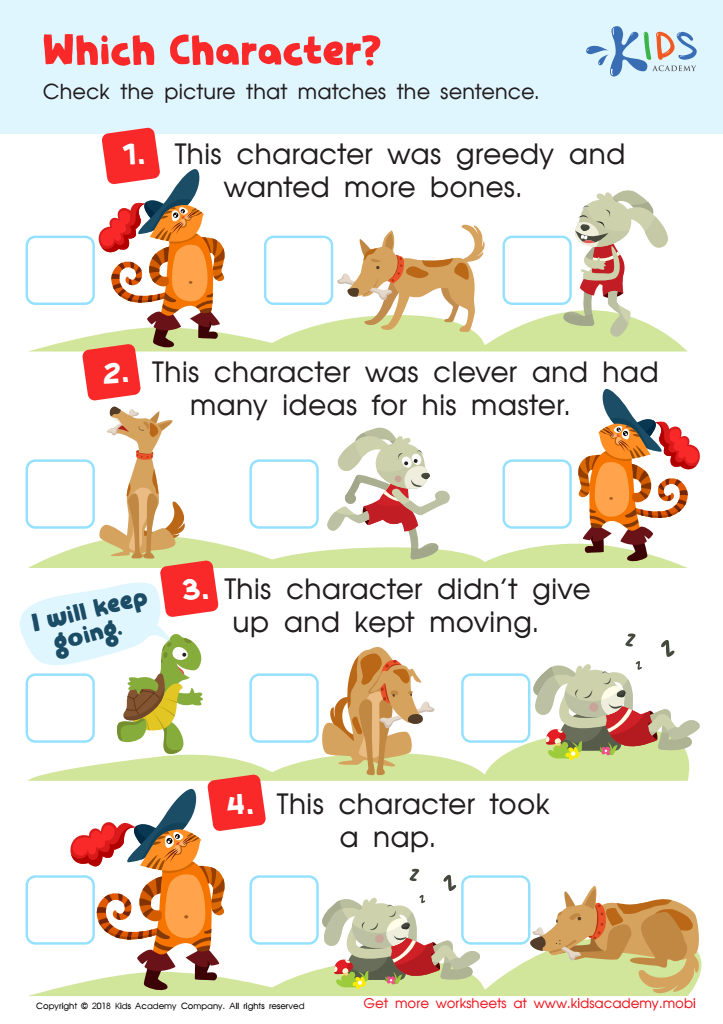
Which Character Worksheet
 Assign to My Students
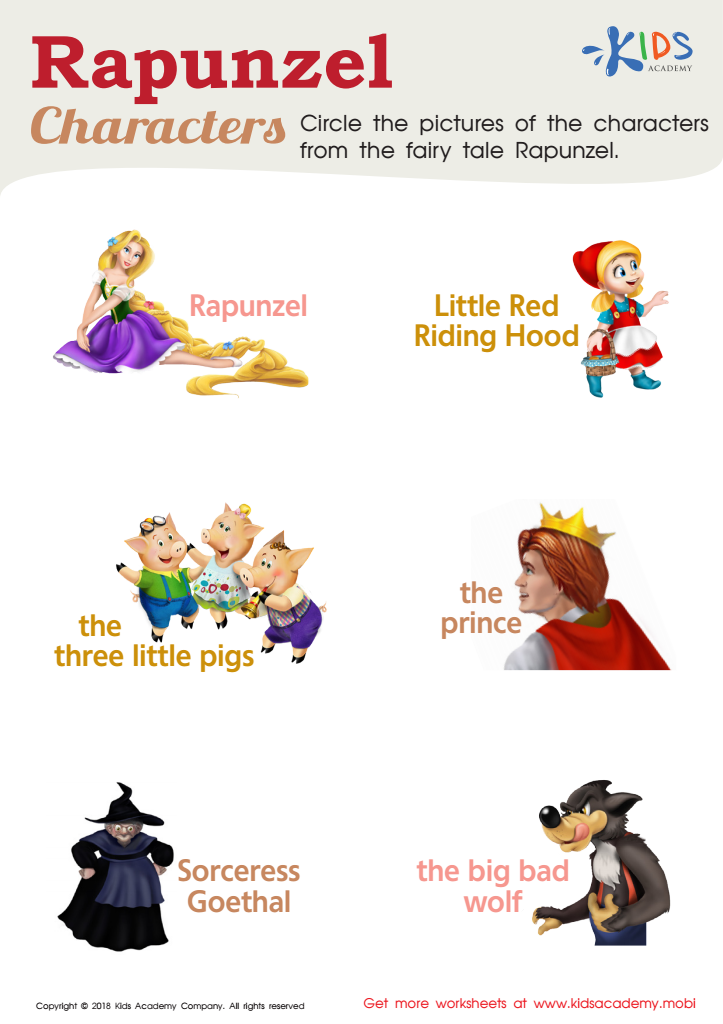
Rapunzel Characters Worksheet
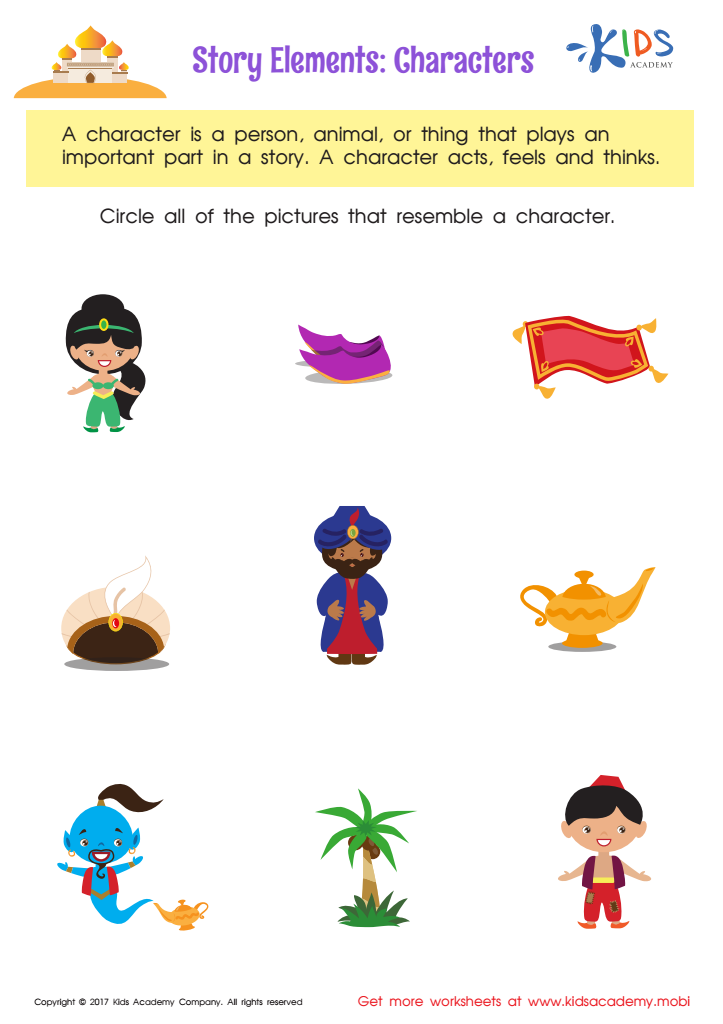
Story Elements Printable








Character recognition is a fundamental skill for children aged 5-9, and its development should be a top priority for both parents and teachers. At this age, children are in their formative years of learning to read and write, skills which form the bedrock for all future education and communication.
First and foremost, character recognition directly influences reading fluency. When children can easily recognize letters and words, their ability to decode text and understand meaning improves, fostering both confidence and enjoyment in reading. This sets a positive cycle: better reading skills encourage more reading, which in turn strengthens cognitive development, vocabulary, and general knowledge.
Second, character recognition is crucial for effective writing skills. Being able to identify and reproduce letters accurately allows children to communicate their thoughts and ideas clearly. This process hones fine motor skills and attention to detail, making other academic tasks easier and more enjoyable.
Moreover, strong character recognition skills are linked to improved academic performance across subjects. For instance, solving word problems in math or following instructions in science relies on a child’s ability to read and comprehend text.
In essence, character recognition lays the groundwork for critical thinking and learning. Investing time and resources into developing these skills in children aged 5-9 sets them on a lifelong path of academic success and intellectual curiosity.








