
Cognitive skill development Worksheets for Ages 5-9
6 filtered results
Difficulty Level
Grade
Age
-
From - To
Subject
Activity
Standards
Unlock your child's potential with our cognitive skill development worksheets for ages 5-9! These expertly designed activities foster essential problem-solving, critical thinking, and memory enhancement skills. Each worksheet is crafted to make learning fun and engaging, helping young learners build a strong foundation for academic success. Through puzzles, logical exercises, and interactive challenges, children will improve their ability to think independently and make connections. Perfect for both classroom use and home education, these worksheets cater to developing young minds in a supportive, enjoyable way. Start their cognitive journey today with engaging and enriching materials tailored just for them!
Favorites
With answer key
Interactive
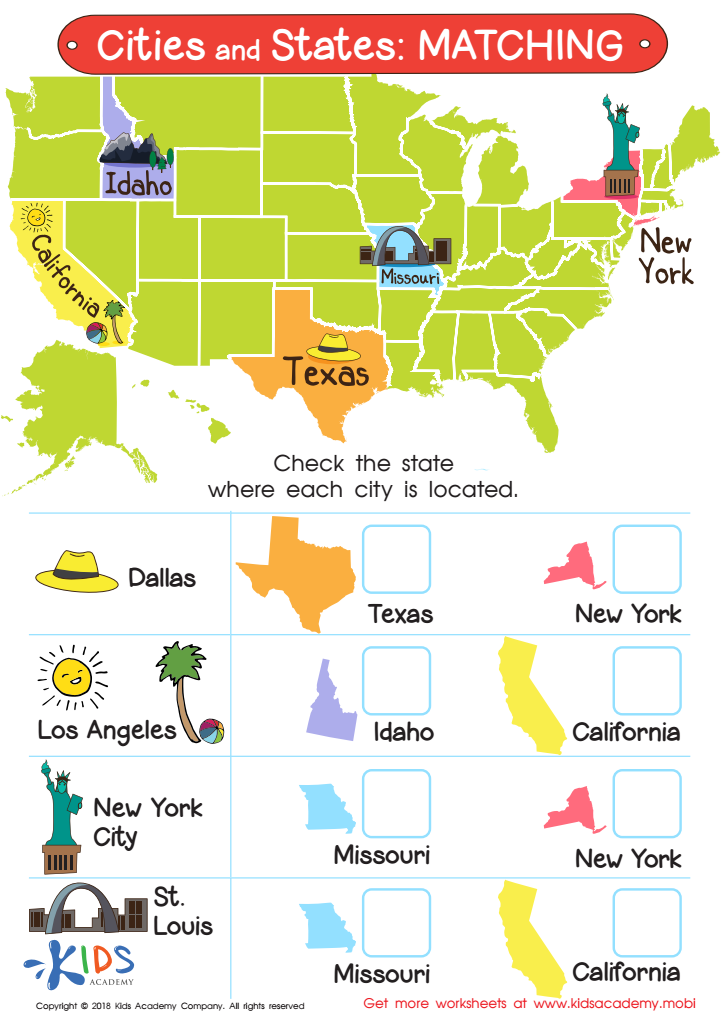
Cities and States: Matching Worksheet
Ask your child if they can name some of the states in your country. If they can, great! If not, use this worksheet to have them learn some states. Show them the map and ask them to observe the shape and color of each state. Then, have them answer the questions by checking the state where each city is located.
 Assign to My Students
Cities and States: Matching Worksheet
Worksheet
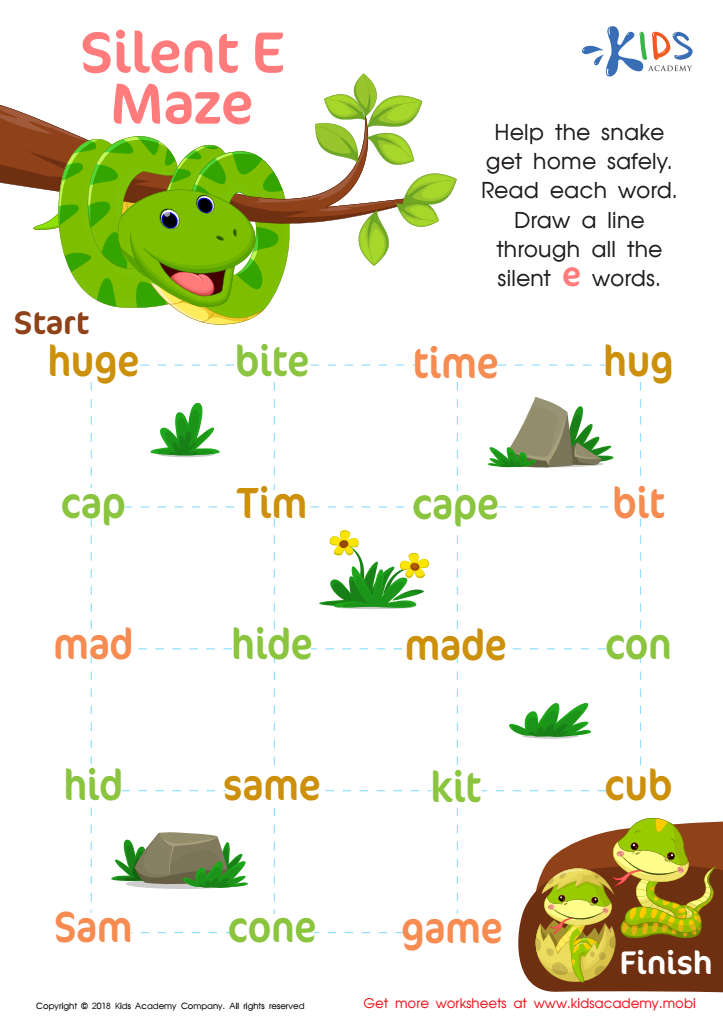
Silent E Maze Worksheet
Kids love mazes! This fun printable worksheet lets them help a mama snake get home to her babies, using Silent E words. They'll practice fine motor skills, while they draw lines through words that have Silent E and words with closed syllables that don't. It's a great way to help them recognize Silent E words!
Silent E Maze Worksheet
Worksheet
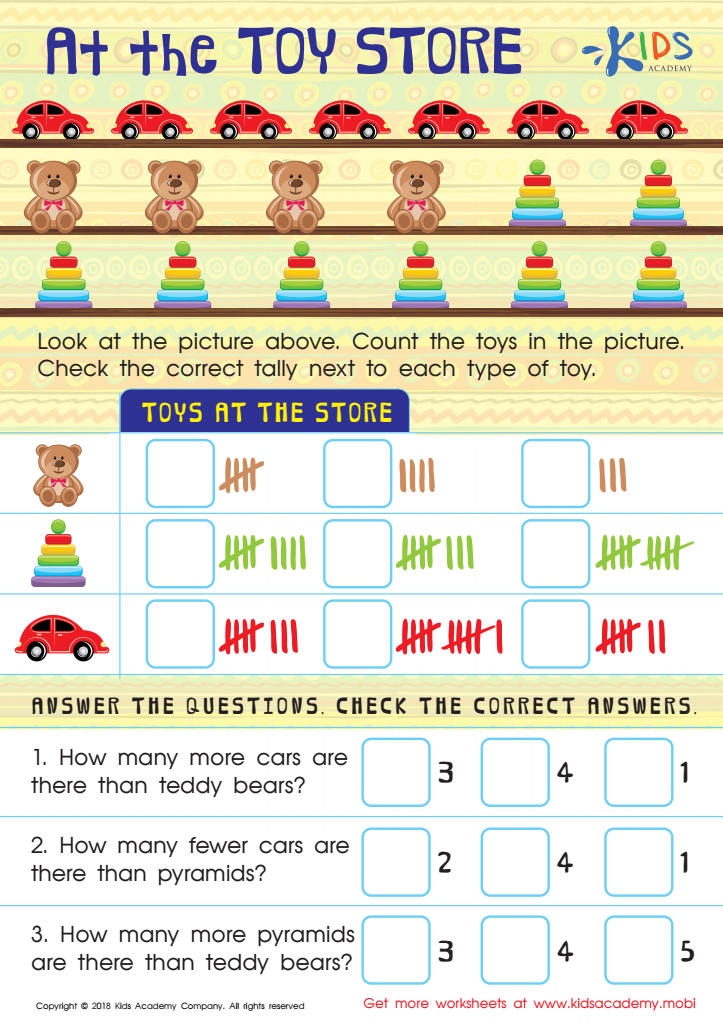
Tally Chart: At the Toy Store Worksheet
Kids Academy has a fun worksheet to help kids practice counting and using tally marks! They can think about the number of toys and compare them. At the bottom, help them answer the questions about the toys on this math page. It's an easy way to learn that one tally mark equals one item.
Tally Chart: At the Toy Store Worksheet
Worksheet
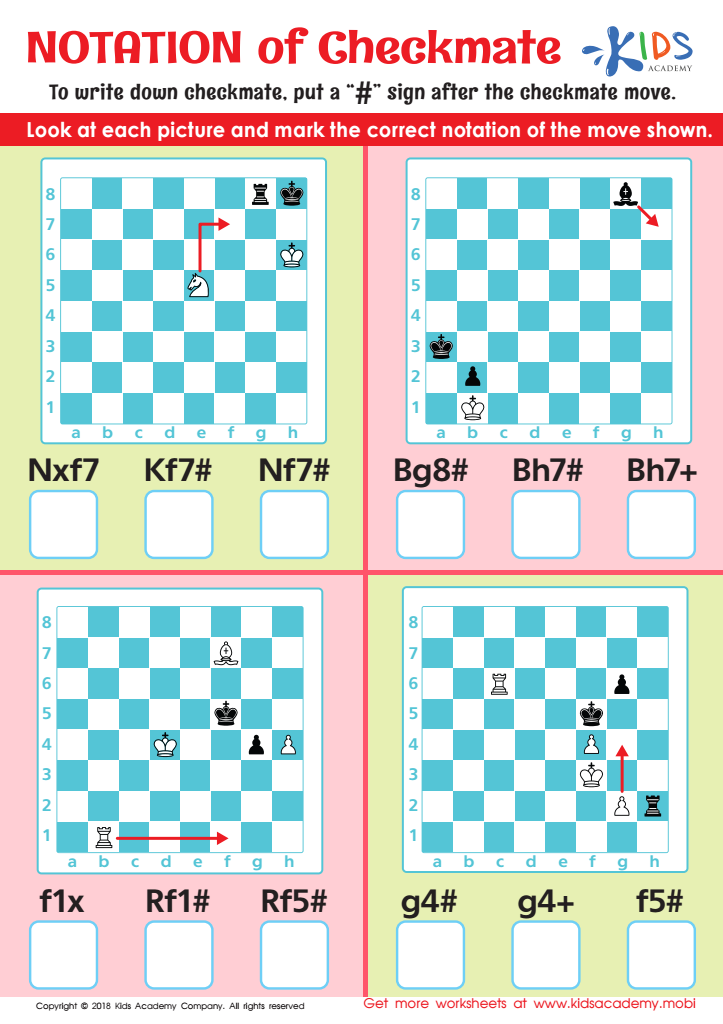
Notation of Checkmate Worksheet
Checkmate is the thrilling, ultimate move in chess! Teach your child to make it and notate it properly with this free worksheet. They'll love being able to capture the king and it's great for brain-building too! Have them look at the sample boards and place a # sign after the checkmate move for notation.
Notation of Checkmate Worksheet
Worksheet
Join Kids Academy for Free
Who is primarily going to use this learning content?








Absolutely, let's delve into why cognitive skill development is crucial between the ages of 5-9.
During these formative years, children's brains are like sponges, highly receptive and agile. Cognitive skills encompass a range of essential abilities, including memory, attention, reasoning, and problem-solving. These foundational skills directly impact a child's academic performance and social interactions.
When parents and teachers prioritize cognitive development, they set children up for a lifetime of learning. For instance, strong memory skills help kids retain and use information, which is quintessential for reading comprehension and math. Good attention spans enable them to focus on tasks, leading to better academic outcomes. Critical thinking and reasoning abilities are not only vital for subjects like science and math but also help children navigate everyday challenges and make sound decisions.
Moreover, developing these skills early helps children gain confidence and resiliency. When they succeed in solving problems and understand new concepts quickly, they feel more competent and are more likely to take on new challenges enthusiastically.
Therefore, incorporating activities that stimulate cognitive growth—like puzzles, reading, and interactive games—can make a monumental difference in a child’s overall development. Investing time in nurturing these skills can pave the way for a brighter, more successful future academically, socially, and emotionally.








