Comparative skills Worksheets for Ages 5-9
3 filtered results
-
From - To
Unlock your child's potential with our Comparative Skills Worksheets designed for ages 5-9! These engaging worksheets help young learners grasp the concept of comparison with fun activities focusing on size, quantity, and quality. By exploring comparisons like 'bigger vs. smaller' and 'more vs. less', children develop critical thinking and observational skills. Our resources not only foster understanding but also make learning enjoyable through colorful illustrations and interactive scenarios. Perfect for classroom use or at home, these worksheets support early education curricula while reinforcing essential skills for future learning. Let your child thrive with our comprehensive and enjoyable comparative skills resources!
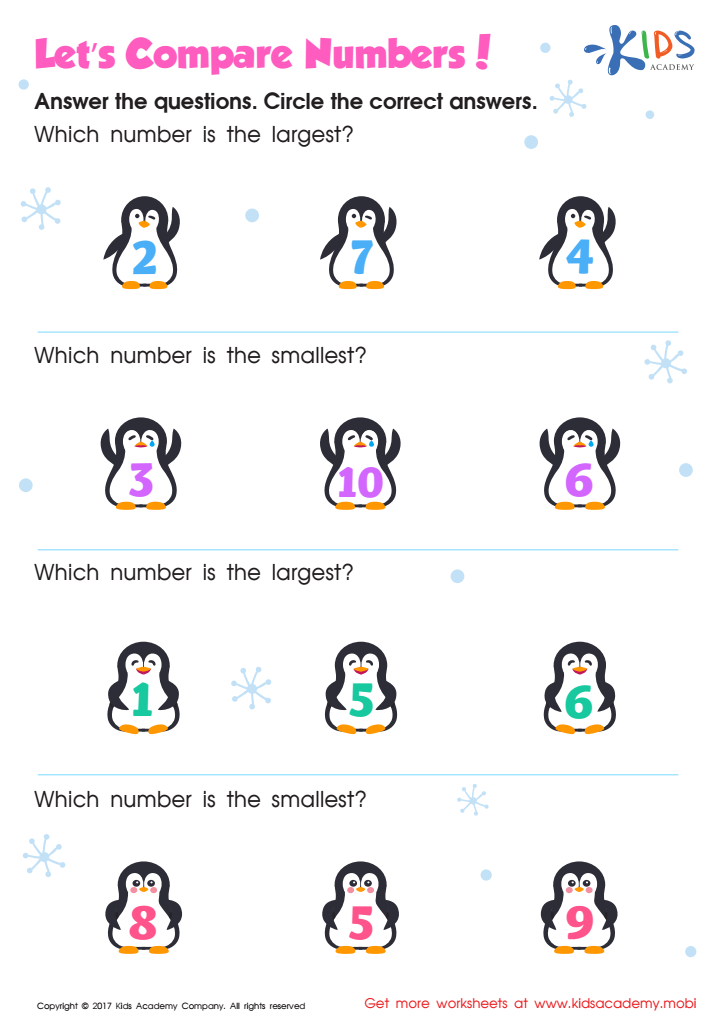
Comparing Numbers 1–10 Worksheet Kindergarten
 Assign to My Students
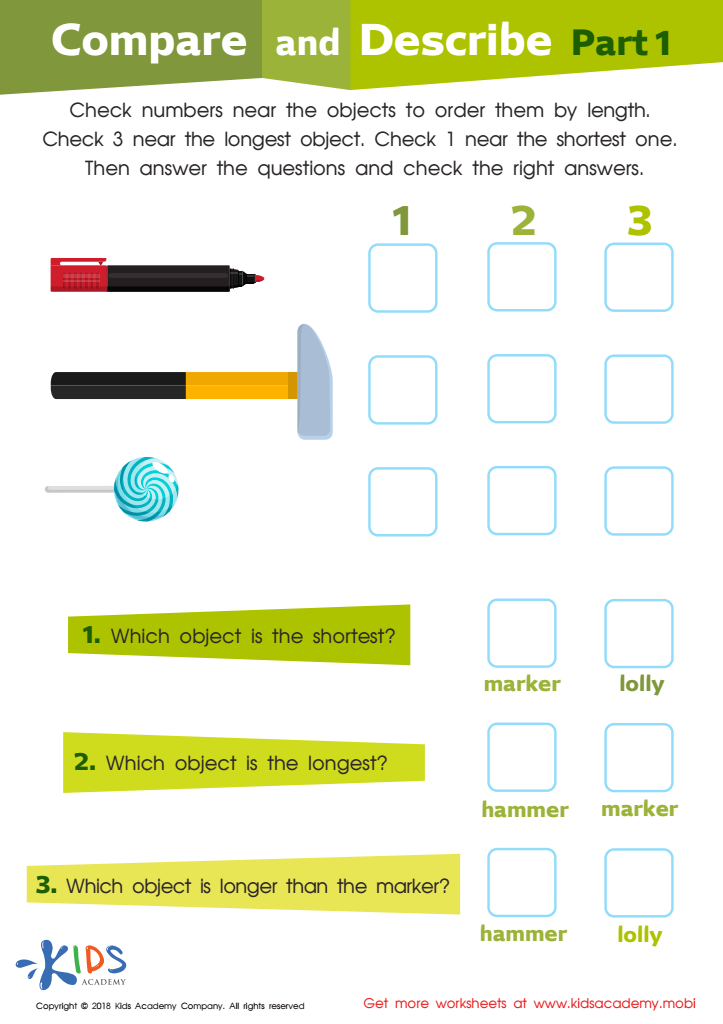
Compare and Describe: Part 1 Worksheet
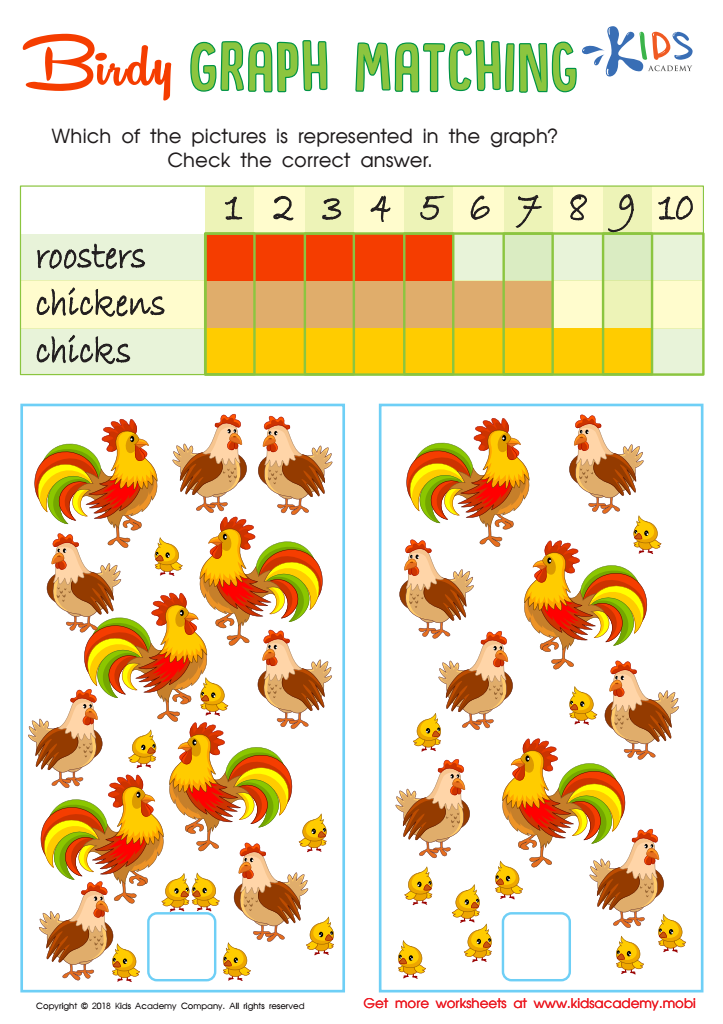
Birdy Graph Matching Worksheet





Comparative skills are essential for children aged 5-9 as they form a critical foundation for cognitive development and daily decision-making. During these formative years, children learn to understand and analyze differences and similarities between objects, concepts, and experiences, fostering critical thinking. When parents and teachers encourage comparative skills, they help children grasp basic concepts of measurement, quantity, size, and value, which are vital for academic success in subjects like math and science.
These skills also enhance children's ability to engage in meaningful interactions with peers by promoting reasoning and discussion. As children compare different items, they learn to articulate their thoughts, develop their perspectives, and construct arguments, consequently improving communication and social skills. Additionally, the ability to compare helps children make choices—such as picking between two toys or deciding what clothes to wear based on weather—promoting independence and confidence.
Furthermore, cultivating comparative skills in this age group aids in the development of problem-solving abilities, as children learn to weigh options and select the best possible outcomes. Therefore, investing time and effort into nurturing these skills equips children not only for current learning but for lifelong critical thinking and decision-making, setting them up for future success.








