Developing spatial awareness Worksheets for Ages 5-9
3 filtered results
-
From - To
Discover our engaging spatial awareness worksheets designed specifically for children aged 5-9. These printable resources enhance vital skills such as understanding shapes, direction, and space through fun activities and exercises. Our worksheets promote cognitive development by challenging young learners to identify patterns, visualize movements, and comprehend distances. Each activity is thoughtfully crafted to cater to various learning styles, ensuring every child can expand their spatial reasoning abilities. Perfect for classroom use or at-home learning, these worksheets provide a foundation for critical thinking and problem-solving. Unlock your child's potential with our interactive and educational resources today!
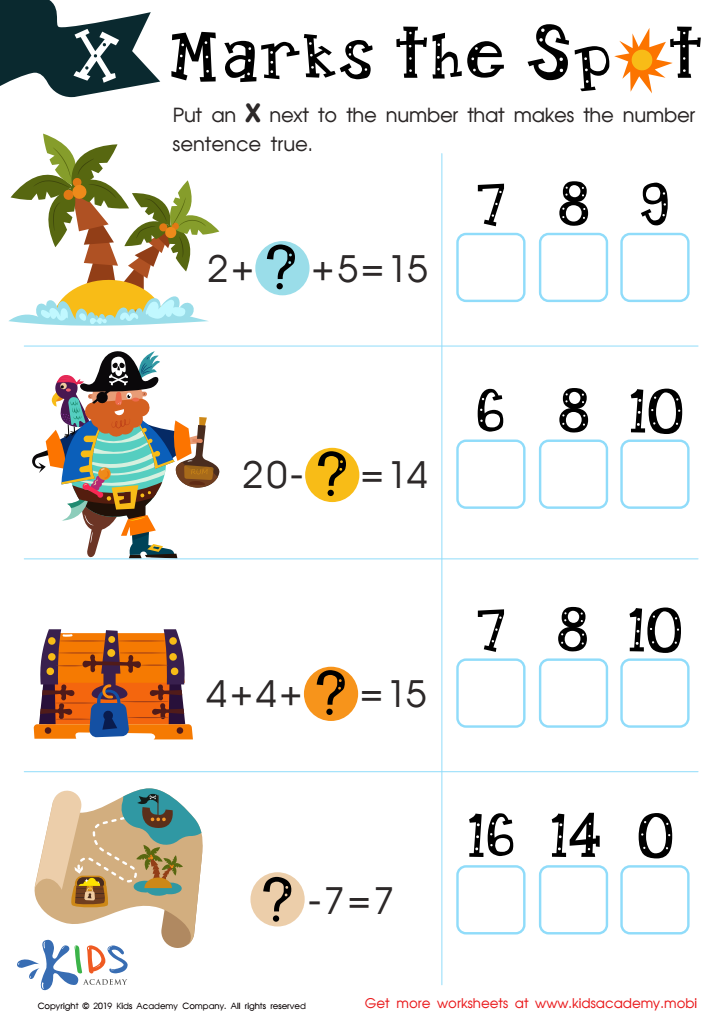
X Marks the Spot Worksheet
 Assign to My Students
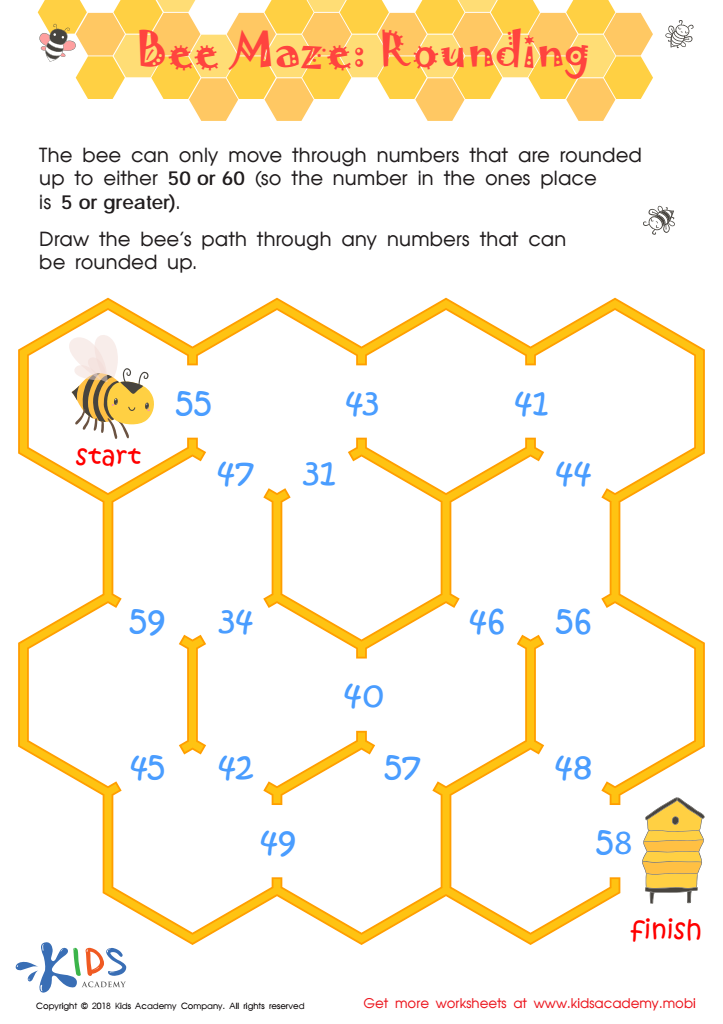
Bee Maze Rounding Worksheet
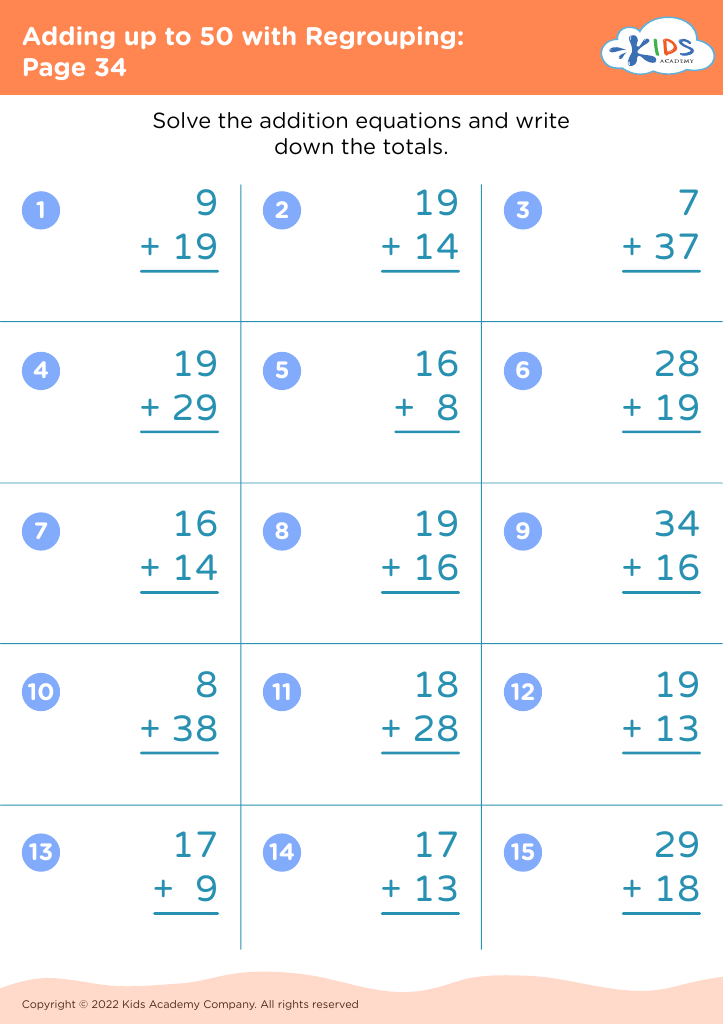








Developing spatial awareness in children aged 5-9 is crucial for several reasons. At this age, children are actively exploring their environment, and spatial awareness helps them understand their position relative to objects and others. This foundational skill enhances their ability to navigate physical spaces, which is essential for everyday activities such as crossing the street safely, participating in sports, and engaging in interactive play.
Moreover, spatial awareness is closely linked to cognitive development. It fosters critical thinking, problem-solving, and creativity as children learn to visualize objects, understand shapes, and predict movements. Activities like building with blocks, drawing, and playing geometry-based games can significantly contribute to enhancing these skills.
In academic contexts, spatial awareness is fundamental in subjects such as math, science, and art. Children with strong spatial skills often excel in geometry and measurement tasks, which can boost their overall confidence in STEM subjects. Furthermore, developing this skill can positively impact literacy, as children's ability to understand diagrams and spatial relationships plays a role in reading comprehension.
Ultimately, nurturing spatial awareness in young children equips them with essential life skills, fosters their intellectual growth, and lays a foundation for future learning. Parents and teachers play a pivotal role in providing opportunities for exploration and experiential learning in this regard.








