
Differentiating goods/services Worksheets for Ages 5-9
3 filtered results
Difficulty Level
Grade
Age
-
From - To
Subject
Activity
Standards
Introduce young learners to the world of economics with our Differentiating Goods/Services Worksheets, designed for ages 5-9. Our engaging activities help children easily grasp the difference between goods and services through fun, interactive exercises. Perfect for teachers and parents alike, these worksheets align with essential learning skills, promoting critical thinking and practical understanding. Foster early financial literacy by guiding your child or student to identify and categorize various goods and services they encounter daily. Build a solid foundation for future economic learning with our expertly crafted resources at Kids Academy.
Favorites
With answer key
Interactive
 Assign to My Students
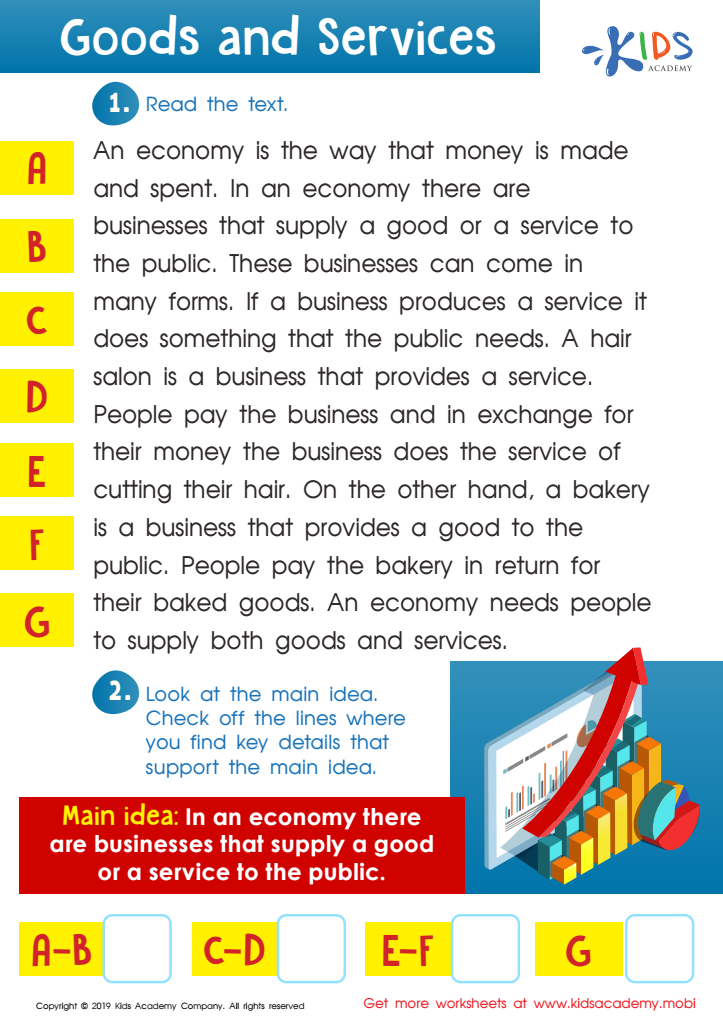
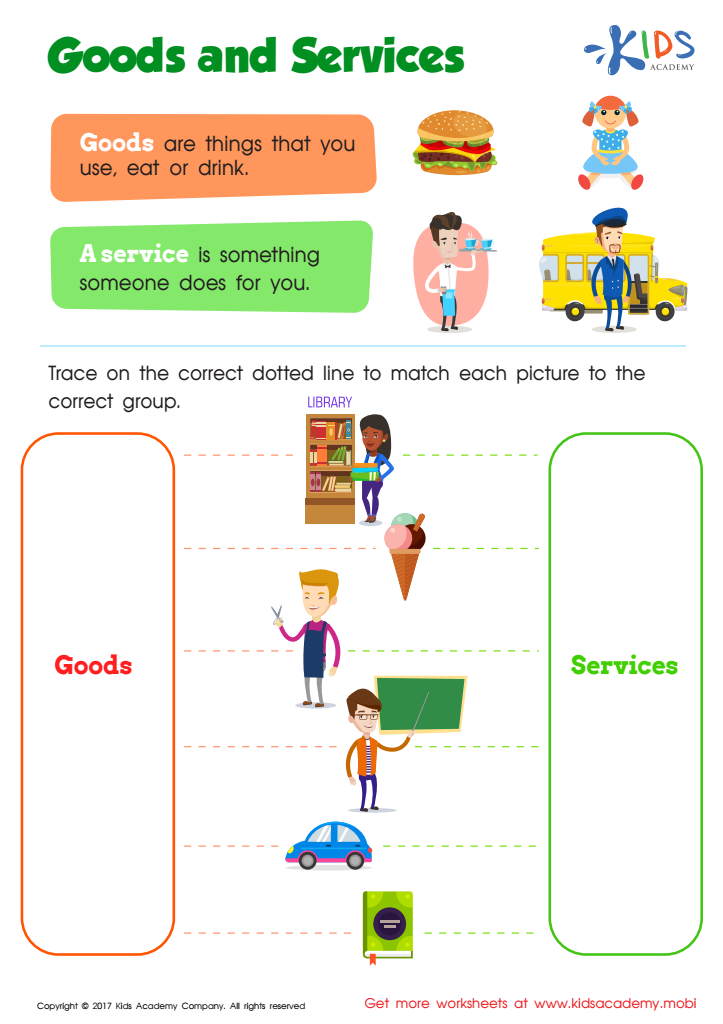
Goods and Services Worksheet
Teach your kids about the economy and businesses with this worksheet. Ask them if they know what goods and services are. After they complete the worksheet, they'll have a better understanding. Read the text to them and guide them step-by-step through the instructions. Help them learn!
Goods and Services Worksheet
Worksheet
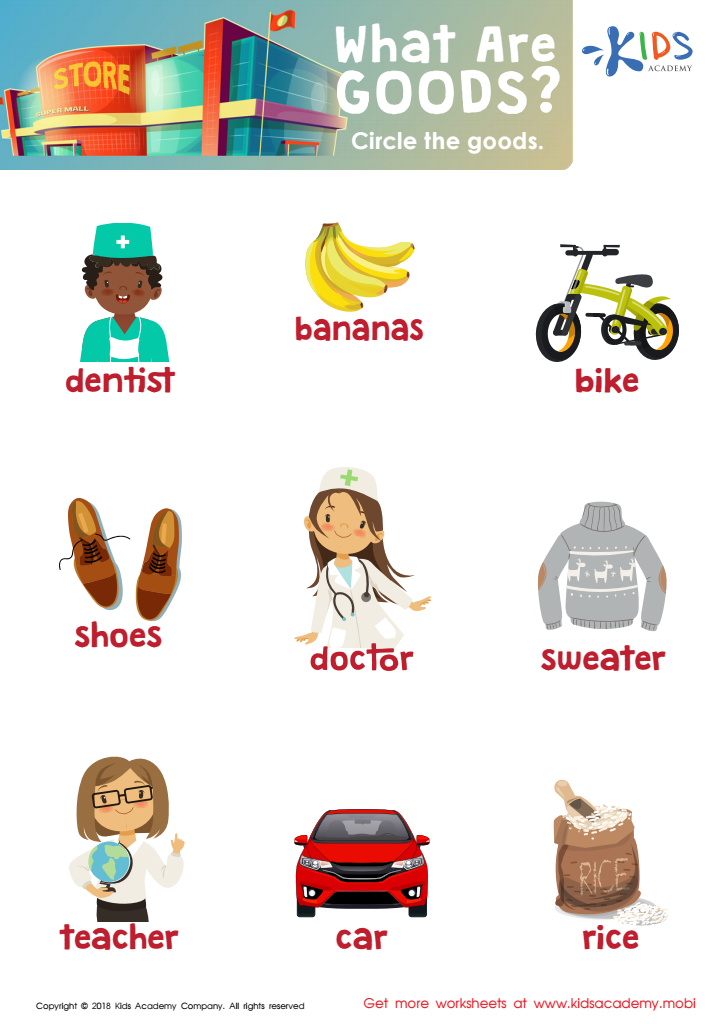
What Are Goods? Worksheet
Introduce your child to economics with this social studies worksheet! It helps kids differentiate between goods and services. Have them look at each picture, discuss what it does, and decide whether it's an object or a service. Encourage them to think carefully and circle the goods. It's a great way to start teaching the basics of economics.
What Are Goods? Worksheet
Worksheet
Join Kids Academy for Free
Who is primarily going to use this learning content?



.jpg)


Differentiating goods and services for children aged 5-9 is crucial for several reasons, reflecting cognitive, social, emotional, and physical development. At this pivotal stage, children exhibit varied learning styles, preferences, and abilities that necessitate tailored educational and recreational resources to ensure optimal growth.
Firstly, cognitive development varies widely among children in this age bracket. Differentiated educational materials, such as age-appropriate books, learning apps, and games, address individual learning needs, fostering confidence and academic success. Teachers and parents can support visual, auditory, and kinesthetic learners by providing diverse resources.
Secondly, social and emotional development is heavily influenced during these years. Goods and services aimed at teaching empathy, collaboration, and emotional regulation through play, shared activities, or storytelling help children navigate social interactions and build essential life skills.
Thirdly, physical development requires different levels of stimulation. Age-specific toys and equipment, such as puzzles for fine motor skills or sports gear for gross motor development, cater to children's growing bodies and coordination abilities.
Lastly, differentiated goods and services ensure safety and prevent frustration, fostering a positive learning and recreational environment. Parents and educators attuned to these needs contribute positively to a child's holistic development, equipping them with the tools they need to thrive in various settings.








