
Enhance problem-solving ability Worksheets for Ages 5-9
3 filtered results
Difficulty Level
Grade
Age
-
From - To
Subject
Activity
Standards
Unlock young minds’ potential with our engaging problem-solving worksheets designed for ages 5-9. These expertly crafted resources from Kids Academy stimulate critical thinking, enhance reasoning skills, and build confidence in young learners. Featuring fun puzzles, logical challenges, and creative activities, our printables make learning enjoyable and effective. Tailored specifically for young minds, these worksheets foster essential skills that form the foundation for future academic success. Discover how our comprehensive collection can turn complex problems into enjoyable and manageable tasks, all while nurturing a love for learning in your child. Start your child's journey to smarter problem-solving today!
Favorites
With answer key
Interactive
Scottish Sewing Math Worksheet
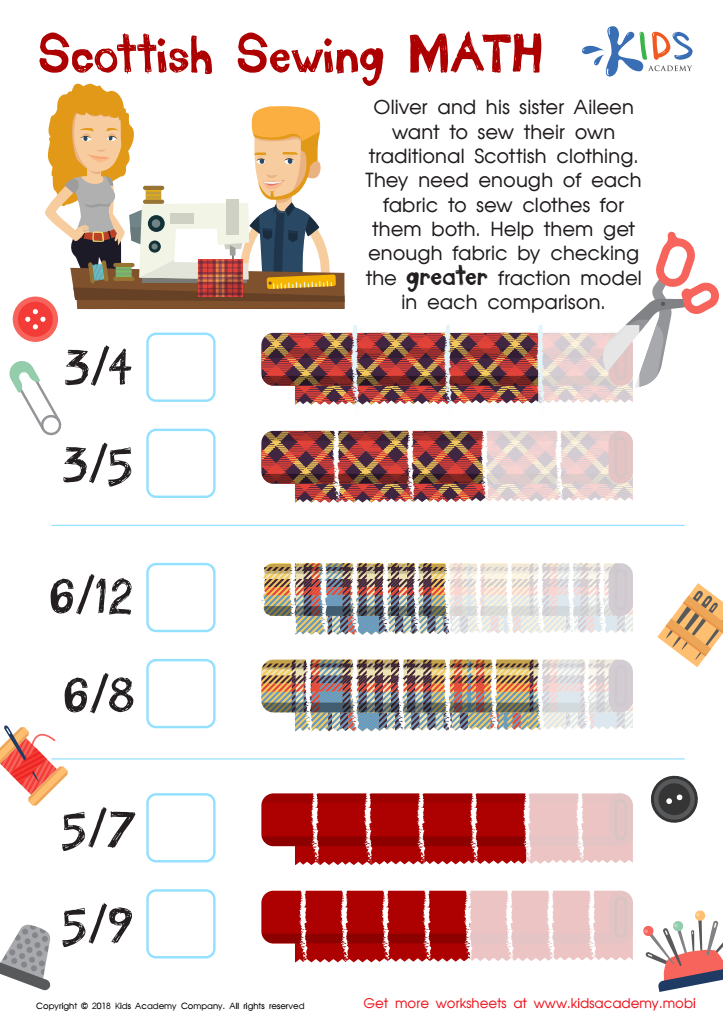
Ask your kindergartners to help Oliver and Alleen make traditional Scottish clothing by figuring out how much fabric to cut out. Help them learn a bit of geography by explaining Scotland is the home of the Scottish people and their unique traditions. Get the right amount by checking the fraction models. 80 words
 Assign to My Students
Scottish Sewing Math Worksheet
Worksheet
Addition and Subtraction: Underwater Math Worksheet
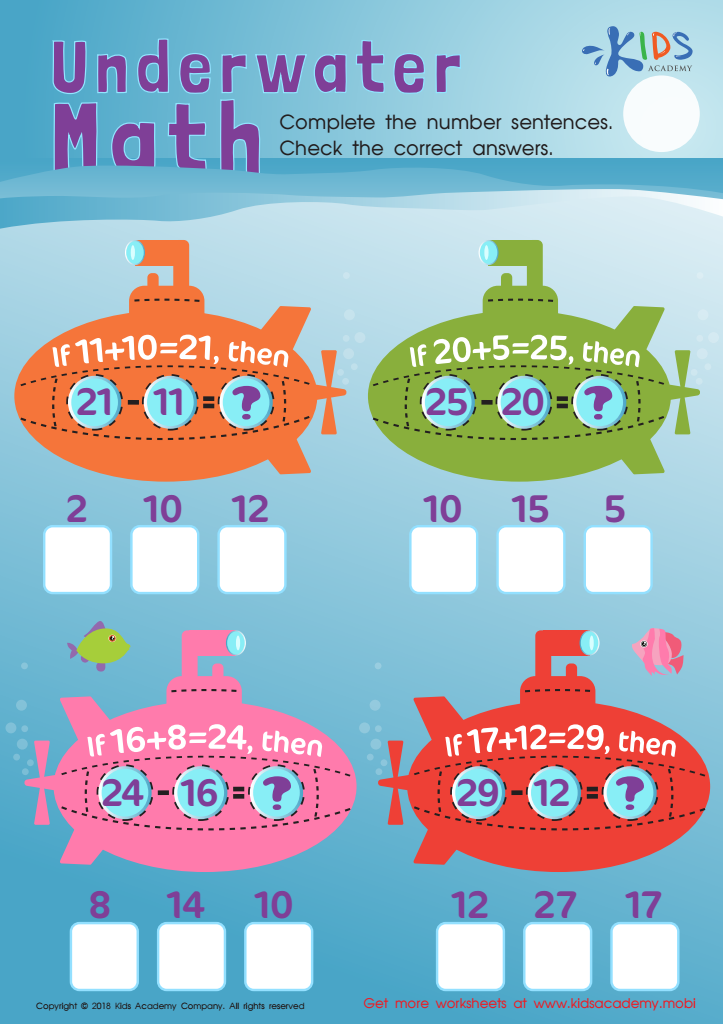
Take your little mathematicians on an undersea adventure as they work to solve number sentences. With fun worksheets, they'll analyze numbers, orders of operation and use if/then statements. They'll learn addition and subtraction are opposites, helping them solve more problems!
Addition and Subtraction: Underwater Math Worksheet
Worksheet
Join Kids Academy for Free
Who is primarily going to use this learning content?








Enhancing problem-solving ability in children aged 5-9 is crucial because it lays the foundation for essential cognitive and life skills. At this developmental stage, children's brains are highly malleable, meaning they are particularly receptive to learning and adopting new skills. Improving problem-solving abilities helps them become independent thinkers who can approach challenges with confidence and creativity.
When children learn to solve problems, they enhance their critical thinking, allowing them to analyze situations, consider various solutions, and make informed decisions. This not only applies to academic pursuits, such as math or science, but also social situations, such as resolving conflicts with peers.
Effective problem-solving skills also cultivate resilience. Children learn that challenges are a part of life and that they have the capacity to overcome them. This fosters a growth mindset, encouraging persistence and reducing fear of failure.
Moreover, parents and teachers play a vital role in modeling problem-solving strategies and providing opportunities for practice in a safe and supportive environment. By caring about and actively promoting problem-solving abilities, adults help equip children with tools vital for lifelong success, adaptability, and well-being. Developing these skills early on is an investment in the child’s future, benefiting their academic performance, social interactions, and overall personal development.








