
Enhancing categorization skills Worksheets for Ages 5-9
5 filtered results
Difficulty Level
Grade
Age
-
From - To
Subject
Activity
Standards
Boost your child's cognitive development with our "Enhancing Categorization Skills Worksheets for Ages 5-9" from Kids Academy! Specially designed for young learners, these engaging worksheets help children develop critical categorization skills, such as sorting and classifying objects based on different attributes like color, shape, size, and more. Our printable resources combine fun and education, making it easier for kids to grasp abstract concepts and improve their logical thinking. Perfect for home practice or classroom use, these worksheets support your child's academic growth while encouraging creativity and problem-solving abilities. Start enhancing your child's categorization skills today!
Favorites
With answer key
Interactive
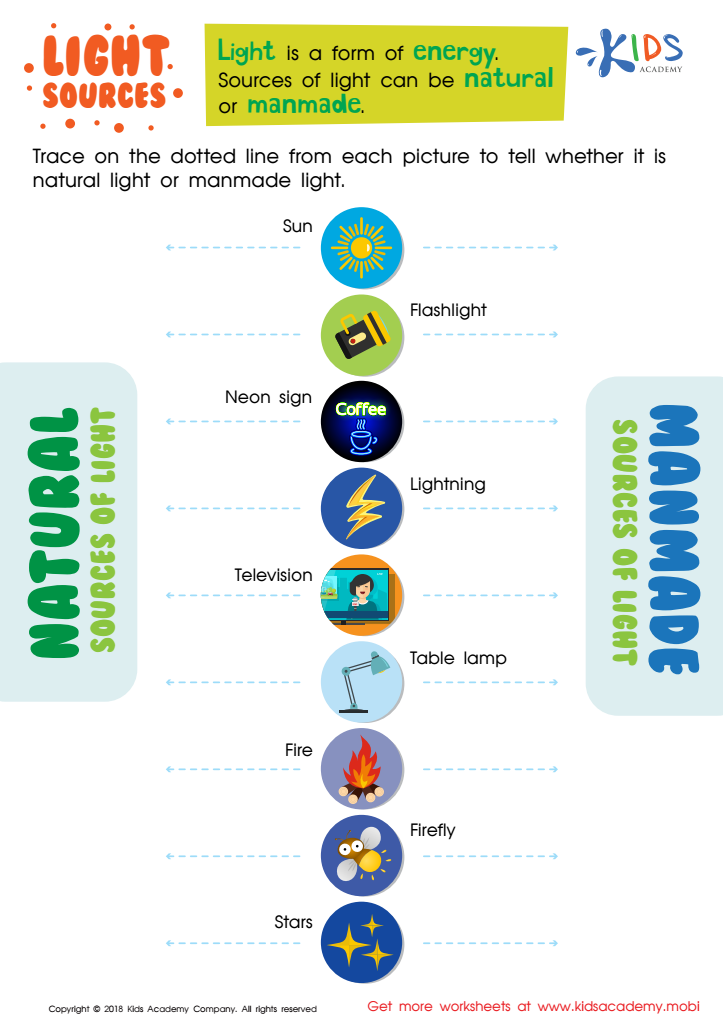
Natural and Manmade Light Sources Worksheet
Have your child learn about natural and manmade light sources with this fun worksheet! They'll distinguish the sun, fireflies and more as either natural or artificial sources. Brighten up their knowledge with this engaging activity!
 Assign to My Students
Natural and Manmade Light Sources Worksheet
Worksheet
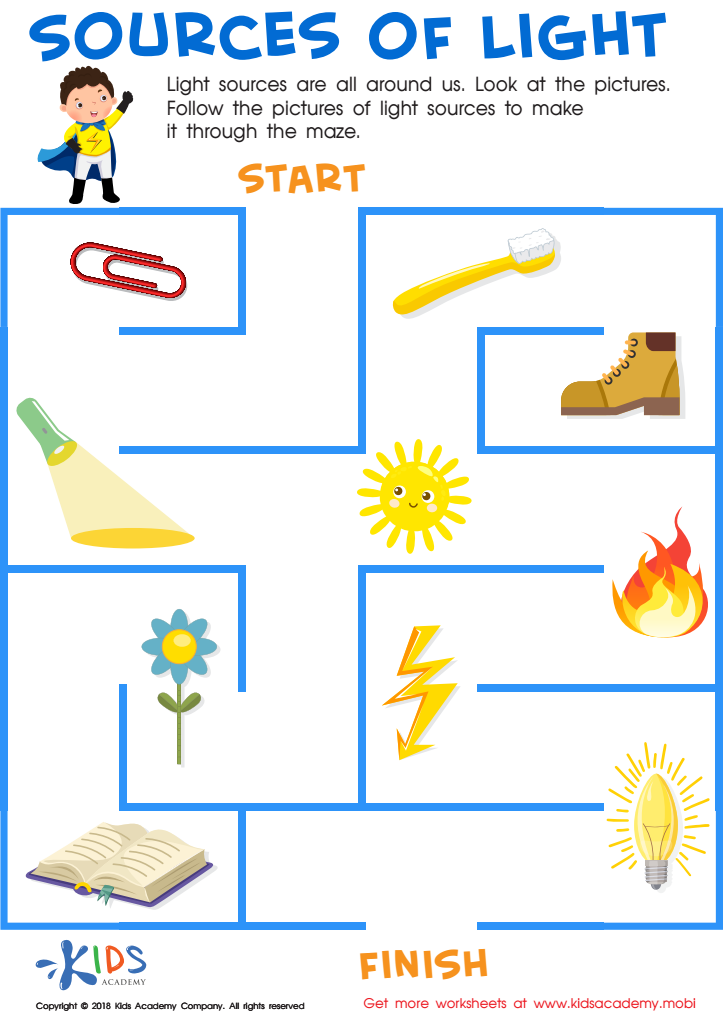
Sources of Light Worksheet
Help your child explore sources of light with this printout exercise. Ask them if they know the sun is the reason for day and night. Then point out other common light sources, then work together to guide them through the maze from start to finish.
Sources of Light Worksheet
Worksheet
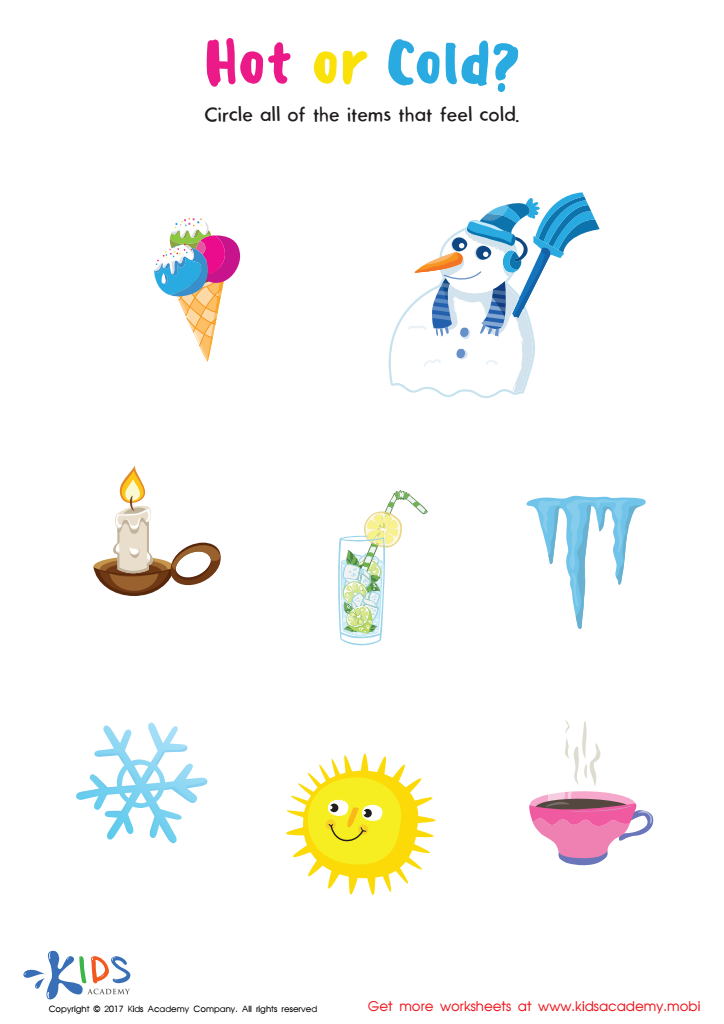
Hot or Cold Printable
Help your child stay safe with this hot or cold worksheet! It promotes problem solving skills and teaches the important concept of temperature differences. Plus, it’s fun! Get your child to learn by playing.
Hot or Cold Printable
Worksheet
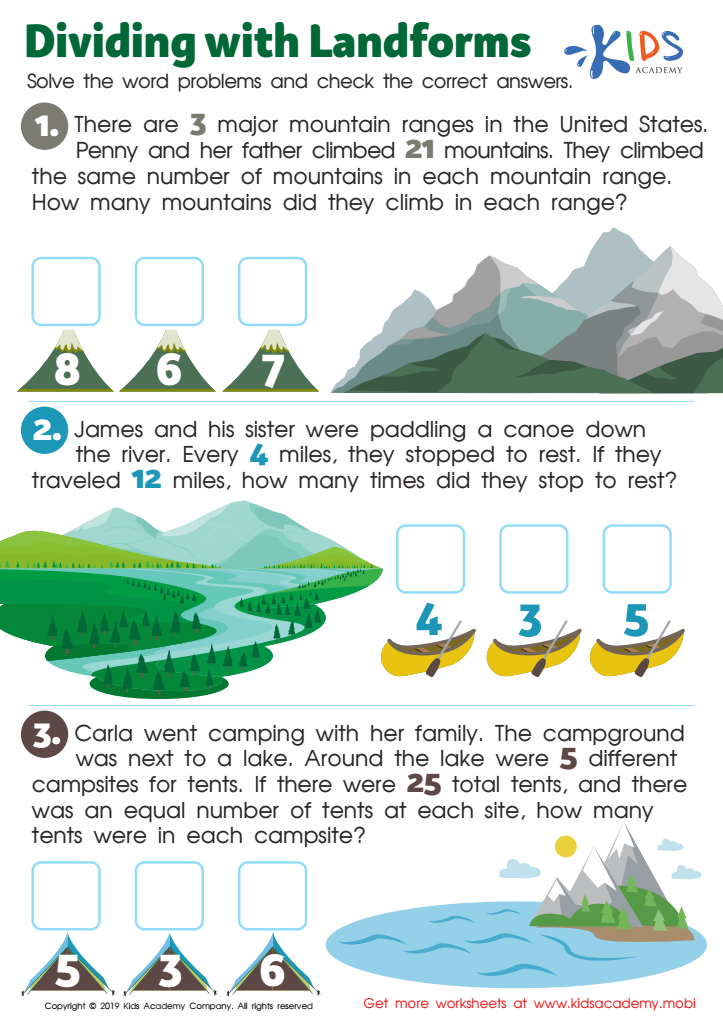
Dividing with Landforms
Mixing subjects to help your child learn is always nice. This worksheet combines landforms, problem-solving and division. The PDF highlights numbers, uses bold colors and provides pictures to help your child understand the questions and answer choices, making them feel empowered, not intimidated.
Dividing with Landforms
Worksheet
Learning Skills
Enhancing categorization skills
Understanding light sources
Improving critical thinking
Differentiating natural/man-made
Differentiating goods/services
Understanding economics
Differentiating natural/artificial light
Differentiating hot vs cold
Improving observational skills
Understanding temperature concepts
Join Kids Academy for Free
Who is primarily going to use this learning content?






Enhancing categorization skills in children aged 5-9 is crucial for both academic and cognitive development. At this stage, children's brains are highly receptive to learning patterns, relationships, and organizational techniques that are foundational for more complex thinking processes. By sharpening categorization skills, parents and teachers support kids in understanding and processing their world more effectively, aiding in memory retention, problem-solving, and decision-making.
When children practice sorting objects, ideas, or information into different categories, they develop critical analytical skills. This act of identifying similarities and differences promotes cognitive flexibility and helps children make connections between new and existing knowledge. For example, sorting animals by habitat doesn’t just teach biology; it introduces children to thematic learning and encourages scientific thinking.
In the classroom, strong categorization skills translate to better organization and comprehension. Children can manage schoolwork more effectively, finding and utilizing information efficiently. Outside of school, these skills foster everyday intellect, from organizing toys to understanding the dynamics in social interactions.
Moreover, enhanced categorization skills lay the groundwork for advanced concepts like mathematical patterns, scientific classifications, and literary themes, ensuring a solid foundation for future academic success. By caring about this aspect of development, parents and teachers invest in a child's holistic intellectual growth, setting them up for both immediate educational success and long-term cognitive resilience.








