Event sequencing Worksheets for Ages 5-9
3 filtered results
-
From - To
Enhance your child's cognitive skills with our engaging Event Sequencing Worksheets designed specifically for ages 5-9. These worksheets encourage critical thinking by prompting young learners to arrange events in the correct order, fostering comprehension and narrative skills. With colorful illustrations and age-appropriate exercises, children will enjoy mastering sequencing, a vital component of logical reasoning and reading proficiency. Ideal for both classroom and home settings, our worksheets cater to diverse learning styles, ensuring an educational yet fun experience. Explore our comprehensive collection and watch your child's confidence soar as they develop their ability to understand and sequence everyday events!
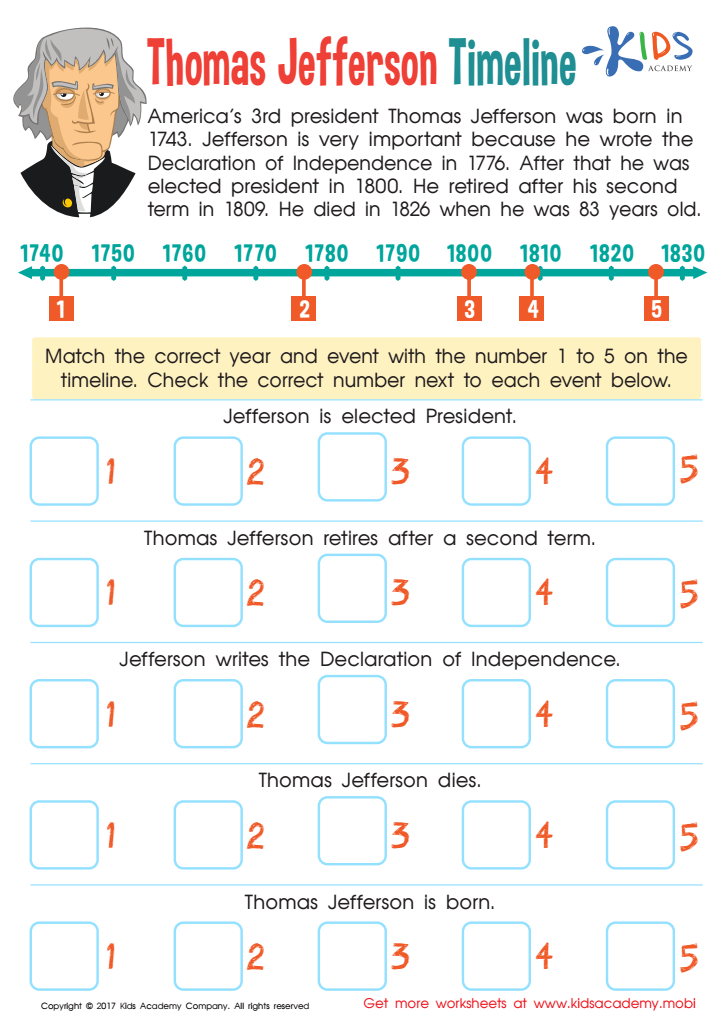
Thomas Jefferson Timeline Worksheet
 Assign to My Students
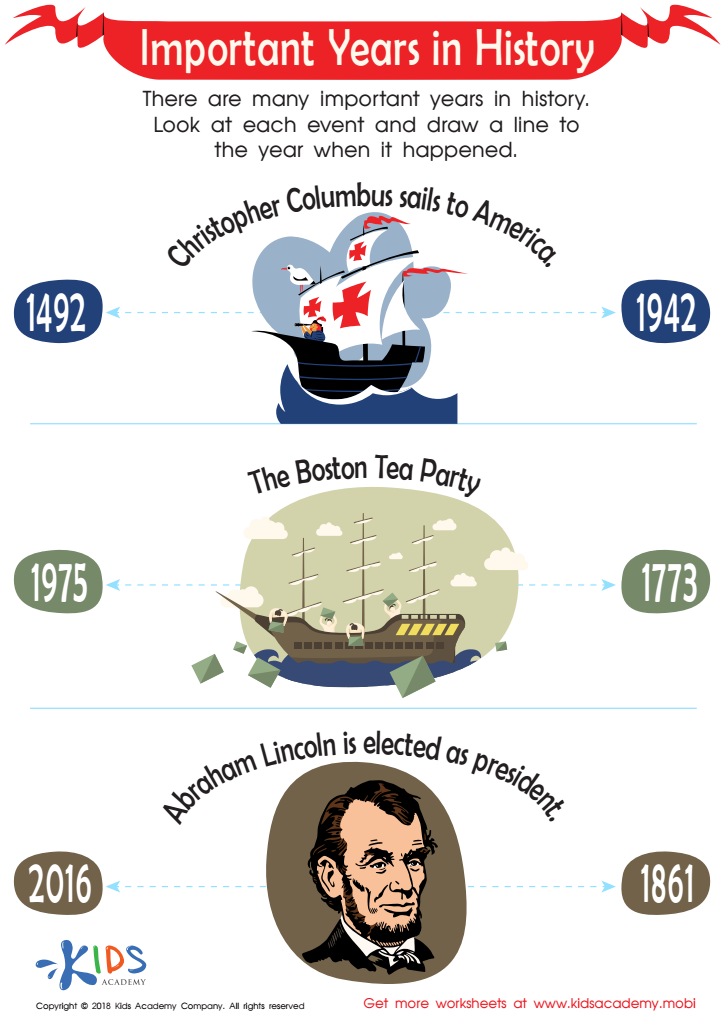
Important Years in History Worksheet
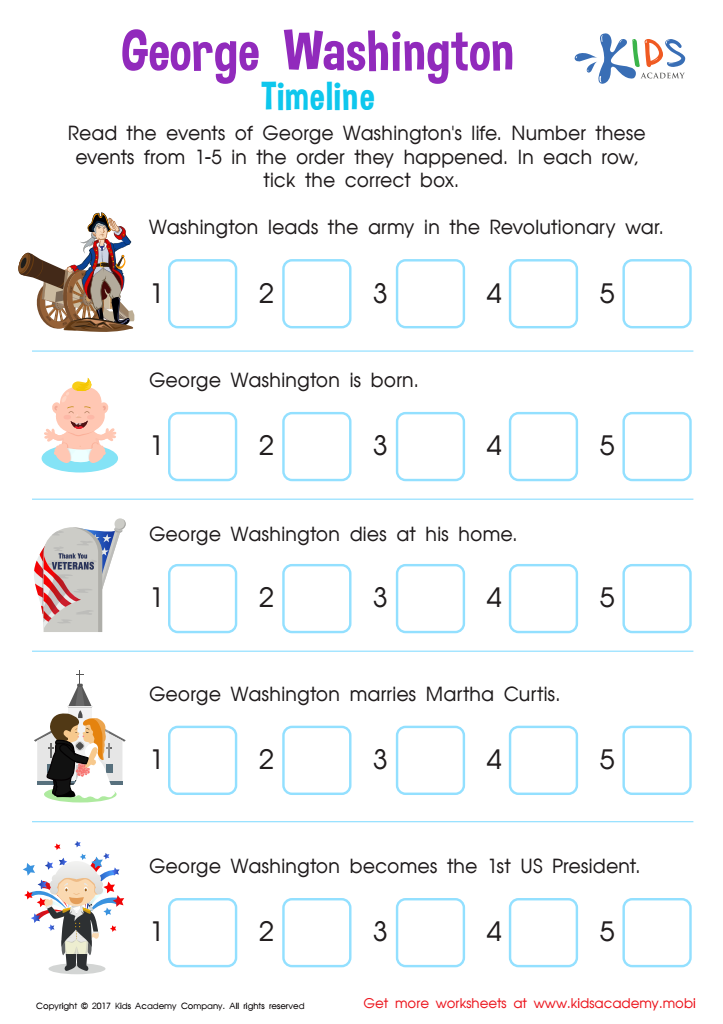
George Washington Timeline Worksheet






Event sequencing is a crucial skill for children aged 5-9, playing a significant role in their cognitive and social development. Parents and teachers should care about this skill because it fosters critical thinking and comprehension abilities. Understanding the order of events helps children grasp narratives, follow instructions, and organize their thoughts logically.
Moreover, event sequencing enhances reading and storytelling skills. As youngsters learn to identify the beginning, middle, and end of stories, they become better readers and more confident communicators. These skills lay a strong foundation for academic success in later years.
In social contexts, understanding sequential events allows children to navigate daily activities—like getting dressed, completing homework, or sharing a story with friends. It aids in developing patience and problem-solving abilities, as they learn to recognize cause and effect.
Furthermore, mastering event sequencing supports emotional intelligence. Children can recount their experiences and express their feelings when they effectively organize their thoughts, contributing to healthier relationships with peers and adults.
In summary, nurturing event sequencing skills in young learners is vital not just for academic growth but also for instilling life skills essential for navigating a complex world.








