
Handwriting development Worksheets for Ages 5-9
3 filtered results
Difficulty Level
Grade
Age
-
From - To
Subject
Activity
Standards
Discover engaging handwriting development worksheets designed specifically for children ages 5-9 at Kids Academy. Our carefully crafted resources promote fine motor skills, letter recognition, and proper penmanship in a fun and interactive way. With a variety of tasks, including tracing letters, connecting dots, and writing words, these worksheets cater to different learning styles, helping young learners build confidence in their writing abilities. Parents and educators can easily access and print these engaging activities, fostering a love for writing while enhancing coordination. Start your child’s journey to perfect handwriting today with our vibrant and educational worksheets!
Favorites
With answer key
Interactive
Letter M Tracing Page
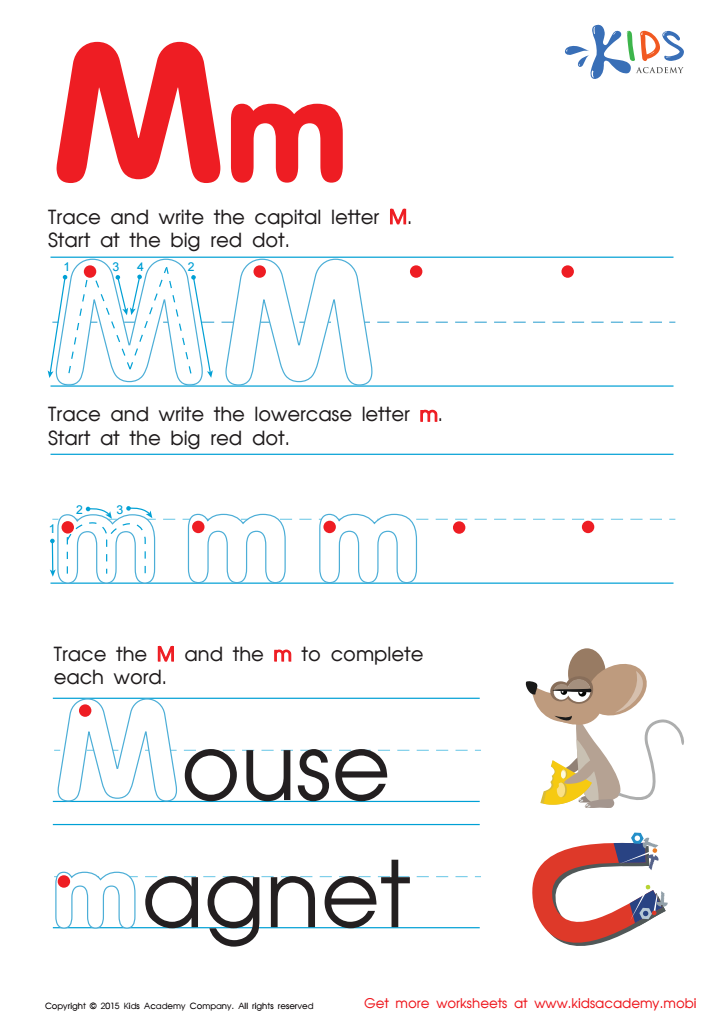
Trace and write the letter "M" to help kids learn the alphabet. Start at the red dot and practice several times. Trace the capital letter first, then move on to the lowercase. Complete words like "mouse" and "magnet" in the further exercise. Get more free printables here.
Letter M Tracing Page
Worksheet
My Name: Letter Fishing Worksheet
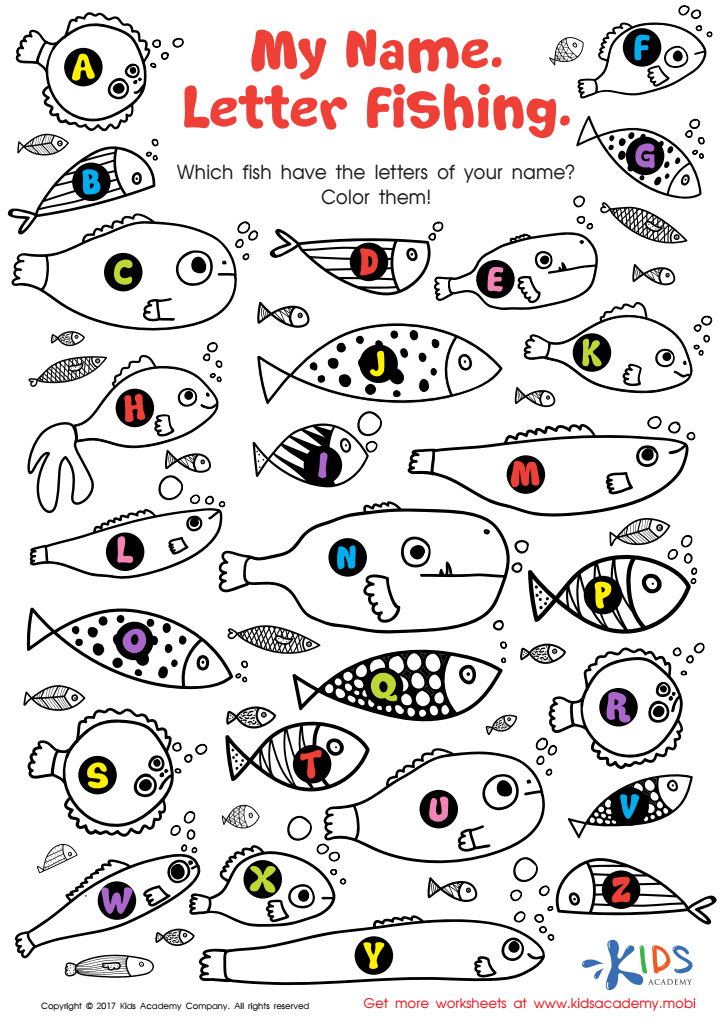
Dive into the deep sea and search for fish with a letter on them. Can you find all the letters from your name? Color your favorite fish with crayons and be creative! On the other side, use the letters you found to write your name. Have fun coloring and finding the letters of your name! (80 words)
Download (PDF)
 Assign to My Students
Assign to My Students
My Name: Letter Fishing Worksheet
Worksheet
Join Kids Academy for Free
Who is primarily going to use this learning content?






.jpg)

Handwriting development in children ages 5-9 is crucial for several reasons. Firstly, it is a fundamental skill that lays the groundwork for future academic success. Good handwriting helps children express their thoughts clearly and communicate effectively in both written and digital formats. During this formative stage, children develop fine motor skills, hand-eye coordination, and cognitive abilities that influence their overall learning capacity.
Moreover, legible handwriting is integral in building self-confidence. When children can write neatly, they feel proud of their work, fostering a positive attitude toward learning. This pride can motivate them to engage more deeply with their studies. Additionally, handwriting can impact assessment outcomes – legibility often influences how well teachers can read and understand students' work.
Parents and teachers play a vital role in this developmental process. Their encouragement and reinforcement can help children develop good habits early on. Incorporating activities like guided practice, playful writing exercises, and providing constructive feedback supports skill acquisition and retention. Recognizing the significance of handwriting goes beyond penmanship; it supports children’s overall cognitive, social, and emotional development, making it essential for stakeholders to prioritize this aspect of education.








