Identify colors Worksheets for Ages 5-9
4 filtered results
-
From - To
Welcome to our "Identify Colors Worksheets" page, specially designed for children ages 5-9. These engaging worksheets help young learners recognize and name colors while enhancing their cognitive skills. With a variety of vibrant and fun activities, children will explore the world of colors through matching, coloring, and identifying colorful objects. Our worksheets promote not only color recognition but also fine motor skills and creativity. Perfect for homeschooling, classroom use, or enrichment activities at home, these resources make learning enjoyable and effective. Start your child’s colorful journey today and watch them thrive in their understanding of the visual world around them!
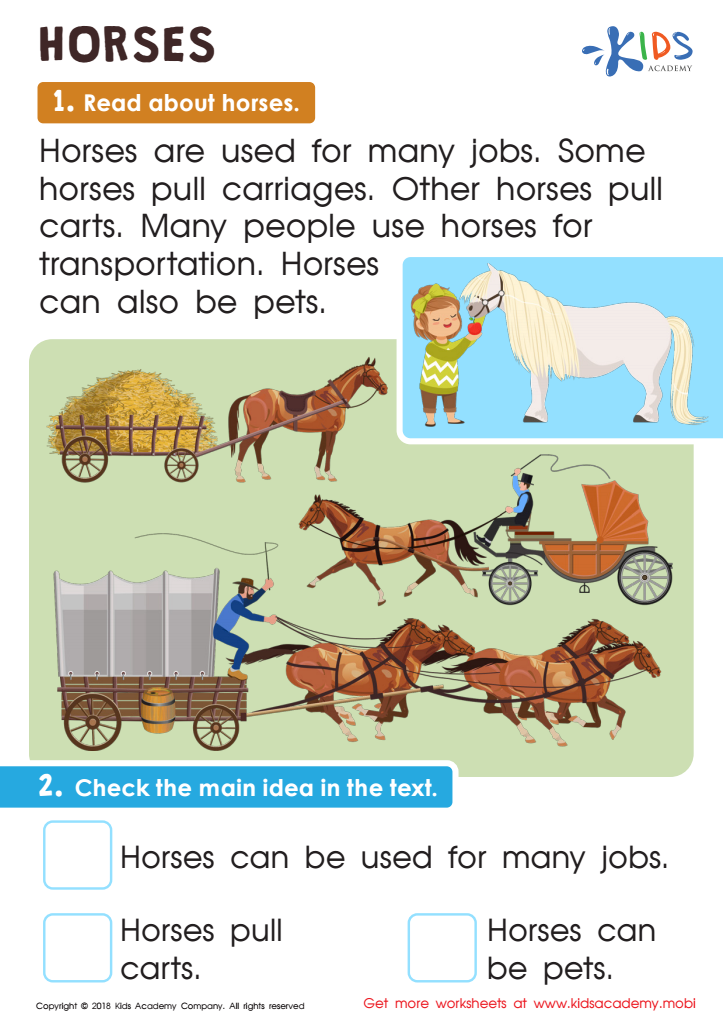
Horses Worksheet
 Assign to My Students








Identifying colors is a fundamental skill for children ages 5-9, playing a crucial role in their overall development. For parents and teachers, understanding the importance of color recognition is vital as it encompasses various learning areas. First, learning colors enhances cognitive development, helping children categorize and differentiate objects in their environment. This skill lays the groundwork for more complex concepts in mathematics and science, such as sorting and grouping.
Moreover, colors are integral to language development. As children learn to name and describe different colors, they enrich their vocabulary, improving communication skills. Artistic expression is also significantly impacted, as children use colors in drawing and painting, fostering creativity and emotional expression.
Emotional and social growth is another benefit of learning colors. Children often associate specific colors with emotions, helping them articulate their feelings and understand the feelings of others. Group activities involving color recognition can promote collaboration and teamwork.
Additionally, mastering color identification can boost a child's confidence in classroom settings, aiding their academic journey. By prioritizing color identification, parents and teachers equip children with essential skills that enhance their learning experience, support critical thinking, and encourage creative exploration.








