Identify shapes Worksheets for Ages 5-9
13 filtered results
-
From - To
Discover our exciting collection of "Identify Shapes Worksheets" tailored for children ages 5-9! These engaging worksheets are designed to help young learners recognize and differentiate various shapes, laying a strong foundation for geometry and spatial awareness. Each worksheet features vibrant illustrations and interactive activities, making learning fun and effective. Kids can enjoy honing their identification skills through tracing, coloring, and matching exercises. Ideal for use at home or in the classroom, our worksheets support early mathematical understanding while enhancing fine motor skills. Empower your child’s learning journey and spark their curiosity about the world of shapes today!
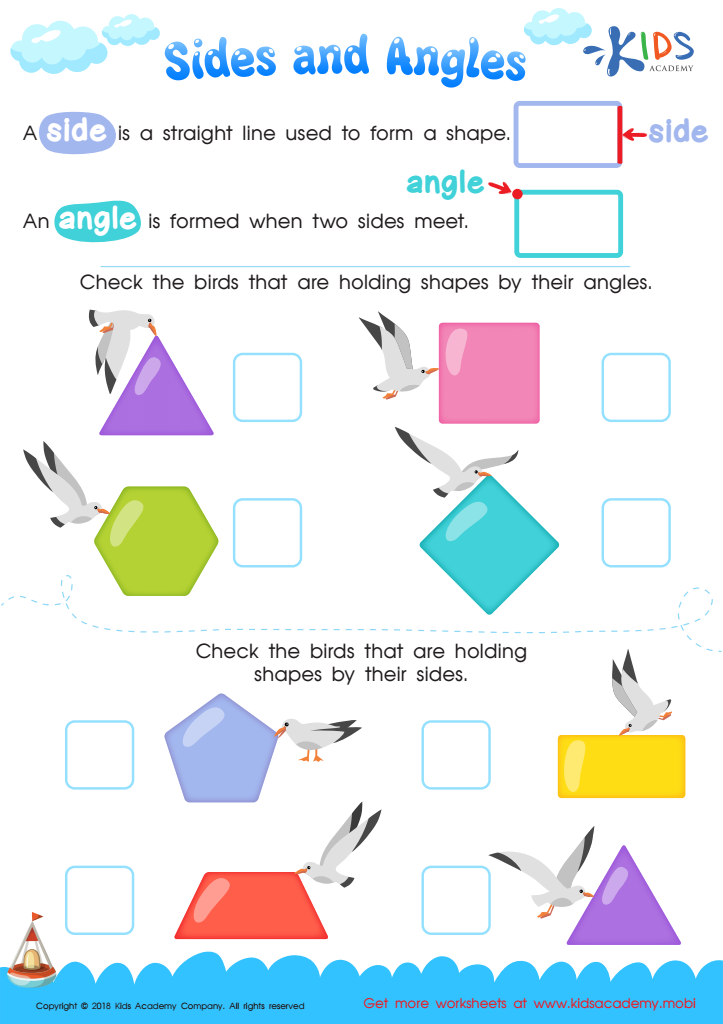
Sides and Angles Worksheet
 Assign to My Students




.jpg)


Understanding shapes is an essential skill for children aged 5-9, forming a foundation for future learning in mathematics, spatial reasoning, and everyday life. First and foremost, shape recognition enhances cognitive development. Identifying and differentiating between shapes aids in the development of critical thinking and problem-solving skills as children learn to classify, compare, and relate different objects.
Moreover, a solid grasp of geometric concepts paves the way for success in higher-level math. Shapes are the building blocks of more complex topics such as fractions, area, and geometry, which children will encounter in later grades. Early exposure can instill confidence and curiosity about math, making future learning less daunting.
In addition to academic benefits, understanding shapes plays a vital role in fostering creativity and imagination. Children can explore shapes through art and building activities, promoting a hands-on approach that enhances fine motor skills and creativity. Furthermore, recognizing shapes in the environment helps children engage with the world around them, linking mathematics to real-life situations.
Ultimately, equipping children with shape identification skills sets the stage for a well-rounded education, encouraging their growth as learners and thinkers in both school and everyday experiences.








