
Letter pronunciation Worksheets for Ages 5-9
3 filtered results
Difficulty Level
Grade
Age
-
From - To
Subject
Activity
Standards
Enhance your child's letter pronunciation skills with our engaging worksheets designed for ages 5-9! Our collection features fun, interactive activities that promote phonemic awareness and sound recognition. Each worksheet helps young learners master individual letter sounds through a variety of exercises, including tracing, matching, and audio cues. These worksheets are perfect for parents and teachers looking to reinforce early literacy skills and boost confidence in reading. By making learning enjoyable, children will develop a strong foundation in language that sets the stage for future academic success. Access our printable resources today and watch your child thrive in their reading journey!
Favorites
With answer key
Interactive
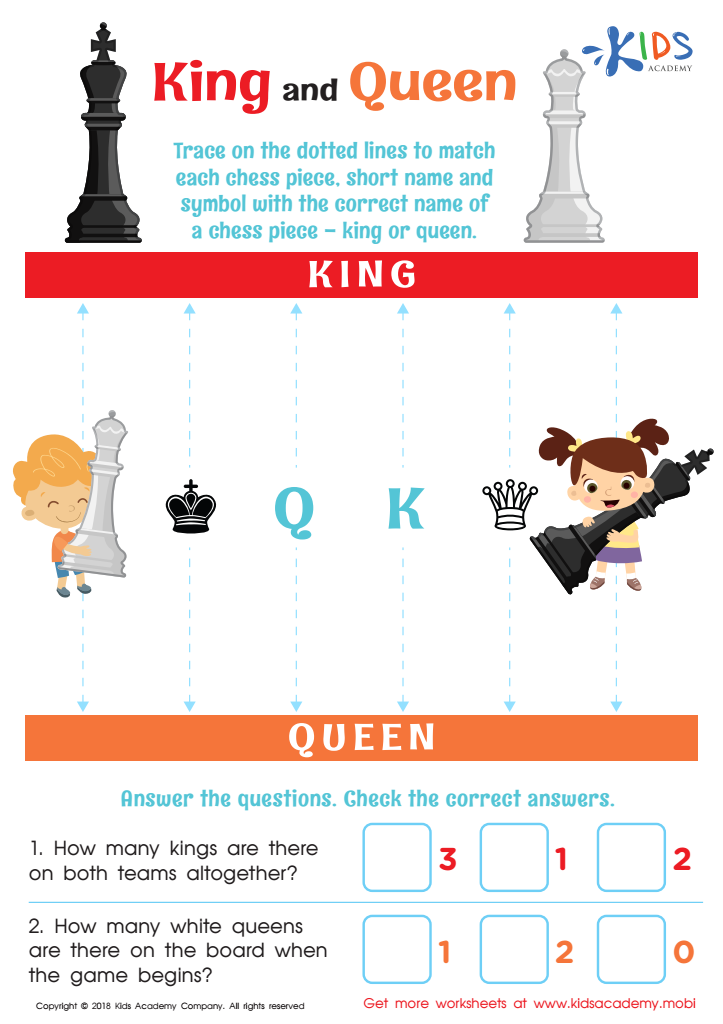
King and Queen Worksheet
Instruct your kids to trace the dotted lines to match each chess piece, short name, and symbol with either king or queen.Answer the questions at the bottom and check the answers. This exercise will help your children to differentiate between a king and queen chess piece and know their symbols.
King and Queen Worksheet
Worksheet
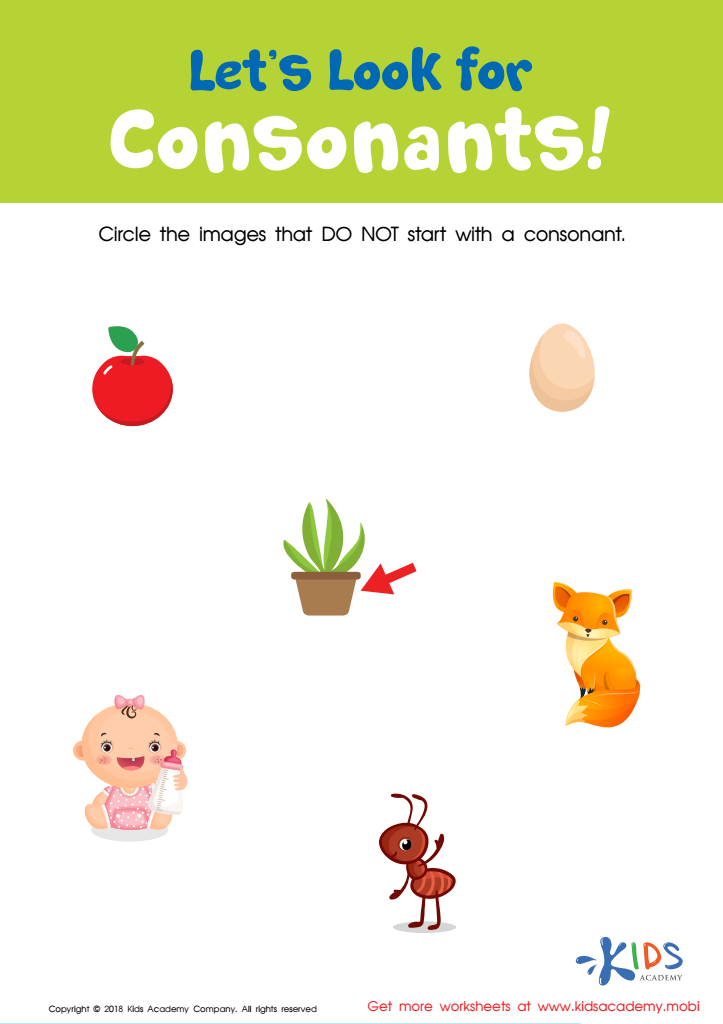
Let's Look for Consonants Worksheet
Help kids learn consonants and words that start with them. Ask them to recite the alphabet, then explain consonants are all letters but the 5 vowels. Use the worksheet to ask them to circle items without a consonant. Emphasize that's 21 consonants.
Let's Look for Consonants Worksheet
Worksheet
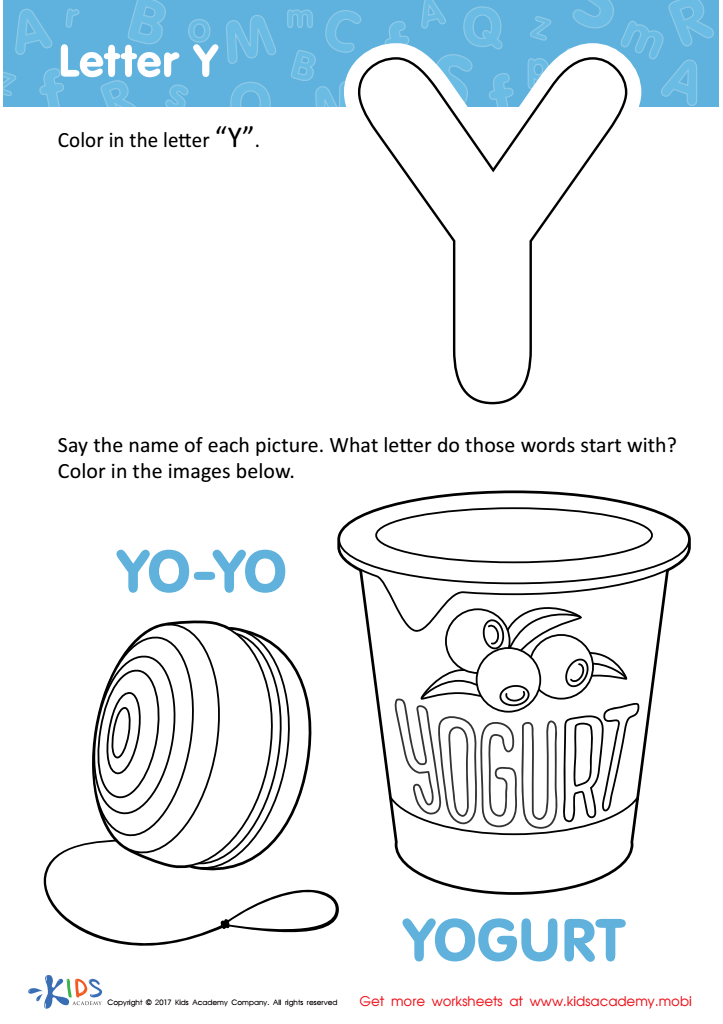
Letter Y Coloring Sheet
Let's celebrate letter "Y"! Here's a fun coloring page that'll help your child learn this end-of-the alphabet letter. It's packed with familiar objects that'll help build their art and literacy skills. So let's say "Yay"!
Download (PDF)
 Assign to My Students
Assign to My Students
Letter Y Coloring Sheet
Worksheet
Join Kids Academy for Free
Who is primarily going to use this learning content?








Letter pronunciation is a fundamental aspect of language development for children aged 5-9. During this critical stage, children are not only learning to recognize letters but also how to articulate their sounds, which forms the basis for reading and writing skills. Proper letter pronunciation aids in phonemic awareness, helping children understand the relationship between sounds and the letters that represent them. This awareness is crucial for decoding words, determining how successfully a child can read independently.
Moreover, learning accurate pronunciation reinforces vocabulary acquisition. Children who hear and practice the correct sounds are more likely to develop a clearer and richer vocabulary, translating to improved communication skills. Teachers and parents play integral roles in modeling proper pronunciation and providing supportive feedback, ensuring students build a strong foundation for literacy.
Additionally, good pronunciation boosts a child's confidence in speaking and exploring language. Confidence encourages participation and creates a positive feedback loop in learning. By valuing and reinforcing letter pronunciation, caregivers set children on a path towards successful reading and writing experiences that will serve them throughout their educational journey and beyond. Ultimately, it empowers them to express themselves effectively in various contexts, paving the way for lifelong communication skills.








