Math skills improvement Worksheets for Ages 5-9
8 filtered results
-
From - To
Boost your child's math skills with our comprehensive worksheets designed for ages 5-9! Our engaging activities make learning fun while covering essential topics such as addition, subtraction, multiplication, division, and geometry. Tailored to foster critical thinking and problem-solving, these worksheets are perfect for classroom or at-home practice. Whether your child is just starting their math journey or needs a little extra help, our easy-to-follow exercises are sure to help them succeed. Download now and watch your child's confidence and proficiency soar with every completed worksheet. Make math exciting and accessible with Kids Academy!
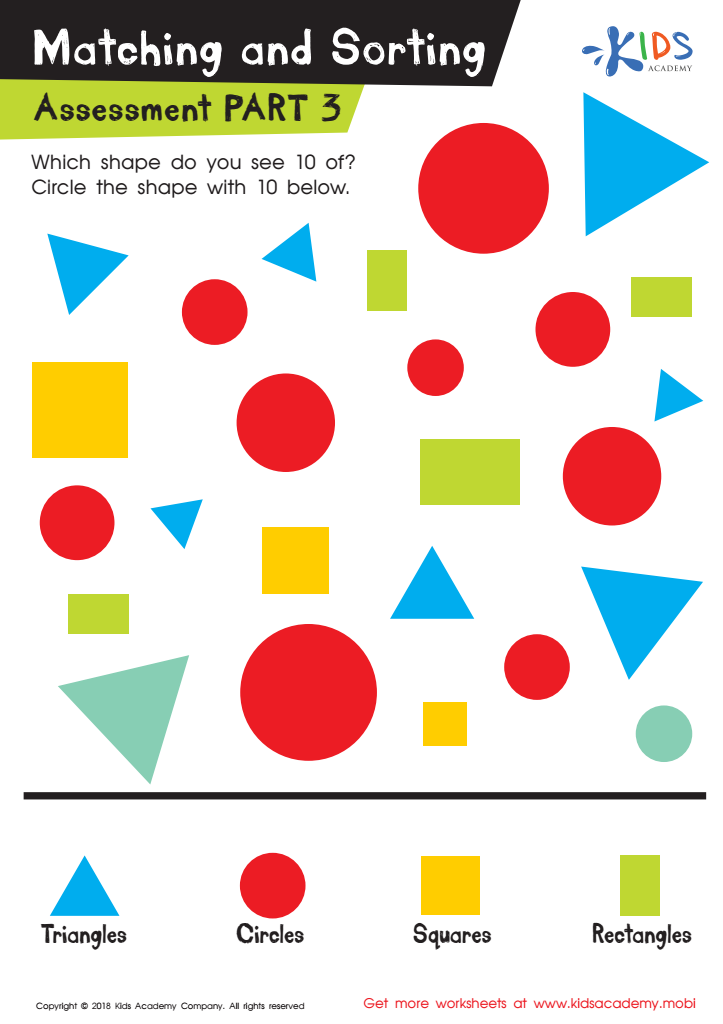
Matching and Sorting for Kindergarten: Assessment 3 Worksheet
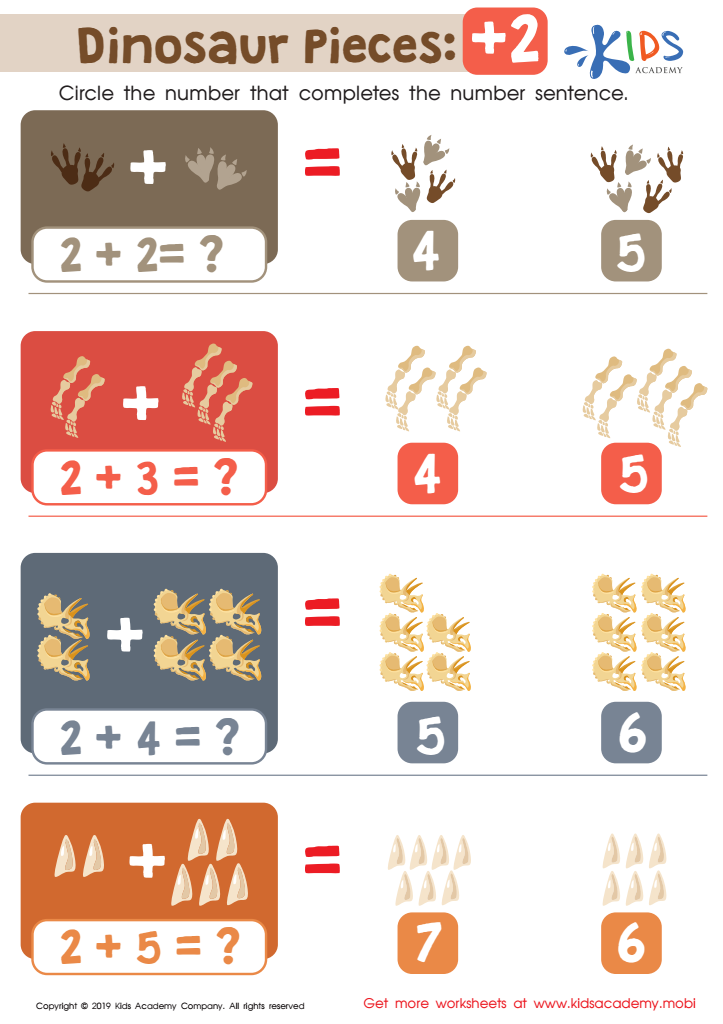
Dinosaur Pieces: +2 Worksheet
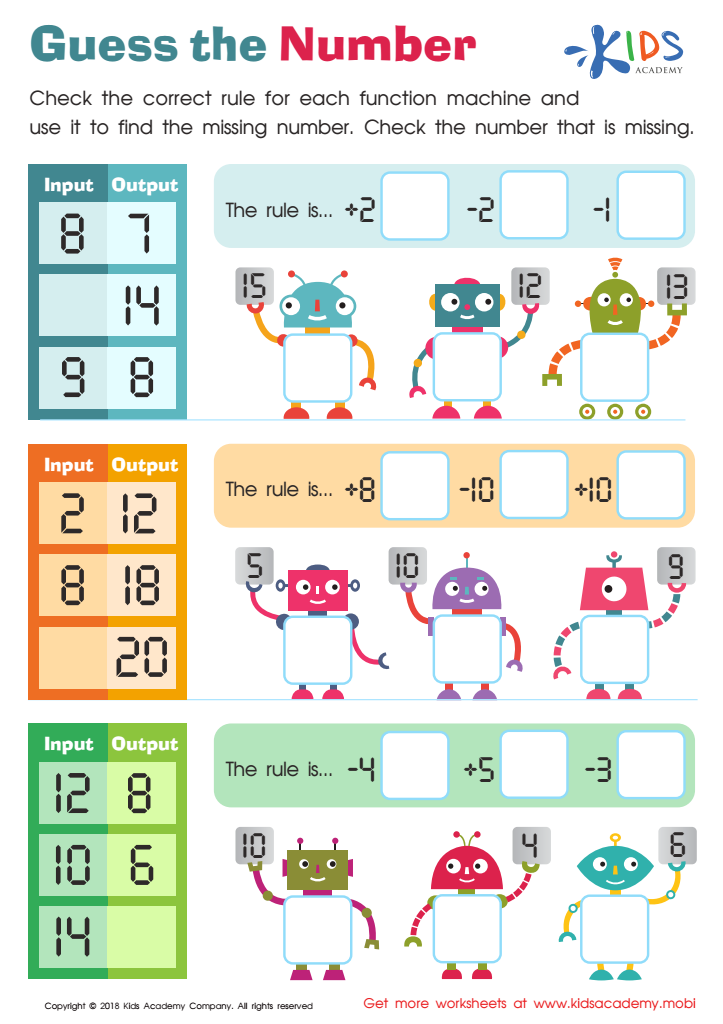
Guess the Number Worksheet
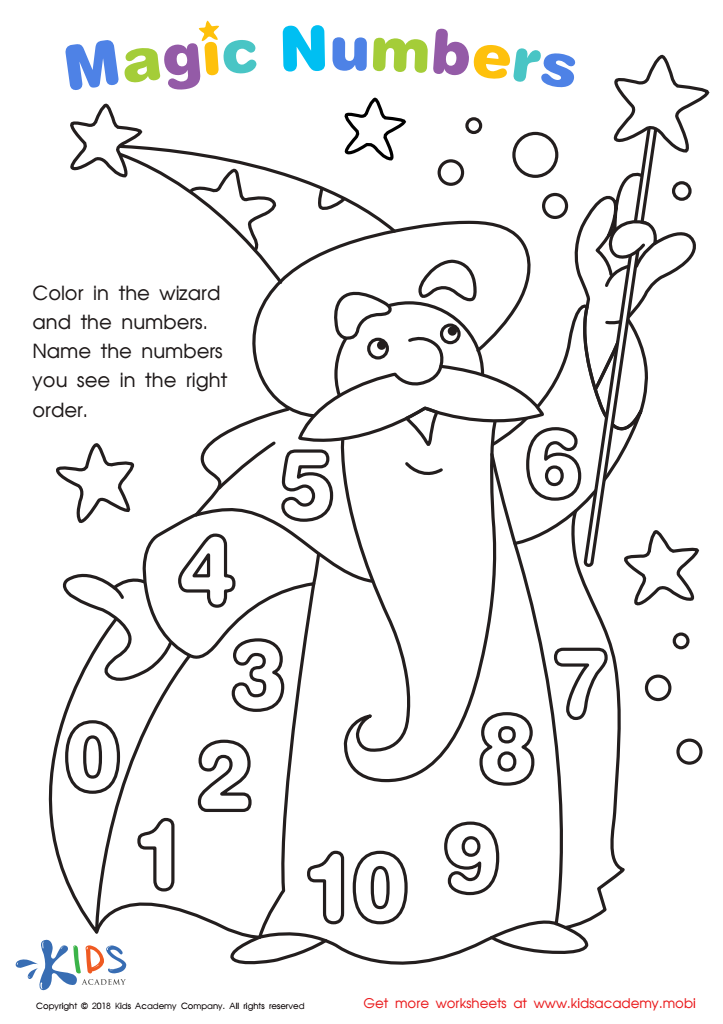
Magic Numbers Worksheet
 Assign to My Students
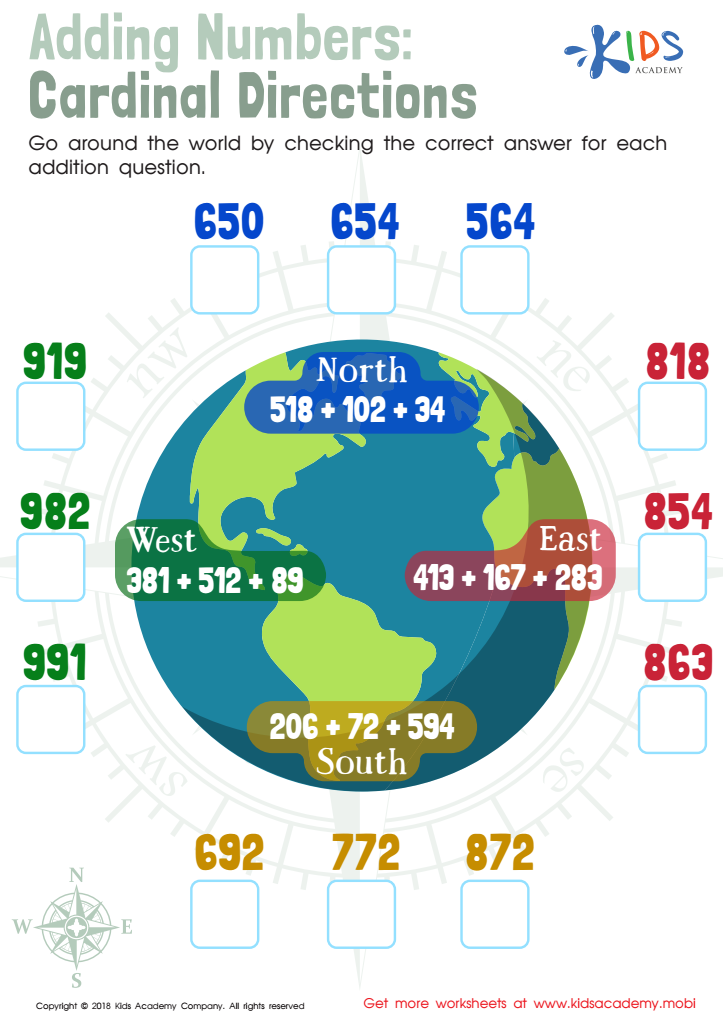
Adding Numbers: Cardinal Directions Worksheet








Improving math skills for children aged 5-9 is crucial for several reasons. First, foundational math skills are the building blocks for future academic success. At this early age, kids develop their understanding of basic concepts such as counting, addition, subtraction, and problem-solving. Proficiency in these areas can lead to a smoother transition to more advanced topics in later grades.
Second, math skills enhance critical thinking and reasoning abilities. Young children who are exposed to math early on learn how to approach problems logically, identify patterns, and make informed decisions. These cognitive skills are transferrable to other academic subjects and real-life situations, benefiting overall intellectual development.
Third, fostering a positive attitude towards math during the early years can influence a child’s confidence and interest in the subject. Many adult math anxieties stem from negative experiences during early education. By creating an encouraging and supportive math learning environment, parents and teachers can help build a strong, positive foundation.
Lastly, strong math skills can open windows of opportunity for future careers in STEM fields, which are increasingly in demand. Thus, investing in early math education supports not just academic growth but also eventual professional prospects.
In summary, improving math skills at a young age is vital for achieving academic proficiency, fostering cognitive development, building confidence, and preparing children for future career opportunities.








