Mental math development Worksheets for Ages 5-9
3 filtered results
-
From - To
Unlock your child's potential with our "Mental Math Development Worksheets for Ages 5-9." Tailored to enhance cognitive skills and number fluency, these printable worksheets offer engaging activities that make learning math fun and effective. From simple addition and subtraction to more complex problems, our worksheets are designed to build confidence and improve mental calculation capabilities. Ideal for young learners, each worksheet encourages critical thinking and problem-solving. Perfect for both classroom and home use, they ensure a solid math foundation, enabling your child to excel in their educational journey. Foster a love for math with our expertly crafted resources!
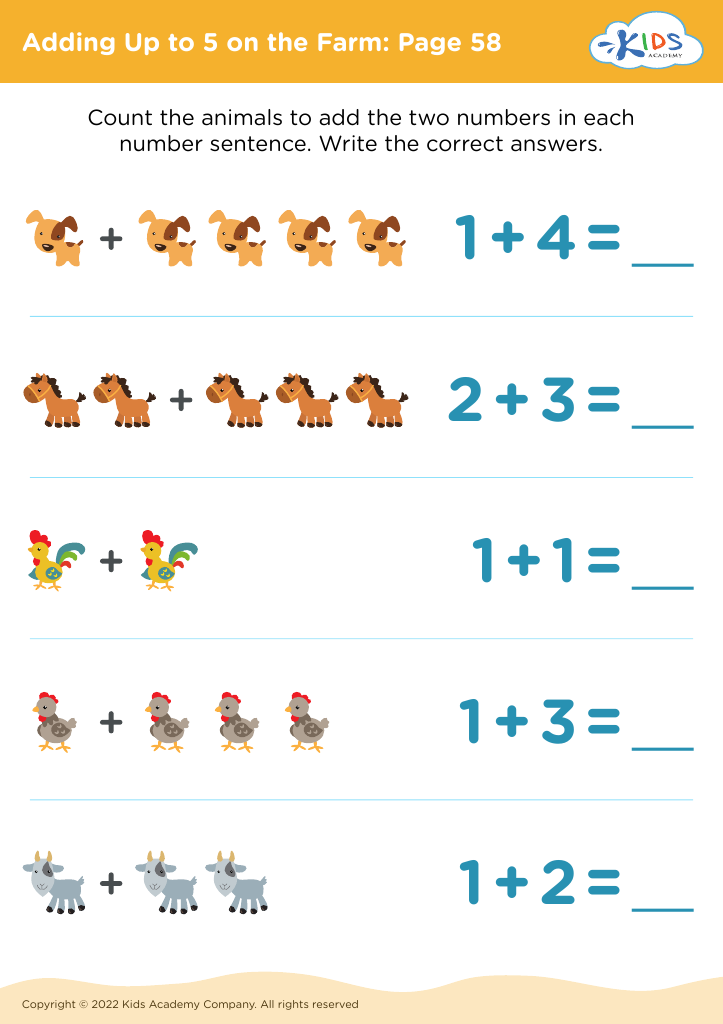
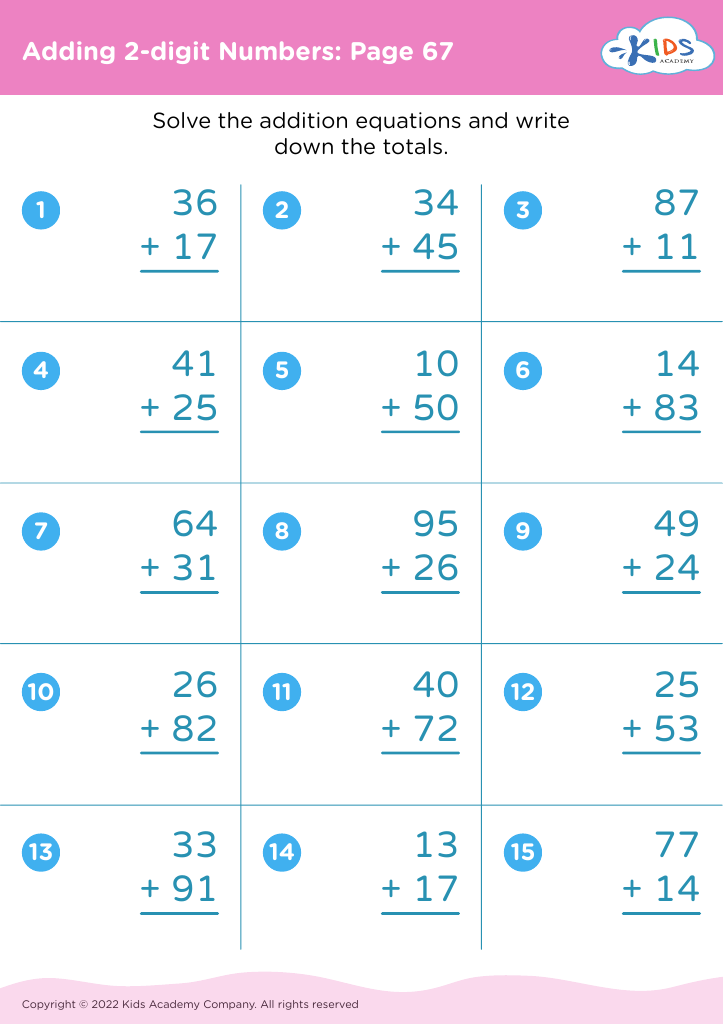
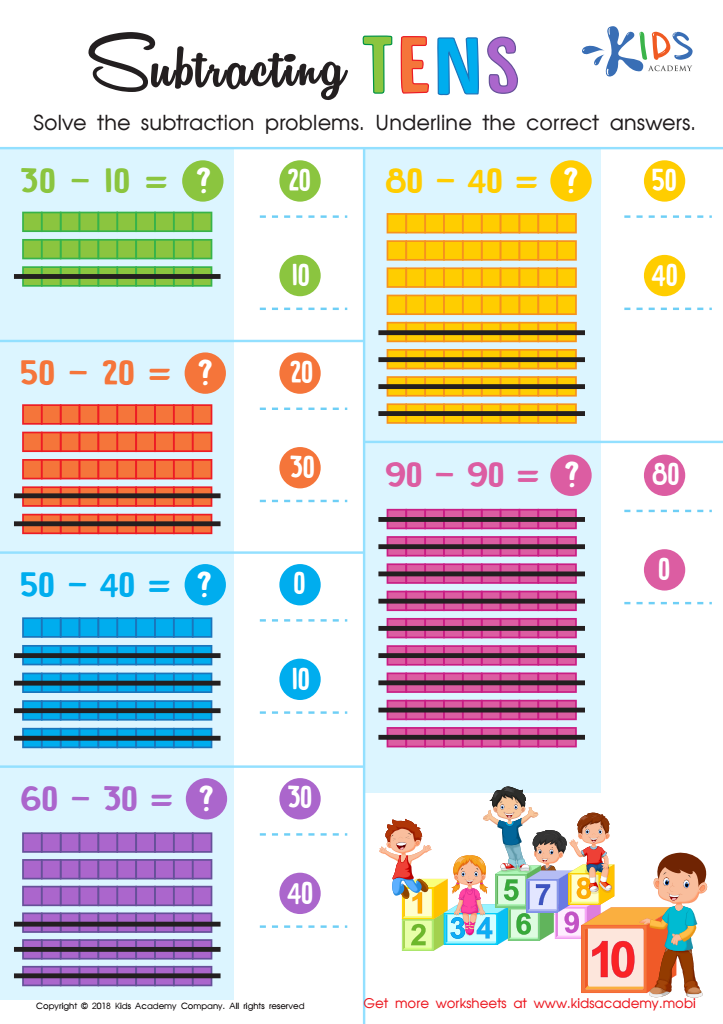
Subtracting Tens Worksheet
 Assign to My Students








Mental math development is crucial for children aged 5-9 as it builds foundational skills that benefit their overall cognitive growth and academic success. This is a critical period of brain development where children are highly receptive to new information and ways of thinking. By mastering mental math, children enhance their problem-solving abilities, improve memory, and gain increased numerical fluency, which are essential skills needed for advanced math concepts that they will encounter later in their education.
Furthermore, mental math encourages children to think logically and analytically, skills that are transferable to other life areas, including science, reading comprehension, and even non-academic activities like playing games. It promotes independence and confidence, empowering students when they can solve problems quickly without relying on a calculator or written work.
From a practical standpoint, mental math skills help children with everyday tasks such as handling money, telling time, and measuring ingredients in cooking. These competencies foster a sense of achievement and competence early on.
Teachers and parents who prioritize mental math development are not only supporting immediate mathematical understanding but are also laying down strong cognitive pathways that facilitate lifelong learning and adaptability. Therefore, focusing on mental math from an early age can set children up for both academic and personal success.








