
Nature appreciation Worksheets for Ages 5-9
6 filtered results
Difficulty Level
Grade
Age
-
From - To
Subject
Activity
Standards
Explore our Nature Appreciation Worksheets designed for children aged 5-9, fostering a love for the great outdoors! These engaging and vibrant worksheets introduce young learners to various aspects of nature, helping them develop awareness and curiosity about their environment. From identifying plants and animals to understanding ecosystem basics, our resources encourage critical thinking and observation skills while connecting kids to nature. Perfect for at home or in the classroom, each worksheet is tailored to spark creativity and enhance learning through fun activities. Let your child embark on an exciting journey of discovery with our Nature Appreciation Worksheets today!
Favorites
With answer key
Interactive
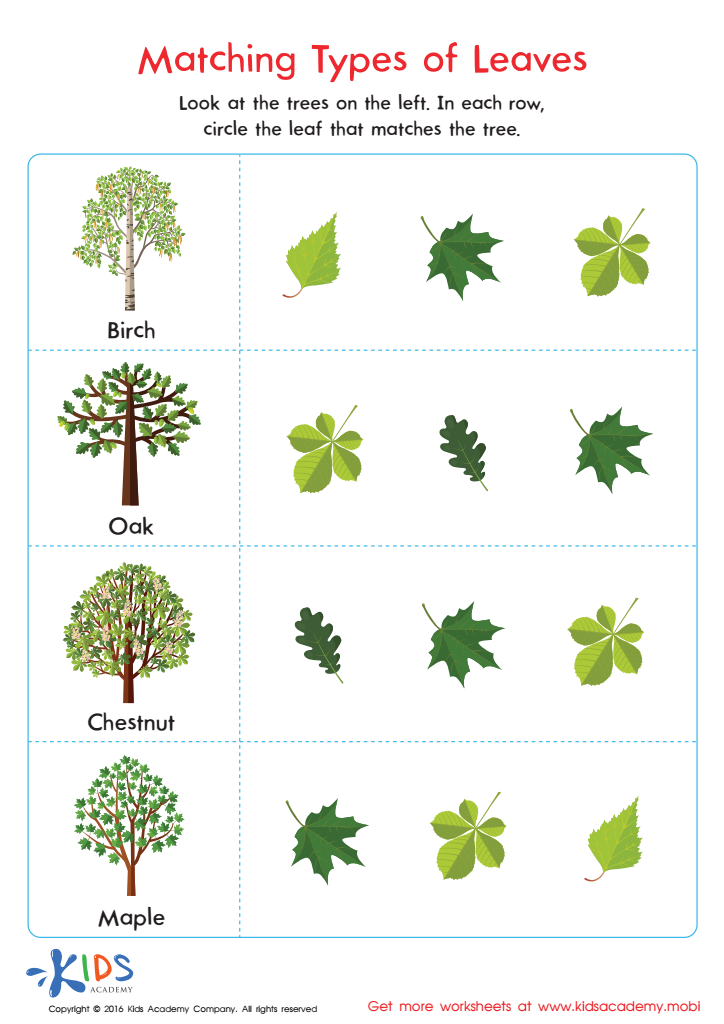
Matching Types of Leaves Printable
Trees are beautiful and essential to life. Show your child the joy of learning about them with this leaf worksheet. It teaches tree identification and encourages observing nature. Expand the learning with additional activities about trees!
 Assign to My Students
Matching Types of Leaves Printable
Worksheet
Join Kids Academy for Free
Who is primarily going to use this learning content?








Nature appreciation is vital for children aged 5-9 as it fosters their cognitive, emotional, and social development. Firstly, engaging with nature cultivates curiosity and fosters critical thinking skills. Children develop observational skills as they explore their environment, learning to ask questions and seek answers, promoting scientific thinking.
Secondly, outdoor experiences are essential for physical health. Children who spend time in nature are more likely to engage in active play, improving their motor skills and overall fitness. Additionally, being outdoors can significantly reduce stress and anxiety, promoting emotional well-being. Nature also allows for rich sensory experiences, enhancing children's ability to process and manage their feelings.
Furthermore, appreciating nature nurtures empathy and responsibility towards the environment. As children learn about the ecosystems around them, they develop a sense of stewardship, understanding the importance of protecting wildlife and habitats. This creates a foundation for responsible citizenship and an awareness of environmental issues, which is increasingly important in today's world.
Lastly, nature fosters strong social connections. Group activities in natural settings encourage teamwork, communication, and leadership skills, building confidence and fostering friendships. For these reasons, parents and teachers should prioritize nature appreciation in early childhood education.








