Phonics recognition Worksheets for Ages 5-9 - Page 2
25 filtered results
-
From - To
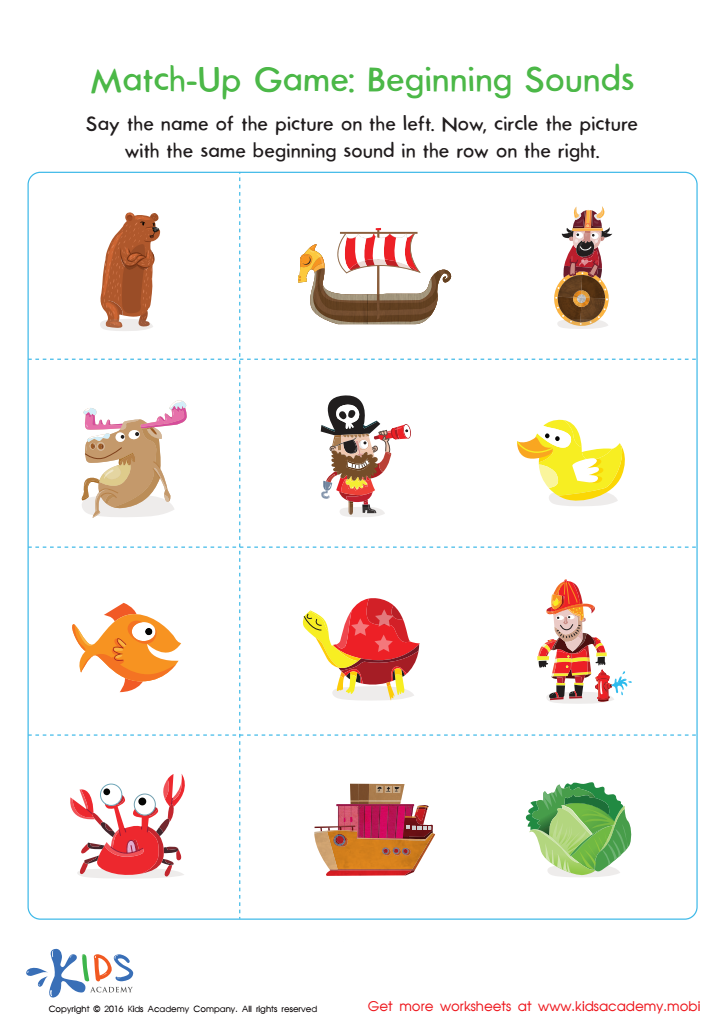
Match–Up Game: Beginning Sounds Worksheet
 Assign to My Students



.jpg)


Phonics recognition is a fundamental building block for literacy, crucial for children aged 5-9. This skill involves understanding the relationship between written letters and spoken sounds, which lays the foundation for efficient reading and writing.
First, phonics helps children decode new words. By grasping phonetic rules, they can sound out unfamiliar words more effectively, building their vocabulary and boosting their confidence in reading independently.
Second, phonics enhances reading fluency. When children can recognize and process words quickly and accurately, they can shift their focus from decoding to comprehension. This fluency is essential for understanding the text and enjoying the reading experience, which fosters a lifelong love of reading.
Furthermore, phonics supports spelling skills. When children understand why and how words are spelled a certain way, they can spell with greater accuracy. This has a ripple effect on writing skills, facilitating clearer, more competent expression of thoughts.
Lastly, early phonics education can mitigate future academic challenges. Students who struggle with reading often fall behind across all subjects. Early mastery of phonics equips children with the tools they need for overall academic success.
Thus, parents and teachers should prioritize phonics recognition, as it is vital for building a solid literacy foundation that will support children’s educational journeys and beyond.








