
Prefix understanding Worksheets for Ages 5-9
3 filtered results
Difficulty Level
Grade
Age
-
From - To
Subject
Activity
Standards
Unlock your child's linguistic potential with our "Prefix Understanding Worksheets for Ages 5-9." Tailored to young learners, these engaging worksheets introduce the basics of prefixes, enhancing vocabulary and reading comprehension. Through fun activities, kids will learn to identify and use common prefixes, boosting their confidence and language skills. Our expertly designed resources support playful yet educational experiences, making foundational learning exciting and effective. Perfect for classroom and at-home use, these worksheets pave the way for academic success, building essential language skills that form the cornerstone of advanced literacy. Transform learning into an adventure with our carefully crafted prefix worksheets!
Favorites
With answer key
Interactive
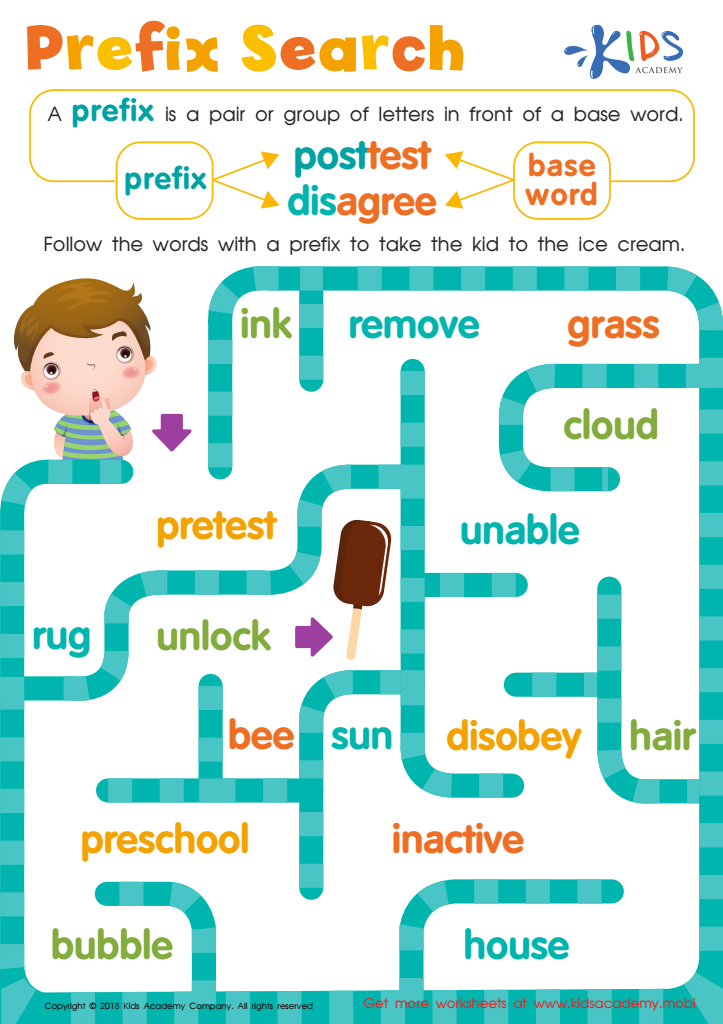
Reading: Prefix Search Worksheet
Maze your way through prefixes! This worksheet helps students practice reading new words with a prefix and figuring out the base word. An understanding of prefixes gives students the skills to comprehend new words. A fun and useful activity for the reading classroom!
 Assign to My Students
Reading: Prefix Search Worksheet
Worksheet
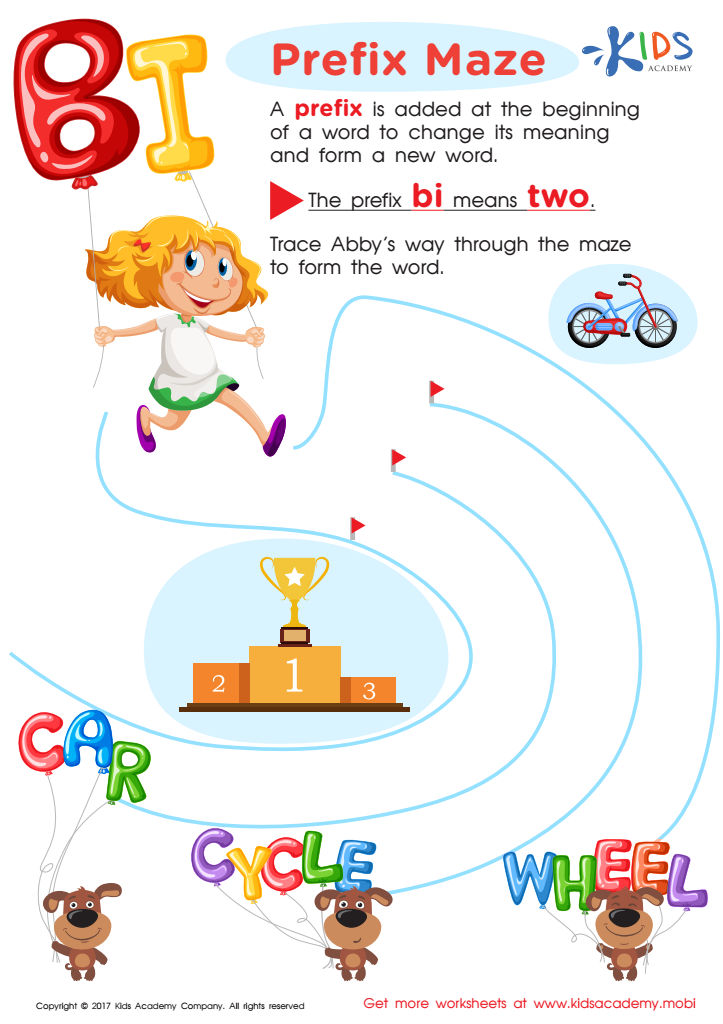
Prefix Bi Words Worksheet
Help "bi" find its root word in this fun and colorful prefix worksheet! Your child will learn how words are built while having a great time!
Prefix Bi Words Worksheet
Worksheet
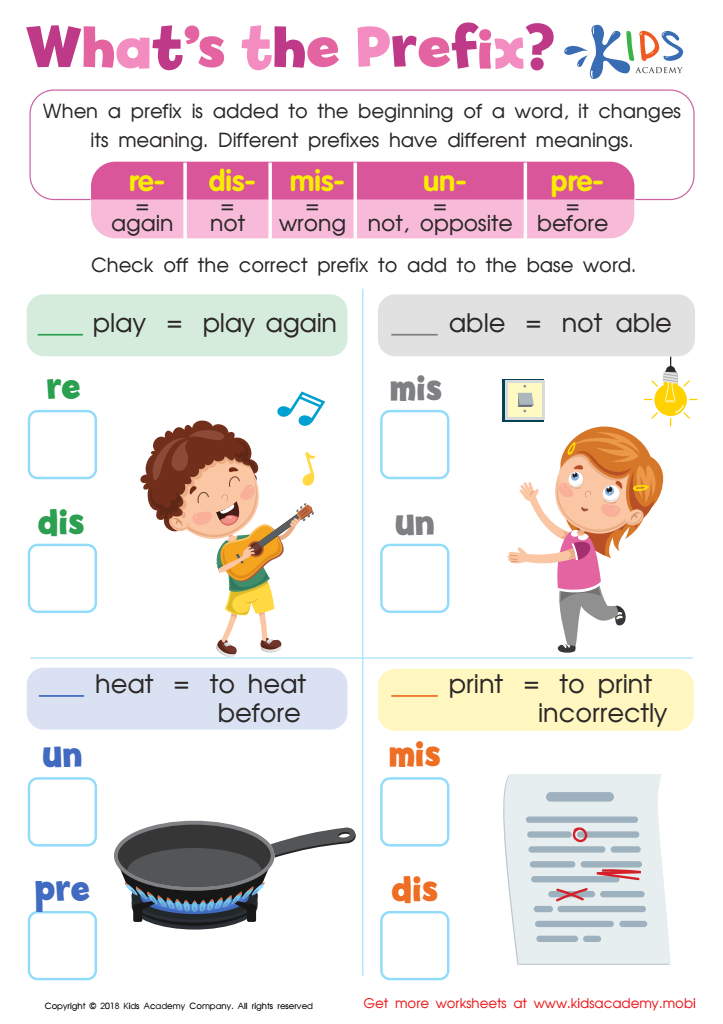
Reading: What Is the Prefix Worksheet
This worksheet helps children learn about prefixes by matching pictures and base words with the correct prefix. Learning these prefixes and their meanings is essential for reading and vocabulary comprehension. Use this free download to check your students' understanding.
Reading: What Is the Prefix Worksheet
Worksheet
Join Kids Academy for Free
Who is primarily going to use this learning content?







Understanding prefixes is crucial for children aged 5-9 because it lays the foundation for their language development and literacy skills. At this developmental stage, children's brains are highly receptive to learning new concepts, and grasping the basics of prefixes can significantly enhance their reading and vocabulary.
Prefixes are small but powerful word parts added to the beginning of base words to change their meaning. For example, understanding that "un-" means "not" or "opposite" helps children decode and comprehend words like "unhappy" or "undo." This knowledge not only expands their vocabulary but also boosts their confidence in reading unfamiliar words.
Moreover, understanding prefixes aids in spelling and writing proficiency. When children learn that "re-" means "again," they can spell words like "redo" and "rewrite" with greater ease and accuracy. This comprehension supports their ability to follow and craft more complex sentences and ideas, enhancing overall communication skills.
Finally, early exposure to prefixes encourages critical thinking. By breaking down words into manageable parts, children can more easily infer meanings and make connections between similar words. This analytical skill is vital for academic achievement across subjects, including science and mathematics. Therefore, investing time and effort to teach children about prefixes during these formative years sets a strong linguistic foundation for future learning.








